A linen closet can look perfectly organized one day and become a mess again a week later.
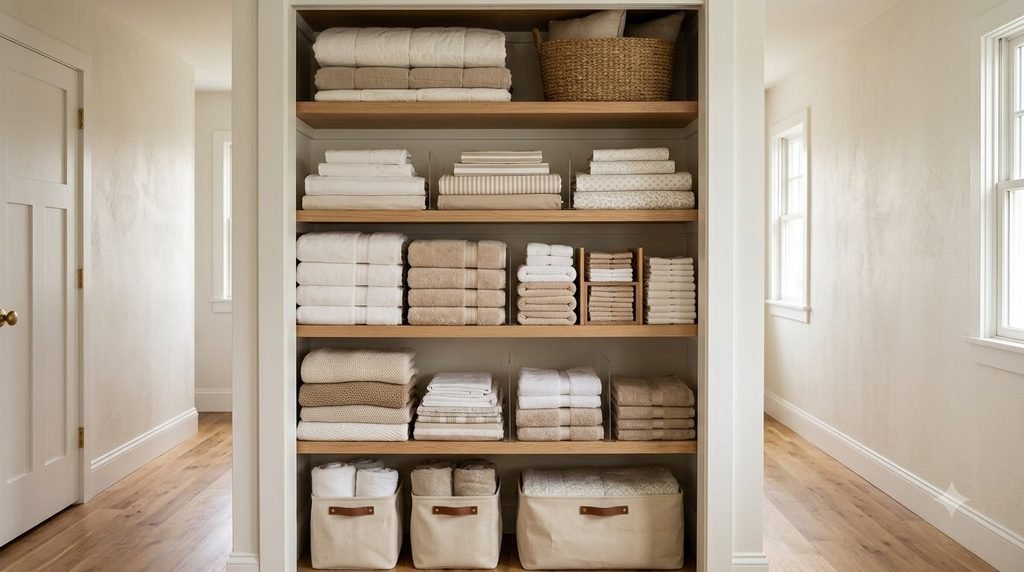
Towels get pulled from the middle of a stack, sheet sets become separated, blankets take over an entire shelf, and items pushed toward the back can disappear completely. In a small linen closet, the problem becomes even more noticeable because every shelf has to work hard.
The answer isn’t simply buying more baskets.
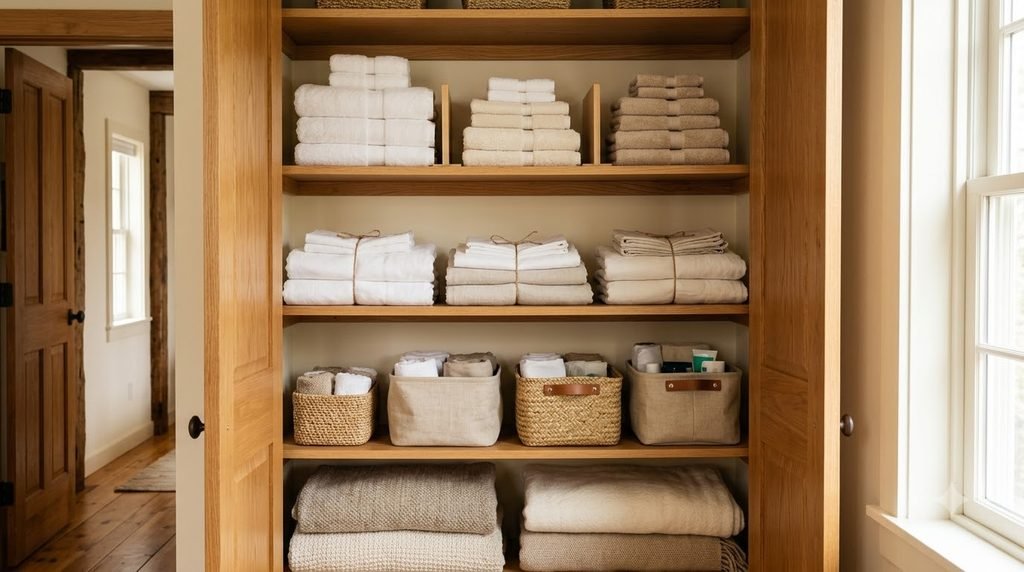
A better linen closet organization system starts with reducing what you actually need to store, grouping similar items together, giving everyday linens the easiest access, and choosing storage that keeps stacks from collapsing.
Whether you have a dedicated linen closet, a narrow hallway cabinet, or a few shelves shared with bathroom supplies, these ideas can help you create a system that stays tidy after laundry day.
Amazon Associate Disclosure: As an Amazon Associate I earn from qualifying purchases.
1. Empty the Linen Closet Completely
Start by taking everything out.
It is difficult to organize a linen closet properly when you’re trying to work around old towels, mismatched sheets, and piles that have accumulated over time.
Place everything somewhere you can see it.
Then create basic groups:
- Bath towels
- Hand towels
- Washcloths
- Sheet sets
- Pillowcases
- Blankets
- Guest linens
- Specialty or seasonal items
Seeing everything together makes it much easier to notice duplicates, worn-out pieces, and sets you no longer use.
Recent linen-closet organization guides also recommend fully emptying the closet before organizing because it gives you a clearer picture of your inventory and available space.

2. Get Rid of Linens You Don’t Actually Need
Before buying a single organizer, edit the collection.
Look for:
- Towels that are badly worn
- Sheets that no longer fit any bed in your home
- Single pillowcases with no useful match
- Blankets nobody uses
- Linens you consistently avoid
- Duplicates that are taking up valuable shelf space
You do not need to follow a rigid number of towels or sheet sets.
The right amount depends on your household size, laundry schedule, guests, available storage, and personal preference. Current linen-closet guidance similarly emphasizes choosing quantities based on the household rather than blindly following a universal rule.
The goal is simple:
Keep enough to make your routine easy, but not so much that storage becomes the routine.
3. Decide Whether to Organize by Type or by Room
There are two practical ways to organize a linen closet.
By type
Keep all bath towels together, all sheets together, all blankets together, and so on.
This works well when multiple rooms use the same linens.
By room
Keep the primary-bedroom sheets together, guest-room linens together, and bathroom towels together.
This can work better when different rooms use very different sizes or styles.
Neither system is automatically better.
Choose the one that makes it easiest for you to grab what you need without opening several containers or disturbing other stacks.
4. Give Everyday Towels the Easiest Access
Your most frequently used towels shouldn’t be buried behind guest linens or oversized blankets.
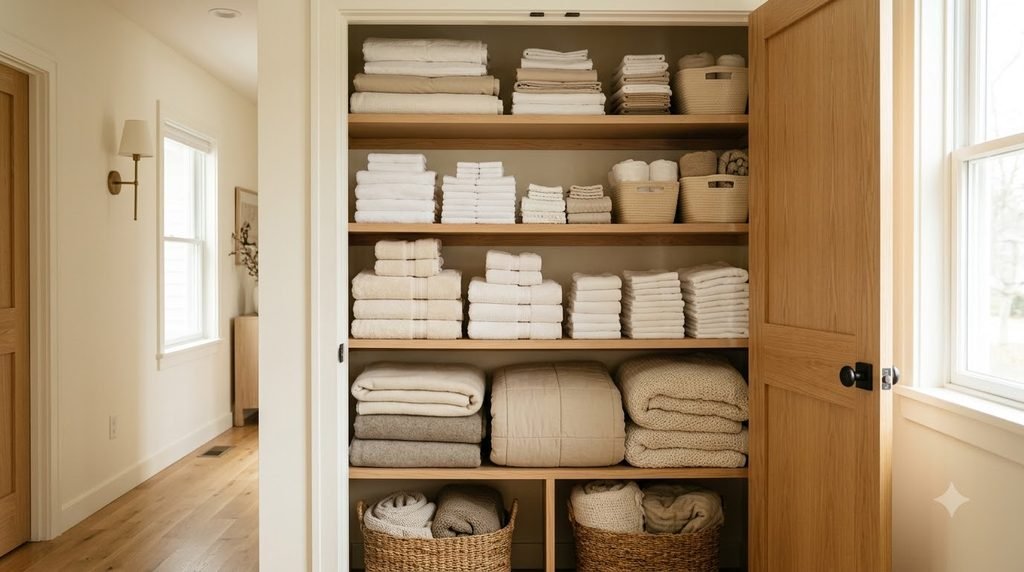
Place everyday bath towels and hand towels somewhere easy to reach, ideally around the middle of the closet.
Less frequently used items can move higher or lower.
A simple frequency system might look like this:
Eye level: everyday towels and frequently used sheets
Upper shelves: guest linens and seasonal items
Lower shelves: heavier blankets and bulkier pieces
This type of frequency-based zoning is a recurring recommendation in current linen-closet guidance because it reduces unnecessary reaching and shelf disruption.
5. Fold Towels for the Shelf You Actually Have
There isn’t one perfect towel-folding method.
The best method is the one that creates stable, easy-to-reach stacks without wasting shelf space.
For a narrow shelf, a compact fold may work better.
For deeper shelves, you may prefer a wider fold that creates fewer layers.
You can also roll towels if that arrangement makes them easier to see and access.
The important part is consistency.
When towels are folded similarly, stacks become easier to maintain and the shelf becomes more visually readable.
Current expert guidance also recommends rolling towels where appropriate to save space and make retrieval easier.
6. Keep Each Sheet Set Together
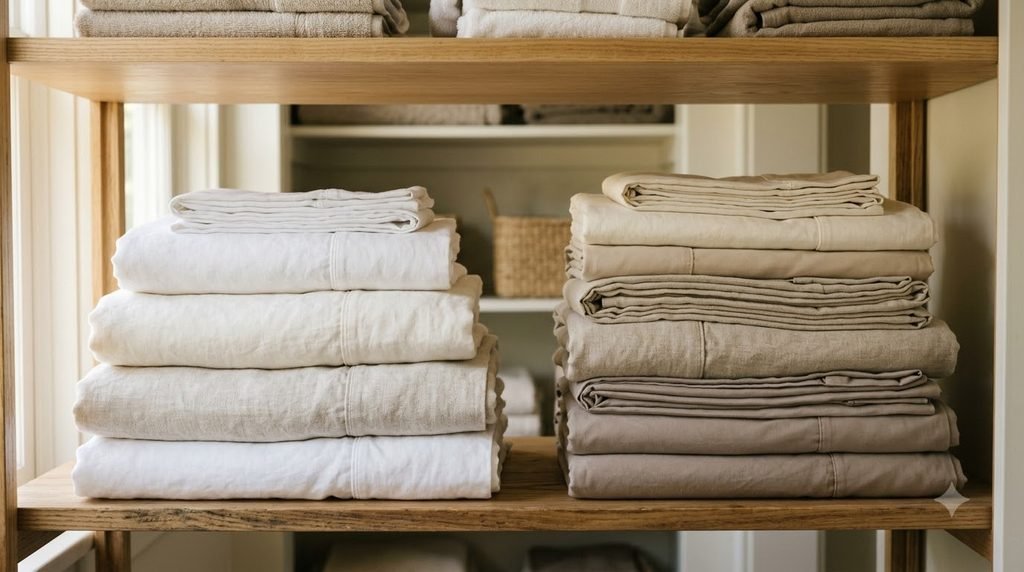
One of the easiest ways to stop sheet chaos is to store each complete set together.
A practical method is to fold the fitted sheet, flat sheet, and pillowcase together and place the bundle inside the second pillowcase.
That way, the entire set stays together instead of becoming separate pieces across the shelf.
This approach is widely recommended in current linen-closet organization coverage because it reduces the need to search for matching pieces.
You can also group sets by bed size:
Twin
Full
Queen
King
The exact categories depend on what your household uses.
7. Stop Tall Stacks From Falling Over
Free-standing stacks look neat until you remove one item from the middle.
Then the entire pile can shift.
Shelf dividers are useful when you need to separate:
- Towel stacks
- Different sheet sizes
- Guest linens
- Blankets
- Pillowcases
Use them selectively.
You don’t need a divider between every category if the shelf already holds stable stacks.
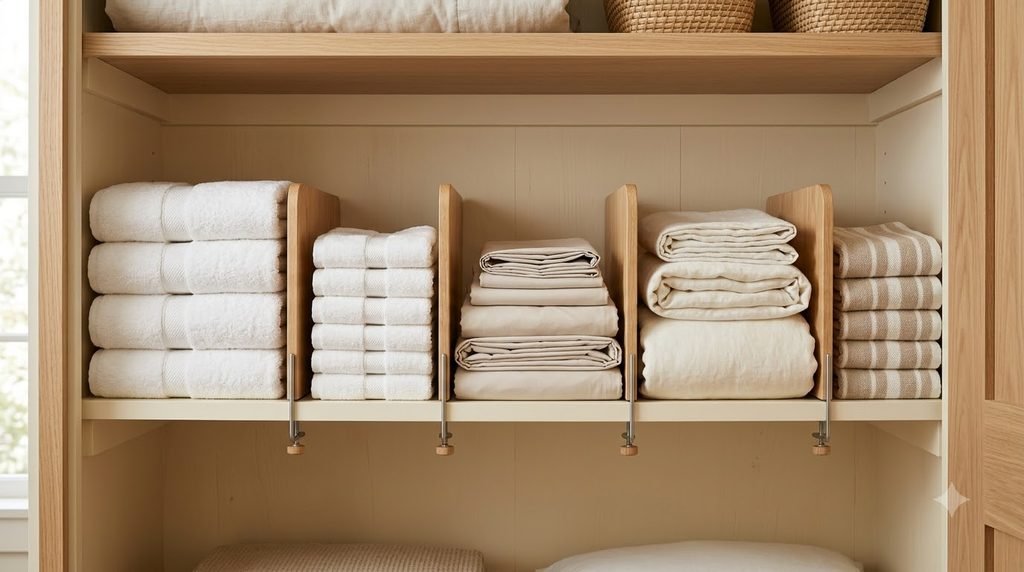
Best for: Tall linen stacks that tend to lean or topple
What to look for: Adjustable width, stable construction, appropriate shelf depth, and enough height to support the stack.
→ Check the current price on Amazon
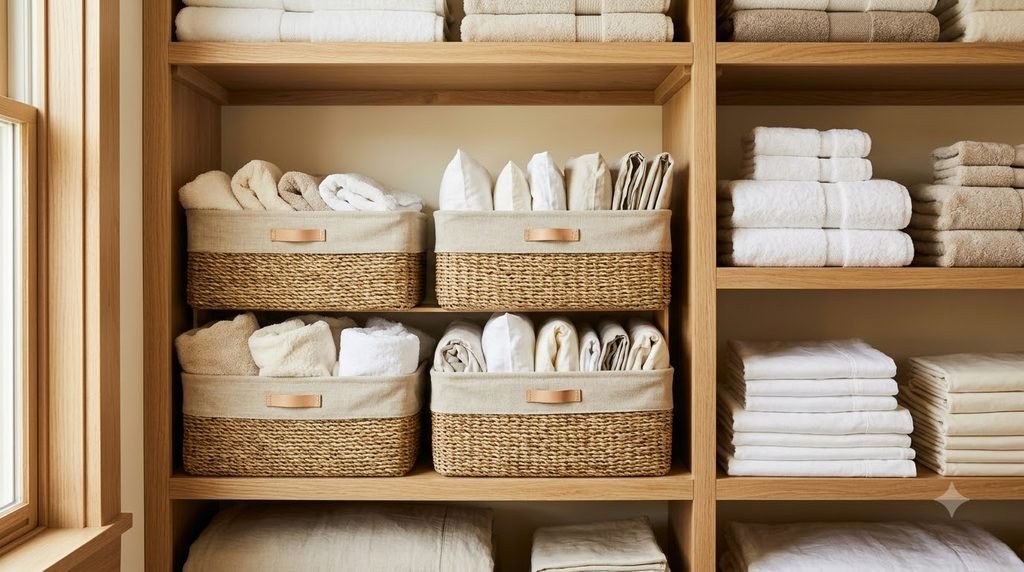
8. Use Bins for Loose or Awkward Linens
Some items don’t stack neatly.
Pillowcases, washcloths, small blankets, spare duvet covers, and guest linens can easily become shelf clutter.
A basket or fabric bin can contain these categories without forcing you to create perfect stacks.
Use bins where they solve a real problem.
For example:
Bin 1: Extra pillowcases
Bin 2: Guest linens
Bin 3: Small blankets
Bin 4: Seasonal bedding
The goal is to contain flexible items while keeping the category visible and easy to access.
9. Use Vertical Space Before Adding More Furniture
Small linen closets often have shelves with more vertical space than the items actually need.
That’s an opportunity.
Shelf risers and under-shelf baskets can create another layer for smaller items without changing the entire closet.
You might use this extra space for:
- Washcloths
- Pillowcases
- Hand towels
- Small guest linens
- Fabric storage bags
Before adding any organizer, measure the available height and depth.
Current organization coverage also emphasizes using vertical dividers and under-shelf organizers to make better use of shelf volume.
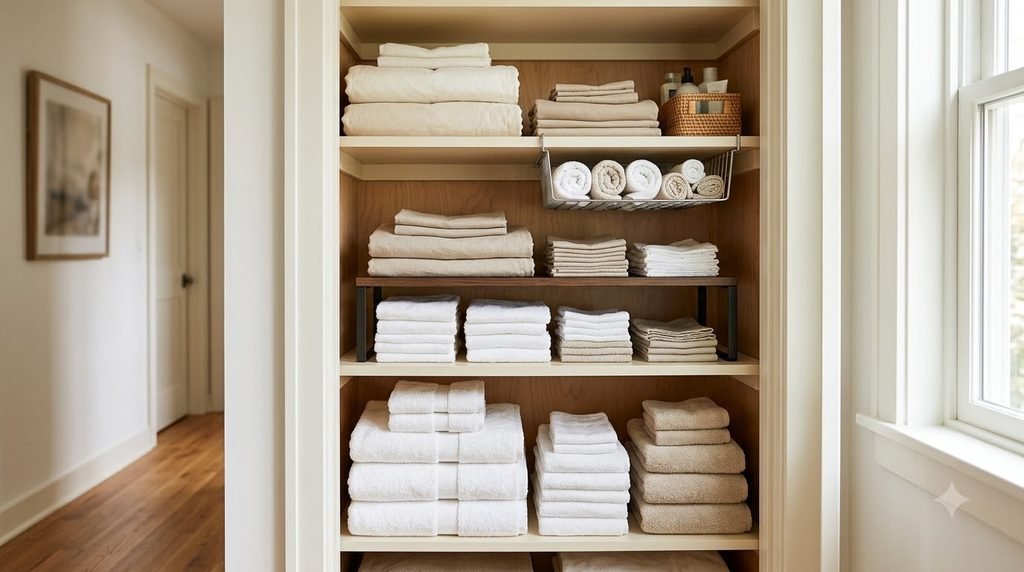
Best for: Small linens that don’t need a full shelf
What to look for: Shelf thickness compatibility, basket depth, weight capacity, and clearance below the shelf.
→ Check the current price on Amazon
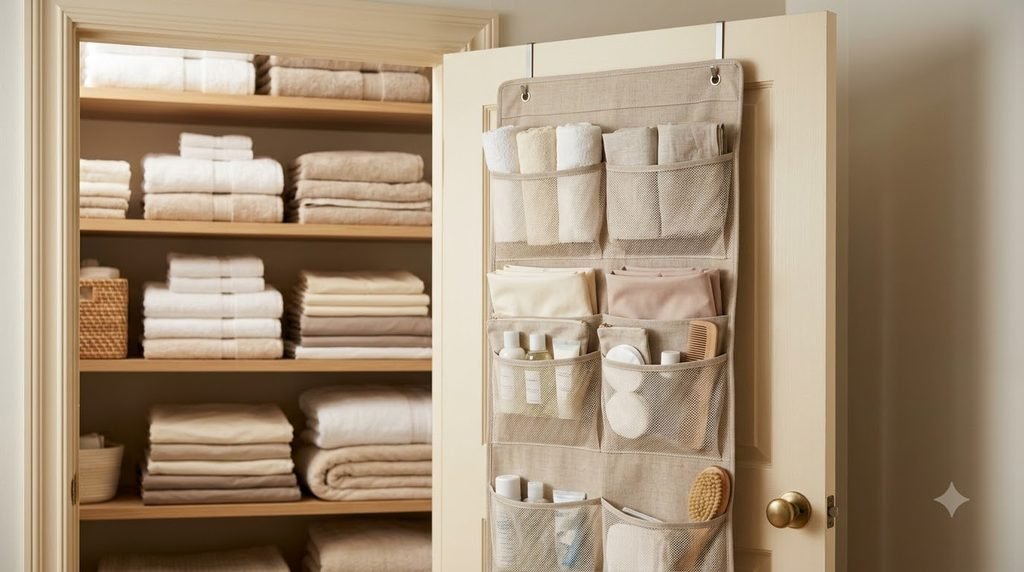
10. Make the Back of the Door Useful
The inside of the linen-closet door can provide extra storage without taking away shelf space.
Depending on the layout, a suitable over-the-door organizer can hold lightweight items such as:
- Washcloths
- Small toiletry backups
- Extra pillowcases
- Guest essentials
- Hair-care accessories
Before adding one, make sure it doesn’t interfere with the shelves closing or make the door difficult to use.
Door storage is especially useful in smaller closets where every shelf is already occupied.
Best for: Lightweight items in small closets
What to look for: Door clearance, pocket size, overall depth, and compatibility with your door.
→ Check the current price on Amazon
11. Store Bulky Blankets Strategically
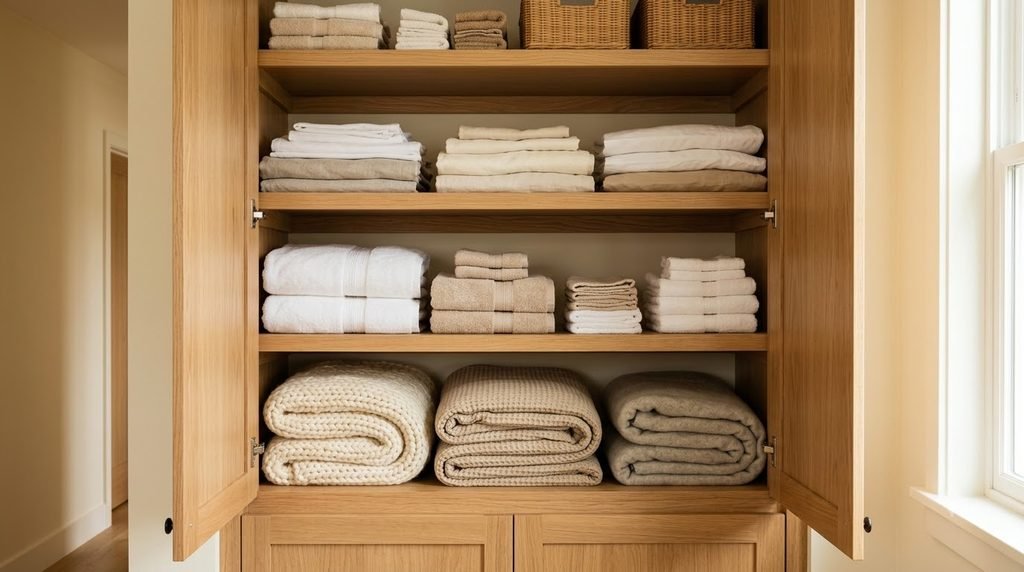
Blankets can consume an entire shelf if they’re folded into large loose piles.
Store bulky blankets on a lower shelf where their weight is less likely to disturb lighter stacks above.
You can also use a large breathable storage bin if the closet layout allows it.
For seasonal blankets, consider whether they need to stay in the linen closet year-round.
If something is used only for a short part of the year, moving it to appropriate seasonal storage may free valuable everyday space.
12. Separate Everyday Linens From Backstock
A linen closet becomes much easier to maintain when you can immediately tell the difference between:
What we use now
and
What we keep as backup
Everyday linens should have the easiest access.
Backup or guest items can be placed slightly farther away.
This prevents the frequently used shelf from becoming crowded with things you only reach for occasionally.
It also makes restocking easier because you can quickly see whether you’re running low.
13. Use Labels Only Where They Help
Labels are useful when they answer a real question.
For example:
- Queen Sheets
- Guest Towels
- Extra Pillowcases
- Blankets
- Washcloths
But you don’t need to label every stack.
A linen closet should be easy to understand visually.
Too many labels can make the shelves feel busier without actually improving access.
Use them for categories that are shared, stored in bins, or otherwise difficult to identify at a glance.
14. Leave Some Breathing Room
One of the easiest ways to make a linen closet difficult to maintain is to fill every available inch.
A shelf that is packed completely full may look efficient on organizing day, but it becomes frustrating when you need to remove something.
Leave enough room to:
- Pull out a towel
- Remove a sheet set
- Put clean laundry away
- Return an item without rebuilding the stack
A system needs a little flexibility.
The best organization isn’t the arrangement that fits the most.
It’s the arrangement that remains usable after real life happens.
15. Create a Simple Linen Closet Reset Routine
You don’t need to reorganize the entire closet every week.
A quick reset is enough.
After laundry day
Return clean linens to their assigned zones.
Once a month
Straighten stacks and check for misplaced items.
Every few months
Review worn linens, duplicates, and items your household no longer uses.
Seasonally
Move bulky seasonal bedding where it makes the most sense for your available storage.
A short maintenance habit keeps a good system from slowly turning into another clutter problem.
How to Organize a Linen Closet in the Right Order
When you’re starting from scratch, follow this sequence:
Step 1: Empty
Take everything out.
Step 2: Edit
Remove worn, unused, mismatched, or unnecessary linens.
Step 3: Group
Separate towels, sheets, blankets, pillowcases, and guest items.
Step 4: Choose Your System
Decide whether organizing by type or room makes the most sense.
Step 5: Assign Shelf Zones
Put everyday items where they’re easiest to reach.
Step 6: Contain
Use dividers and bins only where they solve a storage problem.
Step 7: Maintain
Return everything to the same zone after laundry day.
This order matters because buying storage before editing the collection often means buying containers for things you shouldn’t be storing in the first place.
How Many Sheet Sets and Towels Should You Keep?
There isn’t one universal answer.
Your ideal quantity depends on:
- Number of people in the household
- Number of beds
- Laundry frequency
- Guest needs
- Available storage
- Personal preference
A household doing laundry frequently may need fewer backup sets than one that does laundry less often.
The better question is:
How many sets let us comfortably manage laundry without filling the closet with extras we rarely use?
Once you’ve answered that, storage becomes much easier.
What to Do With Old Towels and Sheets
Don’t automatically keep worn linens just because they technically still work.
Depending on their condition and local options, old towels may have secondary household uses such as cleaning cloths.
Linens that are still usable may be suitable for donation through an appropriate local organization.
Items that are damaged beyond useful reuse should be handled according to local disposal options.
The goal is to make space intentionally rather than keeping everything because it feels wasteful to let go.
A 10-Minute Linen Closet Reset
When the closet starts looking untidy, try this quick reset.
Minutes 1–2: Remove anything that belongs somewhere else.
Minutes 3–4: Straighten towel and sheet stacks.
Minutes 5–6: Return loose pillowcases and small linens to their bins.
Minutes 7–8: Reunite any separated sheet sets.
Minutes 9–10: Put frequently used items back at easy-to-reach heights.
Then stop.
You don’t need a complete reorganization every time a stack moves.
Small corrections are easier to maintain than occasional giant resets.
Final Thoughts
A tidy linen closet isn’t really about perfect folding.
It’s about creating a system that makes the next decision easy.
Keep only the linens your household actually uses.
Group similar items together.
Keep sheet sets together.
Give everyday towels easy access.
Use shelf dividers when stacks fall over.
Add bins when loose categories need containment.
Use vertical and door space when the closet is small.
And leave enough room to put things away without rebuilding the entire shelf.
A good linen closet should make laundry and everyday routines easier—not give you another organizing project to maintain.
The goal isn’t a picture-perfect shelf. It’s a linen closet that stays functional after the laundry is put away.
Related Articles
For more practical organization ideas:
15 Smart Home Organization Solutions for Everyday Clutter
https://jessicamillers.com/smart-home-organization-solutions/
How to Organize a Small Home Office When You Don’t Have Much Space
https://jessicamillers.com/small-home-office-organization/
How to Organize Your Closet for Fall in 15 Easy Steps
https://jessicamillers.com/organize-closet-for-fall/
Affiliate Disclosure
As an Amazon Associate I earn from qualifying purchases.
Product availability, pricing, dimensions, colors, and specifications can change. Always check the current Amazon listing and measure your available space before purchasing.