A home can feel cluttered even when you don’t actually have that much stuff.
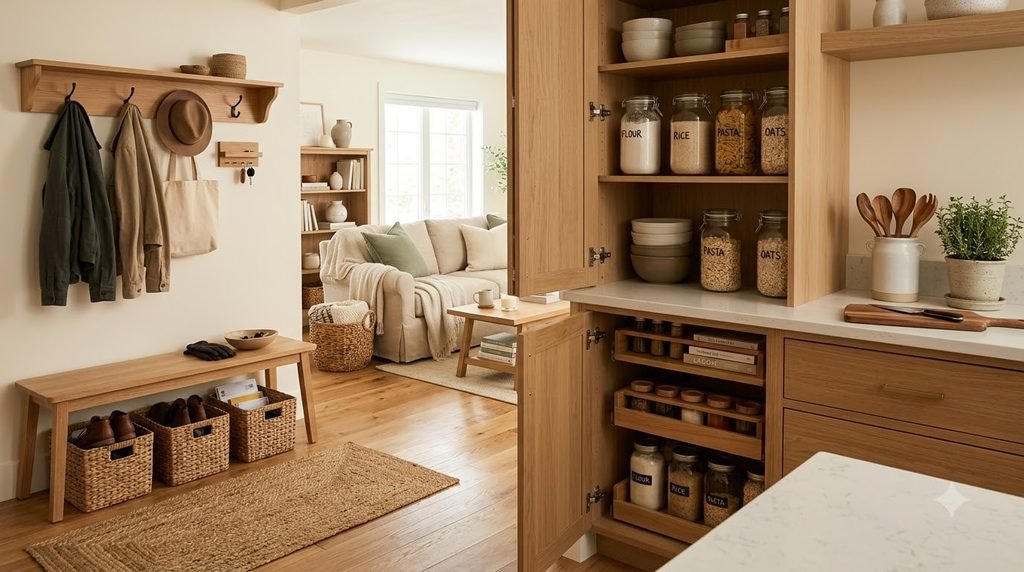
Often, the problem is where things are stored and how easy they are to put away.
A drawer becomes difficult to use because everything is mixed together. A deep cabinet hides the items at the back. Shoes collect by the door because there isn’t a convenient place for them. Seasonal clothing takes up valuable closet space because there isn’t a simple secondary storage system.
The good news is that you don’t always need a major decluttering project to improve these problems.
Sometimes, a small change in the way you use your existing space can make a noticeable difference.
The following home organization solutions focus on common clutter problems and practical ways to make everyday spaces easier to use.
Amazon Associate Disclosure: As an Amazon Associate I earn from qualifying purchases.
1. Use the Back of Doors for Extra Storage
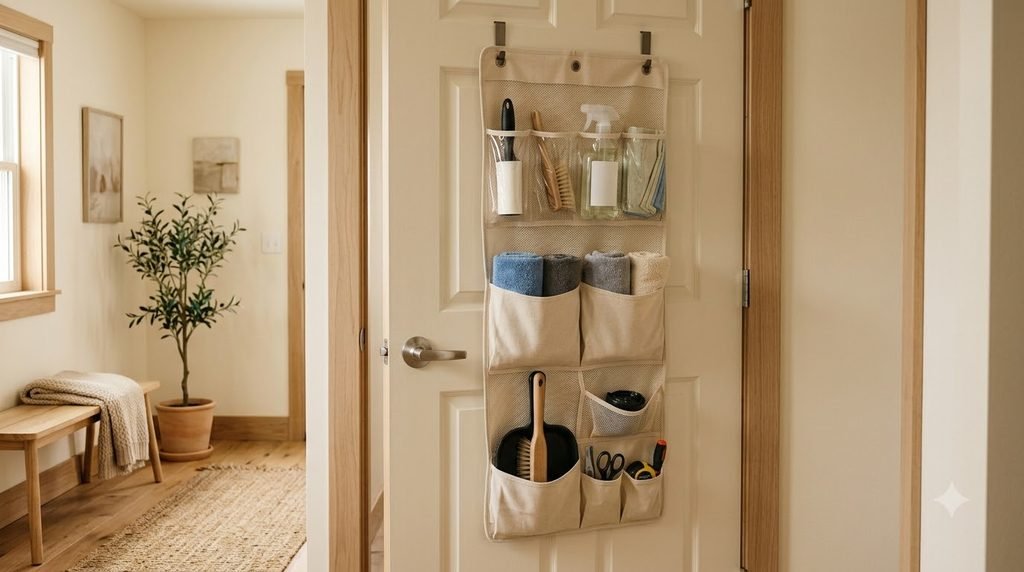
Doors are some of the most overlooked storage surfaces in a home.
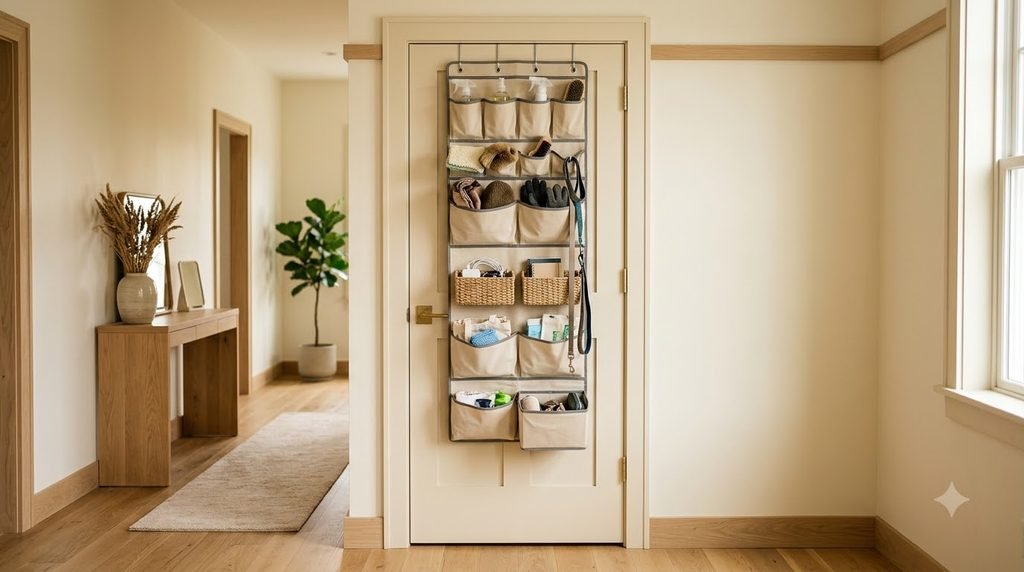
The back of a closet, pantry, bathroom, or bedroom door can provide useful vertical storage without taking up additional floor space.
An over-the-door organizer can be useful for lightweight items such as:
- Accessories
- Cleaning supplies
- Small bathroom products
- Pantry items
- Shoes
- Wrapping supplies
Before buying one, measure the door and check how much clearance you have around the frame.
What to look for: adjustable pockets, sturdy construction, appropriate door clearance, and a design that suits the items you’re storing.
Recommended for: Closets, bathrooms, pantries, and entryways
→ Check the current price on Amazon
2. Make Better Use of Under-Bed Space
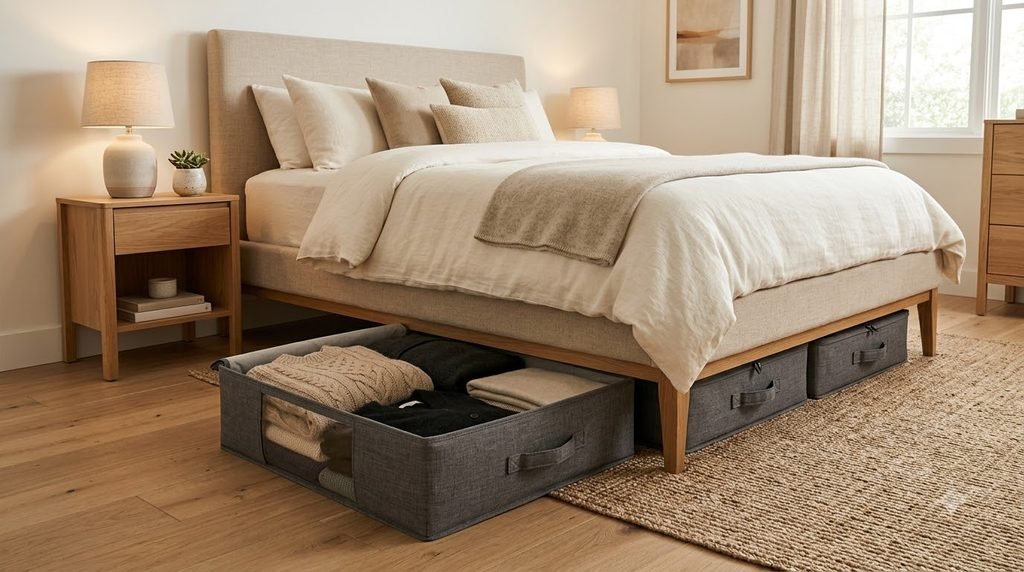
The area underneath your bed is valuable storage space that is often completely unused.
Instead of leaving seasonal clothing, spare bedding, or less frequently used items in random closets, consider using low-profile storage containers or bags underneath the bed.
This works particularly well for:
- Off-season clothing
- Extra blankets
- Guest bedding
- Shoes
- Holiday textiles
- Luggage accessories
Choose containers that are easy to pull out and clearly labeled so you don’t have to empty them to remember what’s inside.
Under-bed storage and other space-saving solutions continue to feature prominently in current small-home organization coverage.
Recommended for: Seasonal clothing, extra bedding, shoes, and items you don’t use every day
What to look for: Low-profile design, durable handles, zipper protection, and dimensions that fit underneath your bed.
→ Check the current price on Amazon
3. Divide Messy Drawers
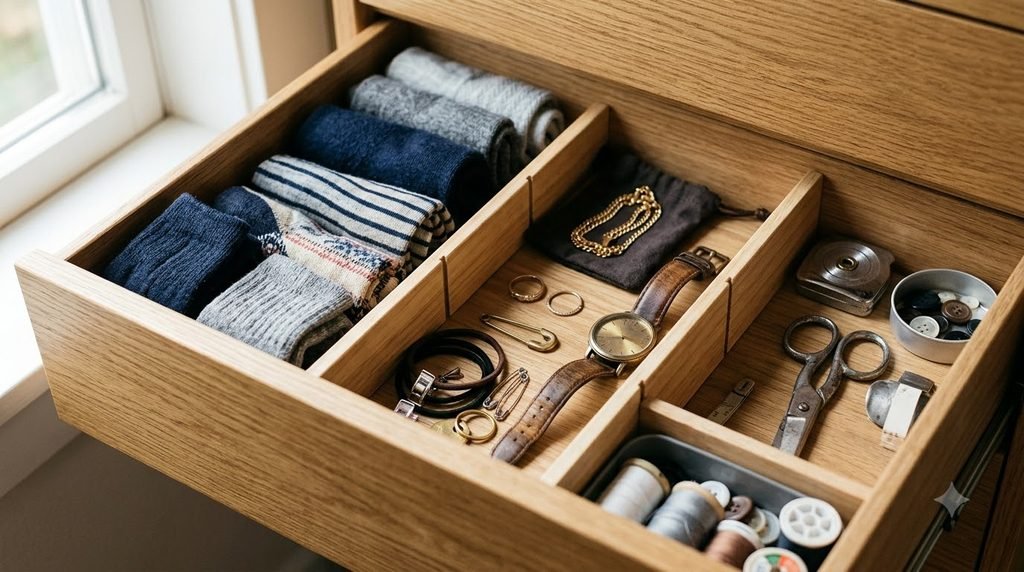
If opening a drawer results in everything shifting around, the problem may not be the amount of stuff you own.
It may simply need separation.
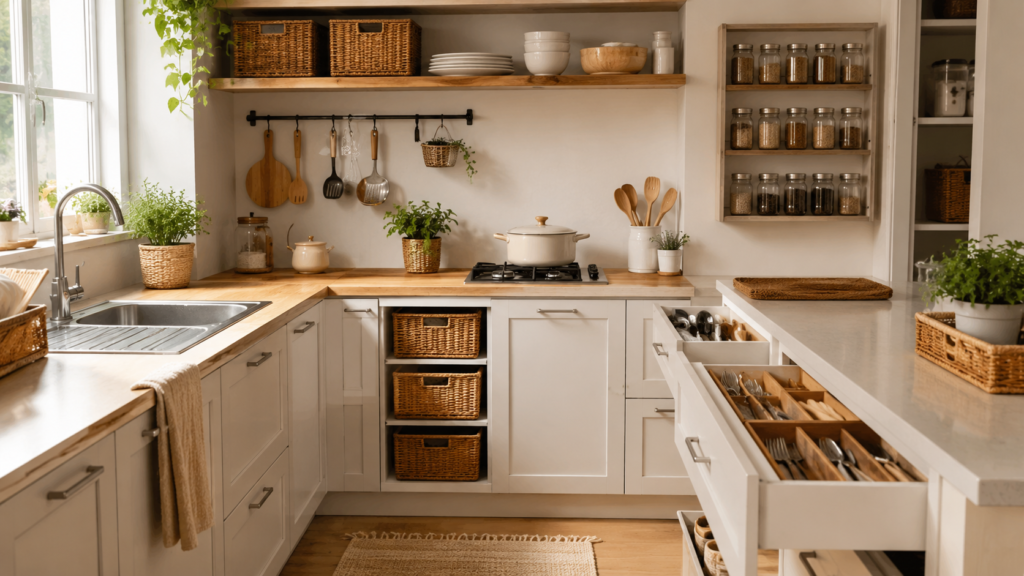
Drawer dividers can create individual sections for categories such as:
- Socks
- Underwear
- Accessories
- Kitchen utensils
- Office supplies
- Beauty tools
Adjustable dividers are particularly useful because you can change the configuration as your needs change.
Before buying: measure the inside dimensions of the drawer rather than relying only on the advertised product size.
Recommended for: Kitchen drawers, clothing drawers, bathroom supplies, and small accessories
What to look for: Adjustable sizing, non-slip features, and dimensions that match the inside of your drawer.
→ Check the current price on Amazon
4. Add Shelf Risers to Tall Cabinets
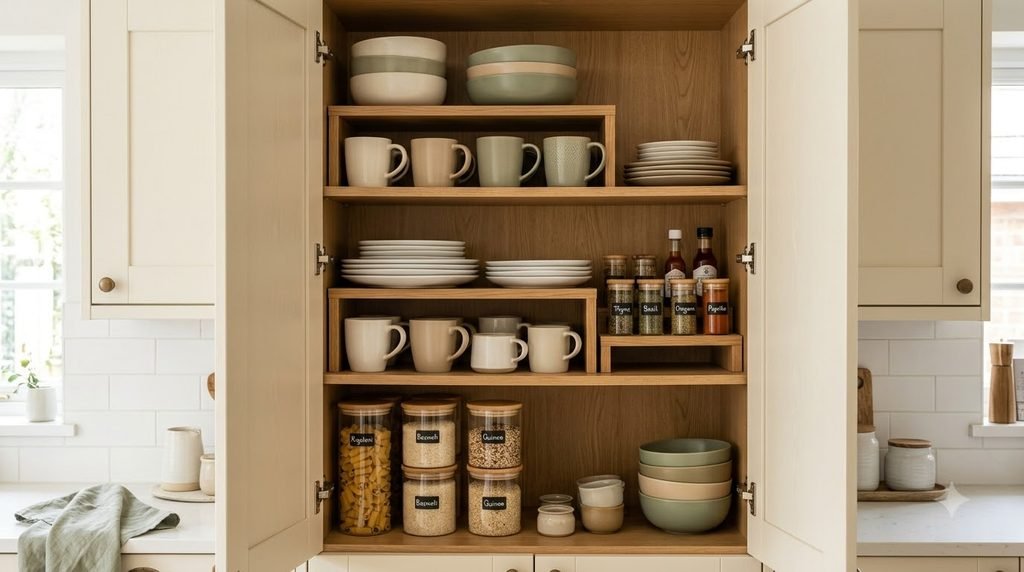
Tall shelves often contain a surprising amount of wasted vertical space.
You may have one layer of mugs, bowls, cans, or folded linens sitting at the bottom while the space above remains unused.
A shelf riser can create another level without requiring permanent installation.
They’re especially useful in:
- Kitchen cabinets
- Bathroom cabinets
- Linen closets
- Pantry shelves
- Bedroom storage
The key is to avoid making the shelf too crowded. The goal is to create accessible layers, not simply stack more things.
Recommended for: Kitchen cabinets, pantry shelves, bathroom cabinets, and linen storage
What to look for: Stable construction, suitable width, and enough clearance between shelves.
→ Check the current price on Amazon
5. Make Deep Cabinets Easier to Reach
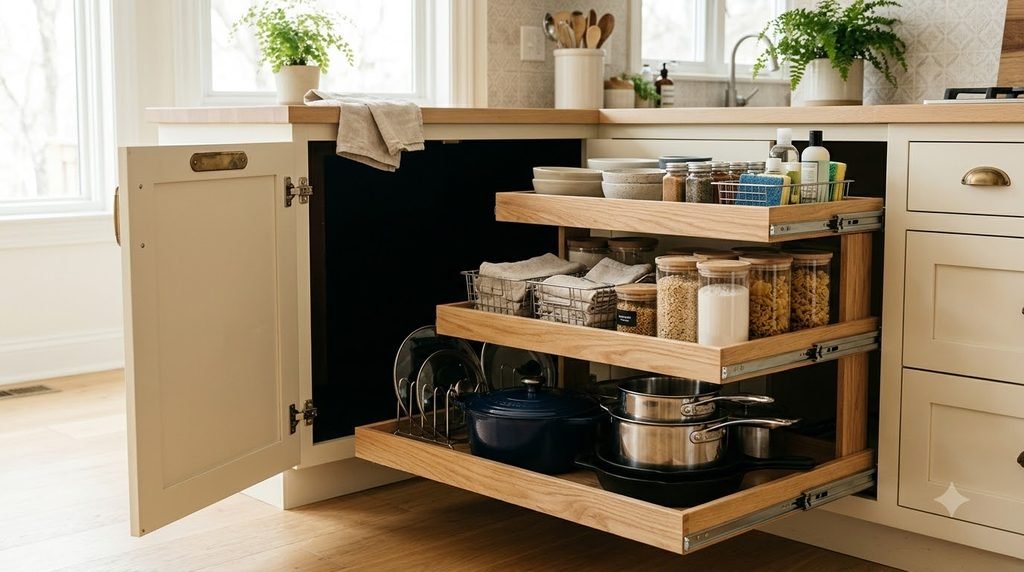
Deep cabinets can create a frustrating organization problem.
Items at the front are easy to reach while things at the back disappear from view.
A pull-out cabinet organizer can help by bringing stored items forward instead of requiring you to reach deep inside the cabinet.
Current September home-organization coverage is also highlighting pull-out cabinet systems as a practical way to improve access to deep storage.
Before purchasing one, check:
- Cabinet width
- Cabinet depth
- Interior height
- Weight capacity
- Installation requirements
- Door clearance
Recommended for: Deep lower kitchen cabinets
What to look for: Correct cabinet dimensions, weight capacity, smooth movement, and installation requirements.
→ Check the current price on Amazon
6. Use a Lazy Susan for Awkward Corners
Some storage areas are difficult simply because you can’t see everything at once.
This is where a rotating organizer can be useful.
A lazy Susan can work well for:
- Spices
- Sauces
- Skincare
- Hair products
- Cleaning supplies
- Pantry items
Instead of reaching behind several containers, you can rotate the organizer and bring the item toward you.
Choose the size based on the shelf rather than buying the largest option available.
Recommended for: Pantry corners, kitchen cabinets, bathroom storage, and frequently used small products
What to look for: Smooth rotation, appropriate diameter, stable base, and enough shelf clearance.
→ Check the current price on Amazon
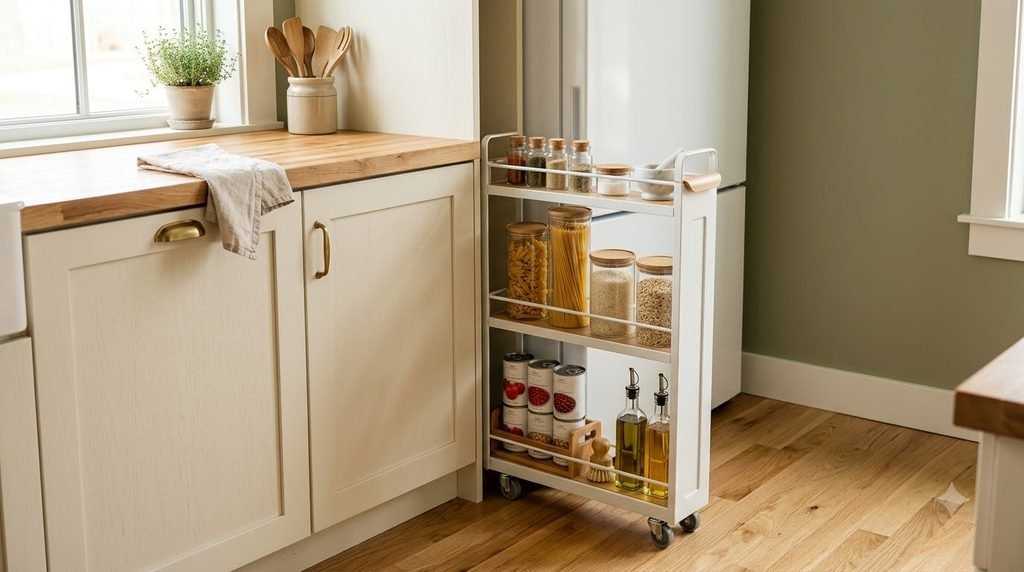
7. Turn Narrow Gaps Into Useful Storage
That narrow space between a refrigerator and cabinet or between a washer and wall may not seem useful, but it can sometimes accommodate a slim rolling cart.
These carts are useful for small quantities of:
- Cleaning supplies
- Pantry items
- Laundry products
- Bathroom backups
- Craft supplies
The important thing is to measure the gap first.
Also check whether doors, drawers, appliances, or walking paths need additional clearance.
A narrow cart is useful only if you can still access the surrounding area comfortably.
Recommended for: Narrow gaps between cabinets, appliances, and walls
What to look for: Measure the gap first, then check the cart width, height, wheel quality, and number of shelves.
→ Check the current price on Amazon
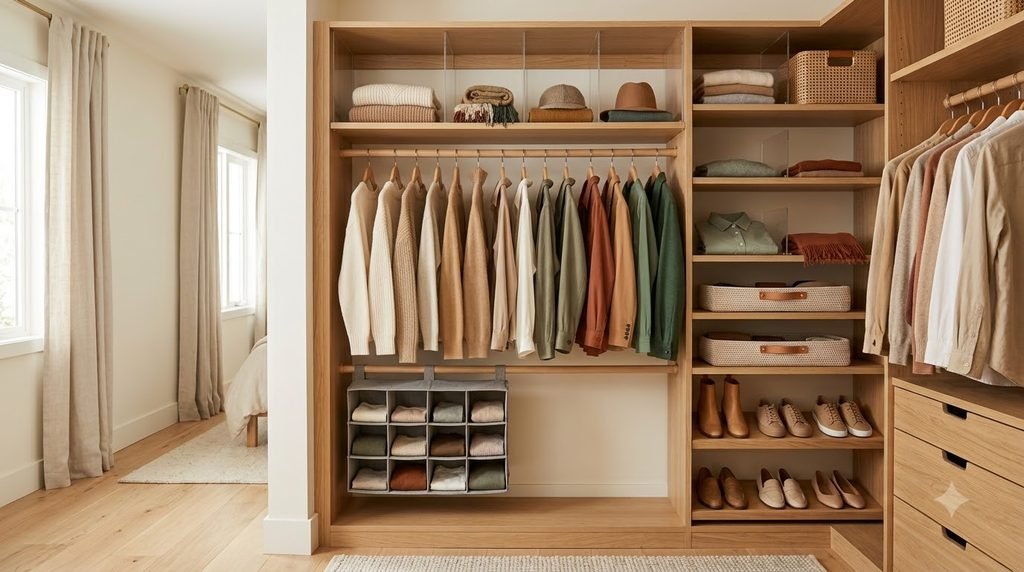
8. Create More Closet Storage Without Adding Furniture
Closets don’t always need another large piece of furniture.
Sometimes the better solution is using the existing vertical space more efficiently.
Consider:
- Hanging organizers
- Shelf dividers
- Slim hangers
- Small baskets
- Stackable bins
- Over-door storage
For example, shelf dividers can prevent folded sweaters, towels, or linens from becoming one large pile.
This approach can also make it easier to see what you already own.
Recommended for: Small closets, apartments, bedrooms, and limited shelf space
What to look for: Strong hanging support, appropriate width, sturdy compartments, and enough clearance for clothing.
→ Check the current price on Amazon
If your closet needs a deeper seasonal reset, you can also read our guide to How to Organize Your Closet for Fall in 15 Easy Steps.
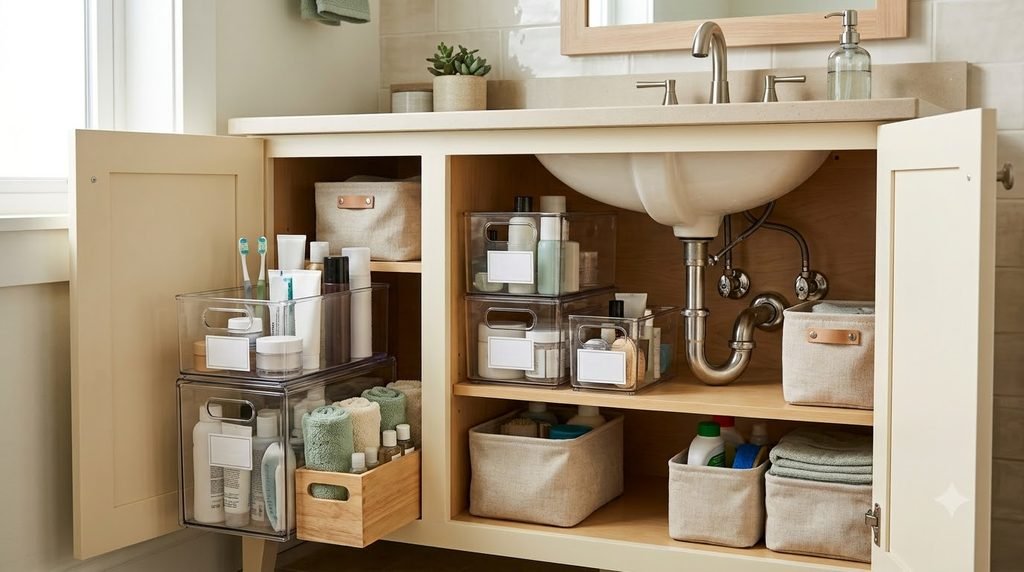
9. Organize Under the Sink by Category
The space underneath a bathroom or kitchen sink can become cluttered quickly because pipes divide the cabinet and make the available space awkward.
Instead of simply filling the cabinet with containers, divide the area by purpose.
For example:
Front: Everyday supplies
Side: Cleaning cloths and brushes
Back: Backup products
Small stackable bins or a suitable under-sink organizer can help separate categories.
But don’t buy an organizer before measuring around the plumbing.
We already have a dedicated guide covering this topic in greater detail:
10 Under-Sink Organizers for Small Bathrooms
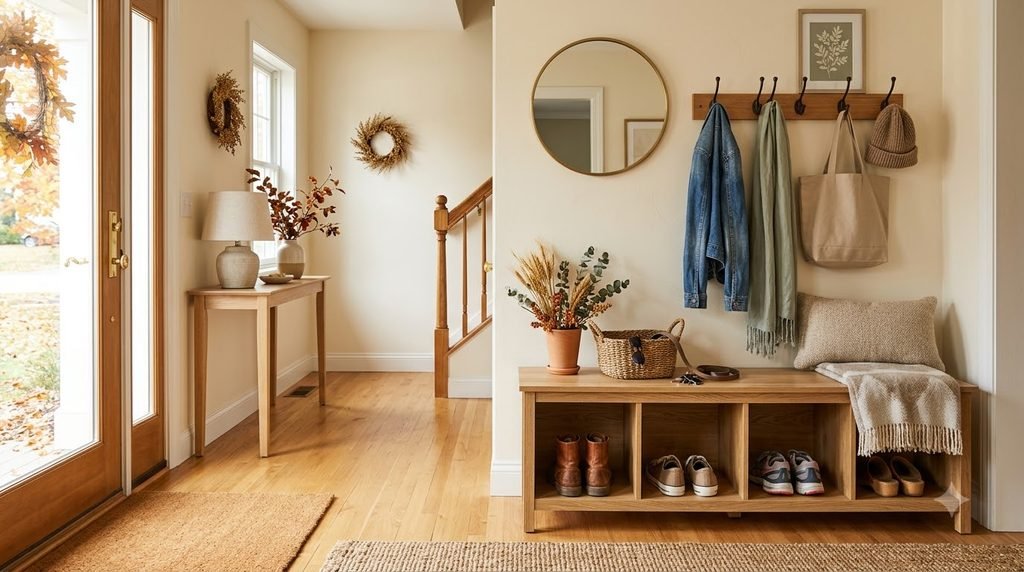
10. Give Shoes a Defined Home
Shoes are one of the easiest things to let accumulate near an entryway.
The solution doesn’t necessarily require a large shoe cabinet.
Depending on your space, you could use:
- A slim shoe rack
- A storage bench
- A vertical shoe organizer
- A small cabinet
- Individual baskets
Keep everyday shoes closest to the entrance and move occasional or seasonal footwear into secondary storage.
The current market is also emphasizing entryway storage that combines function with decorative appeal, including shoe cabinets, benches, wall-mounted storage, and hooks.
For more ideas, see our 15 Entryway Organization Ideas to Keep Your Home Clutter-Free.
11. Use Baskets to Control Open-Shelf Clutter
Open shelving can look beautiful until every small item becomes visible.
Instead of trying to make every individual object look perfectly arranged, group similar small items into baskets.
For example:
- Electronics
- Toys
- Office supplies
- Extra toiletries
- Pet supplies
- Everyday accessories
This creates visual consistency while keeping categories together.
Choose baskets that fit the shelf dimensions and leave enough room to remove them easily.
And remember: a basket is storage, not a reason to keep things you don’t use.
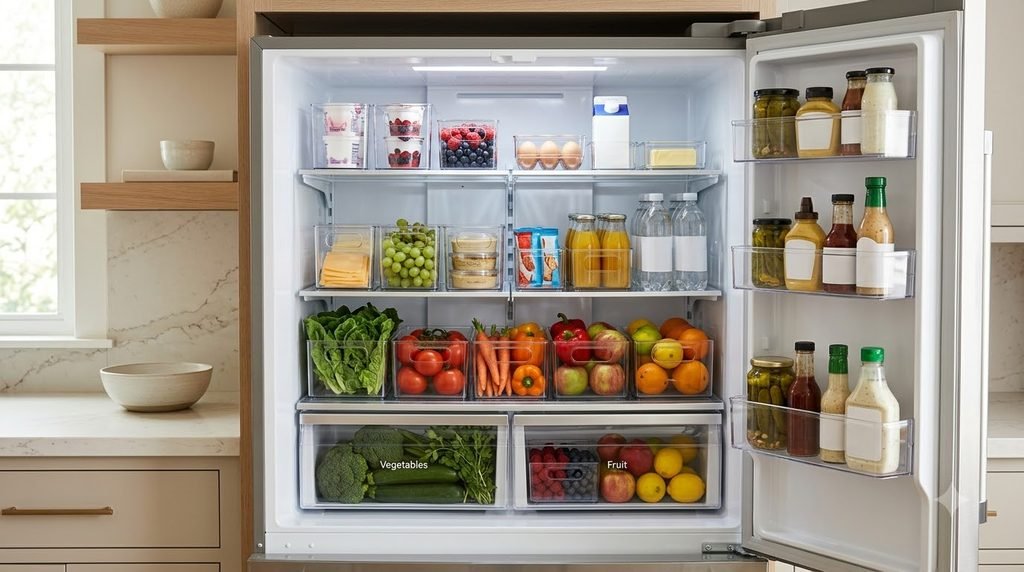
12. Give Your Refrigerator a Simple Organization System
Refrigerators can become difficult to manage when food is pushed to the back and forgotten.
Clear refrigerator bins can help create simple zones such as:
- Breakfast items
- Snacks
- Produce
- Condiments
- Lunch ingredients
The goal isn’t to make your refrigerator look like a showroom.
The goal is to make food visible and accessible.
Current Pinterest-oriented organization coverage has also been highlighting the aesthetic side of refrigerator organization, showing that functional systems can still look visually appealing.
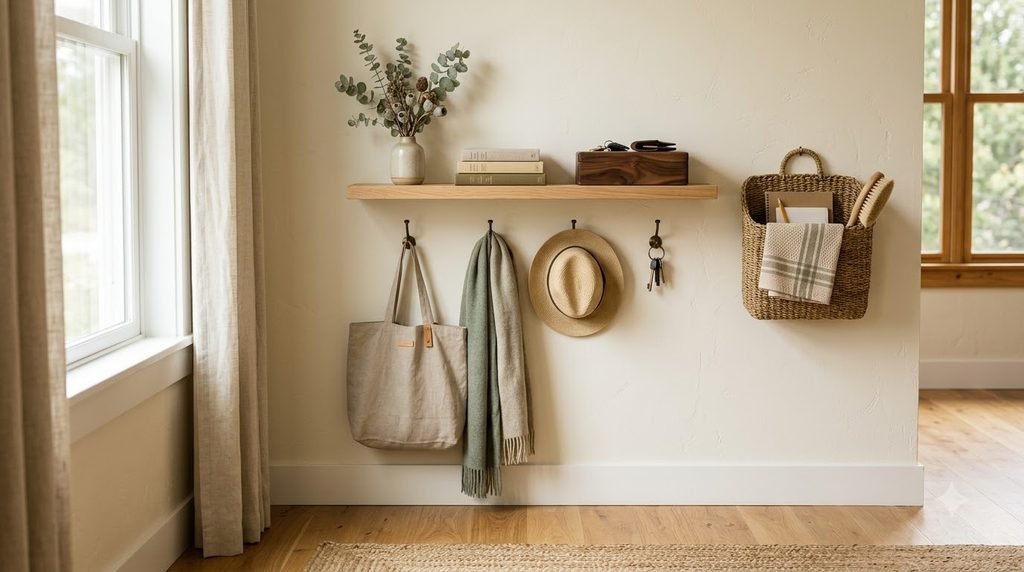
13. Use Wall Space Instead of More Floor Space
When floor space is limited, look up.
Walls can often provide additional storage without making a room feel smaller.
Depending on the room, consider:
- Wall hooks
- Pegboards
- Floating shelves
- Wall-mounted baskets
- Hanging organizers
- Small rails
This can be especially useful in:
- Entryways
- Laundry rooms
- Kitchens
- Home offices
- Bathrooms
The key is to avoid turning every empty wall into storage.
Choose one or two high-value areas where vertical storage genuinely improves the room.
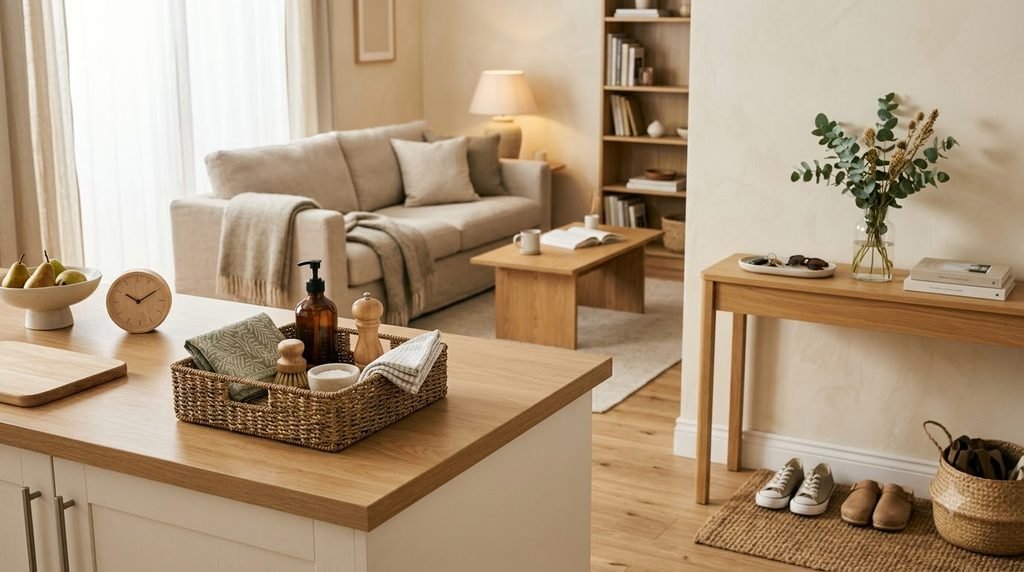
14. Create a Dedicated Home for Small Everyday Items
Keys, chargers, sunglasses, mail, headphones, and other small objects can create disproportionate amounts of visual clutter.
Instead of repeatedly moving these items from one surface to another, give them a defined landing zone.
A small tray near the entrance can hold keys and sunglasses.
A drawer organizer can separate chargers.
A small basket can collect incoming mail.
The system doesn’t need to be complicated.
In fact, the simpler it is, the more likely everyone in the household is to use it.
15. Choose Storage That Solves More Than One Problem
Before buying another storage container, ask:
What problem is this actually solving?
A product becomes more useful when it improves access, visibility, or flexibility rather than simply giving you another place to put things.
For example:
- A storage ottoman can provide seating and hidden storage.
- A storage bench can provide seating and shoe storage.
- A rolling cart can move between rooms.
- Stackable containers can adapt as your storage needs change.
- A wall-mounted organizer can free up floor space.
Current small-home recommendations increasingly emphasize multifunctional pieces and solutions that make better use of limited space.
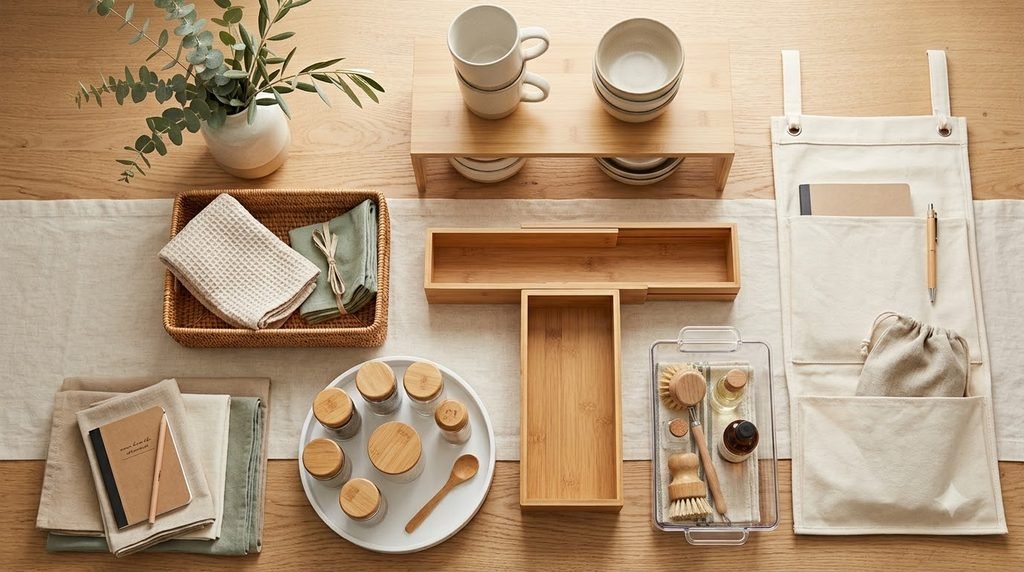
How to Choose the Right Organization Product
It’s tempting to buy an organizer as soon as you see a clutter problem.
But the better process is:
1. Identify the problem
Is the problem lack of space, poor visibility, difficult access, or too many items?
2. Measure the space
Measure width, depth, height, and clearance.
3. Sort before storing
Don’t automatically create storage for things you don’t need.
4. Choose the simplest solution
A small divider may solve the problem better than a large storage system.
5. Think about daily use
Ask whether everyone who uses the space can easily access and return the items.
6. Leave some breathing room
A completely full organizer isn’t necessarily an organized space.
Don’t Buy Storage Before You Declutter
One of the easiest mistakes to make is buying containers before deciding what actually needs to be stored.
If you put unnecessary items into beautiful baskets, you’ve only made the clutter harder to see.
Before purchasing an organization product, ask:
- Do I use this?
- Do I need this?
- Do I already own something similar?
- Is this the best place for it?
- Would removing it solve the problem?
Once you’ve reduced what doesn’t belong, you’ll have a much clearer idea of what storage you actually need.
If you’re doing a larger home reset, our 17 Things to Declutter in September guide can help you decide where to start.
A Simple 15-Minute Organization Reset
You don’t need an entire weekend to improve a cluttered space.
Try this:
Minutes 1–3: Pick one problem area
Choose one drawer, cabinet, shelf, or surface.
Minutes 4–7: Remove what doesn’t belong
Take out trash, duplicates, misplaced items, and things you no longer need.
Minutes 8–11: Group what remains
Put similar items together.
Minutes 12–14: Create a simple storage system
Use existing containers first. Only add a new organizer if there’s a genuine need.
Minute 15: Reset the space
Make sure frequently used items are easiest to reach.
Then stop.
You don’t have to organize the entire house in one session.
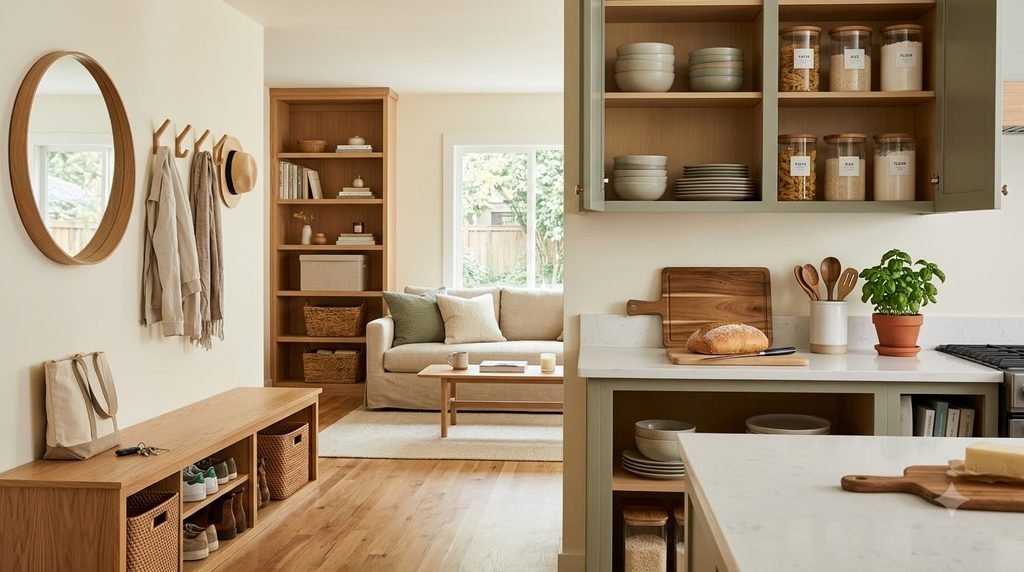
The Best Organization Product Is the One That Fits Your Routine
There is no universal “best” organizer for every home.
A product that works beautifully in a large kitchen may be completely wrong for a small apartment.
Before buying anything, think about:
Your available space.
Measure first.
Your habits.
Choose systems that match how you actually use the room.
Your budget.
A simple basket or divider may solve the problem just as well as an expensive system.
Your maintenance routine.
If something takes five steps to put away, it may not stay organized for long.
The best organization systems are usually the ones that make everyday tasks easier, faster, and more predictable.
Final Thoughts
Home organization doesn’t have to mean buying dozens of containers or completely redesigning every room.
Start with the actual problem.
If a cabinet is difficult to reach, improve access.
If a drawer is chaotic, create categories.
If a closet is overflowing, reduce what you don’t use and make better use of vertical space.
If a countertop keeps collecting small items, create a simple landing zone.
And before buying anything, make sure the product solves a real problem in your home.
A few thoughtful changes can make everyday spaces easier to use without making your home feel over-organized.
The goal isn’t a perfect home. It’s a home that works better for the people who live in it.
Amazon Product Disclosure
As an Amazon Associate I earn from qualifying purchases.
Product availability, pricing, dimensions, colors, and specifications can change. Always check the current Amazon product page and measure your space before purchasing.