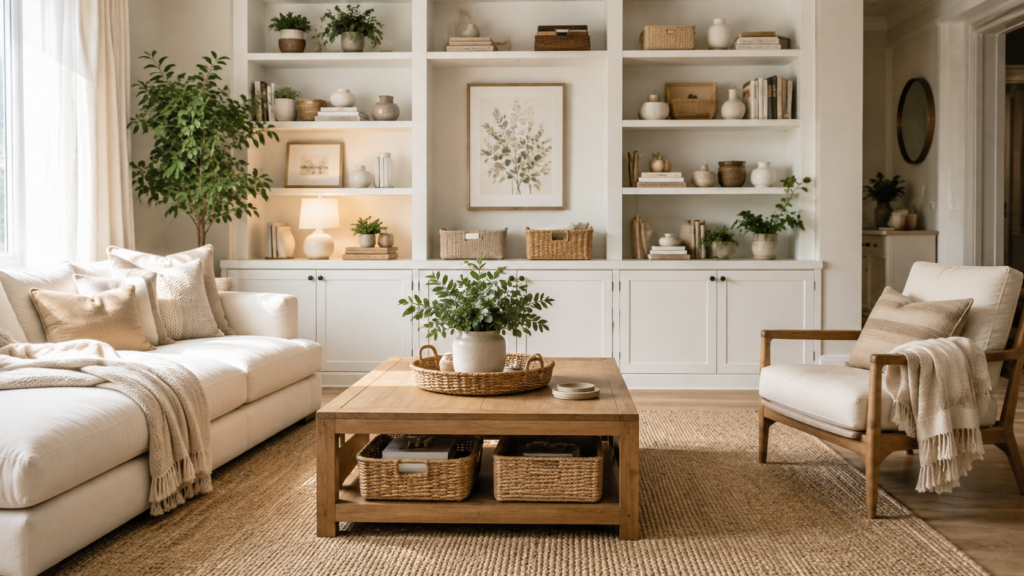
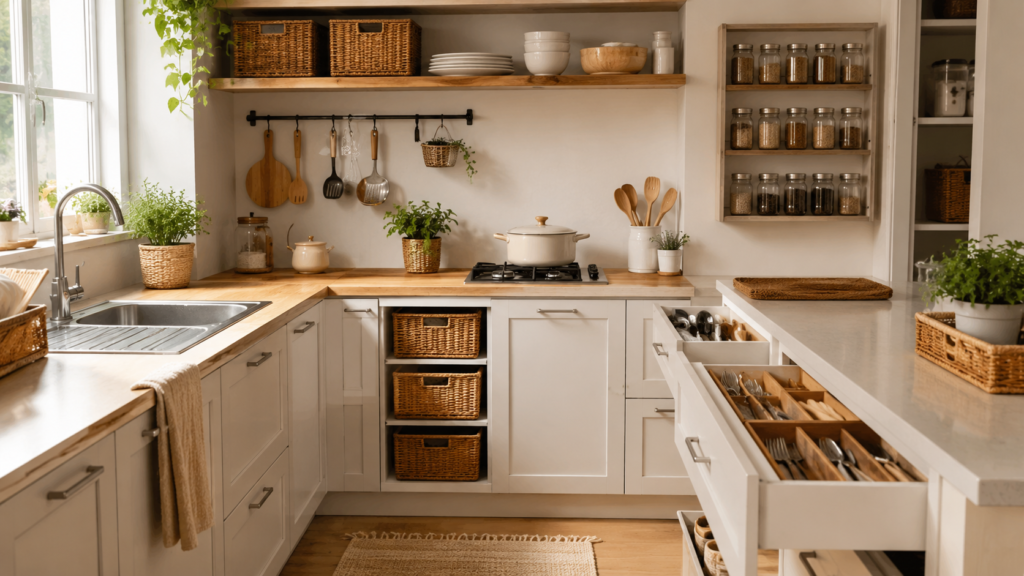
The holidays have a funny way of sneaking up on us.
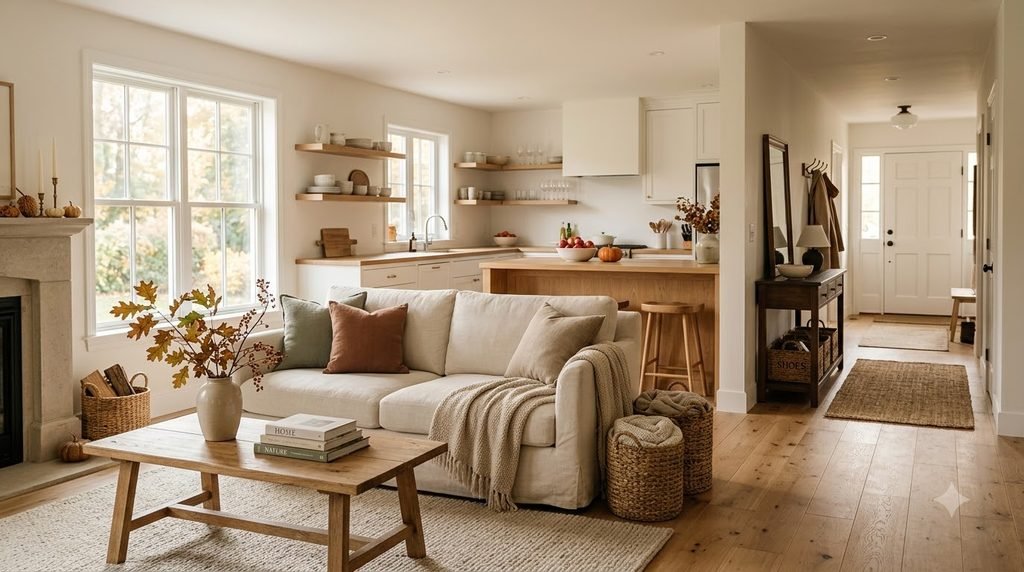
One minute, it’s October and you’re enjoying cooler mornings and the first signs of fall. Then suddenly the calendar fills up, packages start arriving, guests are making plans, and your kitchen seems to have half the counter space it had a month ago.
The good news? You do not need to organize your entire house before the holidays.
A much more realistic approach is to focus on the spaces that are about to work harder: your entryway, kitchen, pantry, guest areas, closets, and seasonal storage.
If your home still feels like it’s transitioning from summer, start with a broader fall home reset before tackling the holiday-specific areas below.
Then work through these 15 things to organize before the holidays get busy.
1. Start With Your Entryway Drop Zone
Your entryway is one of the first places where holiday clutter starts to show.
As temperatures drop, suddenly there are more coats, boots, scarves, bags, packages, umbrellas, and everyday items competing for the same small amount of space.
Start by removing anything that doesn’t need to live near the door.
Put away out-of-season shoes and accessories. Return random household items to their proper rooms. Then create designated spots for the things your family actually uses every day.
A simple entryway setup might include:
- Hooks for coats and bags
- A basket for hats and gloves
- A tray for keys
- A designated shoe area
- A small basket for outgoing items
You don’t need a large mudroom to make this work.
In fact, smaller entryways usually benefit the most from having fewer things and clearer boundaries.
If clutter tends to collect on every available surface, these small-space organization ideas can also help you think more intentionally about what deserves visible space.
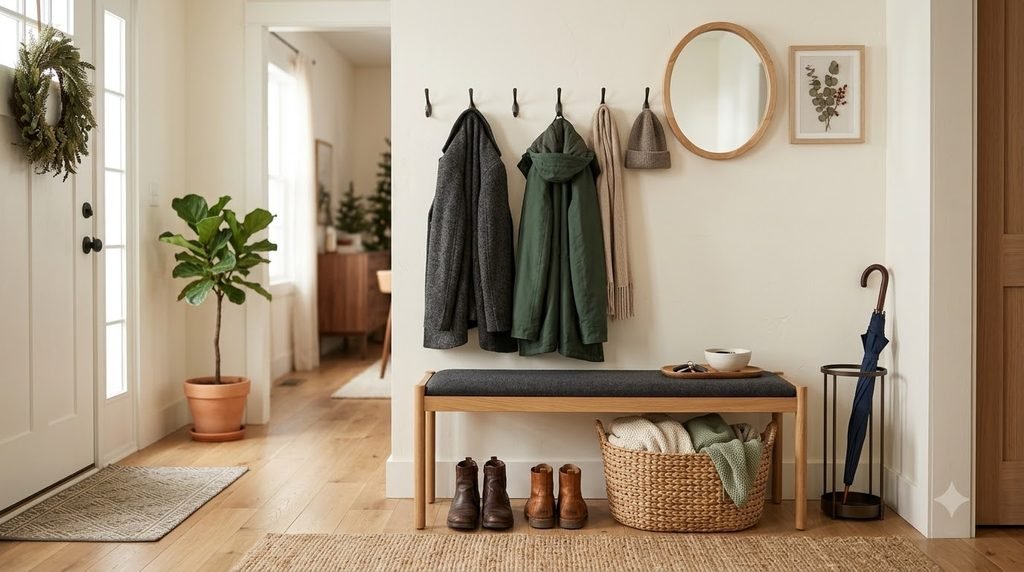
Quick tip: Leave one or two hooks empty. You’ll appreciate the extra space when guests arrive.
2. Make Room in the Coat Closet
Don’t wait until guests are standing at your front door to discover there is nowhere to hang another coat.
Pull everything out of the coat closet and sort it into three groups:
Keep
Coats, jackets, shoes, and accessories your household currently uses.
Relocate
Items that belong in bedrooms, another closet, the garage, or seasonal storage.
Let Go
Things that are damaged, no longer fit, or haven’t been used in a long time.
Pay particular attention to children’s coats and winter accessories. Kids can outgrow clothing surprisingly quickly.
Once you’ve edited the closet, avoid immediately filling every empty inch.
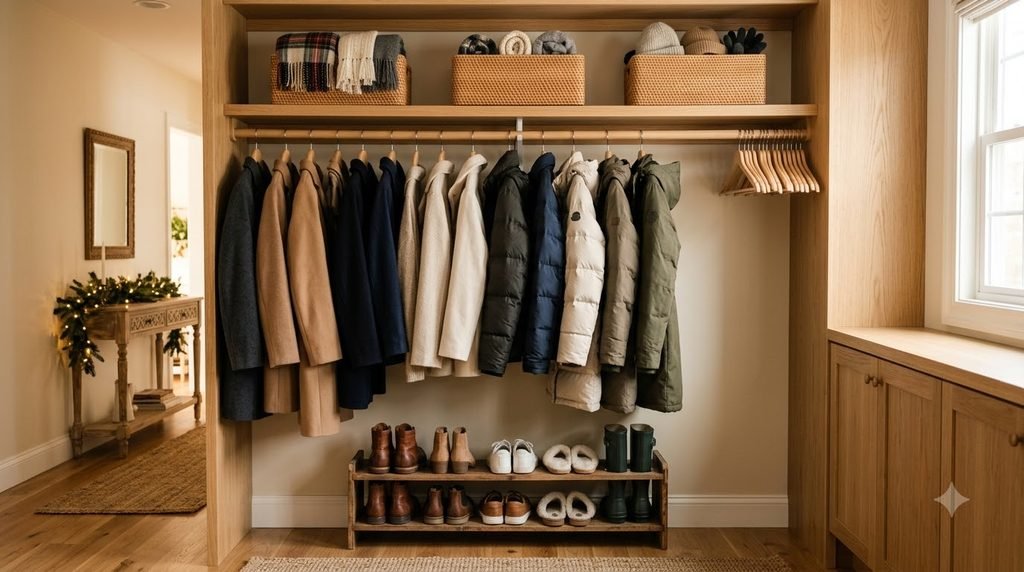
Empty space is useful space.
If you’re already switching wardrobes for cooler weather, my guide to organizing your closet for fall walks through the seasonal transition in more detail.
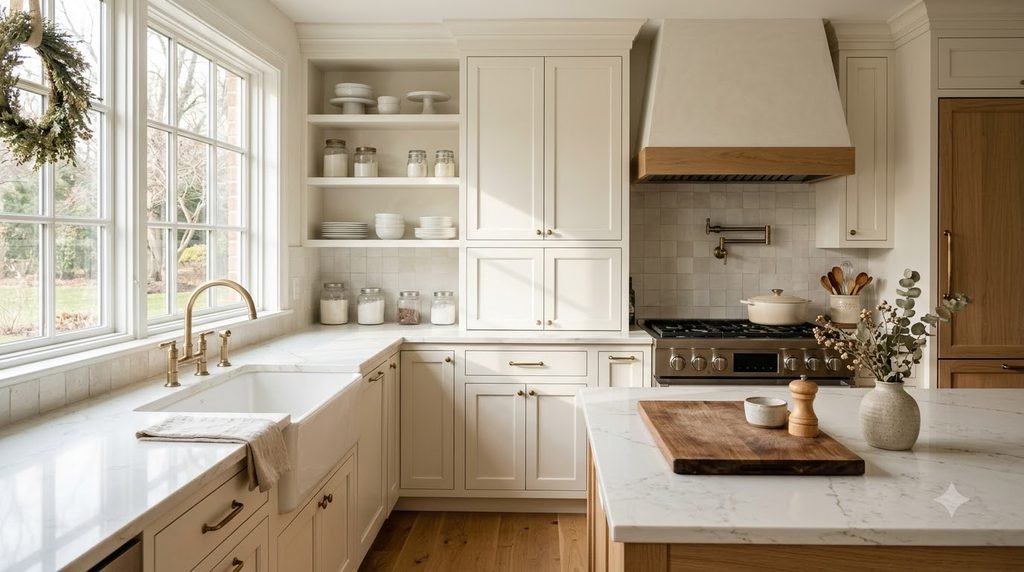
3. Clear Your Kitchen Counters
Your kitchen is about to become one of the hardest-working rooms in the house.
Before holiday cooking begins, look at what is currently living on your counters.
Do you use every appliance sitting there?
Are decorative pieces taking up valuable prep space?
Has mail slowly migrated onto the kitchen island?
Are there bottles, containers, or miscellaneous items that belong somewhere else?
Remove anything you rarely use.
Then group frequently used items together rather than spreading them across every available surface.
This is especially important in a compact kitchen, where even a small amount of clutter can make cooking feel frustrating.
If counter space is already a daily struggle, these coffee station ideas for small kitchens show how grouping related items into one intentional zone can free up other work surfaces.
Think of your counters as working space first and display space second.
You will appreciate every extra inch when holiday cooking starts.
4. Edit the Pantry Before Buying Holiday Groceries
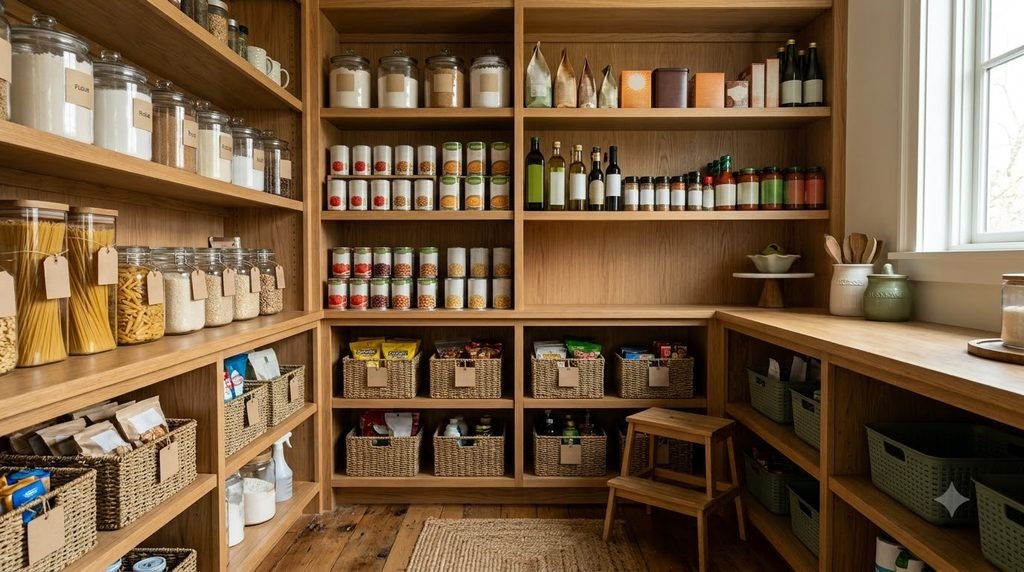
Holiday recipes often require ingredients you don’t regularly keep on hand.
Before adding more food, find out what is already hiding in your pantry.
Take everything shelf by shelf rather than emptying the entire pantry at once.
Check expiration dates.
Combine duplicates when appropriate.
Move older products forward.
Then group foods according to how your household actually uses them.
Possible categories include:
- Baking supplies
- Breakfast foods
- Snacks
- Canned goods
- Pasta and grains
- Everyday cooking ingredients
- Drinks
- Holiday ingredients
Don’t worry about creating a picture-perfect pantry.
Your pantry needs to function better, not look like a grocery store display.
Most importantly, leave some empty space.
That gives you room for seasonal groceries without stuffing food into random corners.
5. Give Your Refrigerator Some Breathing Room
This might be one of the most useful things you organize before Thanksgiving and the winter holidays.
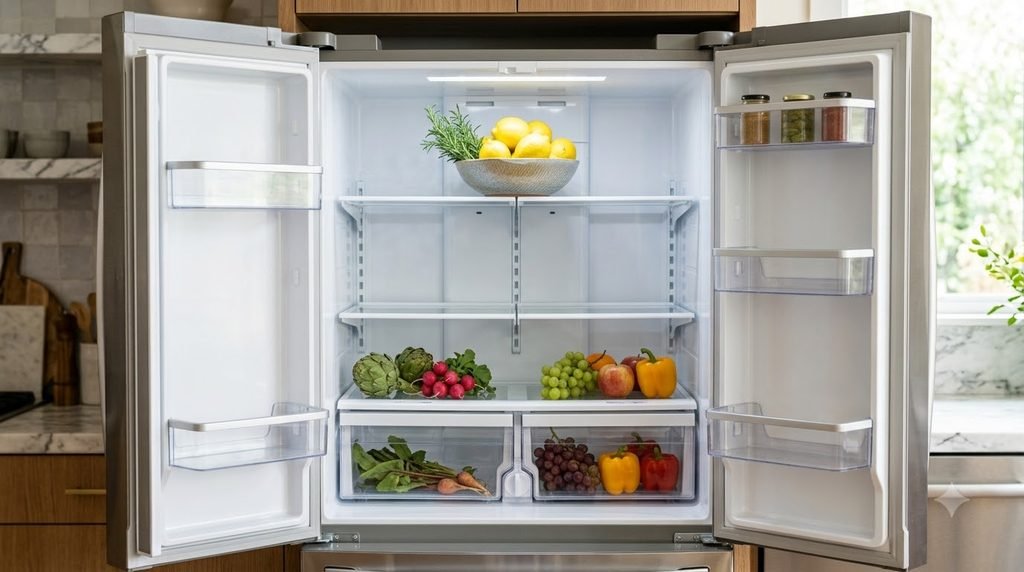
Start with a refrigerator edit.
Remove expired condiments, old leftovers, wilted produce, and anything nobody is realistically going to eat.
Then group similar foods together.
For example:
- Dairy
- Drinks
- Snacks
- Produce
- Meal-prep ingredients
- Leftovers
Clear containers can sometimes improve visibility, but you don’t need to buy an entire refrigerator-organizing system.
First, use the storage you already have.
And if you know you’ll be hosting a big meal, try to leave part of one shelf intentionally empty.
That space becomes incredibly useful for large ingredients, prepared dishes, and leftovers.
Future you will be grateful when you’re not trying to fit a casserole dish between six half-empty containers.
6. Don’t Forget the Freezer
Freezers have a remarkable ability to turn perfectly good food into unidentified frozen objects.
Before holiday grocery shopping starts, pull out the things that have been hiding in yours.
Check dates and labels.
Discard food that is no longer safe or useful, and group the rest into simple categories such as:
- Meat and seafood
- Vegetables
- Fruit
- Prepared meals
- Bread
- Desserts
- Leftovers
If you freeze homemade foods, label them with both the name and date.
You may discover ingredients you were planning to buy again.
That means organizing your freezer can reduce clutter and prevent unnecessary spending.
7. Reset the Linen Closet
Overnight guests mean extra sheets, towels, pillows, and blankets.
Unfortunately, linen closets often become storage areas for everything vaguely related to fabric.
Take a quick inventory.
Look for:
- Worn towels
- Sheets that no longer fit your beds
- Mismatched sets
- Blankets nobody uses
- Excess pillowcases
- Items that belong elsewhere
Then keep complete sheet sets together.
One easy method is to fold the fitted sheet, flat sheet, and extra pillowcase and place everything inside the remaining pillowcase.
That way, you can grab an entire set at once.
Keep guest towels together as well.
If your linen closet is small, don’t force every spare blanket and sheet into it. Store guest bedding near the room where it will actually be used when possible.
8. Prepare the Guest Bedroom Before You Need It
A guest room does not need to look like a boutique hotel.
It simply needs to feel clean, comfortable, and usable.
Unfortunately, spare bedrooms often become temporary storage rooms.
If yours has collected boxes, laundry, seasonal decorations, or miscellaneous items, clear those first.
Then check the basics:
- Clean sheets
- Extra blanket
- Clear nightstand
- Working bedside lamp
- Accessible outlet
- A few empty hangers
- Some closet or drawer space
- A place for luggage
If the room itself has become cluttered, use the same principles from these bedroom organization ideas before adding anything decorative.
No Dedicated Guest Room?
That’s completely fine.
If guests sleep on a sofa bed, air mattress, or in a multipurpose room, create one designated area where they can keep their belongings.
A basket, luggage rack, cleared shelf, or few empty hooks can be enough.
Guests usually appreciate usable space more than extra decorations.
9. Simplify the Guest Bathroom
Bathrooms are easy to overlook because we use them every day.
Guests see them differently.
Start by clearing the countertop.
Throw away empty bottles and products you no longer use.
Then check cabinets and drawers for duplicates, expired products, and things that belong elsewhere.
Keep everyday essentials accessible while leaving a little space for guests.
If your bathroom counter is constantly crowded, these bathroom counter organization ideas offer practical ways to keep frequently used items accessible without covering every surface.
Before guests arrive, also check that you have:
- Clean hand towels
- Extra bath towels
- Toilet paper
- Hand soap
- An empty trash can
- Basic toiletries if you normally provide them
You don’t need a basket filled with miniature hotel products.
Clean, uncluttered, and functional is enough.
10. Check Your Serving Dishes and Entertaining Supplies
Before buying another holiday platter because it looked cute at the store, find out what you already own.
Gather your:
- Serving bowls
- Platters
- Trays
- Pitchers
- Glasses
- Extra utensils
- Table linens
- Food-storage containers
- Holiday-specific dishes
Check for chipped, damaged, or rarely used pieces.
Then store similar things together.
Items used only for entertaining don’t necessarily deserve prime kitchen storage. Consider placing occasional-use pieces on higher shelves or in another accessible storage area.
Keep your everyday kitchen items in the easiest-to-reach locations.
Most importantly, shop your own cabinets before shopping the store.
You may already have everything you need.
11. Organize Holiday Decorations Before Decorating
Opening holiday storage boxes should feel exciting.
It shouldn’t feel like an archaeological excavation.
Before decorating day arrives, check what you actually have.
Go through:
- Lights
- Ornaments
- Garlands
- Wreaths
- Stockings
- Table decorations
- Outdoor decorations
- Seasonal pillows and textiles
Discard broken items that cannot be repaired.
Donate decorations that are still usable but no longer fit your style.
Then group everything by either type or room.
For example:
Christmas Tree
Living Room
Dining Room
Outdoor
Lights
Table Decor
Whichever system makes decorating easiest for you is the correct system.
And if you enjoy seasonal decorating but don’t want your rooms to feel overloaded, the same principles in how to display collections without clutter work beautifully for holiday decor too.
12. Gather Your Gift-Wrapping Supplies
Gift wrap has a habit of spreading throughout the house.
You find one roll in a closet, another under the bed, gift bags in a drawer, and somehow three pairs of scissors disappear every December.
Gather everything in one place:
- Wrapping paper
- Gift bags
- Tissue paper
- Ribbon
- Bows
- Tags
- Tape
- Scissors
- Boxes
Discard torn bags and unusable scraps.
Then create one designated wrapping-supply zone.
It does not need to be an elaborate Pinterest-worthy wrapping station.
A labeled under-bed container, closet bin, basket, or drawer can work perfectly.
The best organization system is often the one simple enough that everyone actually uses it.
13. Make Room in the Kids’ Toy Collection
If children in your household are likely to receive toys, books, games, or craft supplies during the holidays, create some breathing room before new things arrive.
Don’t turn this into a dramatic whole-room decluttering marathon.
Instead, look for obvious candidates:
- Broken toys
- Games with missing pieces
- Toys children have outgrown
- Duplicates
- Dried-out craft supplies
- Books nobody reads anymore
Let children participate when appropriate rather than secretly removing meaningful belongings.
Another option is toy rotation.
Store some toys temporarily and bring them back later.
Sometimes children rediscover old favorites when fewer choices are available at once.
The objective isn’t minimalism.
It’s making the things your family actually enjoys easier to find, use, and put away.
14. Organize Your Cleaning Supplies
The holiday season usually brings more cooking, more people coming through the house, and more little messes.
Make cleaning easier before that happens.
Start by checking your cleaning-supply storage.
Remove empty containers and products you no longer use.
Then group frequently used supplies together.
You might keep a small quick-clean kit with:
- Microfiber cloths
- Multipurpose cleaner
- Glass cleaner
- Paper towels or reusable cleaning cloths
- Duster
This isn’t about having dozens of specialized cleaning products.
It’s about being able to quickly find what you already use.
If you’re planning a deeper clean before hosting, work through this room-by-room cleaning checklist instead of trying to clean the entire house randomly.
Safety note: Always store household cleaning products according to label directions and keep them securely away from children and pets.
15. Fix the One Clutter Hotspot That Drives You Crazy
This might actually be the most valuable thing on this entire list.
Every home has one.
Maybe it’s the kitchen island where everything gets dropped.
Maybe it’s the chair that has quietly become a clothes mountain.
Maybe it’s the bathroom cabinet you open cautiously because something always falls out.
Or perhaps it’s the laundry room shelf that hasn’t been visible since spring.
Choose one.
Not the entire room.
Just the specific spot that creates the most daily frustration.
Remove everything from that small area.
Sort it.
Return things that belong elsewhere.
Let go of things you no longer need.
Then create a simple home for whatever remains.
Often, fixing one irritating clutter hotspot improves daily life more than perfectly organizing an area you rarely use.
Your Simple Pre-Holiday Organization Checklist
Seeing 15 projects at once can make you want to do none of them.
So don’t.
Spread them out.
Week 1: High-Traffic Areas
☐ Entryway
☐ Coat closet
☐ Kitchen counters
☐ Pantry
☐ Refrigerator
Week 2: Food and Guest Preparation
☐ Freezer
☐ Linen closet
☐ Guest bedroom
☐ Guest bathroom
Week 3: Holiday Supplies
☐ Serving dishes
☐ Holiday decorations
☐ Gift-wrapping supplies
Week 4: Everyday Systems
☐ Kids’ toys
☐ Cleaning supplies
☐ Your biggest clutter hotspot
You can also combine these tasks with your existing Sunday reset routine instead of dedicating an entire weekend to organizing.
Even 20 or 30 focused minutes at a time can make a noticeable difference.
Don’t Buy Organizers Until You Declutter
Here’s one rule that can save both money and storage space:
Declutter → Categorize → Assign a home → Measure → Buy storage if necessary.
Not the other way around.
It is incredibly tempting to walk into a store, see beautiful matching containers, and imagine that they will instantly solve your clutter problem.
Sometimes containers help.
Sometimes they simply give you prettier places to keep things you didn’t need in the first place.
Before buying an organizer, ask yourself:
- What exactly am I storing?
- How often do I use it?
- Where should it live?
- What size is the available space?
- Can I easily reach what is inside?
- Will my family realistically maintain this system?
Only then decide whether you need a basket, bin, shelf riser, drawer divider, or other storage product.
This approach is especially useful in small homes, where every storage purchase needs to earn the space it occupies.
A Few Things You Don’t Need to Organize Before the Holidays
Here’s your permission to skip a few things.
Unless they are actively causing problems, you probably don’t need to reorganize:
- Old photo boxes
- Sentimental keepsakes
- Every book you own
- Long-term document archives
- The entire garage
- Every drawer in the house
- Storage areas nobody will use during the holidays
Save those projects for another season.
Right now, prioritize spaces that affect daily life, cooking, guests, and holiday activities.
That keeps this project practical rather than overwhelming.
Make Your Home Easier Before It Gets Busier
Pre-holiday organization isn’t about creating a perfect home.
Real homes get messy.
Packages arrive. Kids leave things out. Dinner gets cooked. Laundry piles up. Guests bring coats and bags. Life keeps happening.
The point of organizing before the holidays is to make those normal moments easier.
A little extra pantry space makes room for holiday groceries.
An organized entryway makes busy mornings less frustrating.
A clear guest room means you aren’t moving piles of stuff the night before visitors arrive.
An edited decoration collection makes decorating more enjoyable.
And a functional kitchen gives you more room to cook, gather, and enjoy the season.
If you’re feeling overwhelmed by the whole house, don’t start with the whole house.
Pick one space from this list today.
Finish it.
Then move on to the next.
For an even broader seasonal refresh, you can also work through these ideas for preparing your home for fall and use the room-by-room cleaning checklist alongside your organizing projects.
And if you prefer having your home projects mapped out on paper, the JessicaMillers Ultimate Home Organization Printable Bundle can help you break larger organizing projects into smaller, manageable steps without trying to tackle everything at once.
The best holiday preparation isn’t a perfectly styled house.
It’s a home that works well enough that you have more time and energy to enjoy the season.
Frequently Asked Questions
When should I start organizing my home for the holidays?
October is a practical time to start because you can work through high-use areas gradually before Thanksgiving and the busiest part of the holiday season. Start with spaces that will see the most activity, such as the kitchen, entryway, pantry, guest areas, and coat storage.
What should I declutter before Christmas?
Prioritize items that compete for space with things you’ll use during the holidays. This can include outgrown coats, expired pantry food, old refrigerator items, unused toys, damaged decorations, excess gift wrap, worn linens, and kitchen items you no longer use.
How do I prepare my house for holiday guests?
Focus first on functionality. Clear the entryway, make coat space available, prepare clean bedding and towels, simplify the guest bathroom, and make sure guests have somewhere to put luggage and personal belongings.
How can I organize for the holidays in a small home?
Avoid trying to create dedicated spaces for every activity. Use multipurpose storage, remove unnecessary items before adding containers, use vertical space where appropriate, and keep frequently used items accessible. Temporary seasonal systems can also work well when permanent storage is limited.
Should I buy storage bins before organizing?
Usually, no. Declutter and categorize your belongings first. Once you know exactly what needs to be stored and where it will live, measure the available space before buying containers. This helps prevent buying organizers that don’t actually solve the problem.