15 Bedroom Organization Ideas to Make Your Room Feel More Spacious
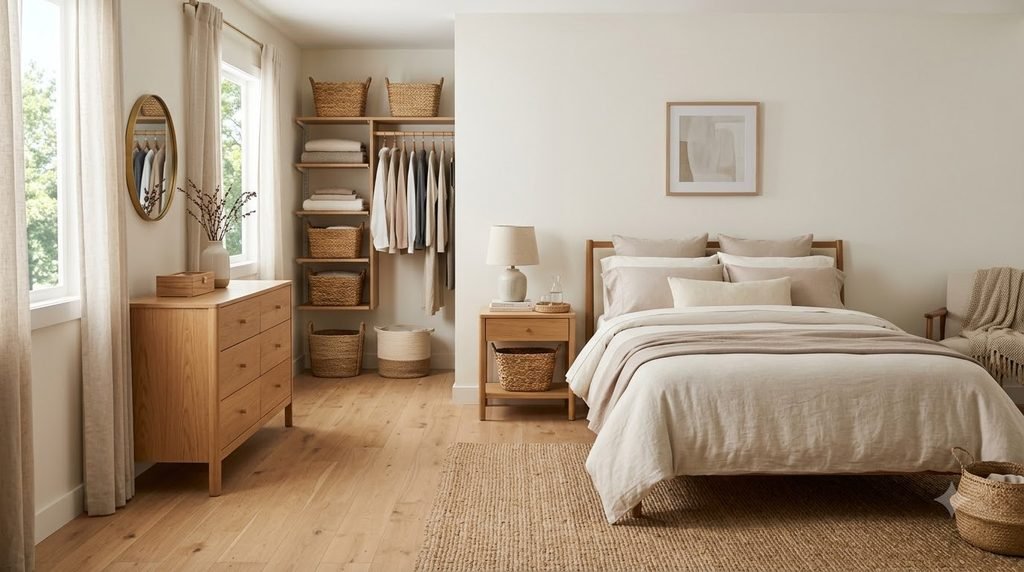
A bedroom can feel crowded even when you don’t have that much furniture. Clothes collect on chairs, nightstands become catch-all spaces, and items that don’t have a home slowly take over the floor.
The good news is that you don’t always need a bigger bedroom to make the space feel more open. The right bedroom organization ideas can help you use overlooked storage areas, reduce visual clutter, and make everyday items easier to put away.
From using the space under your bed to organizing your nightstand and making better use of vertical space, these ideas are simple enough to work in both larger bedrooms and compact spaces.
1. Start by Clearing the Floor
One of the fastest ways to make a bedroom feel more spacious is to give the floor a clear purpose: walking, moving around, and enjoying the room.
Start by picking up anything that doesn’t belong on the floor, including shoes, clothing, bags, boxes, and miscellaneous items.
Then create a permanent home for anything that regularly ends up there.
For example:
- Put shoes in a shoe organizer or designated basket.
- Keep dirty clothes in a hamper.
- Move bags onto hooks.
- Store extra blankets in a basket.
- Put rarely used items into a closet or under-bed storage.
A clear floor doesn’t just make cleaning easier. It can also make the entire room look less visually crowded.
2. Use the Space Under Your Bed
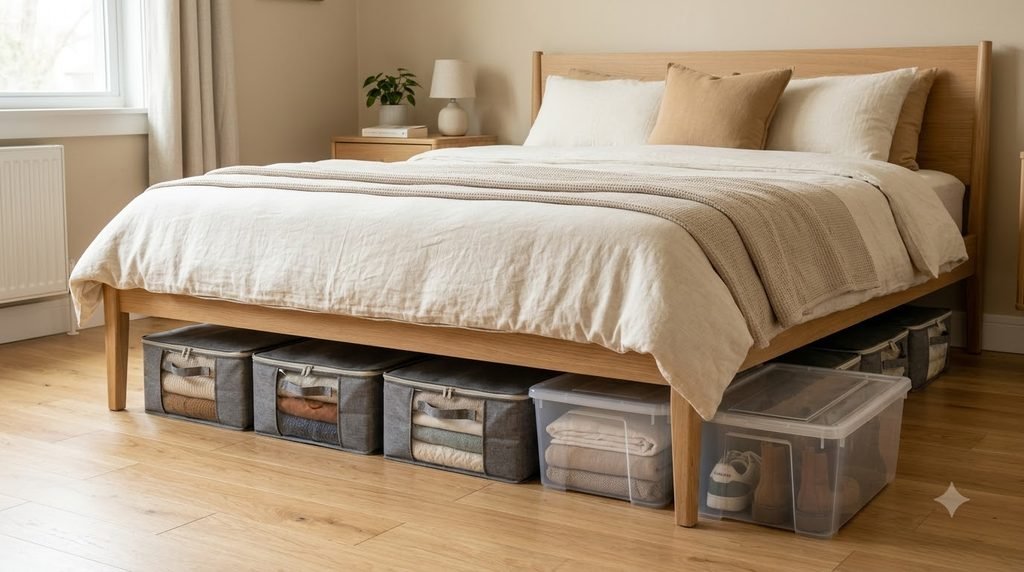
The area underneath your bed is one of the easiest places to add storage without taking up additional floor space.
Use low-profile storage containers for things you don’t need every day, such as:
- Out-of-season clothing
- Extra bedding
- Shoes
- Handbags
- Spare pillows
- Seasonal accessories
Choose containers that are easy to pull out when needed.
If you use several containers, consider labeling them so you don’t have to pull everything out to find one item.
Organization tip: Keep frequently used belongings somewhere easier to reach. Under-bed storage works best for items you use occasionally.
3. Give Your Nightstand a Simple System
A nightstand can become cluttered surprisingly quickly.
Instead of allowing it to become a general storage area, decide what actually needs to live there.
A simple setup might include:
- A lamp
- Your current book
- A small tray for everyday items
- A phone charger
- One decorative item
Use the drawer for smaller belongings that you want nearby but don’t need sitting out.
If your nightstand has multiple drawers, assign each drawer a purpose. For example, one can hold reading materials and personal items while another stores charging cables and small accessories.
The goal isn’t to make your nightstand empty. It’s to make it intentional.
4. Organize Clothes by How Often You Wear Them
Clothing organization becomes much easier when your storage reflects your actual routine.
Keep the clothes you wear most frequently in the easiest-to-reach locations.
For example:
Most used: eye-level drawers and the front of your closet
Occasionally used: higher shelves or less accessible areas
Seasonal: under-bed storage or upper closet storage
This approach prevents your everyday clothes from competing for space with items you only wear occasionally.
You can also group clothing by category, such as tops, pants, workout clothes, sleepwear, and accessories.
5. Make Better Use of Vertical Wall Space
When floor space is limited, look upward.
Vertical storage can help keep belongings organized without adding another bulky piece of furniture.
Depending on your room and rental restrictions, options include:
- Floating shelves
- Wall hooks
- Pegboards
- Picture ledges
- Narrow shelving
- Over-the-door organizers
Use vertical storage for lightweight or frequently accessed items rather than turning every wall into a storage area.
Keeping some wall space open is important too. The goal is to add useful storage without creating another source of visual clutter.
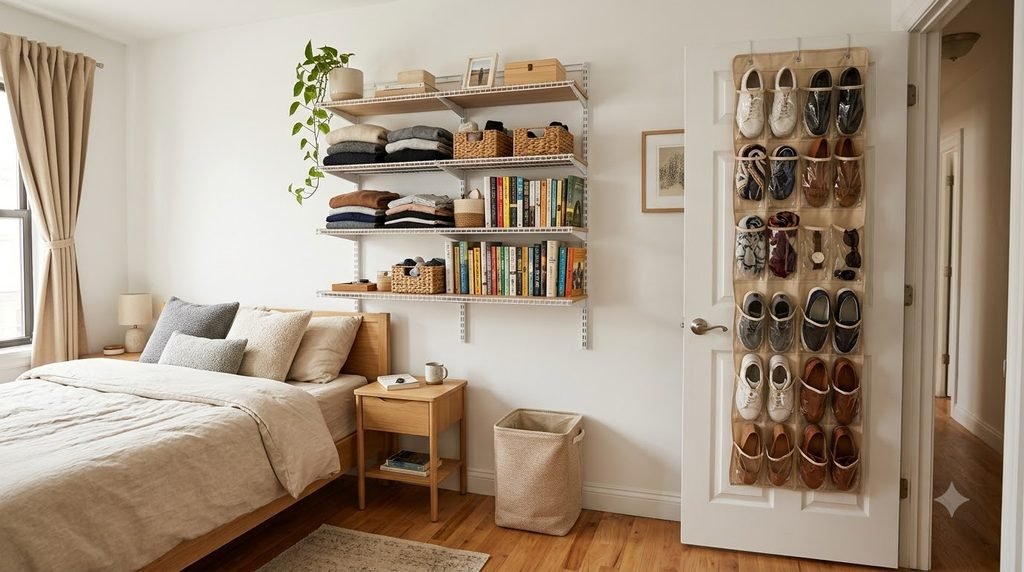
6. Use the Back of the Bedroom Door
The back of a door is easy to overlook, but it can provide useful storage in a bedroom.
An over-the-door organizer can hold smaller belongings such as:
- Accessories
- Hair tools
- Shoes
- Scarves
- Bags
- Small clothing items
For renters, over-the-door solutions can be particularly useful because they may provide additional storage without requiring permanent installation.
Just make sure the organizer doesn’t interfere with the door closing properly.
7. Create a Home for Your Laundry
Laundry is one of the biggest sources of bedroom clutter because it often falls into three categories: clean, dirty, and “I’ll deal with it later.”
Make the system easier by giving laundry a specific place.
A hamper or divided laundry basket can keep dirty clothes from collecting on the floor.
For clean clothes, try to avoid creating a permanent pile on a chair or bench. If you’re short on time, use a temporary basket for clean clothes and put them away during your next reset.
The easier the system is to maintain, the more likely you are to actually use it.
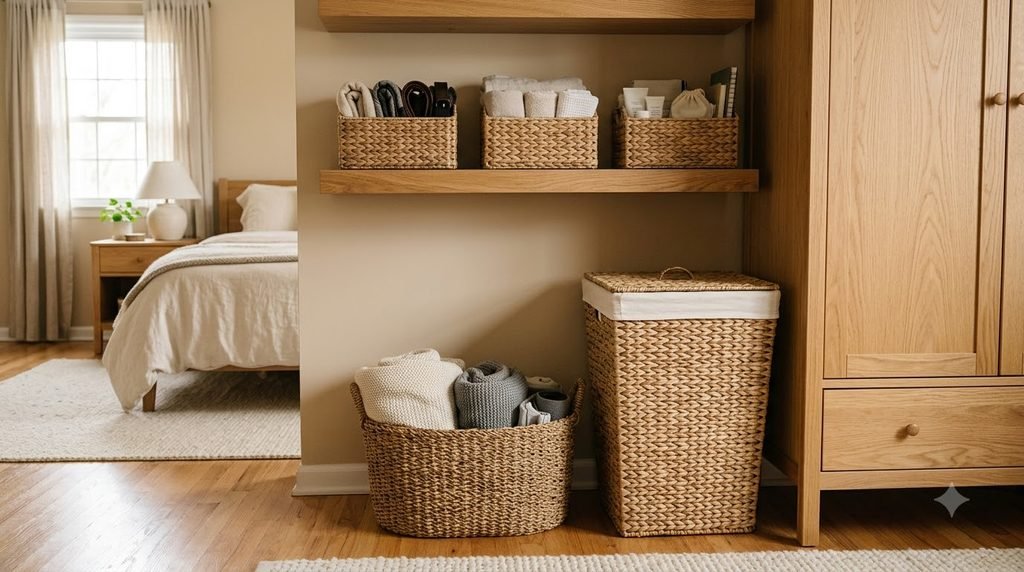
8. Use Baskets to Contain Small Categories
Baskets work best when they have a specific job.
Instead of having one large basket where everything disappears, assign smaller baskets to particular categories.
For example:
- Extra blankets
- Handbags
- Accessories
- Electronics
- Books
- Workout items
Choose baskets that fit the location where you need them.
A basket beside the bed might hold extra blankets, while one on a closet shelf could contain handbags or accessories.
The key is containment, not simply adding more storage.
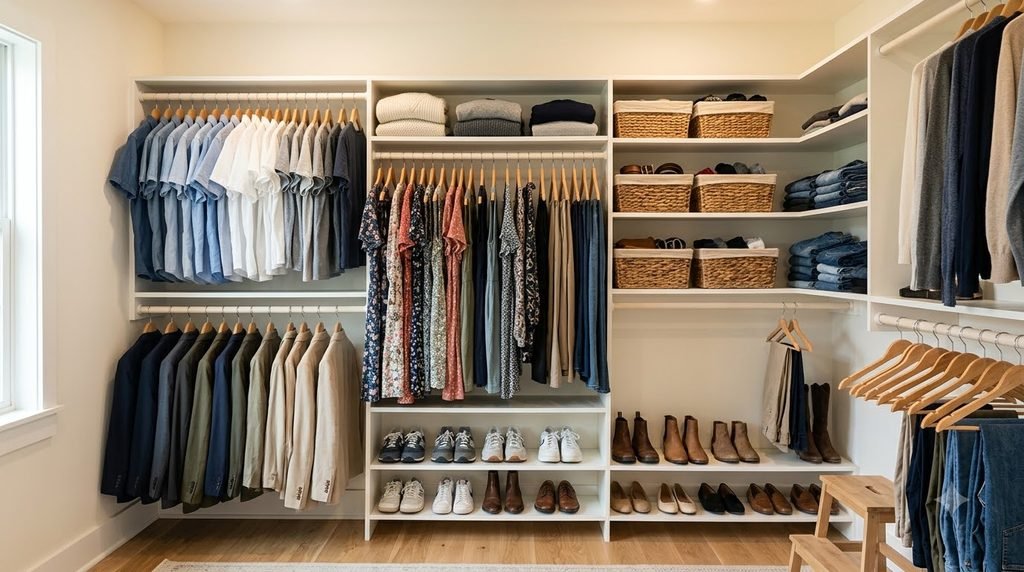
9. Organize Your Closet Around Your Daily Routine
A closet can hold plenty of clothing and still feel difficult to use.
Start by moving your most frequently worn items into the easiest-to-reach areas.
Then group similar items together.
You might organize your closet by:
- Tops
- Bottoms
- Dresses
- Jackets
- Workwear
- Workout clothing
- Accessories
If you have extra vertical space, use the upper portion of the closet for seasonal items or less frequently used belongings.
You can also use slim matching hangers to create a more consistent appearance and make better use of hanging space.
For more ideas, you can also explore our 15 Closet Organization Ideas to Maximize Your Storage Space.
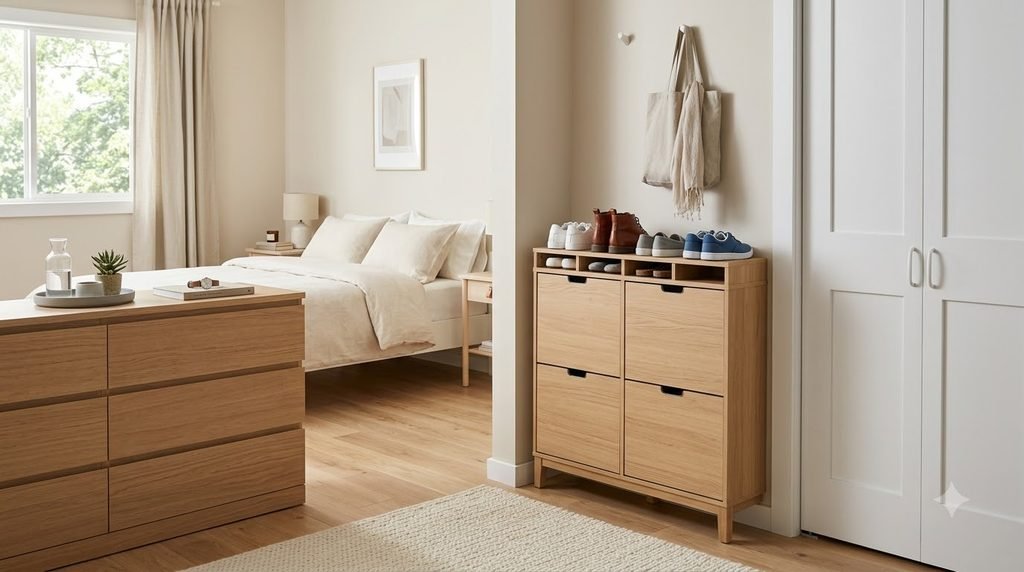
10. Give Shoes a Dedicated Storage Spot
Shoes scattered around a bedroom quickly make the room look messy.
Instead of keeping every pair near the door or beside your bed, choose one dedicated storage location.
Depending on your space, you could use:
- A shoe rack
- Closet shelving
- Under-bed shoe storage
- A narrow shoe cabinet
- Shoe boxes
- Stackable organizers
Keep your everyday shoes in the easiest location and move less frequently worn pairs to secondary storage.
This simple change can make the floor noticeably easier to maintain.
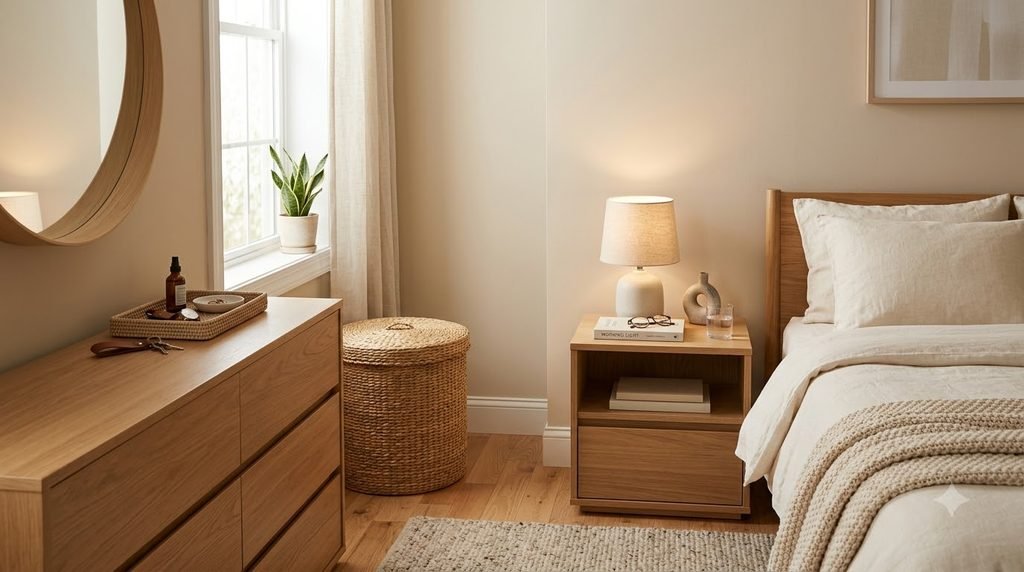
11. Reduce Clutter on Dressers and Other Flat Surfaces
Large flat surfaces attract clutter.
A dresser can start with one lamp and a small decorative object and eventually become covered with receipts, jewelry, clothing, beauty products, and random items.
Instead of trying to organize every object individually, reduce what stays on the surface.
A useful rule is:
Daily-use items can stay accessible; everything else needs a home.
Use a small tray for items you regularly reach for, and put everything else into drawers, baskets, or designated storage.
An uncluttered dresser can make the room feel calmer without requiring any major changes.
12. Create a Small “Drop Zone”
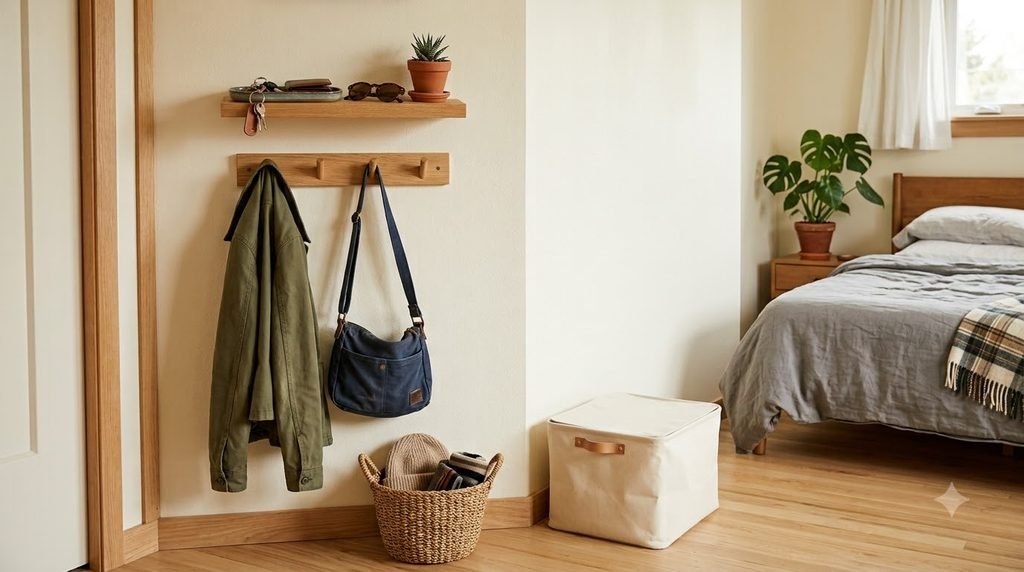
If you regularly throw your keys, purse, headphones, glasses, or other belongings on the nearest surface, create a small drop zone.
It doesn’t need to be complicated.
A drop zone might include:
- One small tray
- A few wall hooks
- A small basket
- A narrow shelf
Keep it near the place where you naturally enter or leave the bedroom.
The important part is that the storage location matches your habits. If putting something away takes too many steps, you’re more likely to leave it somewhere else.
13. Store Seasonal Items Somewhere Else
Your bedroom doesn’t need to hold everything you own all year.
Seasonal belongings can take up valuable storage space even when you’re not using them.
Consider moving things such as:
- Heavy winter bedding
- Seasonal clothing
- Holiday accessories
- Extra blankets
- Seasonal decor
to higher closet shelves, under-bed containers, or another appropriate storage area.
When the season changes, swap what you need rather than keeping everything within arm’s reach.
This creates more usable space for the things you actually need right now.
14. Choose Furniture That Does More Than One Job
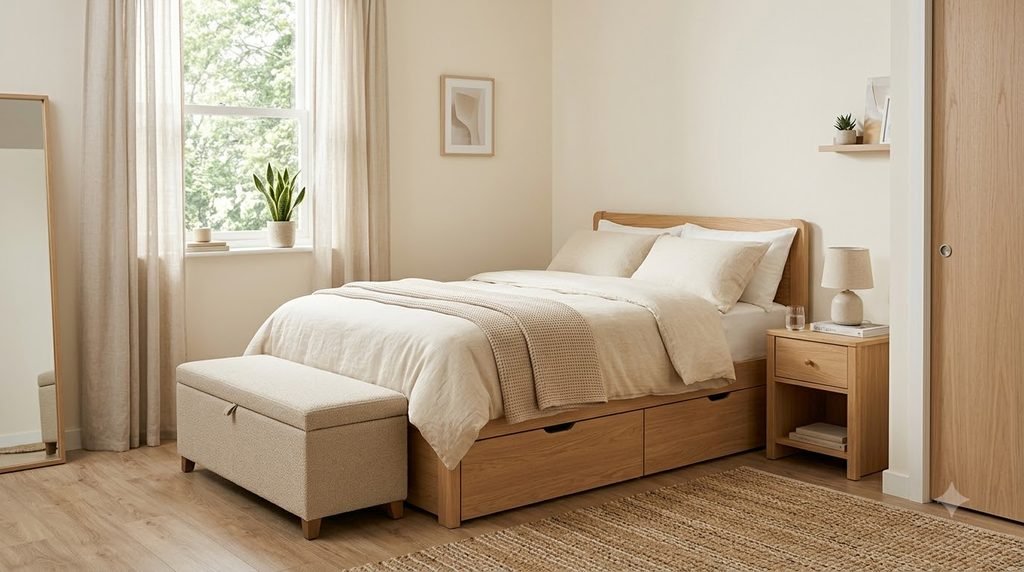
When your bedroom is short on space, every large piece of furniture should earn its footprint.
Look for furniture that combines functions, such as:
- A bed with built-in drawers
- A storage bench
- A nightstand with drawers
- A dresser that doubles as a vanity
- A storage ottoman
- A narrow shelving unit
Multifunctional furniture can be especially useful in smaller bedrooms because it provides storage without requiring several separate pieces.
Before buying anything new, however, measure your available space carefully. A storage piece isn’t helpful if it makes the room harder to move around in.
Recent small-bedroom guidance similarly emphasizes multifunctional furniture and using vertical, under-bed, and other overlooked spaces instead of simply adding more bulky furniture.
15. Keep a Small Daily Reset Routine
The best bedroom organization system is one you can maintain.
You don’t need to spend an entire weekend reorganizing your bedroom every week.
Instead, create a short reset routine.
Before going to bed or first thing in the morning:
- Put dirty clothes in the hamper.
- Return shoes to their storage spot.
- Clear the nightstand.
- Put away anything that doesn’t belong in the bedroom.
- Straighten the bedding.
- Return small items to their designated homes.
This can take only a few minutes once the room already has a good organization system.
The goal isn’t perfection. It’s preventing small amounts of clutter from becoming a large weekend project.
How to Organize a Bedroom Without Making It Feel More Crowded
Adding storage isn’t always the answer.
If every available surface is filled with baskets, containers, shelves, and furniture, the room can still feel crowded even when everything is technically organized.
Instead, follow these principles:
Use hidden storage first
Under-bed containers, drawers, closets, and closed cabinets can keep everyday visual clutter out of sight.
Keep frequently used items easy to reach
Don’t put something you use every day in a storage box at the back of a closet.
Leave some empty space
Not every shelf or surface needs to be filled.
A little breathing room can make an organized room feel more spacious.
Measure before buying
Before purchasing storage furniture, measure the available width, depth, and height.
Also check door swings, drawer clearance, walking paths, and access to outlets.
Organize according to your habits
The perfect-looking organization system isn’t useful if it doesn’t match how you actually use the room.
Small Bedroom Organization Ideas on a Budget
You don’t need to replace your bedroom furniture to improve organization.
Start with what you already have.
Try:
- Repurposing baskets you already own
- Using existing boxes for temporary categories
- Adding hooks to unused areas where appropriate
- Moving rarely used items to upper shelves
- Decluttering before buying storage
- Reorganizing your existing closet
- Using the space underneath your bed
- Creating a small drop zone
- Removing furniture that doesn’t serve a useful purpose
A good rule is to organize first and shop second.
Once you know exactly what storage problem you’re trying to solve, it’s much easier to decide whether you actually need a new product.
Common Bedroom Organization Mistakes to Avoid
Even a well-intentioned organization project can create new problems.
Buying storage before decluttering
If you don’t reduce unnecessary belongings first, you may simply end up with more containers filled with things you don’t use.
Using every inch of wall space
Vertical storage is useful, but covering every wall with shelves can make the room feel visually busy.
Keeping everything on open shelves
Open storage is convenient, but too many visible objects can make a bedroom look cluttered.
Creating complicated systems
If it takes several steps to put something away, the system may not last.
Ignoring the floor plan
A storage piece that technically fits may still make the room difficult to walk through.
Think about how you move through the room, not just where another piece of furniture can fit.
How to Keep Your Bedroom Organized
Once you’ve organized the room, maintaining it becomes much easier when everything has a designated home.
Try a simple weekly reset:
Clothes: Put away anything that has been left out.
Laundry: Empty the hamper or start a load.
Surfaces: Clear your nightstand and dresser.
Floor: Return shoes, bags, and miscellaneous items to their homes.
Closet: Quickly straighten anything that has become difficult to find.
Storage: Check whether anything is being placed in the wrong category.
You can also use a 15-minute reset when the room starts getting messy instead of waiting until clutter becomes overwhelming.
If you’re working on the rest of your home too, our 10 Simple Home Organization Ideas That Make Everyday Life Easier can be a useful next step.
Frequently Asked Questions
How do I organize my bedroom with too much stuff?
Start by separating your belongings into four groups: keep, donate, relocate, and discard. Then organize what remains according to how frequently you use it. Everyday items should be easiest to reach, while seasonal and rarely used belongings can go into higher, deeper, or under-bed storage.
How can I make my bedroom look more spacious?
Reduce visible clutter, keep walking areas clear, use vertical and hidden storage, and avoid filling every available surface with furniture or decor. A clear floor and fewer items on open surfaces can make the room feel more open.
What should I organize first in my bedroom?
Start with the area causing the most daily frustration. For many people, that means the floor, clothing, nightstand, or closet. Fixing the biggest recurring clutter zone first usually creates the most noticeable improvement.
Is under-bed storage a good idea?
Yes, especially for items you don’t use every day. Under-bed storage can be useful for seasonal clothing, extra bedding, shoes, and other occasional items without taking up additional floor space.
How often should I organize my bedroom?
A major organization session isn’t necessary every week. A short daily or weekly reset can keep the system working, while a deeper decluttering session can be done whenever your storage starts becoming difficult to use.
Final Thoughts
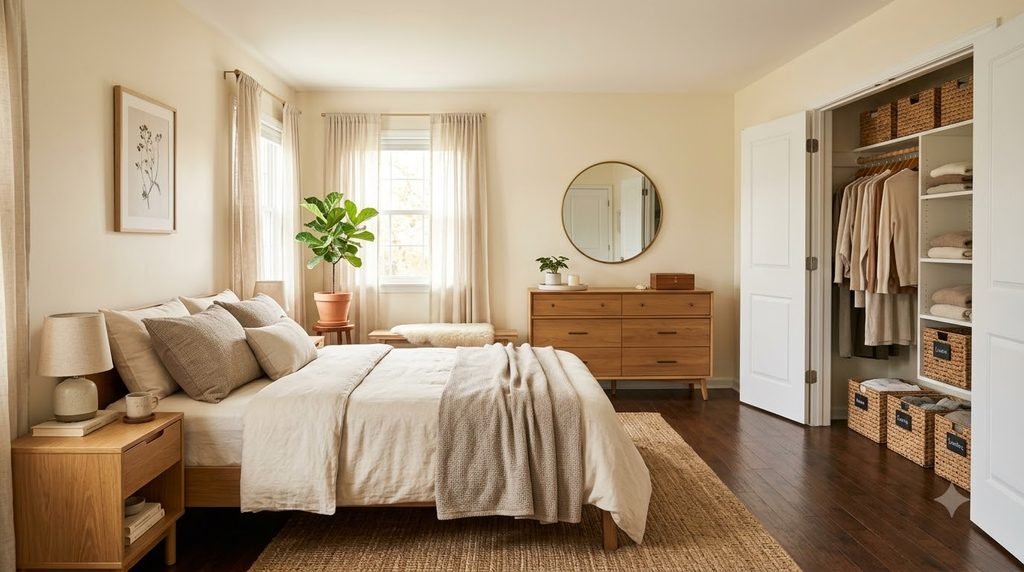
A more organized bedroom doesn’t require a huge makeover or expensive storage system.
Start by removing things that don’t belong, clearing the floor, making better use of hidden storage, and giving frequently used belongings a permanent home. Then simplify the surfaces that collect clutter and choose storage solutions that fit the way you actually live.
The biggest improvement often comes from using the space you already have more intentionally rather than adding more furniture.
Once your bedroom has a simple system, a few minutes of maintenance can keep it feeling calmer, cleaner, and more spacious.
Related Articles
- 15 Closet Organization Ideas to Maximize Your Storage Space
- 12 Small Space Organization Ideas to Make Your Home Feel Bigger
- 15 Simple Home Organization Ideas That Make Everyday Life Easier
- 15 Entryway Organization Ideas to Keep Your Home Clutter-Free
- 27 Small Bathroom Organization Ideas to Maximize Every Inch