A small bathroom can feel crowded surprisingly quickly.
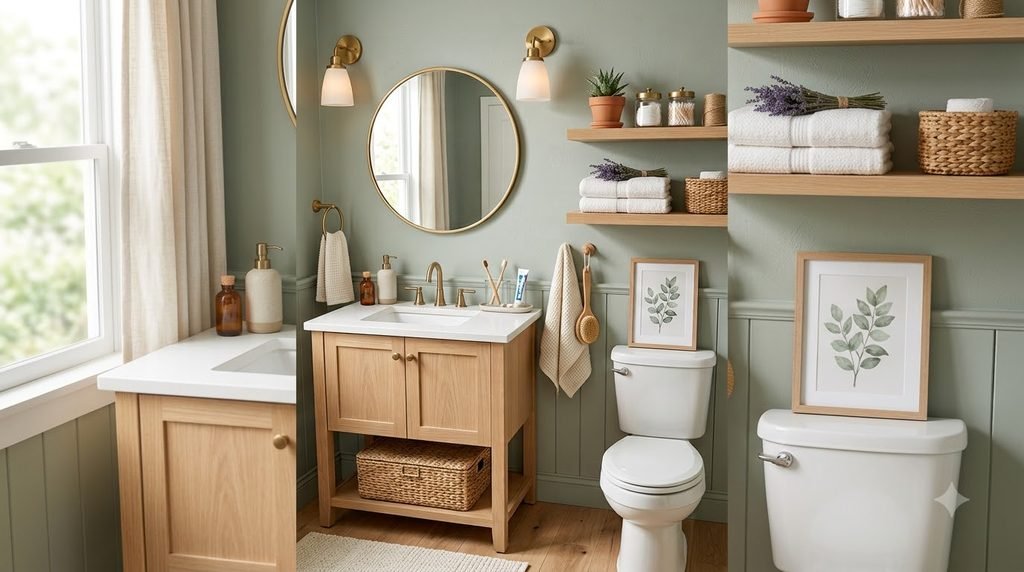
A few bottles collect around the sink. Towels have nowhere to go. Cleaning supplies end up under the vanity, hair tools take over a drawer, and suddenly the bathroom feels much smaller than it actually is.
But the problem isn’t always the amount of space.
Often, it’s where the available space is being used.
Small bathrooms have storage opportunities that are easy to overlook: the wall above the toilet, the back of the door, the inside of vanity doors, narrow gaps, vertical wall space, and the area underneath the sink.
Current 2026 bathroom-organization guidance is increasingly focused on using these overlooked areas, creating dedicated zones, reducing countertop clutter, and choosing storage that fits the actual layout rather than simply adding more containers.
So before you consider a renovation—or decide that your bathroom is simply too small—try these 27 small bathroom organization ideas.
How to Organize a Small Bathroom
Start by looking at the bathroom as a collection of zones rather than one storage problem.
Think about:
- Sink and vanity
- Shower
- Toilet area
- Walls
- Door
- Under-sink cabinet
- Medicine cabinet
- Drawers
- Towels and linens
- Cleaning supplies
Then ask a simple question:
What do I use every day, and what can be stored somewhere less accessible?
Everyday items should be easy to reach.
Backups and occasional-use products don’t need prime real estate.
That one distinction can make a surprisingly big difference.
27 Small Bathroom Organization Ideas
1. Declutter Before Adding Storage
Before buying another basket or organizer, remove things you don’t need.
Take everything out of one drawer, cabinet, or shelf and sort it into:
Keep
Relocate
Discard
Donate
Check for:
- Empty containers
- Expired products
- Products you never use
- Duplicate toiletries
- Old samples
- Worn-out accessories
If you reduce the number of things competing for storage, the rest of the organization becomes much easier.
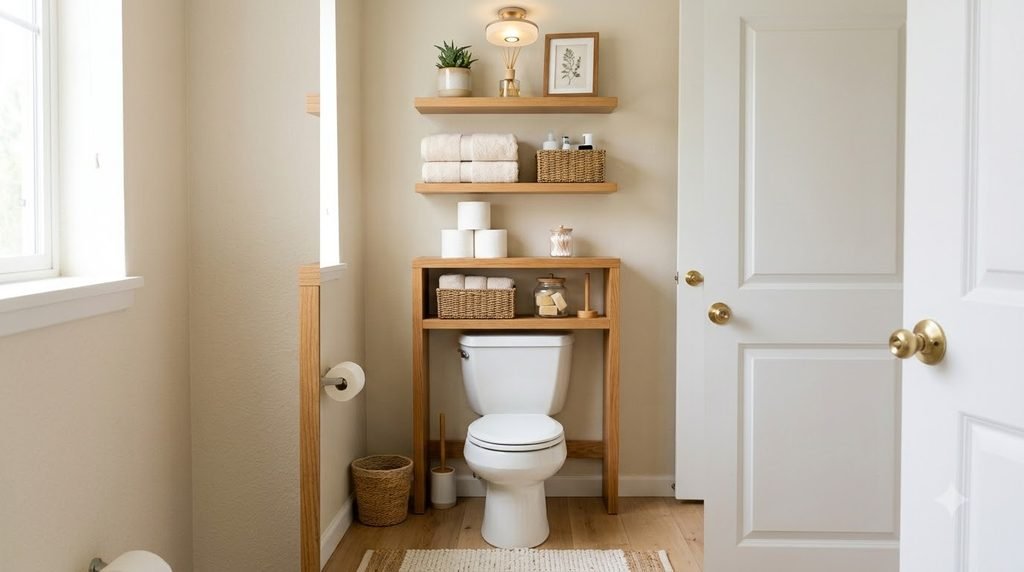
2. Use the Wall Above the Toilet
The space above the toilet is often one of the most useful vertical areas in a small bathroom.
Depending on your layout, you could use:
- Floating shelves
- A narrow cabinet
- A freestanding over-the-toilet unit
- Baskets
- Small towel storage
Use this area for items such as extra toilet paper, towels, guest supplies, or decorative storage.
Current 2026 coverage specifically highlights over-the-toilet storage as a practical way to take advantage of otherwise unused vertical space.
Before installing anything, measure carefully and make sure the storage doesn’t interfere with the toilet, tank access, ventilation, or normal movement.
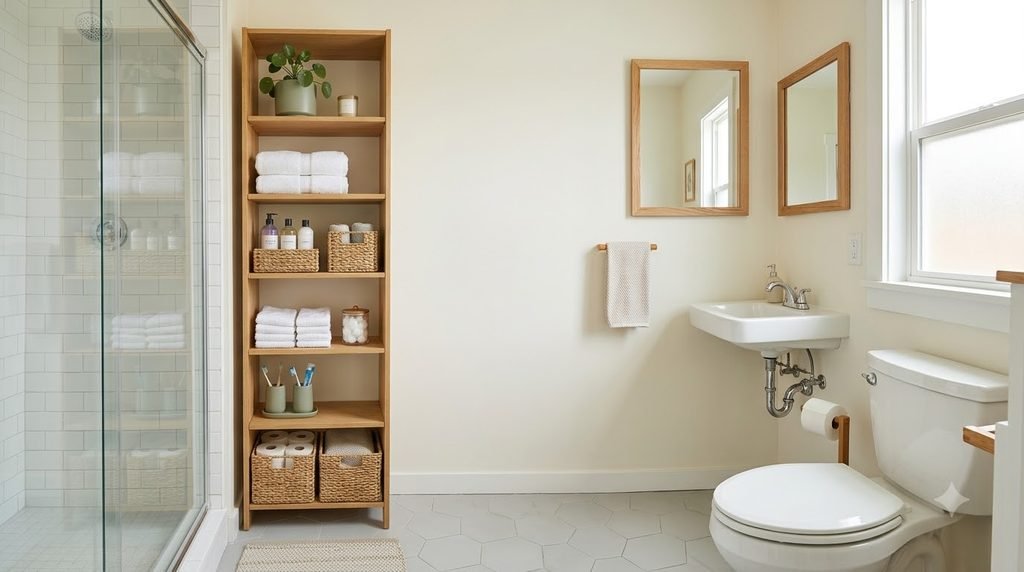
3. Go Vertical With Bathroom Storage
When floor space is limited, look upward.
A tall narrow shelf can provide significantly more useful storage than a wide low cabinet while taking up less floor area.
Use vertical storage for:
- Towels
- Toiletries
- Toilet paper
- Hair products
- Cleaning supplies
- Baskets
The goal is to move storage up instead of out.
4. Use the Back of the Bathroom Door
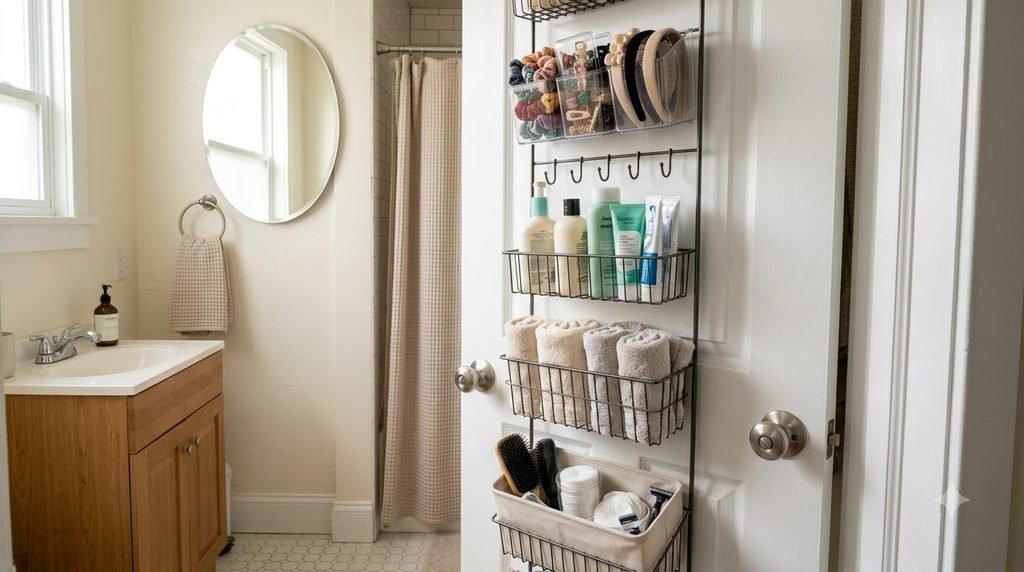
The back of the door can become valuable storage in a small bathroom.
Depending on your door and clearance, consider an over-the-door organizer for lightweight items such as:
- Hair accessories
- Toiletries
- Small towels
- Cleaning cloths
- Extra personal-care items
Make sure the organizer doesn’t prevent the door from closing properly.
5. Create an Everyday Vanity Zone
Don’t let the entire bathroom counter become a storage shelf.
Choose the products you use every day and create a small dedicated zone for them.
For example:
Toothbrush + toothpaste
Hand soap
One or two skincare products
Daily hair products
Everything else can move into drawers or cabinets.
A clear countertop instantly makes a small bathroom feel calmer.
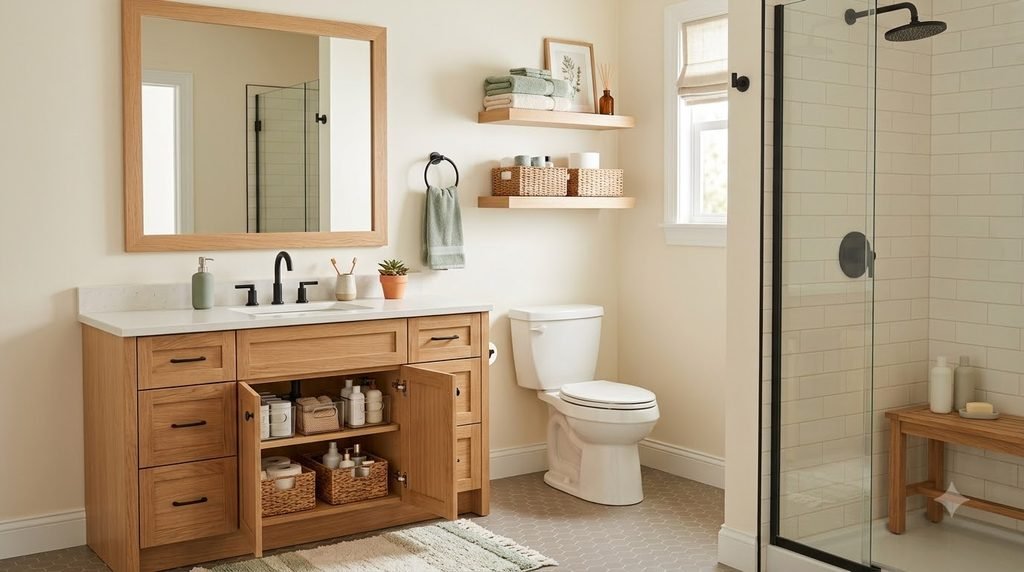
6. Organize Under the Sink
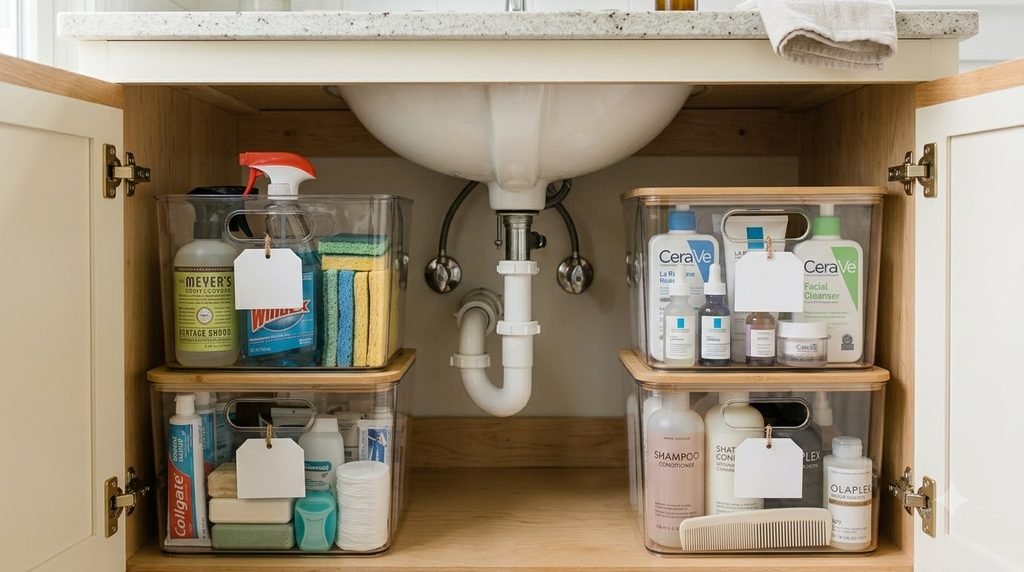
Under-sink storage can be extremely useful, but only if you can actually see what’s inside.
Start by removing everything.
Then divide supplies into categories:
- Cleaning
- Hair care
- Skincare
- Toilet supplies
- Backups
Use stackable bins, pull-out organizers, or small containers where appropriate.
Leave enough room around plumbing so you can still access pipes for maintenance.
Professional organizers and designers frequently recommend improving under-sink storage to make small bathrooms more functional.
7. Add a Small Shelf Above the Vanity
If the wall above the vanity is empty, a narrow shelf can provide useful storage without taking up counter space.
Use it for:
- Small baskets
- Hand towels
- Decorative items
- Everyday toiletries
- Extra soap
Keep the shelf relatively shallow so it doesn’t make the room feel visually crowded.
8. Make the Medicine Cabinet Work Harder
If you have a medicine cabinet, don’t waste its vertical space.
Use small organizers or adjustable shelves to separate:
- Dental care
- Skincare
- First-aid supplies
- Everyday medications
- Small grooming items
Keep frequently used products at eye level.
Important: medications should be stored according to their label instructions; the bathroom’s heat and humidity may not be appropriate for some medicines.
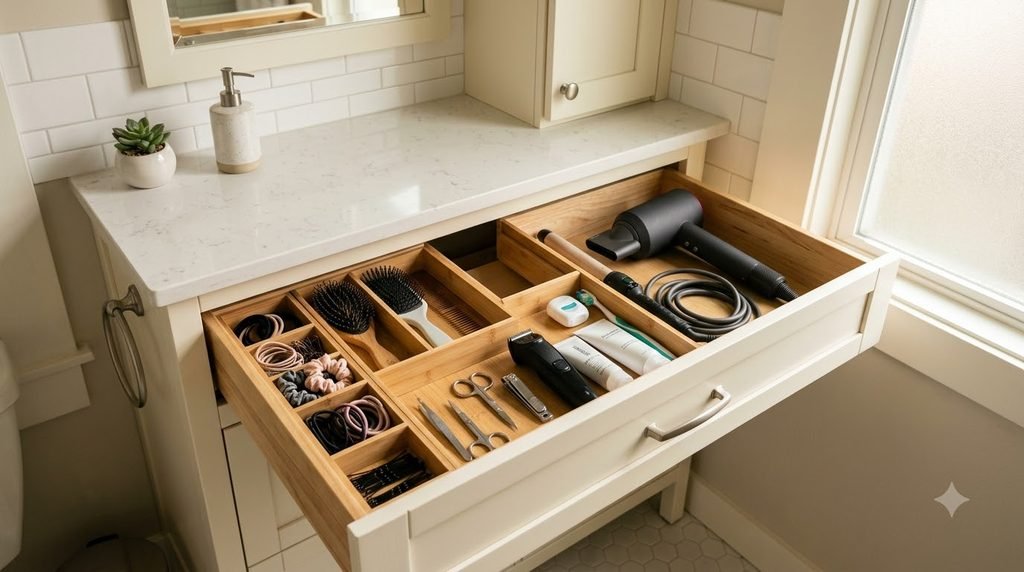
9. Use Drawer Dividers
Bathroom drawers can become a mixture of hair ties, brushes, cosmetics, skincare products, and random accessories.
Use dividers to create smaller sections.
For example:
Section 1: Dental
Section 2: Skincare
Section 3: Hair accessories
Section 4: Grooming tools
The goal isn’t to make every drawer look perfect.
It’s to make finding something take seconds instead of minutes.
10. Create a Hair-Tool Station
Hair dryers, straighteners, curling irons, and brushes can consume an entire bathroom cabinet.
Create one dedicated area for them.
Depending on your setup, you might use:
- A heat-safe holder
- A drawer divider
- A dedicated cabinet section
- A suitable wall-mounted organizer
Always follow the manufacturer’s safety instructions for storing heated appliances, particularly while they’re still hot.
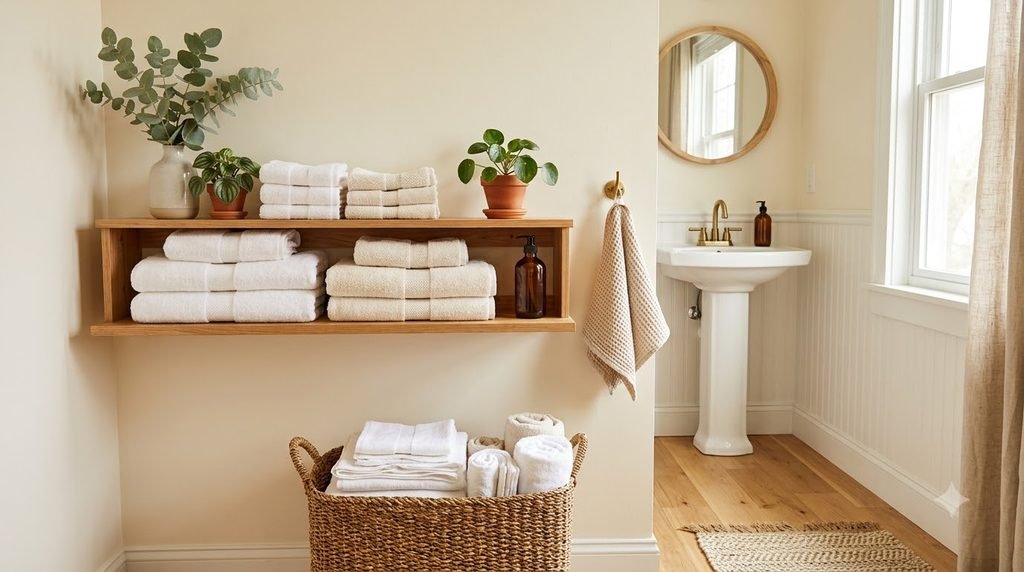
11. Give Towels a Dedicated Home
Towels shouldn’t have to compete with toiletries for storage.
If you don’t have a linen closet, try:
- A narrow shelf
- Wall-mounted towel storage
- A ladder-style rack
- A basket
- Over-the-door towel storage
Fold towels consistently so you can stack them neatly.
Keep the towels you use most often easiest to reach.
12. Use Baskets to Control Visual Clutter
Open shelves can quickly become messy when every individual product is visible.
Baskets solve that problem by grouping smaller items together.
Use separate baskets for:
- Extra toiletries
- Hair products
- Guest supplies
- Cleaning items
- Towels
Choose baskets that fit the shelf rather than buying the baskets first and trying to find a place for them later.
13. Organize the Shower by Frequency
A shower can become cluttered with shampoo, conditioner, body wash, scrubs, razors, and backup products.
Start by removing anything you don’t use regularly.
Then create a simple system:
Daily products → easiest reach
Occasional products → secondary storage
Backups → outside the shower
This keeps the shower area cleaner and reduces unnecessary bottles.
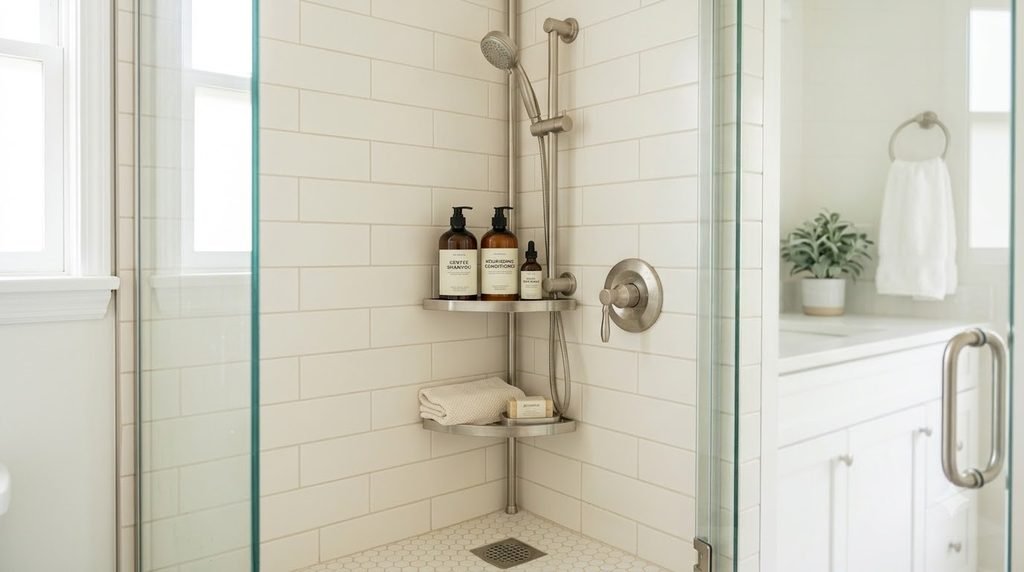
14. Use a Corner Shower Caddy
Corners are often underused.
A properly fitted corner caddy can provide vertical storage without taking up much floor space.
Use it for products that actually belong in the shower.
Avoid overloading it.
A crowded caddy simply moves the clutter from the floor to the wall.
15. Keep Backup Products Out of Prime Space
Do you really need six bottles of shampoo sitting beside the shower?
Probably not.
Create a backup zone somewhere else.
Store:
- Extra shampoo
- Toilet paper
- Soap
- Toothpaste
- Cleaning supplies
- Extra toiletries
Then keep only current-use products in the bathroom’s most convenient areas.
16. Turn a Narrow Gap Into Storage
Look around your bathroom for narrow spaces:
- Beside the vanity
- Between the toilet and wall
- Beside a cabinet
- Between furniture and the door
A slim rolling cart or narrow shelving unit may fit into one of these gaps.
Measure carefully before buying anything.
A few inches of unused width can sometimes become useful storage without affecting the room’s walking path.
17. Use the Space Beside the Toilet
The area beside the toilet is another possible storage zone.
Depending on the layout, a narrow shelf or small cabinet can hold:
- Toilet paper
- Cleaning supplies
- Small towels
- Guest products
Keep the unit narrow enough that it doesn’t make the bathroom feel cramped.
18. Create a Toilet-Paper Storage Zone
Instead of storing toilet paper wherever you happen to find room, give it one dedicated home.
Possible options include:
- A basket
- Narrow vertical shelf
- Closed cabinet
- Over-the-toilet storage
Keep enough accessible for everyday use and store larger quantities elsewhere if necessary.
19. Make the Vanity Countertop Work for You
Small bathrooms don’t necessarily need completely empty counters.
Instead, aim for intentional counters.
Keep only the things that genuinely need to stay there.
A simple tray can group everyday items together while preventing them from spreading across the entire vanity.
Everything else should have a home inside a drawer or cabinet.
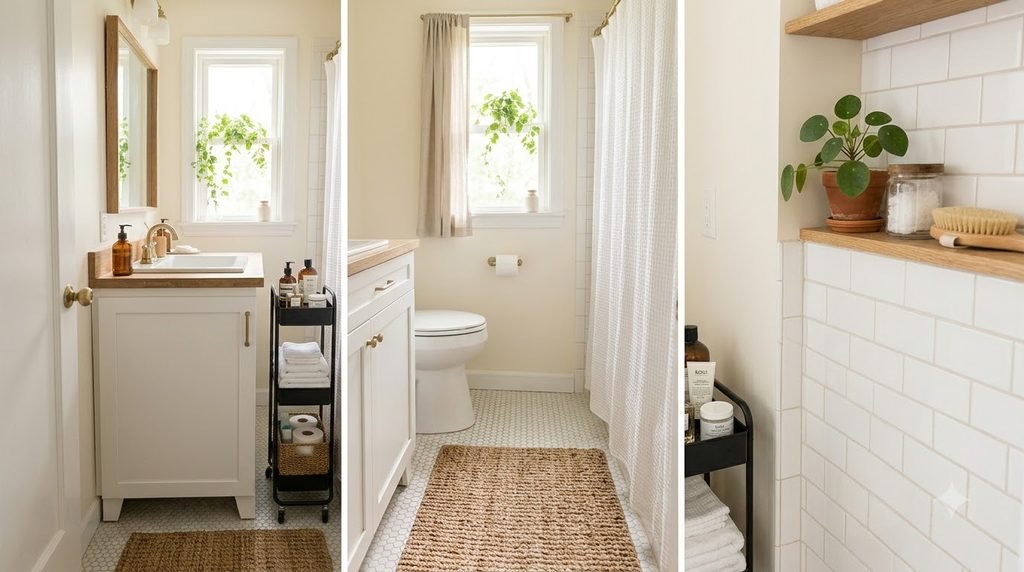
20. Use a Small Rolling Cart
A slim rolling cart can be especially useful in apartment bathrooms or bathrooms without enough cabinet storage.
Use the levels for:
Top: daily products
Middle: towels or grooming supplies
Bottom: backups
Because the cart can move, it can also be repositioned when cleaning the bathroom.
Current home-organization recommendations continue to highlight rolling carts as flexible storage solutions for tight spaces.
21. Create a Cleaning-Supply Zone
Bathroom cleaning supplies shouldn’t be scattered around the room.
Create one designated area under the sink or in a nearby household storage cabinet.
Group:
- Bathroom cleaner
- Disinfecting supplies
- Sponges
- Brushes
- Cleaning cloths
- Gloves
Keep cleaning products according to their labels and away from children or pets.
22. Use the Space Above the Door
If your bathroom layout allows it, a high shelf above the door can provide storage for items you don’t need every day.
Good candidates include:
- Extra towels
- Seasonal items
- Guest supplies
- Backup toiletries
Because it’s high up, avoid storing anything heavy or difficult to safely retrieve.
23. Create a Small Guest-Bathroom Zone
If your bathroom doubles as a guest bathroom, keep a small group of guest essentials together.
A basket could contain:
- Fresh hand towels
- Extra toilet paper
- Travel-size toiletries
- Soap
- Tissues
This keeps guest supplies from taking over everyday storage.
24. Use Labels Where They Actually Help
Labels can make shared bathroom storage easier to maintain.
Instead of labeling every tiny container, label categories.
For example:
Backups
Hair Care
Guest
Cleaning
Toiletries
This is particularly useful when multiple people share the same bathroom.
25. Separate Daily Items From Backups
One of the simplest organization systems is:
Daily → accessible
Weekly → nearby
Backup → stored away
This prevents your bathroom from becoming a warehouse.
It also makes cleaning easier because fewer products need to remain visible.
26. Keep the Floor as Clear as Possible
In a tiny bathroom, floor space has a huge visual impact.
Whenever possible, move storage upward.
Wall shelves, hooks, over-the-door organizers, narrow cabinets, and floating storage can help keep the floor open.
An uncluttered floor makes the room feel easier to move through and visually more spacious.
27. Give Everything a “Home”
This is the most important idea on the list.
Every frequently used item should have an obvious place to return to.
If you don’t know where something belongs, it will eventually end up on the counter.
Create simple homes for:
- Toothbrushes
- Hair tools
- Towels
- Toilet paper
- Cleaning supplies
- Skincare
- Shower products
- Backups
The best bathroom organization system isn’t the one that looks perfect on day one.
It’s the one you can still maintain six months later.
Small Bathroom Organization for Apartments
Apartment bathrooms often have limited cabinets, little counter space, and no dedicated linen closet.
Focus on storage that doesn’t permanently change the room.
Useful options include:
- Over-the-door organizers
- Freestanding shelves
- Slim carts
- Removable hooks
- Tension-style storage where appropriate
- Baskets
- Small drawer organizers
Before installing anything, check your lease and make sure the solution is suitable for the wall, tile, humidity, and available clearance.
How to Organize a Small Bathroom Without Cabinets
No vanity cabinets?
You still have options.
Use:
- A slim rolling cart
- Floating shelves
- Over-the-toilet storage
- Wall hooks
- Narrow freestanding shelves
- Door organizers
- Baskets
Focus first on vertical space.
Current small-bathroom guidance repeatedly emphasizes vertical storage because compact bathrooms often have limited floor area but usable wall space.
How to Make a Small Bathroom Feel Bigger
Organization and visual design work together.
Keep the floor open
Less floor clutter makes the room feel larger.
Reduce countertop clutter
A clear vanity creates visual breathing room.
Use vertical storage
Tall, narrow storage can provide capacity without consuming much floor area.
Group small products
Baskets and trays reduce visual noise.
Don’t overfill shelves
Some empty space makes storage look calmer.
Keep colors cohesive
A simple palette can make a small bathroom feel more unified.
Small Bathroom Organization Mistakes to Avoid
Buying Storage Before Measuring
Always measure the space first.
A shelf that’s two inches too deep can make a tiny bathroom frustrating to use.
Using Every Available Surface
Not every empty wall needs a shelf.
Leave some visual breathing room.
Keeping Too Many Backups
Store excess supplies somewhere else when possible.
Overloading the Shower
Too many bottles make the shower harder to clean.
Ignoring Humidity
Bathroom storage needs to suit a damp environment. Choose materials and products appropriate for the location.
Creating Complicated Systems
If putting something away takes too many steps, the system probably won’t last.
Frequently Asked Questions
How do I organize a very small bathroom?
Start by decluttering, then focus on vertical storage, over-the-toilet space, under-sink organization, door storage, drawer dividers, and designated zones for daily-use products.
How can I get more storage in a small bathroom?
Look beyond the existing cabinets. Use vertical walls, the space above the toilet, the back of the door, narrow gaps, under-sink space, and suitable freestanding storage.
How do I organize a bathroom with no cabinets?
Use floating shelves, slim rolling carts, over-the-toilet storage, baskets, hooks, and narrow shelving. Keep everyday items accessible and store backups elsewhere.
Where should I put towels in a small bathroom?
Use wall-mounted towel racks, narrow shelves, baskets, ladder-style racks, or over-the-door storage depending on your layout. Keep frequently used towels easy to reach.
How do I keep a small bathroom countertop clear?
Keep only genuine daily essentials visible. Group them on a small tray if needed and give everything else a designated drawer, cabinet, basket, or storage zone.
Is over-the-toilet storage a good idea?
It can be very useful because it takes advantage of vertical space that might otherwise remain unused. However, measure carefully and make sure the storage doesn’t interfere with toilet use, tank access, or the room’s circulation.
Final Thoughts
A small bathroom doesn’t have to feel like a constant battle against clutter.
You don’t necessarily need a larger vanity, a full renovation, or dozens of storage containers.
Start smaller.
Remove what you don’t use.
Move everyday products into convenient zones.
Use the wall.
Look behind the door.
Take advantage of the space above the toilet.
Make the area under the sink easier to access.
And keep backup supplies from taking over your prime storage.
The goal isn’t to fill every empty inch.
It’s to make every useful inch work better.
When everything has a simple home and the surfaces stay relatively clear, even a very small bathroom can feel calmer, more functional, and surprisingly spacious.