Small laundry rooms rarely have a storage problem alone—they have a workflow problem. When detergent, baskets, and clothes all compete for the same few feet of space, the room quickly becomes messy again.
The goal isn’t to squeeze more containers into the room. It’s to create a setup where the things you use most are easy to reach, and the available wall, door, and floor space works harder for you.
Here are 27 practical small laundry room organization ideas to help you create a space that feels cleaner and easier to use.
The 5-Zone Method for a Small Laundry Room
Before buying baskets or shelves, divide your laundry room into five functional zones:
- Wash Zone: Detergent, pods, and fabric softener.
- Treat Zone: Stain remover, brushes, and cloths.
- Dry Zone: Drying rack, hanging rod, or hooks.
- Fold Zone: A counter or folding surface.
- Utility Zone: Cleaning tools, extra supplies, and lint rollers.
The key rule: store frequently used items closest to the task they belong to. This reduces unnecessary movement.
27 Small Laundry Room Organization Ideas
1. Use the Wall Above Your Washer and Dryer
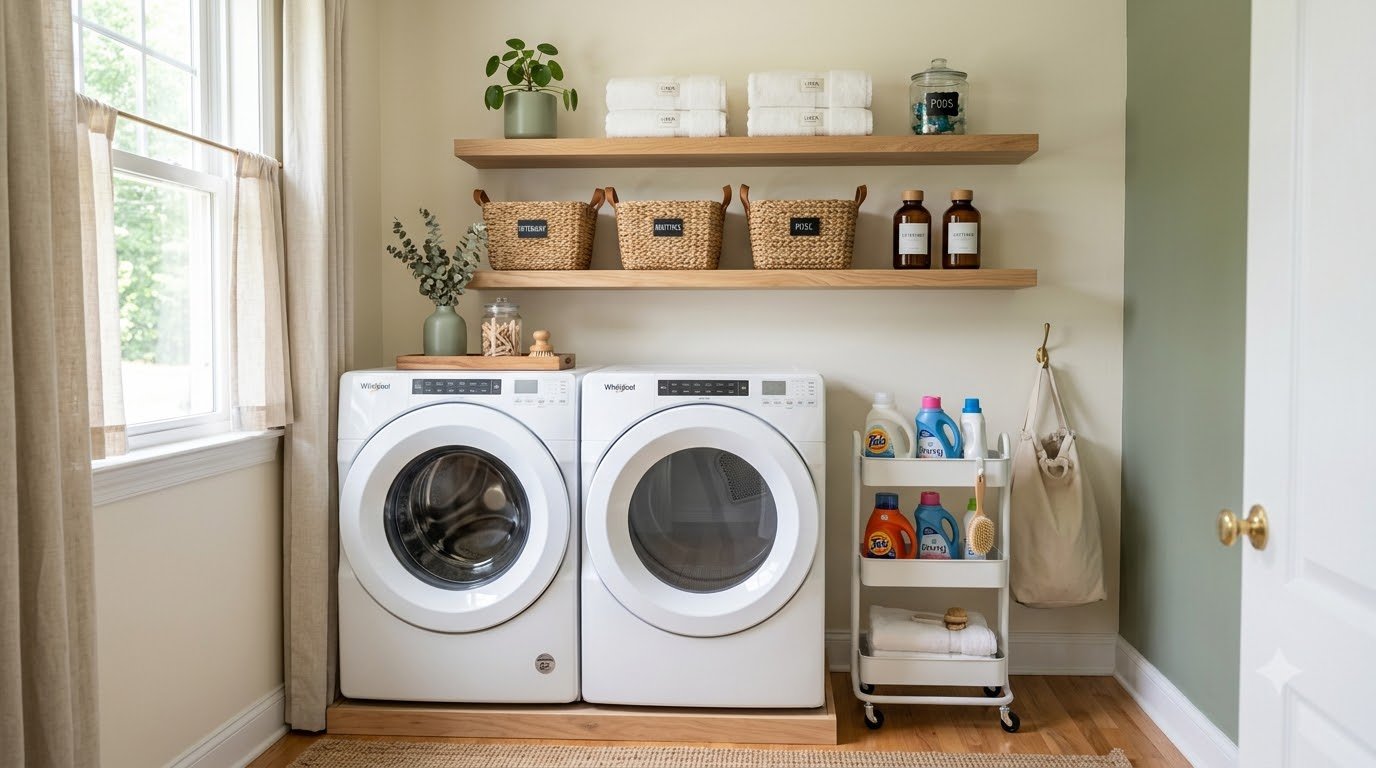
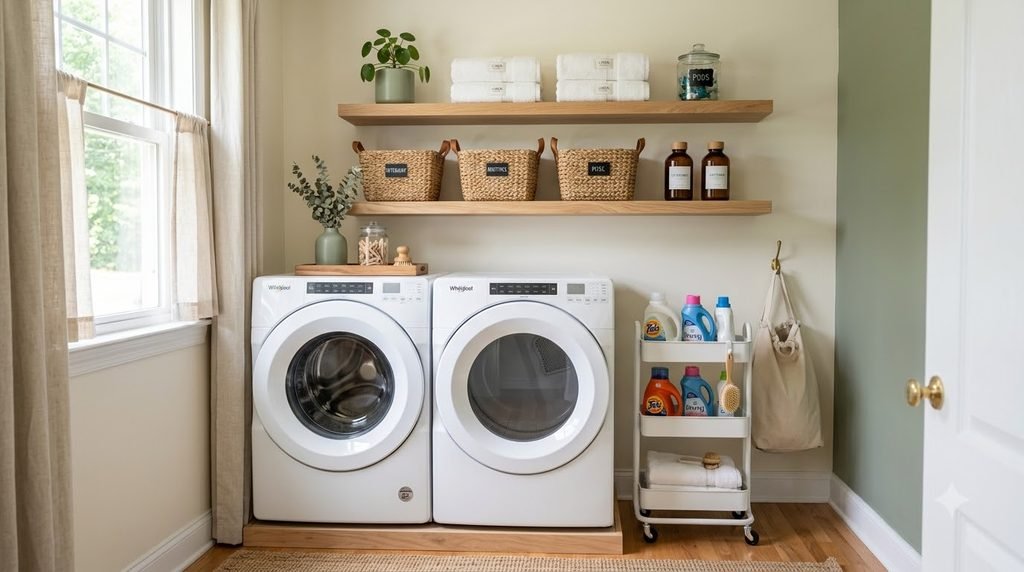
When floor space is limited, the wall above your machines is the easiest place to add storage. Install one or two shelves for everyday supplies, small baskets, or towels.
2. Install Floating Shelves
Floating shelves provide storage without the bulk of a large cabinet. Use them for detergent, fabric-care products, and small baskets. They are great for oddly shaped spaces where standard cabinets won’t fit.
3. Stack Your Washer and Dryer
If your room is narrow, a stackable configuration can free up substantial floor space. Always follow the manufacturer’s compatibility and installation requirements before stacking.
4. Add a Narrow Rolling Cart
A narrow gap beside the washer can become one of the most useful storage areas. Measure the gap first, then choose a slim rolling cart for detergent, stain removers, and cleaning cloths.
5. Use the Back of the Door
The back of the door is valuable storage space often overlooked. Use an over-the-door organizer for stain sticks, lint rollers, small brushes, and laundry bags. Keep the organizer relatively light.
6. Create a Dedicated Detergent Station
Instead of letting detergent bottles collect randomly, create one dedicated zone. Group them by purpose: Wash (detergent + stain remover), Dry (dryer sheets), and Care (garment bags).
7. Use Matching Storage Baskets
Matching baskets instantly make a small laundry room look more organized. Use them for towels, cleaning cloths, and extra supplies. Woven baskets can also add warmth to a utilitarian space.
8. Add a Compact Drying Rack
A wall-mounted, fold-down, or retractable drying rack gives you a place to air-dry clothes without taking up floor space. A collapsible solution is much more practical in tiny rooms than a large freestanding rack.
9. Add a Hanging Rod
Don’t stop at the space directly above the machines. Use tall shelving, wall-mounted cabinets, or high shelves. Keep everyday items at a comfortable height and reserve higher shelves for backups.
10. Use Vertical Storage Beyond the Machines
If the room becomes a drop zone, create a small command center with a calendar, hooks for laundry bags, a basket for misplaced items, and a small shelf for essentials. (For more vertical ideas, see our Small Space Organization Ideas).
11. Create a Small Laundry Command Center
If you have a narrow gap, a slim storage cart can turn it into a useful vertical supply area. Measure first—a cart that is too wide will interfere with appliance ventilation.
12. Add Pull-Out Storage
Pull-out baskets or drawers make deep cabinets easier to use. Instead of reaching to the back, you can pull the storage forward and see everything at once.
13. Use Shelf Risers Inside Cabinets
Shelf risers create a second level for smaller products. Keep larger detergent bottles underneath while storing stain sticks and dryer supplies above them.
14. Store Cleaning Supplies Vertically
Use wall hooks, narrow organizers, or pegboards to keep tools upright and easy to grab rather than letting them pile together.
15. Use a Pegboard for Small Tools
A pegboard turns a blank wall into a flexible system. Use hooks for scissors, brushes, dustpans, and small cleaning accessories. The advantage is flexibility.
16. Add Hooks to Unused Walls
A few well-placed hooks can provide surprisingly useful storage for reusable bags, cleaning cloths, garment bags, and hangers. This works especially well in awkward areas where shelves would be too bulky.
17. Create Separate Laundry Sorting Zones
If dirty laundry piles up, create dedicated sorting zones. Use two hampers for lights and darks, or one slim hamper with multiple compartments. Choose a system that matches how your household actually does laundry.
18. Use Slim Hampers
Bulky baskets can overwhelm a small room. Instead, look for tall and narrow hampers that use vertical space. They can fit beside a washer, dryer, or cabinet.
19. Store Extra Supplies Up High
Divide supplies into Everyday (detergent, stain remover) and Backstock (extra detergent, seasonal products). Keep everyday products within easy reach and move backstock to higher shelves.
20. Use Clear Containers for Small Items
Clear containers make small supplies easier to find. They’re useful for clothespins, laundry pods, dryer balls, and stain sticks. Keep them securely away from children and pets.
21. Add a Fold-Down Ironing Board
A wall-mounted or fold-down ironing board gives you an ironing surface without permanently consuming floor space. When finished, fold it away.
22. Make a Laundry Closet More Functional
A laundry closet can still work harder. Try adding shelves above the machines, door-back storage, a slim rolling cart, hooks, and foldable drying equipment.
23. Use Warm Wood and Woven Baskets for a Cozy Look
Organization doesn’t have to mean sterile white plastic. Introduce warm wood, woven baskets, natural textiles, and a simple plant to make the space feel more like part of your home.
24. Keep Countertops Visually Clear
If you have a countertop above front-loading machines, resist the urge to use every inch. Keep only regularly used products on top; put backups inside cabinets.
25. Create a Simple Laundry Reset System
At the end of each laundry session: put detergent back, return tools to hooks, remove empty packaging, and fold clothes promptly. A few minutes prevents clutter from accumulating.
26. Make Every Storage Zone Serve a Purpose
Every shelf, basket, and hook should have a job. For example: Shelf 1 for everyday products, Shelf 2 for towels, Rolling cart for cleaning supplies, and Hooks for laundry bags.
27. DIY Small Laundry Room Organization Ideas
You don’t need an expensive makeover. Try installing a basic shelf, adding hooks to an unused wall, repurposing baskets, or creating a fold-down drying area. (For more, see our Utility Closet Organization guide).
How to Organize a Small Laundry Room Step by Step
If the room feels overwhelming, don’t organize everything at once.
- Empty the main storage areas.
- Remove what you don’t need (empty containers, duplicates).
- Group similar items (essentials, cleaning supplies, backstock).
- Measure before buying storage (walls, gaps, cabinets).
- Choose storage based on your actual space.
- Keep everyday items within easy reach.
Small Laundry Room Organization Mistakes to Avoid
- Buying storage before measuring.
- Using every surface as permanent storage.
- Ignoring vertical space.
- Keeping too many backups.
- Creating a system that is too complicated to maintain.
Frequently Asked Questions
How do I organize a very small laundry room?
Start by using vertical space. Add shelves above the washer and dryer, a narrow rolling cart, door storage, hooks, and a compact drying rack.
How can I maximize storage in a small laundry room?
Use the walls, door, appliance-side gaps, and vertical space before adding bulky furniture. Floating shelves and rolling carts add useful storage without taking up floor space.
Where should I store laundry detergent?
Keep everyday detergent in an easy-to-reach location near the washer, such as a shelf or cabinet. Store backup supplies separately so the main work area stays uncluttered.
Final Thoughts
A small laundry room doesn’t have to feel cramped. The best strategy is to use each zone intentionally rather than simply adding more storage. Start with the easiest improvements first: add a shelf above the machines, use a narrow rolling cart, and install hooks.
Related Articles: