The entryway is often the first place clutter starts to build up. Shoes pile up by the door, jackets end up on chairs, keys disappear, and bags seem to find their way onto every available surface.
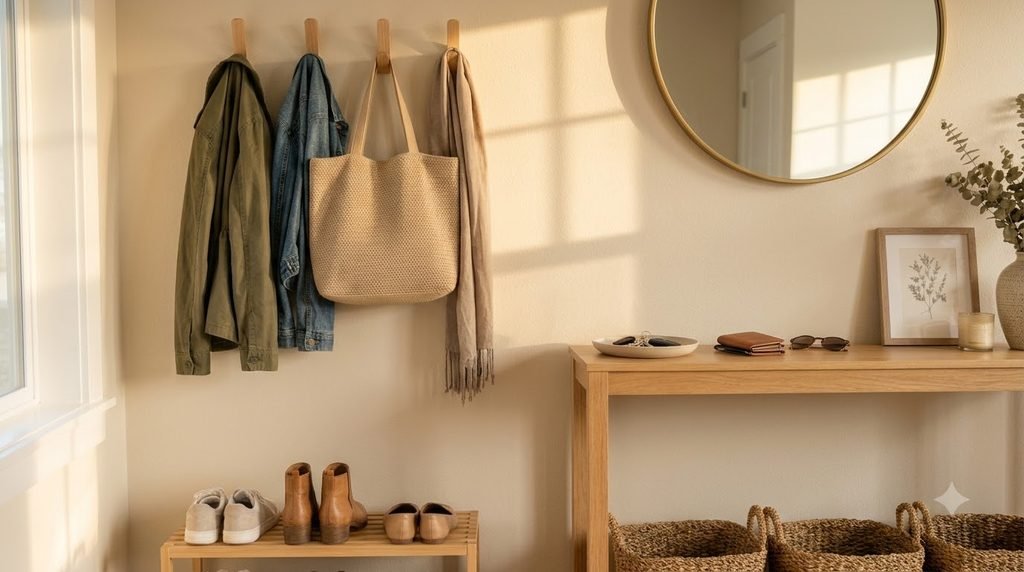
The good news is that you don’t need a huge mudroom to create a functional entryway.
With a few smart storage solutions and simple organization habits, even a small entryway can become a clean, welcoming space where everything has a place.
If you’re looking for entryway organization ideas that work in real homes, these practical solutions can help you make better use of the space you already have.
1. Create a Dedicated Drop Zone
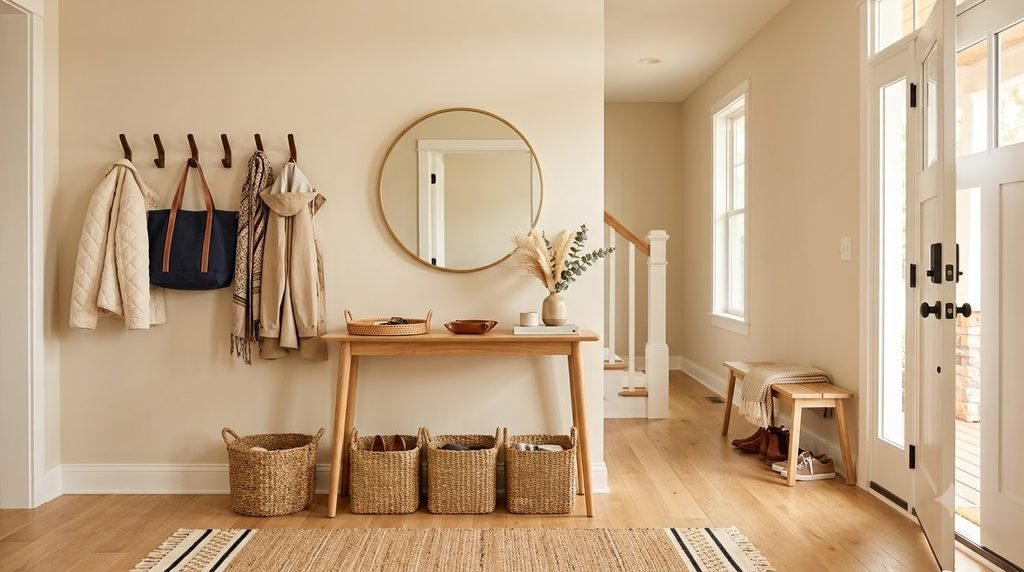
One of the easiest ways to control entryway clutter is to create a dedicated drop zone near the door.
Instead of allowing keys, shoes, bags, jackets, mail, and everyday items to land wherever there is space, give each category a specific home.
A practical entryway drop zone can include:
- Wall hooks for jackets and bags
- A small tray for keys and wallets
- A basket for everyday accessories
- A slim shoe rack or cabinet
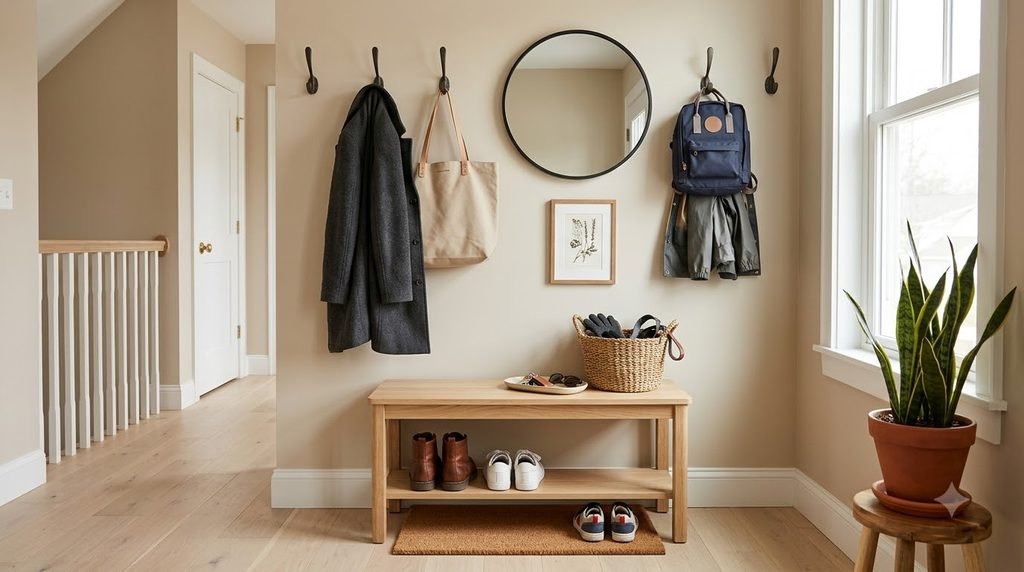
- A small bench for putting on shoes
- A basket for items that need to go to another room
The most important part is location. Keep the storage close enough to the entrance that putting things away takes only a few seconds.
If your entryway is small, don’t try to create a full mudroom. Start with three basic zones: shoes, hanging items, and small essentials.
For more ways to organize compact areas of your home, see our small space organization ideas.
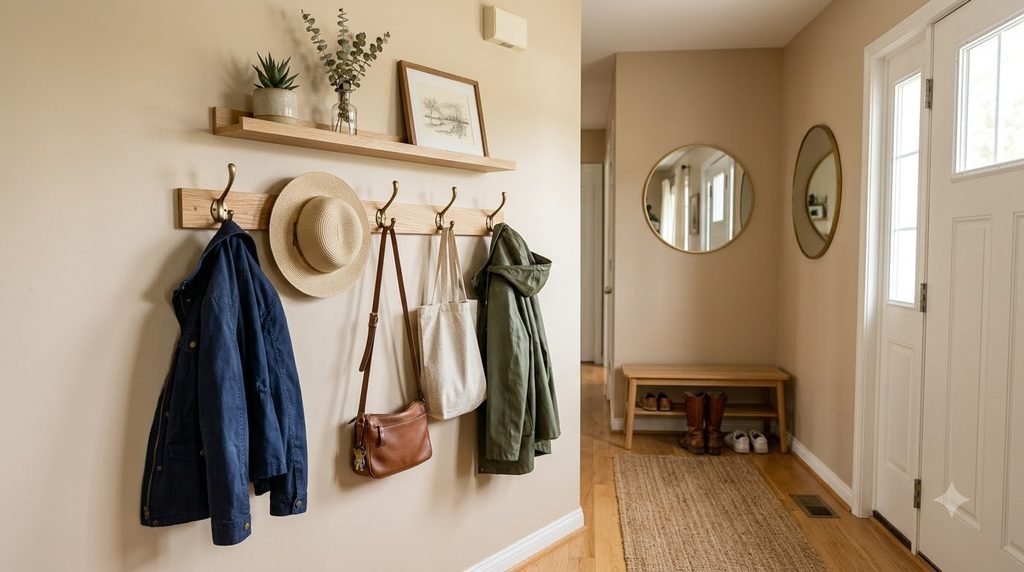
2. Add Wall Hooks for Bags and Jackets
Wall space is valuable, especially in a narrow entryway.
A row of sturdy hooks can keep jackets, purses, backpacks, hats, and reusable shopping bags off the floor.
Install hooks at a comfortable height for adults, and consider adding lower hooks if children regularly use the entryway.
Keeping frequently used items within easy reach also makes it easier for everyone to put things away.
3. Use a Slim Shoe Rack
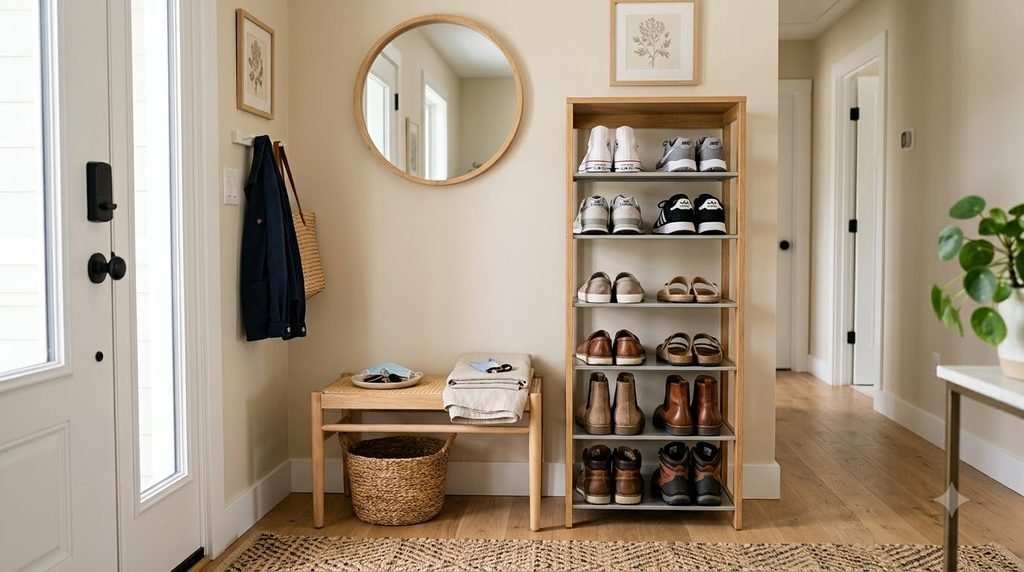
Shoes are one of the fastest ways for an entryway to become cluttered.
Instead of allowing footwear to collect around the door, use a slim shoe rack that fits the available wall space without narrowing the walkway.
For a small entryway, consider:
- Vertical shoe racks
- Narrow stackable racks
- Shoe benches
- Closed shoe cabinets
- Wall-mounted shoe storage
Keep the shoes your household wears most often near the entrance and move seasonal or special-occasion footwear to another storage area.
If shoes still end up on the floor, the storage may be too far away or difficult to use. Make the everyday shoe zone as convenient as possible.
This approach works particularly well when you’re trying to create entryway storage ideas for small spaces without adding bulky furniture.
4. Add a Storage Bench
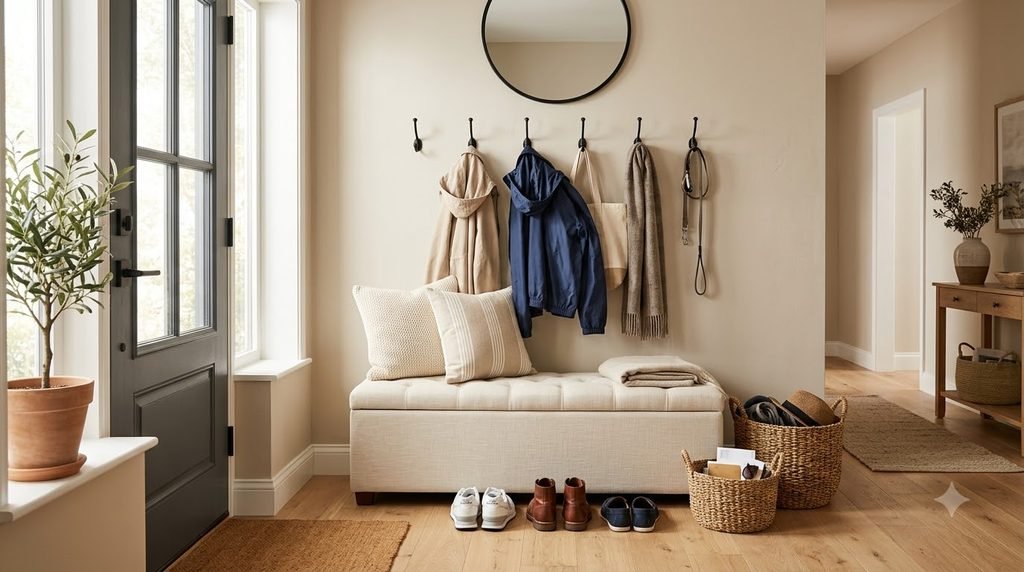
A storage bench can solve two problems at once.
It gives you a comfortable place to sit while putting on or taking off shoes, while the space underneath can provide hidden storage.
Depending on the design, you can use the storage area for:
- Shoes
- Winter accessories
- Reusable shopping bags
- Outdoor gear
- Pet-walking supplies
Choose a bench that fits the scale of your entryway so the space doesn’t feel crowded.
5. Use Baskets for Everyday Items
Baskets are an easy way to contain the small items that tend to accumulate near the front door.
Use separate baskets for different categories rather than putting everything into one large container.
For example:
- One basket for hats and gloves
- One for scarves
- One for reusable bags
- One for children’s accessories
Matching baskets can also make an entryway look more cohesive while keeping everyday items accessible.
6. Create a Key and Mail Station
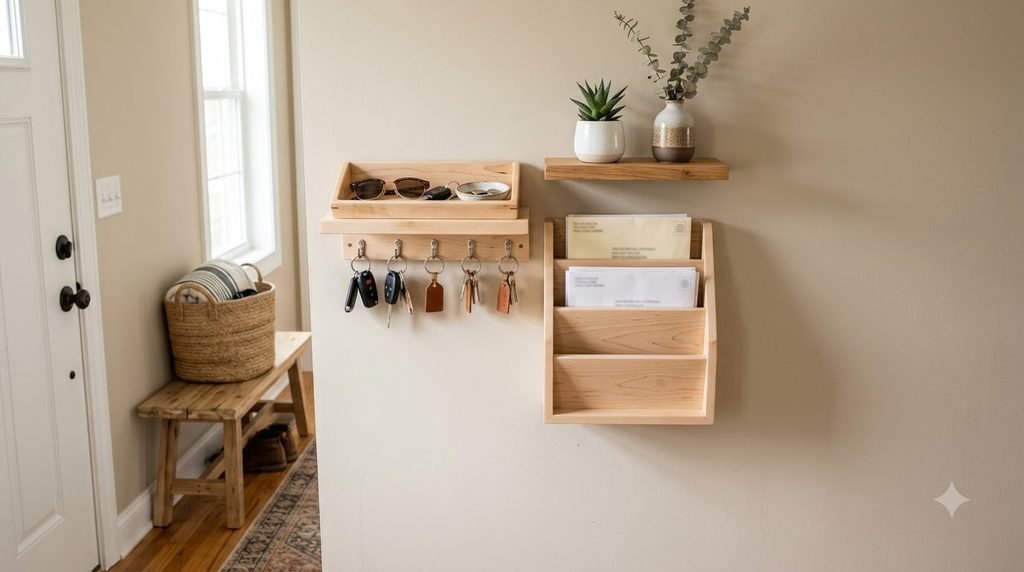
Keys and mail are small, but they can create surprisingly large amounts of clutter.
Create one small station near the entrance.
A simple setup could include:
- A wall-mounted key holder
- A small catch-all tray
- A mail organizer
- A recycling container nearby
Make a habit of dealing with mail as soon as possible rather than allowing it to accumulate on the entryway table.
A dedicated station means you won’t have to search the house for your keys every morning.
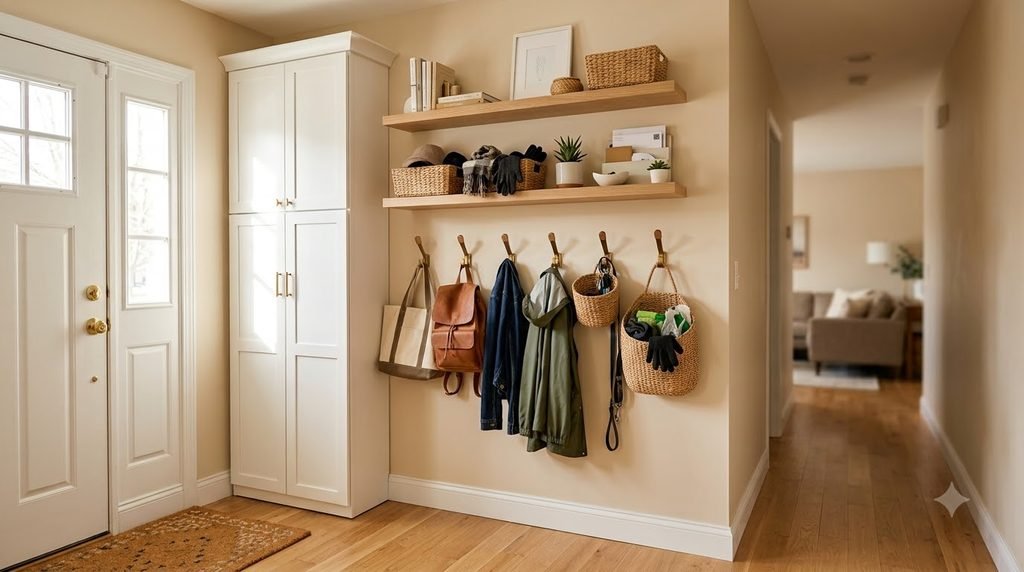
7. Make Use of Vertical Storage
When floor space is limited, look at the walls before adding another piece of furniture.
Vertical storage can give you several useful storage zones while keeping the walkway open.
Consider using:
- Floating shelves
- Wall hooks
- Tall cabinets
- Vertical shoe storage
- Hanging baskets
- Narrow shelving
- Wall-mounted mail organizers
- Small pegboards
Place frequently used items at an easy-to-reach height and use higher shelves for seasonal or less frequently used belongings.
A narrow entryway often benefits more from vertical storage than from a deep console or large cabinet.
If you are organizing several compact areas in your home, you may also like our guide to small space organization ideas.
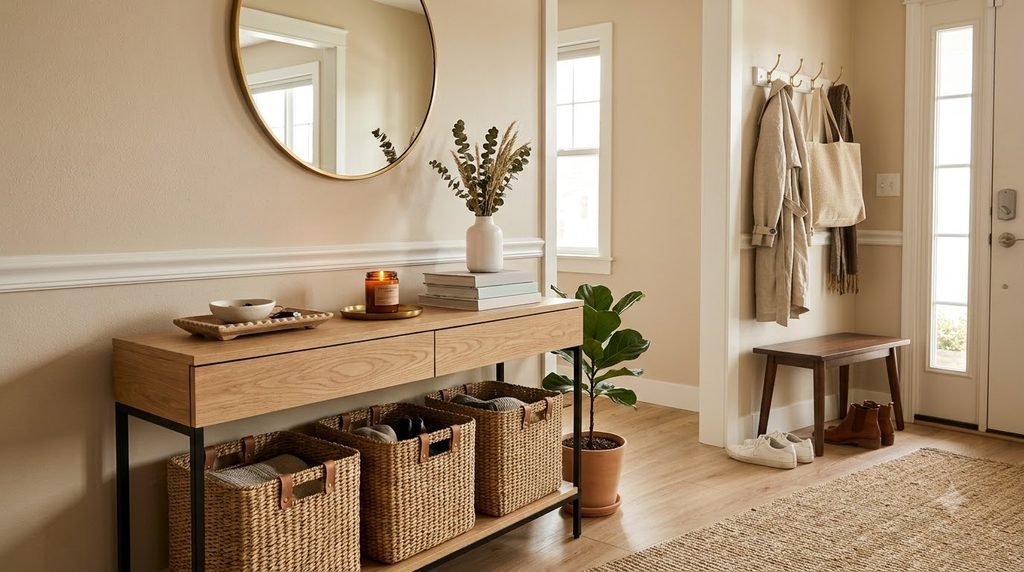
8. Use the Space Under a Console Table
A console table can provide more storage than it appears to offer.
Instead of leaving the area underneath completely empty, add baskets or low storage containers.
You can use the space for:
- Shoes
- Bags
- Blankets
- Seasonal accessories
- Pet supplies
Choose baskets that slide easily underneath the table and don’t interfere with the walkway.
9. Organize Shoes by Frequency of Use
You don’t need every pair of shoes stored near your front door.
A better system is to organize footwear according to how often your household actually uses it.
Keep everyday footwear easily accessible, such as:
- Sneakers
- Casual shoes
- Slippers
- Children’s everyday shoes
- Frequently worn boots
Move special-occasion shoes, seasonal footwear, and rarely worn pairs to a closet or another storage area.
This simple change can free up valuable entryway storage and make it easier to find the shoes you need every day.
If your entryway is particularly narrow, combine this approach with a slim vertical shoe rack or closed cabinet.
10. Add a Small Catch-All Tray
A small tray can prevent everyday items from spreading across your entryway.
Use it for things such as:
- Keys
- Sunglasses
- Wallets
- Earbuds
- Small accessories
The important part is keeping the tray intentionally small.
If the container is too large, it can become another place to accumulate random clutter.
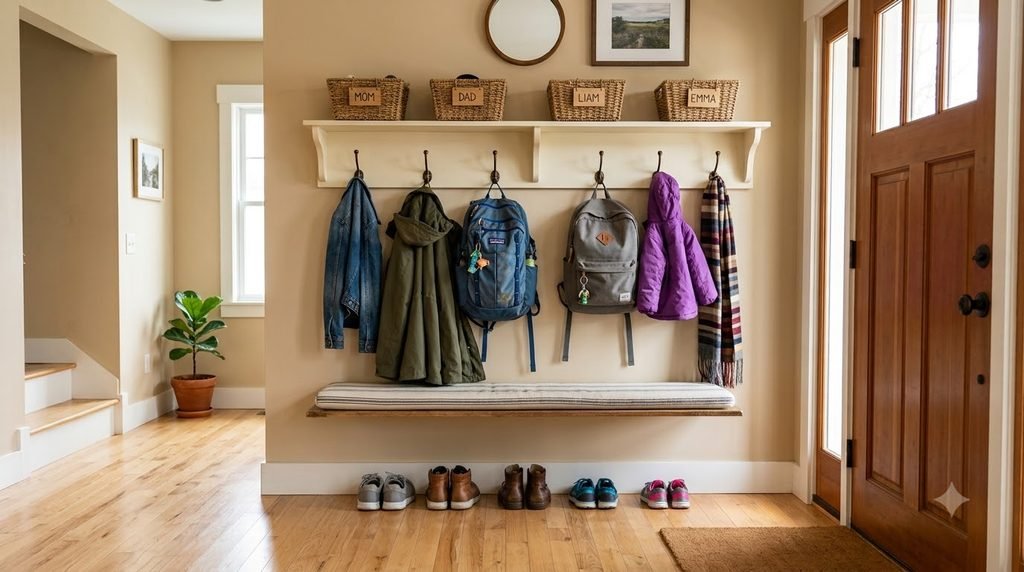
11. Create a Family Drop Zone
If several people use the same entrance, a single shared pile of shoes, jackets, backpacks, and bags can quickly become overwhelming.
Instead, give each household member a simple designated area.
Depending on the available space, each person could have:
- One hook
- One basket
- One shelf
- One shoe section
- One small labeled storage area
For children, keep their hooks and baskets low enough that they can use them independently.
The goal isn’t to create a complicated personalized storage system. It’s simply to make it obvious where each person’s everyday belongings belong.
A family drop zone can make an entryway much easier to maintain because everyone has a defined place for the things they bring into the house.
12. Use a Small Entryway Cabinet
If you have enough room, a slim cabinet can provide valuable hidden storage.
Closed storage is particularly useful when you want the entryway to look clean even when everyday items are stored nearby.
Use the cabinet for things you don’t need constantly, such as:
- Extra shoes
- Seasonal accessories
- Cleaning supplies
- Bags
- Outdoor equipment
Before buying furniture, measure the available width, depth, and walking space carefully.
13. Don’t Forget the Entryway Floor
An organized entryway isn’t only about storage furniture.
The floor should remain as open as possible.
Use a washable runner or entryway mat to define the space while keeping the walking path clear.
If shoes constantly end up outside the storage area, the problem may be that the shoe storage is too far away or difficult to use.
Move everyday storage closer to the door and make putting things away as convenient as possible.
14. Organize Seasonal Entryway Items
Your entryway doesn’t need to store every type of clothing and accessory all year.
Instead, rotate items according to the season.
During warmer months, you may need space for:
- Lightweight jackets
- Hats
- Sandals
- Reusable shopping bags
During colder months, you may need more room for:
- Coats
- Boots
- Gloves
- Scarves
- Umbrellas
Store off-season items elsewhere and bring them back when the weather changes.
This reduces visual clutter and gives your everyday entryway storage more room to work.
Seasonal rotation is particularly useful for small homes where entryway storage is limited.
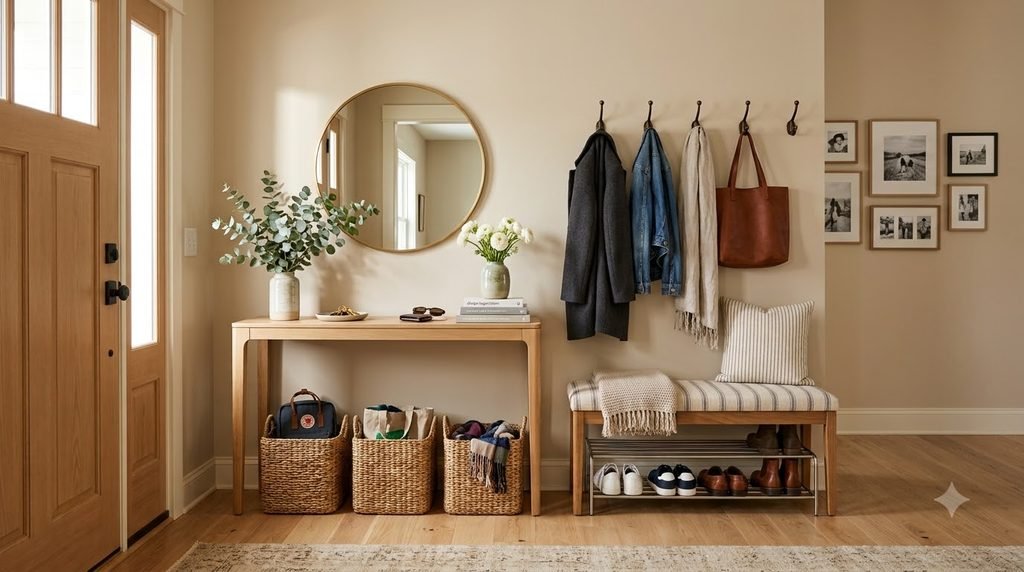
15. Do a 10-Minute Entryway Reset
Even a well-designed entryway organization system needs a quick reset.
A short reset once a day or a few times a week can prevent small piles from becoming a major mess.
Step 1: Put Away Shoes
Return shoes to their designated rack, cabinet, bench, or basket.
Step 2: Hang Jackets and Bags
Move coats, purses, backpacks, and reusable bags back to their hooks.
Step 3: Clear the Drop Zone
Return keys, wallets, sunglasses, and other small items to their designated tray or organizer.
Step 4: Deal With Mail
Recycle unwanted mail and move important papers to their proper location.
Step 5: Clear the Floor
Make sure the main walkway remains open.
A simple reset works better than waiting until the entryway becomes so cluttered that you need to reorganize everything from scratch.
Entryway Organization Ideas for Small Spaces
A small entryway doesn’t need to feel cramped.
The key is choosing storage that uses vertical space and keeps the floor open.
Try combining:
- Wall hooks
- Slim shoe racks
- Narrow benches
- Floating shelves
- Small baskets
- Over-the-door storage
- Wall-mounted organizers
Avoid adding large furniture simply because it provides storage.
Every piece should have a clear purpose.
If the entryway is extremely narrow, prioritize wall storage and shallow furniture over deep cabinets or large benches.
16. Entryway Organization Ideas for Very Small Spaces
When you have a very small entryway, every piece of furniture needs to earn its place.
Start with storage that uses the walls instead of taking up floor space.
Try combining:
- Wall hooks
- A slim shoe rack
- A narrow floating shelf
- A small catch-all tray
- Wall-mounted baskets
- A shallow console table
- A narrow storage bench
Avoid choosing furniture based only on how much it can store.
Measure the available depth first and make sure there is still enough room to walk comfortably.
In a tiny entryway, less furniture with better placement is often more useful than adding several storage pieces.
17. Small Entryway Storage Ideas Without a Closet
You don’t need an entryway closet to create useful storage.
If your home has an open entrance, create separate zones using small pieces of furniture and wall storage.
For example:
Wall: hooks for coats and bags
Shelf: keys, sunglasses, and small accessories
Floor: slim shoe rack
Bench: seating plus hidden storage
Basket: reusable bags or seasonal accessories
This creates the basic functions of an entryway closet without requiring a dedicated room or built-in storage.
If your home has several areas without traditional storage, our 10 simple home organization ideas can help you find additional ways to create practical systems.
18. How to Organize a Small Entryway Step by Step
If your entryway feels cluttered, start with the items that create the biggest problems.
Step 1: Remove everything from the entryway
Take out shoes, bags, jackets, mail, accessories, and miscellaneous items.
Step 2: Decide what actually belongs there
Only keep items that are regularly used when entering or leaving the house.
Step 3: Create three basic zones
Start with:
- Shoes
- Jackets and bags
- Small essentials
Step 4: Measure the space
Measure the wall width, available floor depth, door clearance, and any existing furniture.
Step 5: Choose storage based on the measurements
Use hooks, baskets, shelves, racks, or a narrow cabinet according to the actual space available.
Step 6: Put everyday items within easy reach
Frequently used belongings should be the easiest things to put away.
Step 7: Create a reset routine
Spend a few minutes regularly returning everything to its designated place.
The goal is not simply to make the entryway look organized once. The goal is to create a system that stays manageable.
19. Entryway Organization Ideas for Apartments
Apartment entryways often have limited floor space and little built-in storage.
Focus on compact solutions that provide multiple functions.
Useful options include:
- Over-the-door organizers
- Wall hooks
- Slim shoe racks
- Narrow storage benches
- Floating shelves
- Small baskets
- Wall-mounted key holders
- Shallow console tables
If you rent, choose removable or freestanding solutions where appropriate and follow the manufacturer’s installation requirements.
A small apartment entryway can still have dedicated storage for shoes, coats, bags, and everyday essentials without requiring a renovation.
For more apartment-friendly organization ideas, see our small space organization guide.
20. Entryway Storage Ideas for Shoes, Bags, and Coats
The easiest way to organize an entryway is to think about storage by category.
Shoes
Use a slim shoe rack, bench, cabinet, or vertical organizer.
Bags
Use sturdy wall hooks, individual hooks, or a basket for reusable shopping bags.
Coats and Jackets
Keep everyday outerwear on easily accessible hooks rather than storing it in a closet that is inconvenient to reach.
Small Essentials
Use a tray, wall organizer, or small basket for keys, sunglasses, wallets, and other frequently used items.
When each category has a designated storage zone, clutter becomes easier to control because items don’t have to compete for the same space.
21. How to Organize an Entryway Without Making It Look Cluttered
Adding storage doesn’t automatically make an entryway look organized.
Too many visible baskets, hooks, furniture pieces, and accessories can create visual clutter even when everything technically has a place.
Try these simple principles:
- Keep only frequently used items visible
- Use matching or coordinated baskets
- Limit the number of items on a console
- Keep the floor as open as possible
- Store seasonal items elsewhere
- Use closed storage for less attractive everyday items
- Leave some empty space between storage zones
The goal is to balance function and visual breathing room.
An organized entryway should make the home feel easier to enter, not feel like another storage room.
22. Create a Renter-Friendly Entryway Organization System
Renters can still create an organized entryway without making permanent changes.
Depending on the surface and product specifications, consider:
- Removable hooks
- Freestanding shoe racks
- Narrow benches
- Baskets
- Freestanding shelving
- Over-the-door organizers
- Small trays
- Removable wall organizers
Before attaching anything to a wall or door, check your lease and follow the manufacturer’s instructions.
If you cannot drill into the wall, focus on combining freestanding storage with the vertical space that is already available.
23. Use a Narrow Console Table for Entryway Storage
A console table can work well in an entryway, but depth matters.
For a narrow hallway, choose a shallow table that leaves enough room for comfortable movement.
Use the top for only a few everyday items, such as:
- A small lamp
- A catch-all tray
- One decorative object
- A small basket
Then use the space underneath for additional baskets or low storage.
Avoid turning the console into a dumping ground for mail, bags, packages, and miscellaneous household items.
Give every item a defined home so the console remains functional rather than becoming another clutter zone.
24. Create an Entryway Reset Basket
If random items frequently travel through your entryway, add one small reset basket.
The basket is not permanent storage for clutter.
Instead, use it for items that belong in other rooms.
For example, you might find:
- Toys
- Chargers
- Books
- Clothing
- Kitchen items
- Children’s belongings
Once or twice a day, carry the basket through the house and return everything to its proper location.
This simple system can prevent the entryway from becoming the place where miscellaneous household items permanently accumulate.
25. Organize the Entryway Based on Your Daily Routine
The most effective entryway organization system is based on how your household actually enters and leaves the home.
Ask yourself:
- What do we usually drop first?
- Where do shoes naturally end up?
- Which bags are used every day?
- Do we need a place for children’s backpacks?
- Do we need space for pet supplies?
- Where does mail normally collect?
- Which items need to leave the house with us?
Then design the storage around those habits.
If everyone naturally removes shoes immediately, put shoe storage near the door.
If bags are always dropped on a chair, install hooks nearby.
If keys disappear regularly, create a dedicated key station.
Organization works best when the system follows your habits instead of forcing your habits to follow the system.
26. Entryway Organization Ideas on a Budget
You can create a functional entryway without buying an expensive furniture set.
Start with inexpensive or existing items such as:
- Simple hooks
- Baskets
- Small trays
- Stackable shoe racks
- Storage bins
- Floating shelves
- Repurposed furniture
Before purchasing anything, check other rooms for items that could be moved into the entryway.
A basket that isn’t being used, a small shelf, or an extra tray may already solve part of your storage problem.
Spend money only on the storage that solves a specific problem.
This keeps the entryway practical without turning organization into an expensive makeover.
How to Organize an Entryway Without a Mudroom
You don’t need a dedicated mudroom to create an effective drop zone.
A small section near the front door can work just as well.
Start with three essentials:
A place to hang things.
Use hooks for coats, bags, and hats.
A place for shoes.
Choose a compact rack, bench, or cabinet.
A place for small items.
Add a tray, basket, or wall organizer for keys, mail, and accessories.
Once these three zones are established, you can add storage based on your family’s specific needs.
ith new products.
Common Entryway Organization Mistakes
Even a well-intentioned setup can become difficult to maintain.
Too Much Furniture
A crowded entryway can feel worse even if it technically contains more storage.
No Designated Drop Zone
Without a clear place for keys, bags, shoes, and jackets, clutter will quickly return.
Storing Everything Near the Door
Only keep frequently used items in the entryway.
Storage That’s Difficult to Access
If putting something away requires several steps, people are less likely to do it.
Ignoring Seasonal Changes
Winter coats and summer sandals don’t need to occupy the same amount of space year-round.
Final Thoughts
The best entryway organization ideas make coming home and leaving the house easier.
You don’t need a huge mudroom or an expensive custom storage system. A few thoughtful changes—such as wall hooks, a slim shoe rack, baskets, a small bench, and a dedicated drop zone—can make a noticeable difference.
Start by identifying what creates the most clutter in your entryway.
If it’s shoes, improve shoe storage.
If it’s bags and jackets, add hooks.
If it’s keys and mail, create a small catch-all station.
If everything seems to accumulate, create a complete drop zone.
The goal isn’t to create a perfectly styled entryway that nobody uses. It’s to create a practical space where everything has a place and putting things away is easy enough to become a habit.
Related Articles
For more practical organization ideas, check out:
- 12 Small Space Organization Ideas to Make Your Home Feel Bigger
- 10 Simple Home Organization Ideas That Make Everyday Life Easier
- 15 Closet Organization Ideas to Maximize Your Storage Space
- 15 Toy Organization Ideas to Keep Your Home Clutter-Free
- 15 Small Laundry Room Organization Ideas to Maximize Every Inch