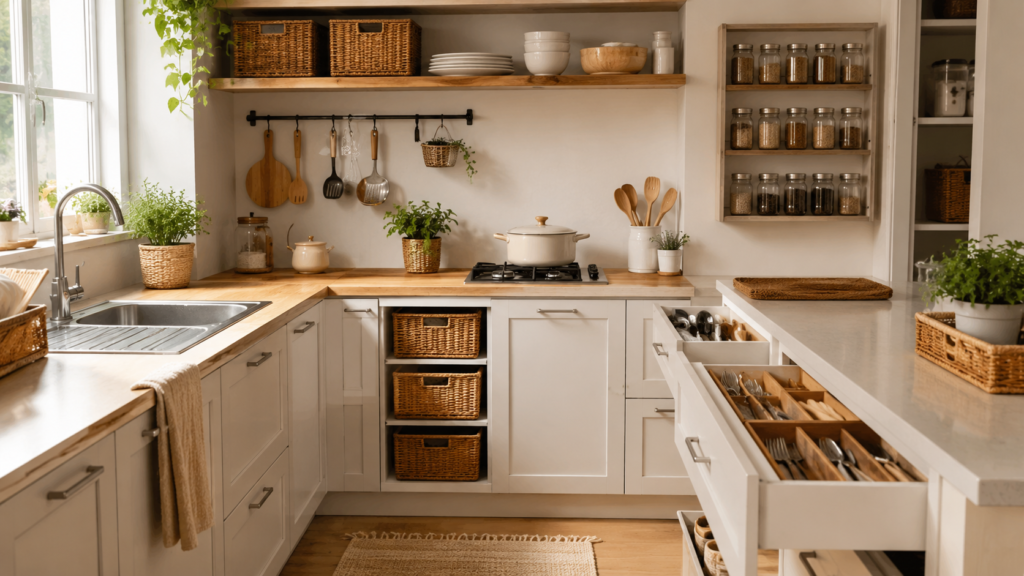
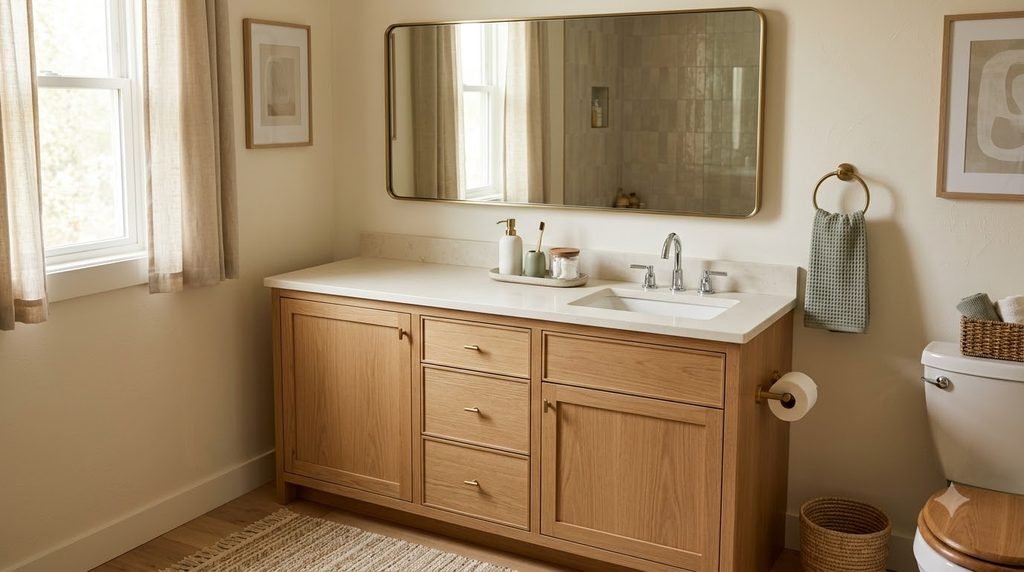
A small bathroom vanity has to do a lot with very little space.
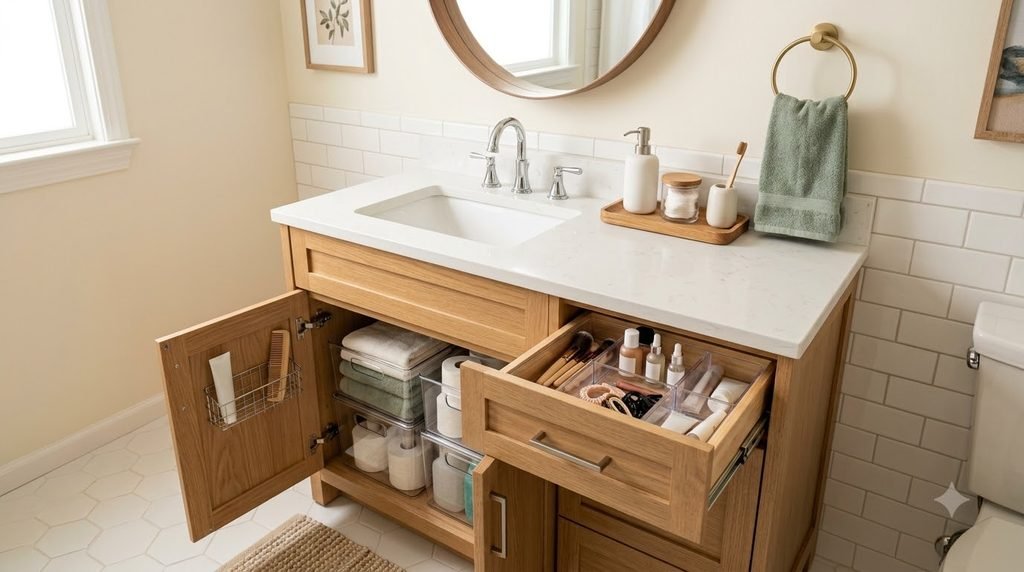
It needs to hold the products you use every morning and evening, provide enough room to wash up, store backup supplies, and still leave the bathroom feeling clean rather than crowded.
That’s why a small vanity can become cluttered so quickly.
A few skincare bottles end up around the sink. Makeup gets mixed with hair accessories. Extra toiletries disappear into deep cabinets. And before long, the countertop becomes the easiest place to leave everything.
The solution isn’t to put more containers on the counter.
Instead, treat the counter as a work surface, then move the rest of your bathroom essentials into clearly defined drawers, cabinets, door storage, and other nearby spaces.
Current 2026 organization guidance increasingly recommends this system-first approach: identify what you actually use, give everyday items the easiest access, and move rarely used or backup products away from the vanity.
Here are practical ways to organize a small bathroom vanity without sacrificing the counter space you actually need.
Amazon Associate Disclosure: As an Amazon Associate I earn from qualifying purchases.
1. Declutter the Vanity Before Adding Storage
Start by taking everything off the countertop and, if possible, emptying the drawers and vanity cabinet too.
Put the products on a clean surface where you can see them.
Then create a few simple groups:
- Daily-use products
- Weekly or occasional products
- Skincare
- Hair products
- Makeup
- Dental care
- Backup toiletries
- Cleaning supplies
- Items that belong somewhere else
Now remove the obvious clutter.
Look for:
- Empty bottles
- Products you never use
- Old samples
- Duplicates
- Broken accessories
- Products that belong in another room
Bathroom organization experts specifically recommend removing unused or outdated products before trying to reorganize the vanity.
The less you need to store, the easier it becomes to protect your limited counter space.
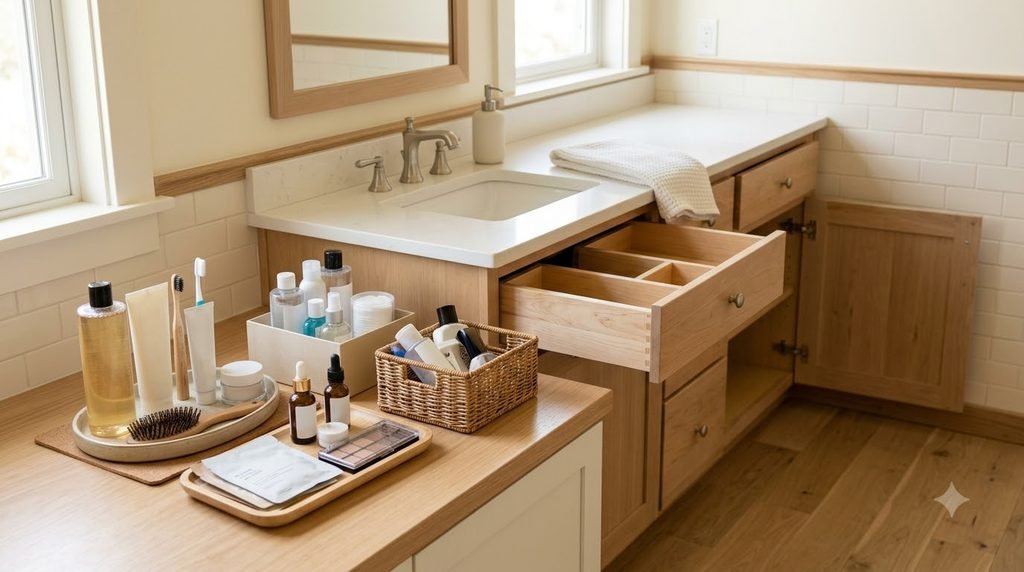
2. Decide What Actually Belongs on the Counter
A bathroom counter should support your routine, not store everything used in the bathroom.
Think about what you use every day.
For many households, that might include:
- Toothbrush
- Toothpaste
- Hand soap
- One or two skincare products
- A small daily-use item or two
Everything else should at least be considered for drawer, cabinet, wall, or nearby storage.
A useful question is:
Would I reach for this every day if it wasn’t already sitting here?
If the answer is no, it probably doesn’t need permanent counter space.
This simple rule can make a small vanity feel noticeably larger without purchasing anything.
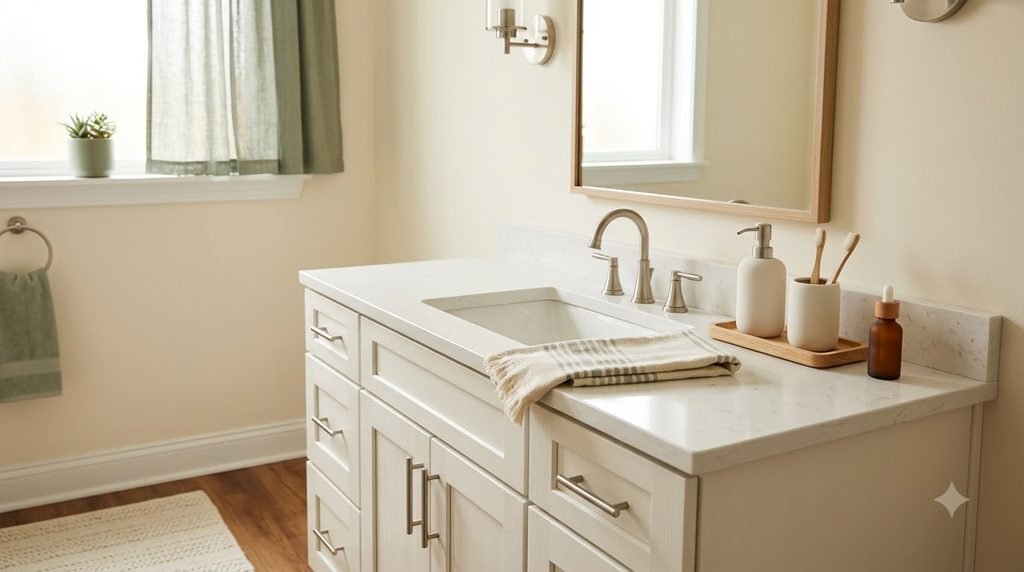
3. Create a Daily-Use Zone
Once you’ve decided what genuinely needs easy access, give those items one defined area.
You could use one small tray, a shallow organizer, or a designated section beside the sink.
The goal is to prevent your entire countertop from becoming a collection of individual bottles.
Instead of:
Toothpaste + skincare + hand lotion + hair products + miscellaneous items everywhere
create:
One small daily-use zone + clear workspace
A tray can work particularly well because you can move the entire group when cleaning the counter.
4. Move Backup Products Out of Sight
Buying backup products can save shopping trips, but storing all of those extras around the sink wastes valuable space.
Keep backup shampoo, toothpaste, skincare, soap, tissues, and other extras somewhere separate from your daily-use products.
Possible locations include:
- Under-sink storage
- A linen closet
- A bathroom cabinet
- A hallway storage cabinet
- A designated backup bin
Recent small-bathroom guidance specifically recommends keeping rarely used and backup products away from the main vanity when counter space is limited.
Your morning routine should not have to compete with your stockpile.
5. Organize Vanity Drawers by Routine
Bathroom drawers become easier to maintain when they’re organized around how you use the items, rather than simply filling each drawer randomly.
For example:
Top drawer
Daily skincare, dental accessories, and other morning essentials.
Second drawer
Makeup or grooming products.
Third drawer
Hair accessories or less frequently used items.
The exact arrangement depends on your household.
The principle is simple:
The more often you use something, the easier it should be to reach.
Current vanity-organization guidance also recommends drawer organizers and grouping toiletries, makeup and smaller items into practical categories.
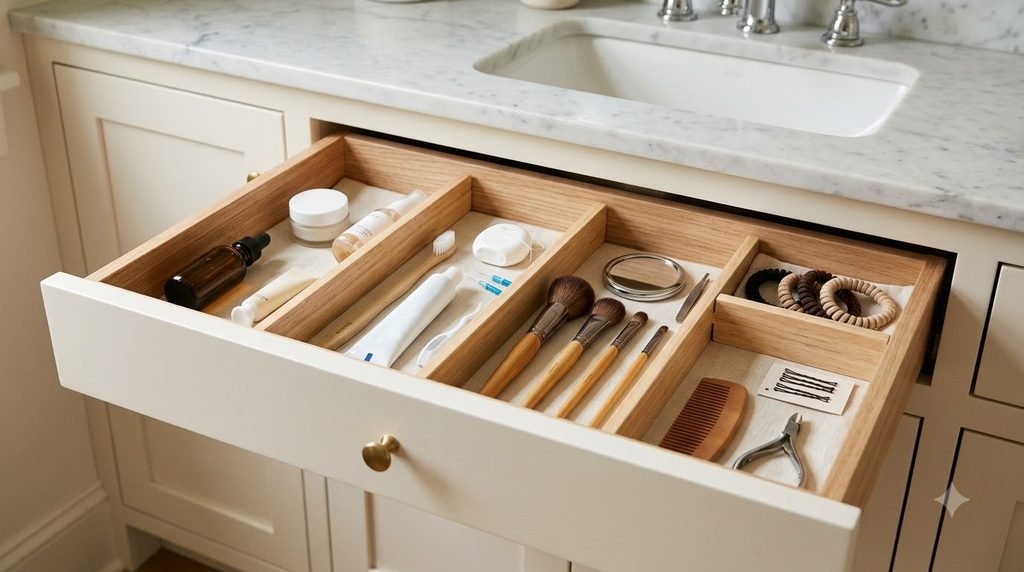
6. Use Small Drawer Dividers
A large vanity drawer can quickly become one mixed pile.
Use adjustable dividers or small compartments to keep categories separate.
For example:
- Lip products
- Hair ties
- Floss
- Small skincare products
- Nail accessories
- Makeup tools
- Grooming accessories
Adjustable Drawer Dividers
Best for: Deep or wide bathroom vanity drawers
What to look for: Adjustable width, appropriate drawer height, secure fit, and easy-to-clean material.
→ Check the current price on Amazon
Measure the inside of the drawer before purchasing. A divider that fits another vanity may not work in yours.
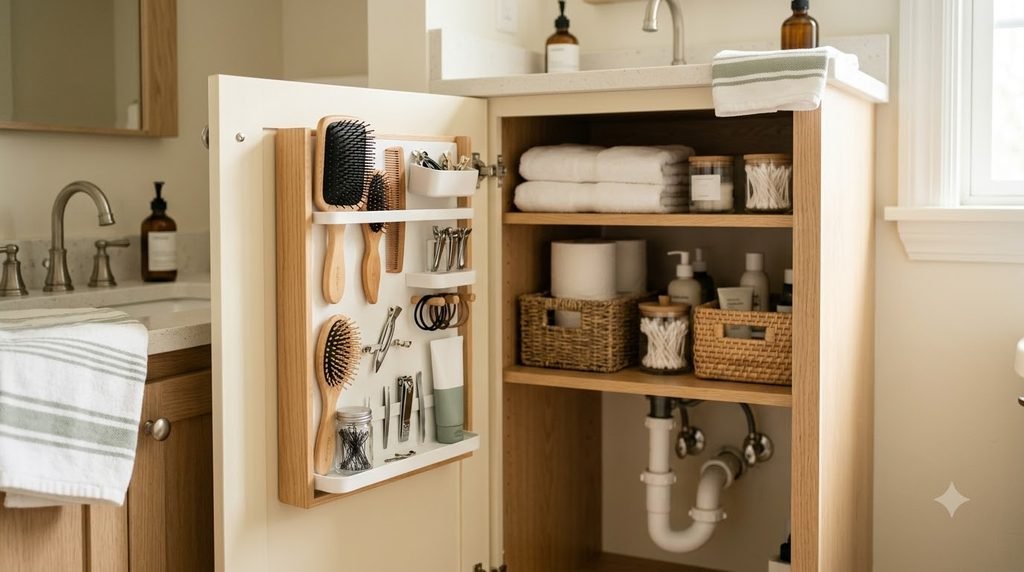
7. Use the Inside of Vanity Doors
The inside of a cabinet door can provide useful storage without taking away shelf space.
Depending on the cabinet and available clearance, you can use a suitable organizer for:
- Hair accessories
- Small grooming tools
- Cleaning cloths
- Brushes
- Extra toiletries
- Lightweight bathroom accessories
Door storage works especially well when the cabinet has deep shelves but limited visibility.
Before installing anything, make sure it won’t interfere with plumbing, shelves, hinges, or the cabinet closing.
Lowe’s current vanity guidance also highlights door and pull-out organizers as ways to make more of the existing cabinet space usable.
Vanity Door Organizer
Best for: Small lightweight items that otherwise clutter drawers or shelves
What to look for: Door clearance, attachment method, depth, and weight capacity.
→ Check the current price on Amazon
8. Make the Space Under the Sink Work Better
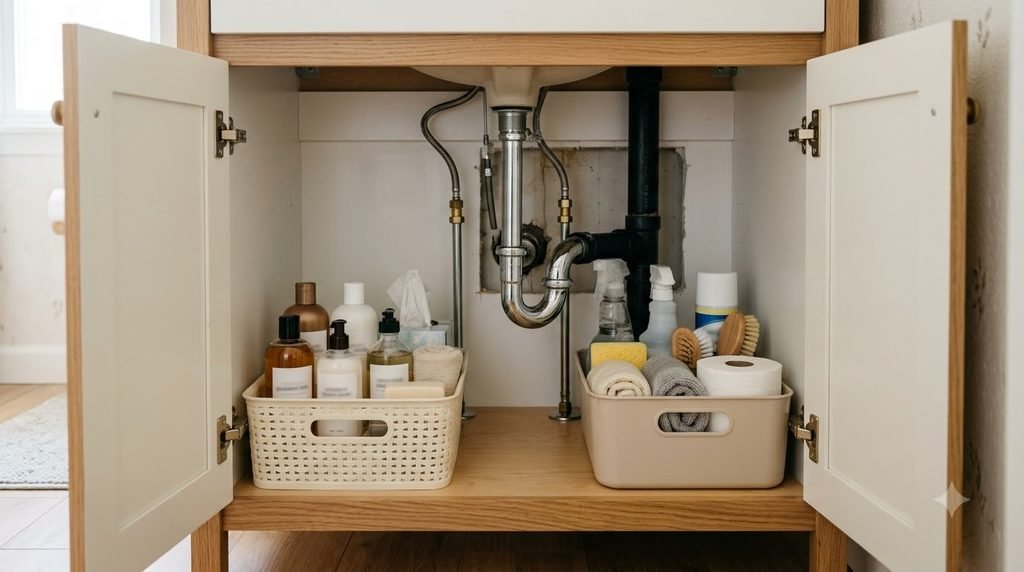
The area underneath the sink can be valuable, but plumbing often makes it awkward.
Instead of trying to fill the entire cabinet, organize around the pipes.
Group items into practical categories such as:
Cleaning supplies
Toiletry backups
Hair-care backups
Extra bathroom supplies
Use storage that remains easy to remove.
A bin you can pull forward is usually more useful than several small containers pushed into the back where you can’t see them.
You can also leave the immediate plumbing area open so you can access it when necessary.
For more detailed ideas specifically for this area, see our guide to Under-Sink Organizers for Small Bathrooms.
9. Add Vertical Storage Without Crowding the Counter
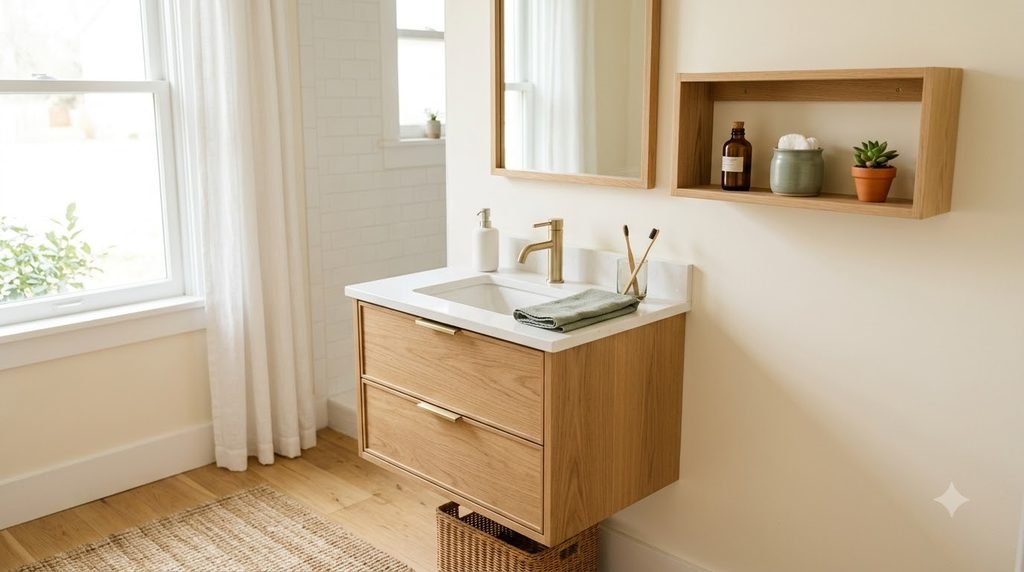
If every drawer and cabinet is already full, look upward.
Depending on the bathroom layout, you might use:
- A shallow wall shelf
- A medicine cabinet with additional storage
- A small mounted organizer
- A shelf above the vanity
- A narrow vertical storage unit
The key is keeping the solution visually light.
You don’t want to replace countertop clutter with a wall that feels equally crowded.
Small-bathroom organization coverage increasingly emphasizes overlooked vertical areas and wall storage as ways to gain capacity without consuming more floor space.
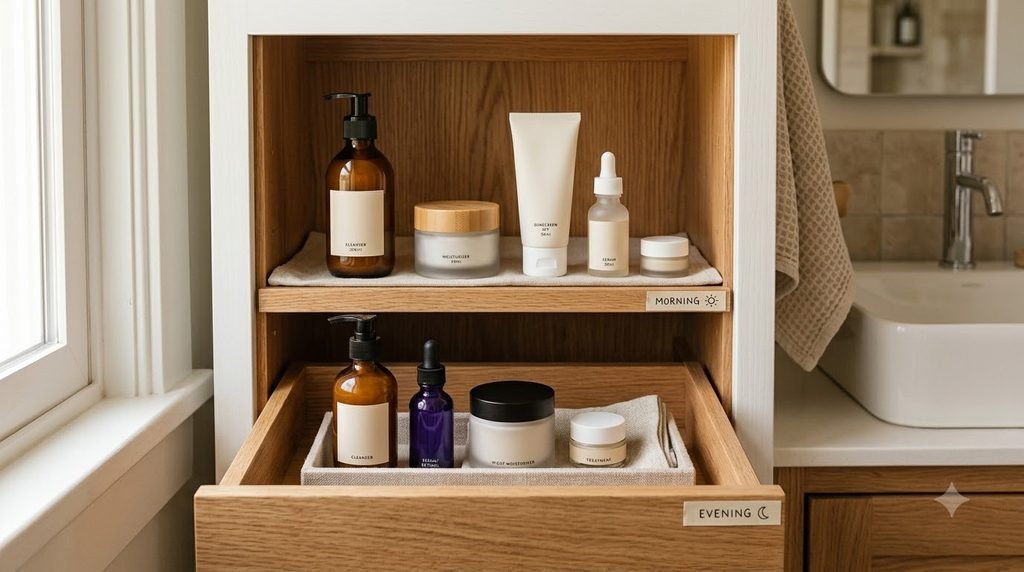
10. Group Skincare and Toiletries by Use
Don’t organize skincare simply because the bottles look similar.
Organize around the routine.
For example:
Morning
Cleanser, moisturizer, sunscreen and other daily products.
Evening
Night cream, treatment products and other evening essentials.
Occasional
Masks, specialty products and items used less frequently.
This approach makes your vanity easier to use because you’re looking for a routine rather than a specific bottle.
It also helps expose products that you bought but no longer use.
11. Create a Hair-Tool Zone
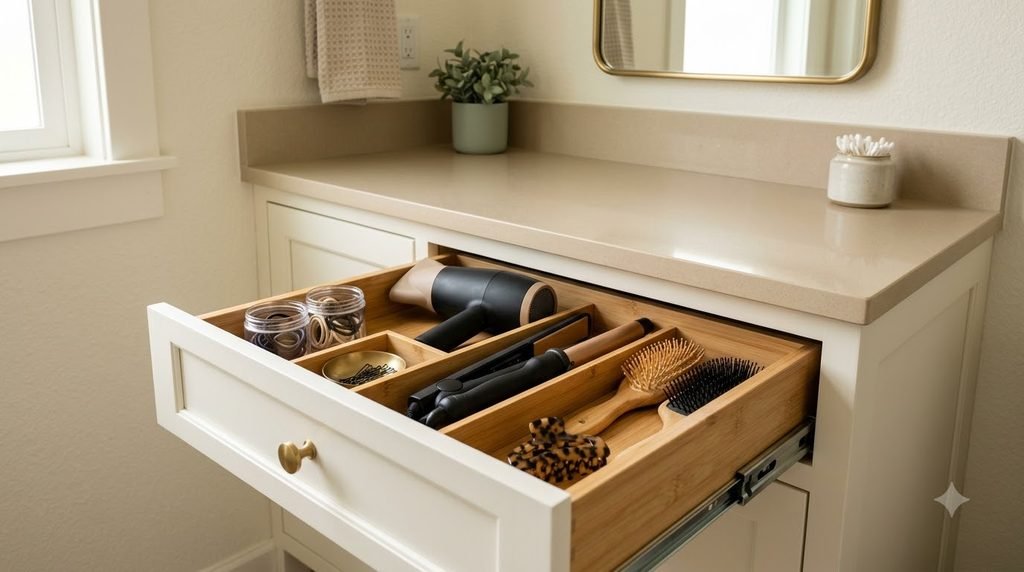
Hair dryers, straighteners, brushes and curling tools can take over a small vanity surprisingly quickly.
Give them one designated area.
Depending on your storage, this might be:
- A vanity drawer
- A cabinet section
- A heat-safe holder
- A nearby wall or door organizer
Keep heat-producing tools stored according to manufacturer guidance, and allow them to cool completely before placing them into enclosed storage.
The goal is to keep the tools contained while still making your most-used ones easy to grab.
12. Give Makeup Its Own Small Category
Makeup often becomes cluttered because small items disappear into large drawers.
Instead, create a compact makeup zone.
You might group:
- Everyday makeup
- Brushes
- Lip products
- Eye products
- Occasional products
You don’t necessarily need a large acrylic organizer.
A simple shallow compartment system can be enough.
And regularly check products you no longer use. Bathroom organization experts specifically recommend removing unused or outdated cosmetics rather than letting them occupy valuable vanity storage.
13. Use a Slim Organizer for Awkward Gaps
Small bathrooms often have narrow gaps that aren’t wide enough for furniture but are still useful for storage.
Look for space:
- Beside the vanity
- Between the vanity and wall
- Inside a narrow cabinet section
- Along the side of a cabinet
A slim organizer can hold small toiletries, cleaning supplies, hair accessories, or other narrow categories.
But measure first.
A storage product should improve access without making drawers, doors, or walking areas harder to use.
14. Keep Cleaning Supplies Separate
Cleaning products don’t need to compete with your morning routine.
Keep them together in an appropriate storage area, preferably away from everyday personal-care products.
If the bathroom vanity is the only available storage location, create a clearly separated cleaning-supply zone under the sink or in a dedicated cabinet section.
Follow product labels and manufacturer instructions for storage, and never mix household chemicals.
A visually organized vanity isn’t useful if cleaning supplies are mixed into daily toiletries.
15. Create a 5-Minute Vanity Reset
The easiest way to keep a small vanity organized is to prevent small amounts of clutter from becoming a full reset.
At the end of the day:
Minute 1
Remove anything that belongs somewhere else.
Minute 2
Return skincare and toiletries to their assigned zones.
Minute 3
Put makeup and hair accessories away.
Minute 4
Clear the countertop and wipe the surface.
Minute 5
Check drawers for anything that has been placed in the wrong category.
That’s it.
You don’t need to reorganize the entire vanity every week.
A small repeatable reset is easier to maintain.
How to Choose Bathroom Vanity Organizers
Don’t buy an organizer simply because it looks good in a product photo.
Start with your actual storage problem.
For drawers
Measure the inside width, depth, and height.
For cabinets
Measure around pipes, hinges, doors, and fixed shelves.
For countertops
Measure the available working surface before adding a tray or container.
For door organizers
Check both door clearance and shelf clearance.
For wall storage
Consider the width, depth, mounting method, and whether the placement interferes with mirrors or other fixtures.
A good organizer should make your routine easier.
It shouldn’t simply give you another object to clean and move around.
Current vanity guidance from Lowe’s similarly recommends choosing drawer, basket, pull-out, and door storage based on the actual vanity layout.
What Shouldn’t Live on a Small Bathroom Vanity?
A small countertop becomes cluttered quickly when it stores things that don’t need to be there.
Consider moving:
- Backup toiletries
- Unused products
- Bulk purchases
- Extra towels
- Cleaning supplies
- Rarely used grooming tools
- Large collections of cosmetics
- Products you don’t use regularly
The exact answer depends on your household.
The principle is:
Keep the counter for the things that support your daily routine.
Recent organizing guidance also recommends removing or relocating items that aren’t regularly used instead of allowing them to occupy prime vanity space.
A Simple Small Vanity Setup to Copy
A practical small bathroom vanity could look like this:
Counter
Only daily-use products and perhaps one shallow tray.
Top Drawer
Morning and evening essentials.
Second Drawer
Makeup or grooming accessories.
Cabinet
Backup toiletries and larger supplies.
Door
Small lightweight accessories.
Under Sink
Cleaning supplies and contained backups.
Wall
Only the storage that genuinely solves a remaining problem.
This setup doesn’t require a large bathroom.
It requires clear decisions about what deserves easy access.
How to Keep a Small Bathroom Vanity Organized
Once the vanity is organized, use a few simple rules.
One home for each category.
Buy backups only when you have somewhere appropriate to store them.
Return everyday products to the same location.
Keep the counter mostly clear.
Review products periodically instead of storing everything indefinitely.
And before buying another organizer, ask:
What specific problem will this solve?
That question alone can prevent a lot of unnecessary storage purchases.
Final Thoughts
A small bathroom vanity doesn’t need to hold everything in the bathroom.
It needs to hold the things that make your daily routine easier.
Keep the countertop focused on everyday use.
Move backups into cabinets or other storage.
Divide drawers by routine.
Use the inside of doors when appropriate.
Work around plumbing instead of fighting it.
Use vertical space carefully.
And give yourself a five-minute reset so clutter doesn’t quietly rebuild.
The goal isn’t to create a bathroom that looks perfect for a photograph.
The goal is a vanity that gives you enough clear space to use the bathroom comfortably—and makes it easy to put things away when you’re finished.
Related Articles
For more bathroom and home organization ideas:
27 Small Bathroom Organization Ideas to Maximize Every Inch
https://jessicamillers.com/small-bathroom-organization-ideas/
10 Under-Sink Organizers for Small Bathrooms That Make Storage Easier
https://jessicamillers.com/under-sink-organizers-for-small-bathrooms/
15 Smart Home Organization Solutions for Everyday Clutter
https://jessicamillers.com/smart-home-organization-solutions/
How to Organize a Linen Closet So Towels and Sheets Stay Tidy
https://jessicamillers.com/linen-closet-organization/
Amazon Affiliate Disclosure
As an Amazon Associate I earn from qualifying purchases.
Product availability, pricing, dimensions, colors, and specifications can change. Always check the current Amazon listing and measure your available space before purchasing.