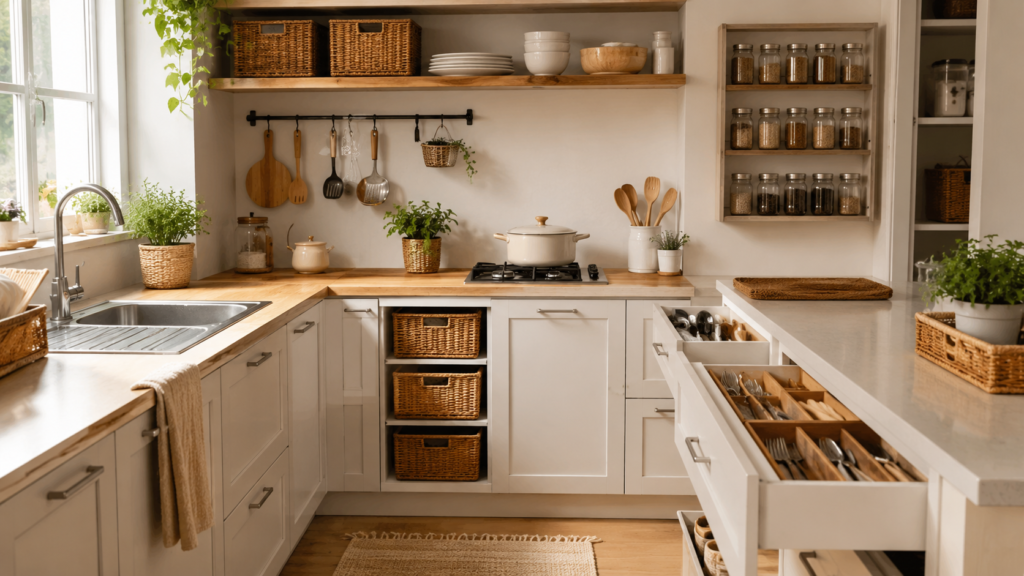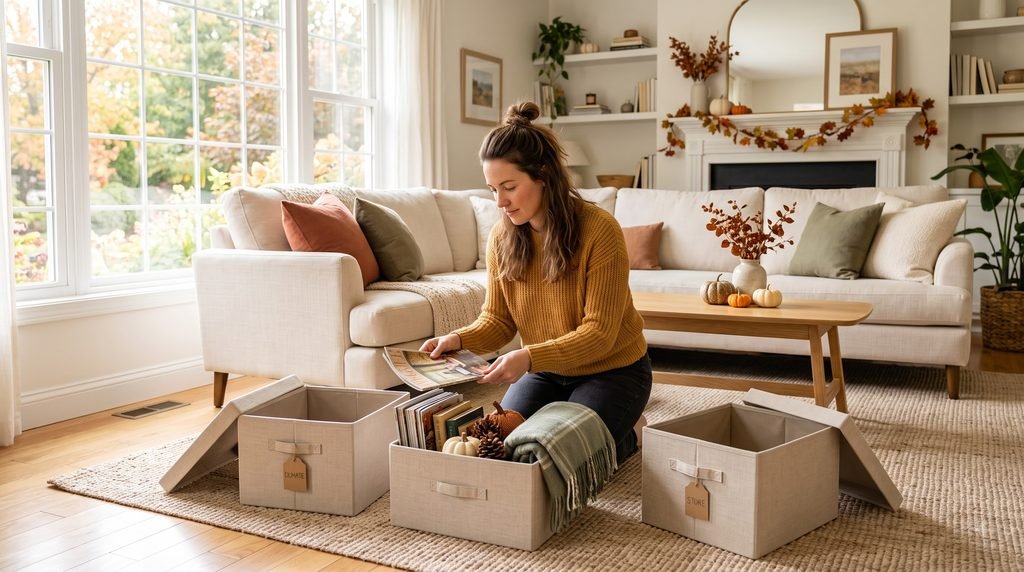
October is a useful time to declutter your home before the holiday season gets busy.
Summer is winding down, fall routines are settling in, and the next few months can bring Halloween decorations, Thanksgiving gatherings, holiday shopping, overnight guests, and more time spent at home.
That doesn’t mean you need to empty every closet or spend an entire weekend decluttering your house.
A better approach is to focus on the things that are already taking up space, no longer serve a purpose, or are about to become more noticeable as the season changes.
If you’re wondering what to declutter in October, start with these seven areas.
They are small enough to tackle without turning your home into a giant organizing project, but meaningful enough to make everyday spaces easier to use.
October Decluttering Checklist: 7 Things to Let Go
Here are the seven areas to check this month:
- Old fall and Halloween decorations
- Summer clothes and accessories you’re no longer using
- Expired or unwanted pantry and baking items
- Extra food containers and missing lids
- Entryway clutter and unused accessories
- Old papers, receipts, and mail
- “Just in case” items you’ve been saving
You don’t have to tackle all seven at once.
Pick one category, set aside 15 to 30 minutes, and stop when that category is finished.
1. Declutter Old Fall and Halloween Decorations
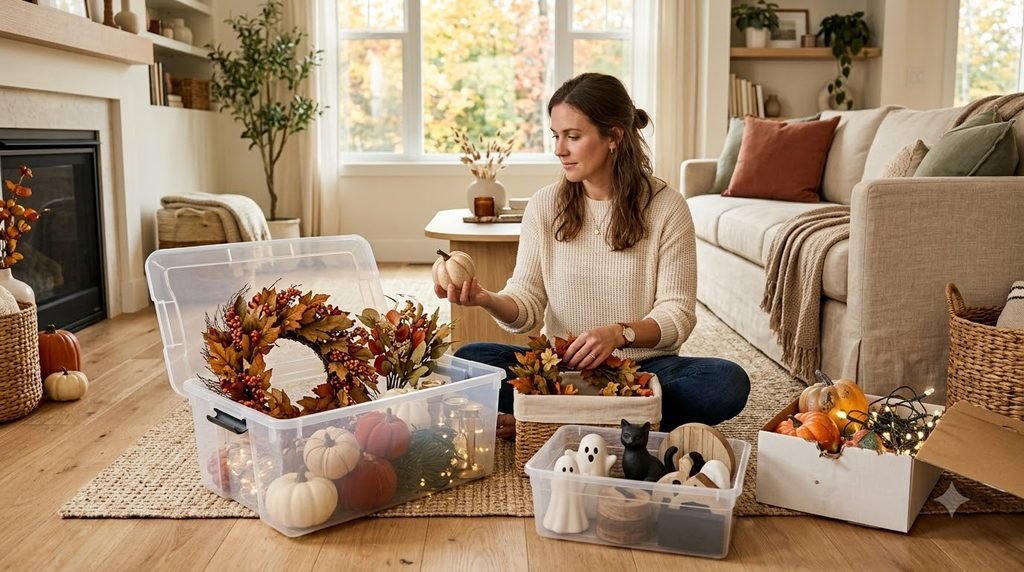
Before bringing more seasonal decorations into your home, look at what you already have.
Seasonal decor has a way of multiplying.
One year you buy a new pumpkin. The next year you add another wreath. Then you find a Halloween decoration you forgot you owned and buy something similar anyway.
By October, storage bins can be packed with decorations you don’t actually want to use.
Take everything out and ask:
- Is it still in good condition?
- Did I use it last year?
- Would I choose it again today?
- Is it faded, broken, or damaged?
- Do I have several similar pieces?
- Does it still fit the way I decorate my home?
- Am I keeping it because I love it or because I feel guilty getting rid of it?
Pay particular attention to:
- Broken Halloween decorations
- Faded artificial flowers
- Damaged wreaths
- Tangled or nonworking decorative lights
- Duplicate pumpkins
- Seasonal signs you no longer like
- Decorations that haven’t been used in several years
You don’t have to get rid of something simply because it isn’t currently trendy.
If you genuinely love it and use it, keep it.
The goal is to make room for the seasonal pieces you actually want to display.
For more inspiration, see our guide to Halloween Decor Trends 2026.
2. Declutter Summer Clothes and Accessories You’re Not Using
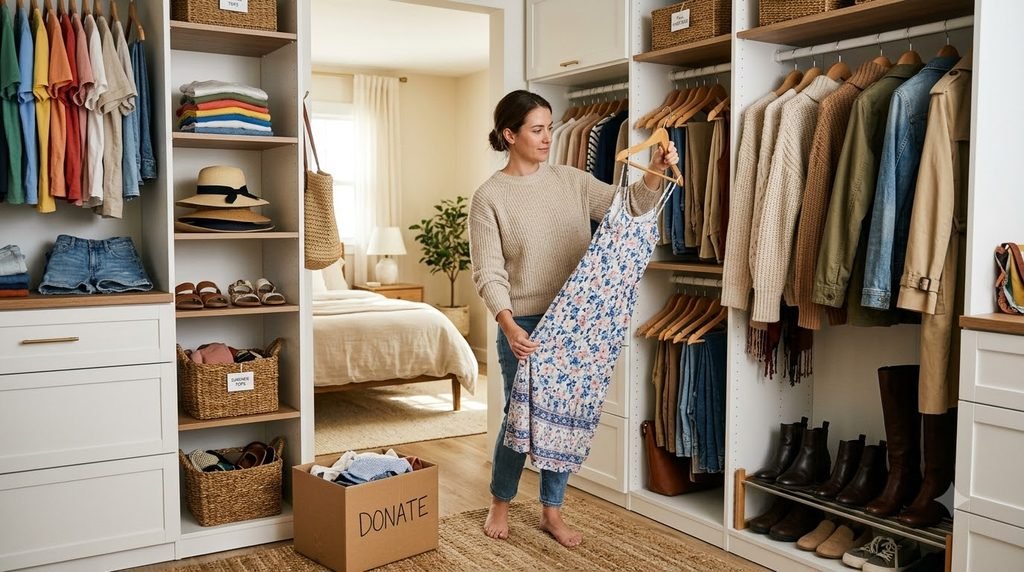
October is also a natural time to look at the summer items that are still taking up prime storage space.
You don’t have to put away every warm-weather item immediately. Many parts of the U.S. still have warm October days.
Instead, use this as an editing opportunity.
Look for:
- Sandals you didn’t wear this summer
- Swimsuits that no longer fit or feel comfortable
- Worn-out shorts
- Vacation clothing you never reached for
- Duplicate lightweight tops
- Damaged beach towels
- Old hats
- Summer accessories you no longer use
- Clothes that don’t fit your current lifestyle
Try the simple question:
If I needed this again next summer, would I actually want to own it?
If the answer is no, you may not need to store it for another year.
For clothing that you’re keeping, make the seasonal transition easier by moving the pieces you wear most often into the easiest-to-reach areas.
Our guide on How to Organize Your Closet for Fall can help with the next step.
3. Check Your Pantry for Expired and Unwanted Items
Your pantry can quietly accumulate clutter throughout the year.
October is a good time to check it before holiday cooking and baking begin.
Start with the obvious items:
- Expired food
- Stale baking ingredients
- Open packages nobody is using
- Duplicate spices
- Nearly empty packages
- Foods your family tried once and didn’t like
- Ingredients purchased for a recipe that was never made
- Snacks that have been sitting untouched
Then look at your shelves from a practical perspective.
If you have three containers of the same type of ingredient, do you really need all three?
If you bought a specialty ingredient for one recipe two years ago and haven’t used it since, is it still earning its shelf space?
Don’t turn this into a perfection project.
You don’t need every pantry container to match.
The goal is simply to make it easier to see what you already own before buying more.
For a deeper project, see Fall Pantry Organization Ideas.
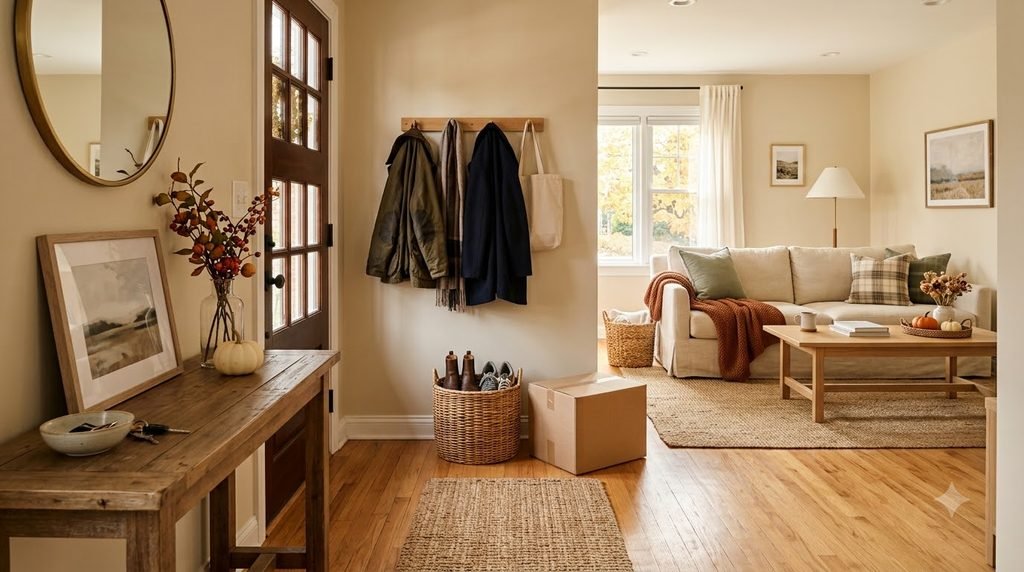
4. Declutter Extra Food Containers and Missing Lids
Food storage containers are another category that can quietly take over a kitchen.
Open the cabinet or drawer and check for:
- Containers without lids
- Lids without matching containers
- Cracked containers
- Warped plastic
- Stained containers you no longer want to use
- Containers that are too small to be useful
- Duplicates you never reach for
- Takeout containers you have been saving without a real reason
Take everything out before deciding what stays.
Match the lids and containers.
Anything without a useful partner can usually leave the collection.
Then consider how much storage space you actually want to dedicate to food containers.
A simple rule can help:
Keep the number of containers your household regularly uses—not the number your cabinet can physically hold.
This is especially helpful before the holiday season because kitchen storage tends to work harder when you’re cooking more often.
5. Declutter Your Entryway Before Guests Start Arriving
The entryway is one of the first places people notice when they walk into a home.
It is also one of the easiest places for everyday clutter to accumulate.
October is a good time to clear it before cooler weather brings more coats, shoes, bags, and seasonal accessories.
Look for:
- Shoes nobody wears
- Summer accessories that no longer need to stay by the door
- Empty shopping bags
- Old umbrellas
- Worn-out hats
- Random packages
- Items that belong in another room
- Excess shoes taking up floor space
- Bags that are no longer being used
Then think about what your entryway will need over the next few months.
You may soon need more room for:
- Jackets
- Coats
- Boots
- Scarves
- Hats
- Gloves
- School bags
- Work bags
Don’t wait until the entryway is already overflowing.
Create a little breathing room now.
For more practical ideas, see Entryway Organization Ideas.
6. Clear Out Old Papers, Receipts, and Mail
Paper clutter doesn’t always look dramatic.
A few receipts here.
A coupon there.
An old flyer on the counter.
A stack of mail that you planned to deal with later.
Then suddenly there is a pile.
October is a good month to do a quick paper edit before holiday schedules become busier.
Start with:
- Junk mail
- Expired coupons
- Old receipts you no longer need
- Outdated event flyers
- Duplicate documents
- Takeout menus
- Product manuals for things you no longer own
- Notes that are no longer relevant
- Papers that have already been handled
Don’t automatically throw away important documents.
If you’re unsure whether something should be kept, check the appropriate financial, tax, legal, medical, or organizational requirements before discarding it.
The goal is to remove obvious paper clutter—not to make important record-keeping decisions without checking what you need to retain.
Once you’ve sorted everything, create one simple place for papers that still require action.
That might be a small tray, folder, or household command center.
7. Let Go of the “Just in Case” Stuff
This may be the hardest category.
It’s also one of the most useful.
Most homes contain things that are being kept for a possible future situation:
- Random cords
- Mystery cables
- Extra kitchen gadgets
- Old packaging
- Spare containers
- Broken objects waiting to be repaired
- Hardware from furniture you no longer own
- Clothes reserved for an imaginary future occasion
- Supplies for projects that never happened
- Items you might use “someday”
Before keeping something, ask:
What specific situation am I realistically saving this for?
If you have a clear answer and the item is useful, keep it.
If the answer is simply:
“I might need it someday.”
pause before putting it back.
You don’t need to eliminate every backup item from your home.
But keeping dozens of low-value objects because they might become useful can consume a surprising amount of storage.
A helpful compromise is a maybe box.
Put questionable items into one clearly labeled box.
Write the date on it.
If you don’t need something after a reasonable period, reconsider whether it deserves permanent storage.
This gives you a way to make decisions without feeling like you have to get rid of everything immediately.
What Should You Declutter First in October?
If you’re short on time, start with the areas that affect your everyday life.
A simple priority order is:
First: Visible clutter
Clear countertops, entryways, tables, and other areas you see every day.
Second: Seasonal clutter
Review summer items and old fall or Halloween decorations.
Third: Kitchen clutter
Check the pantry, food storage containers, and duplicate kitchen items.
Fourth: Paper clutter
Remove obvious junk mail, old receipts, and papers you no longer need.
Fifth: Hidden clutter
Tackle drawers, closets, storage bins, and “just in case” items.
You don’t have to declutter the whole house in October.
A few targeted areas can make a bigger difference than starting ten projects and finishing none.
A 30-Minute October Decluttering Reset
If you only have half an hour, use this simple plan.
Minutes 1–5: Choose One Area
Pick one:
- Entryway
- Kitchen counter
- Pantry shelf
- Closet section
- Seasonal decor bin
- Paper pile
Don’t choose the entire house.
Minutes 6–15: Remove Obvious Clutter
Create three groups:
Keep
Move Somewhere Else
Let Go
Don’t overthink obvious decisions.
Minutes 16–22: Put the Keep Items Back
Return everything to its proper place.
Avoid creating a new pile while organizing the old one.
Minutes 23–27: Deal With the “Move” Pile
Return those items to their actual homes.
If something repeatedly ends up in the wrong place, that may be a sign that its current storage location isn’t practical.
Minutes 28–30: Finish
Take out the trash.
Put donations into a designated bag or box.
Wipe the surface if necessary.
Then stop.
You don’t need to turn a 30-minute reset into a four-hour project.
October Decluttering Checklist
Save this checklist for your next reset:
Seasonal Decor
- Remove broken fall decorations
- Check Halloween decorations
- Remove duplicate seasonal pieces
- Set aside decorations you no longer want
Closet
- Review unworn summer clothes
- Check sandals and summer shoes
- Remove damaged accessories
- Make room for fall layers
Pantry
- Check expiration dates
- Remove stale ingredients
- Review duplicate spices
- Get rid of ingredients nobody uses
Kitchen
- Match food containers with lids
- Remove cracked containers
- Remove duplicates
- Clear unnecessary takeout containers
Entryway
- Remove unused shoes
- Put away summer accessories
- Clear random items
- Make room for coats and fall gear
Paper
- Recycle junk mail
- Remove expired coupons
- Clear old receipts
- File important documents
Miscellaneous
- Review mystery cords
- Check “just in case” items
- Remove broken things
- Review unfinished-project supplies
Where to Donate or Dispose of Things
Decluttering doesn’t always mean throwing everything in the trash.
Depending on the condition of an item, consider:
- Donating usable clothing
- Donating working household items
- Recycling eligible paper
- Recycling electronics through appropriate programs
- Using local textile recycling where available
- Properly disposing of batteries and household chemicals
- Giving useful items to friends or family
Disposal rules vary by location and by item, especially for electronics, batteries, chemicals, and other materials that shouldn’t go into ordinary household trash.
When in doubt, check your local municipality or recycling provider for current instructions.
Don’t Buy Storage Until You Declutter
This is one of the easiest mistakes to make.
You see a messy closet, drawer, or pantry and immediately think:
I need more storage.
Sometimes you do.
But sometimes you simply have too many things.
Before buying containers, bins, shelves, or organizers:
- Remove what you don’t need.
- Group what remains.
- See how much storage you actually need.
- Measure the space.
- Then decide whether an organizing product solves a real problem.
This approach can save money and prevent your home from becoming a collection of containers holding things you don’t use.
What Not to Declutter in a Hurry
Decluttering should make your home more functional, not create new problems.
Don’t make rushed decisions about:
- Important financial records
- Tax documents
- Legal paperwork
- Medical records
- Identification documents
- Sentimental items you’re not ready to evaluate
- Items belonging to another family member
You also don’t need to declutter something simply because an organizing trend says you should.
Your home has to work for your household.
If something is useful, meaningful, or genuinely enjoyed, it doesn’t automatically become clutter just because it takes up space.
How to Keep October Clutter From Coming Back
Decluttering once is helpful.
Changing the habits that create the clutter is even better.
Try these simple rules:
One in, one out
When appropriate, consider removing an old item when a new one comes in.
Give frequently used things a home
If you use something regularly, it should have an obvious place to return to.
Create a donation box
Keep one small box or bag available for things your household is ready to let go of.
Do a weekly reset
Spend 10 to 15 minutes returning misplaced items and clearing visible clutter.
Don’t use empty surfaces as storage
Kitchen counters, entryway tables, and dining tables can quickly become unofficial storage zones.
Finish small projects
If you keep buying supplies for projects that never get finished, decide whether the project is still worth the space those supplies occupy.
October Decluttering vs. a Full Fall Home Reset
You don’t need to confuse the two.
October decluttering is about removing things you no longer need or want.
A fall home reset is broader.
It can include:
- Seasonal storage
- Closet organization
- Entryway preparation
- Pantry organization
- Cleaning
- Rearranging routines
- Preparing for cooler weather
- Getting ready for holiday activity
If you want a broader seasonal project, see 31 Fall Home Reset Ideas That Make Your Home Easier to Live In.
For general fall preparation, How to Prepare Your Home for Fall: A Practical Checklist is another useful next step.
Frequently Asked Questions
What should I declutter in October?
Start with seasonal decorations, unused summer clothing, pantry items, food storage containers, entryway clutter, old papers, and things you’ve been keeping “just in case.” These categories are practical because October is a natural transition point before the holiday season becomes busier.
Why is October a good month to declutter?
October sits between the transition out of summer and the busier holiday period. It gives you an opportunity to remove things you no longer need and make space for seasonal clothing, decorations, cooking supplies, guests, and everyday routines before November and December become more demanding.
What should I declutter before the holidays?
Focus on visible and frequently used areas first: entryways, closets, kitchen counters, pantry shelves, food storage, guest areas, paper piles, and seasonal decorations. You don’t need to declutter your entire home before the holidays.
What should I get rid of before Halloween?
Look for broken or damaged decorations, duplicate seasonal pieces, decorations you no longer enjoy, tangled nonworking lights, and costumes or accessories that are no longer useful. Keep the Halloween items you actually plan to use.
How can I declutter my house quickly?
Choose one small area, set a 15- to 30-minute timer, and sort items into Keep, Move, and Let Go groups. Finish that one area before starting another. Short focused sessions are often easier to maintain than trying to organize the entire house at once.
Should I buy organizers before decluttering?
Usually, it’s better to declutter and measure first. Once you know what you’re keeping and how much space those items actually need, you can decide whether an organizer will solve a real storage problem.
What if I don’t know whether to keep something?
Ask whether you use it, whether you have a specific realistic reason to keep it, whether you already own something that performs the same function, and whether the item is worth the space it occupies. For genuinely difficult decisions, a temporary “maybe box” can give you time to decide.
Your Simple October Decluttering Plan
You don’t need to complete everything today.
Try this simple schedule:
Week 1: Seasonal decor + entryway
Week 2: Closet + summer items
Week 3: Pantry + food storage
Week 4: Paper clutter + miscellaneous “just in case” items
By the end of the month, you can make noticeable progress without spending every weekend organizing.
Final Thoughts
October is a useful month to make your home a little lighter before the holiday season gets busy.
You don’t need a dramatic whole-house decluttering project.
Start with the things that are easiest to identify:
Old seasonal decorations.
Summer items you’re no longer using.
Expired pantry ingredients.
Extra food containers.
Entryway clutter.
Old papers.
And those random things you’ve been saving just in case.
Keep what is useful, meaningful, or genuinely loved.
Let go of what no longer serves your household.
And most importantly, don’t replace clutter with more storage products unless you actually need them.
A more organized home doesn’t have to be perfect.
It just needs to make everyday life a little easier.
Start with one drawer, one shelf, one closet section, or one small pile today. By the time the holiday season arrives, those small decisions can add up to a home that feels more open, functional, and ready for what comes next.