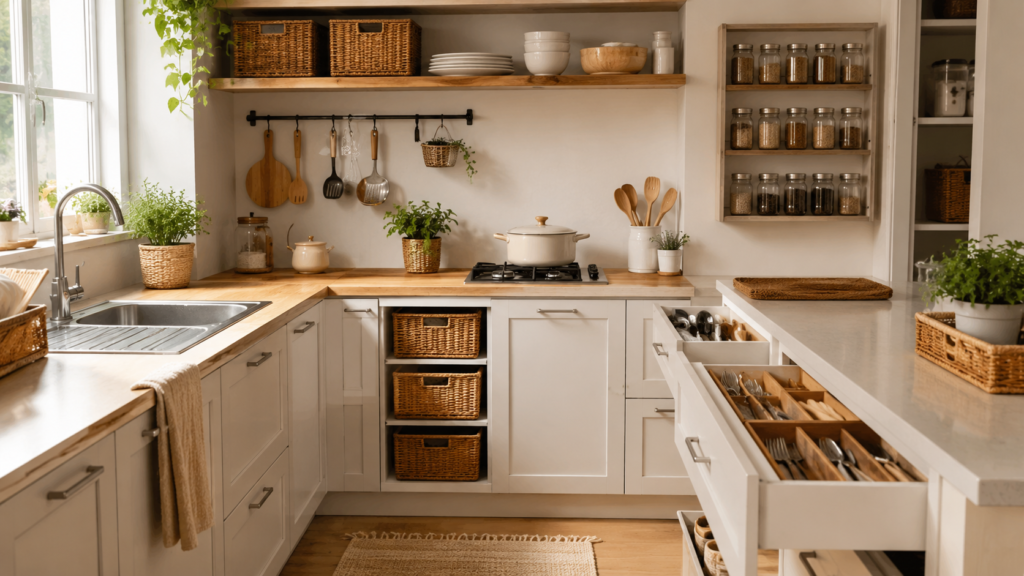
As summer winds down and fall approaches, the kitchen often starts getting busier.
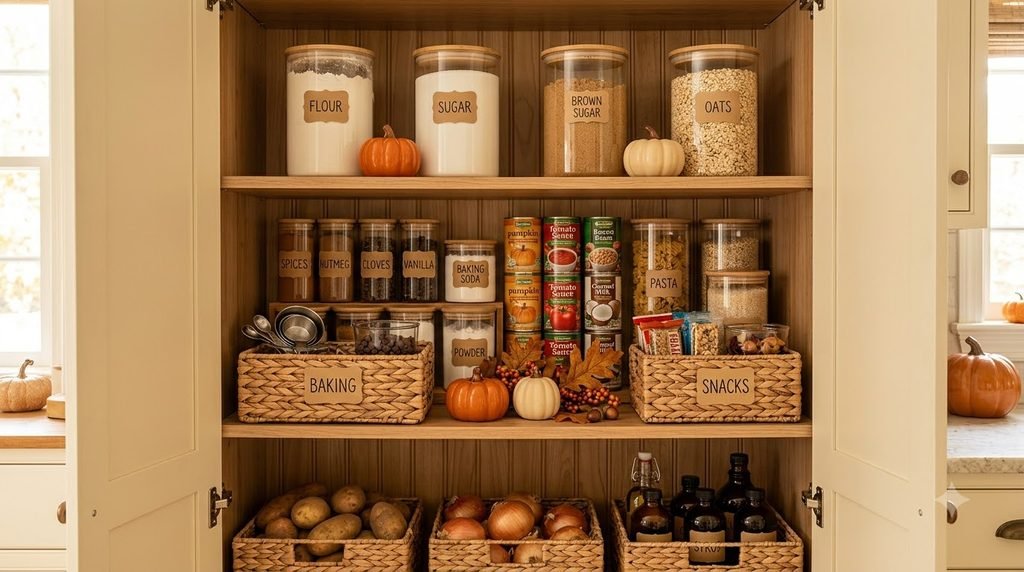
There are cozy breakfasts, weekend baking projects, soups and casseroles, holiday recipes, warm drinks, and all those seasonal ingredients that somehow seem to appear in every grocery cart.
That makes early fall a great time to give your pantry a reset.
A fall pantry reset doesn’t mean buying matching containers for everything or creating a picture-perfect walk-in pantry. The goal is much simpler: know what you have, make frequently used ingredients easy to reach, remove what you no longer need, and create enough space for the foods you actually use during the season.
Current fall pantry guidance recommends taking stock before shopping, removing expired or unnecessary duplicates, and organizing ingredients around the meals and baking projects you actually make.
If your pantry is small—or you don’t even have a dedicated pantry—these 17 fall pantry organization ideas can help you make the most of what you already have.
How to Do a Fall Pantry Reset
Before rearranging shelves, take everything out of one section at a time.
Check:
- Expiration dates
- Open packages
- Duplicate ingredients
- Nearly empty containers
- Ingredients you never use
- Seasonal ingredients left over from last year
- Baking supplies you may already have
Then group similar items together and decide which ingredients deserve the easiest-to-reach locations.
This simple inventory step can help prevent buying duplicates and make it easier to use food before it expires.
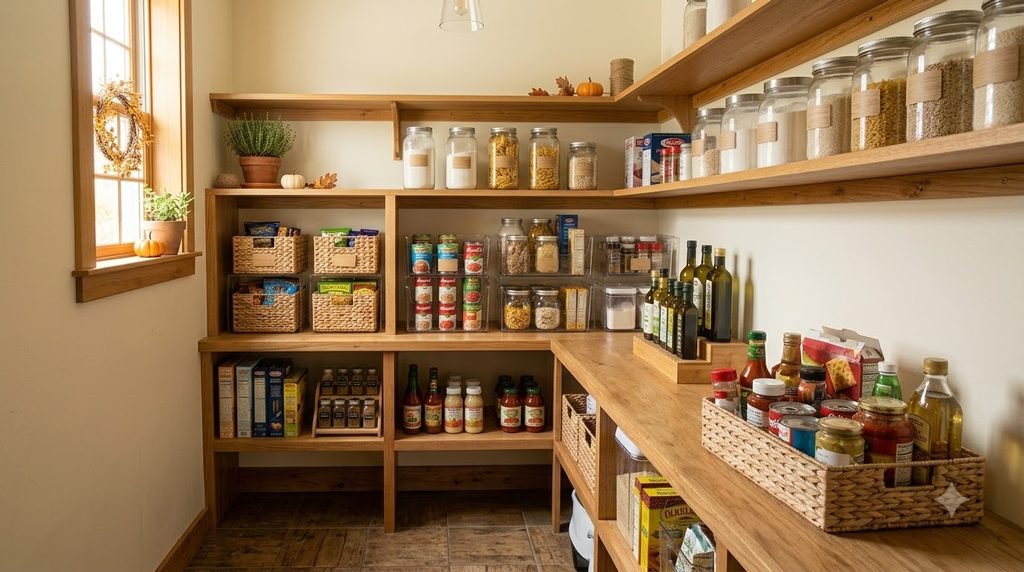
17 Fall Pantry Organization Ideas
1. Start With a Pantry Inventory
Before buying anything for fall baking or cooking, find out what is already in your pantry.
Create a quick inventory of staples such as:
- Flour
- Sugar
- Brown sugar
- Oats
- Rice
- Pasta
- Canned tomatoes
- Broth
- Baking powder
- Baking soda
- Spices
- Chocolate chips
- Nuts
- Canned pumpkin
You may discover that you already have several ingredients you were about to buy again.
A simple inventory also gives you a better idea of what needs to be used first.
2. Remove Expired and Unwanted Items
A pantry reset is the perfect time to clear out food you no longer need.
Check dates and condition, and discard items that are expired, spoiled, damaged, or otherwise unsuitable.
For unopened foods that you know you won’t use, consider donating them when appropriate.
Don’t let the pantry become storage for ingredients simply because you feel guilty throwing them away.
A smaller collection of useful foods is much easier to organize.
3. Create a Dedicated Fall Baking Zone
Fall often means more baking.
Instead of scattering baking ingredients throughout the pantry, create one dedicated zone.
Keep frequently used baking supplies together, such as:
- Flour
- Sugar
- Brown sugar
- Baking powder
- Baking soda
- Oats
- Chocolate chips
- Sprinkles
- Extracts
A dedicated baking section means you can find what you need without searching through the entire pantry.
Current baking-pantry organization advice also recommends grouping high-use baking ingredients together so they’re easier to grab during recipe preparation.
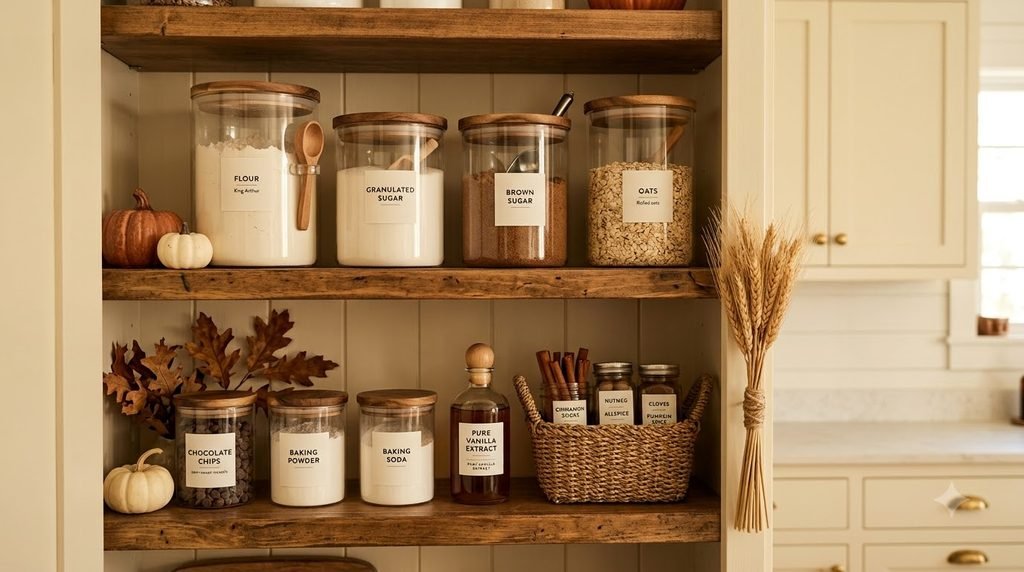
4. Organize the Pantry by How You Cook
Traditional organization often means putting all pasta together, all canned food together, and all baking supplies together.
That can work.
But you can also organize around how you actually use your kitchen.
For example:
Breakfast Zone
- Oats
- Cereal
- Pancake mix
- Syrup
Baking Zone
- Flour
- Sugar
- Chocolate
- Baking ingredients
Weeknight Dinner Zone
- Pasta
- Rice
- Broth
- Canned tomatoes
Snack Zone
- Crackers
- Granola bars
- Nuts
Grouping food by meal or routine can make everyday cooking faster because related ingredients stay together.
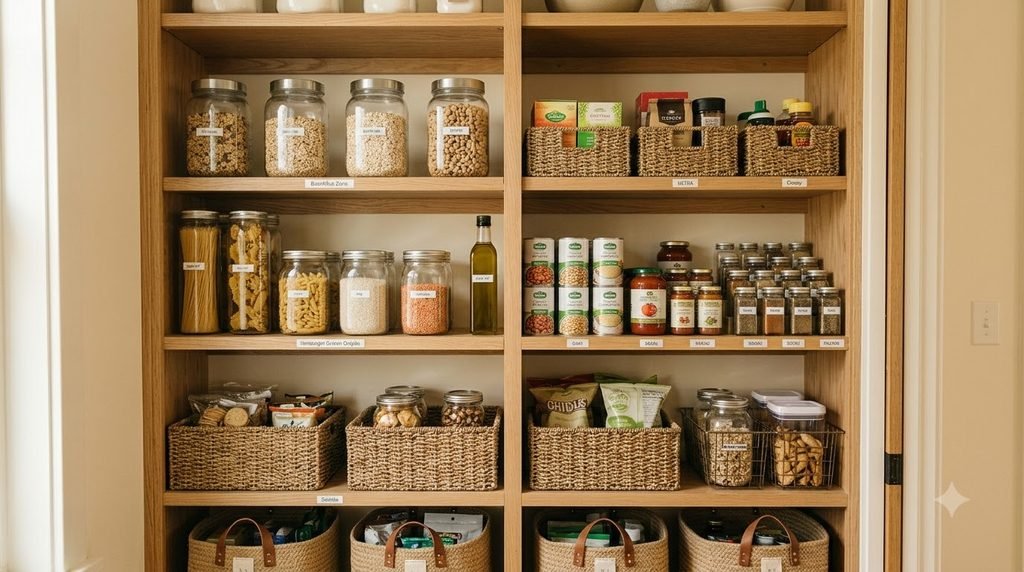
5. Move Fall Staples to Easy-to-Reach Shelves
Not every pantry item deserves prime real estate.
If you know you’ll be making more soups, baked goods, oatmeal, or cozy dinners during fall, move those frequently used ingredients to an accessible shelf.
Keep less frequently used items higher up or farther back.
A useful rule is:
Most-used items at eye level. Less-used items above or below.
This keeps your pantry functional instead of simply making it look organized.
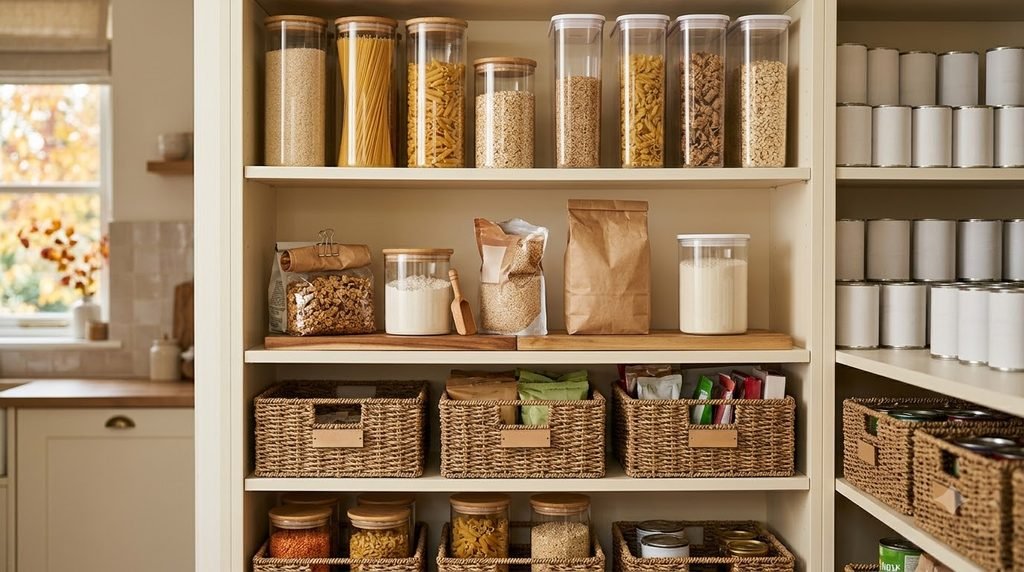
6. Use Clear Containers for Frequently Used Dry Goods
Clear airtight containers can make frequently used dry ingredients easier to see.
They’re particularly useful for:
- Flour
- Sugar
- Oats
- Rice
- Pasta
- Cereal
- Baking mixes
You don’t need to transfer everything.
Start with the ingredients you use most often.
And choose containers based on your actual shelf dimensions. Current pantry guidance emphasizes measuring shelves before purchasing storage because containers that don’t fit properly can waste more space than they save.
7. Give Brown Sugar Its Own Storage Solution
Brown sugar is a common fall baking staple, and it can become hard when exposed to air.
Keep it in an appropriate airtight container or storage system designed to help maintain its texture.
Don’t simply transfer everything into containers because they look pretty.
Choose storage based on the ingredient and how frequently you use it.
For ingredients where freshness matters, proper storage is more important than matching aesthetics.
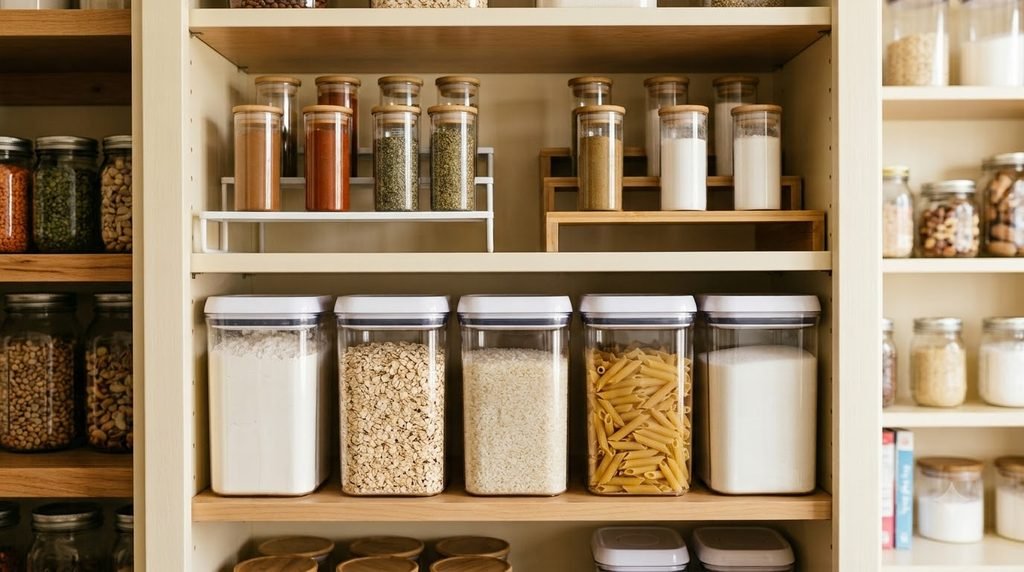
8. Use Shelf Risers to Create More Levels
Deep pantry shelves often have wasted vertical space.
A shelf riser can create another level for smaller containers.
Use them for:
- Canned goods
- Spices
- Small baking supplies
- Jars
- Condiments
This allows you to see items toward the back instead of stacking everything into one tall pile.
The goal is visibility, not maximum density.
9. Create a Small-Spice Zone
Fall recipes often use warm spices such as:
- Cinnamon
- Nutmeg
- Ginger
- Cloves
- Allspice
- Pumpkin pie spice
Group frequently used spices together.
A shallow drawer, tiered shelf, or turntable can make small spice containers easier to see.
Keep spices away from excessive heat and light where possible so they maintain quality longer.
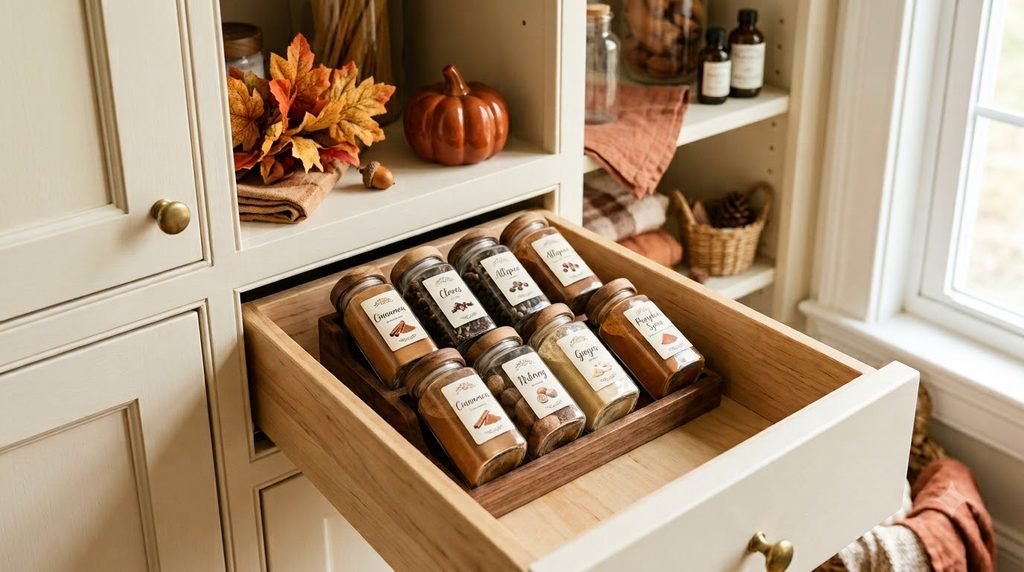
10. Use Baskets for Small or Flexible Categories
Not everything needs its own container.
Baskets can be useful for categories that change throughout the season.
Try one for:
Baking extras
Snack foods
Breakfast items
Tea and warm drinks
Decorating supplies
Backstock
A basket also makes it easier to pull an entire category off a shelf when you need it.
11. Make a Fall Breakfast Station
Fall mornings often bring back warmer breakfast routines.
Create a small breakfast zone containing things you regularly use together.
For example:
- Oats
- Cereal
- Pancake mix
- Granola
- Nuts
- Cinnamon
- Dried fruit
If you have a coffee or tea station nearby, you can coordinate the two zones without mixing everything into one crowded shelf.
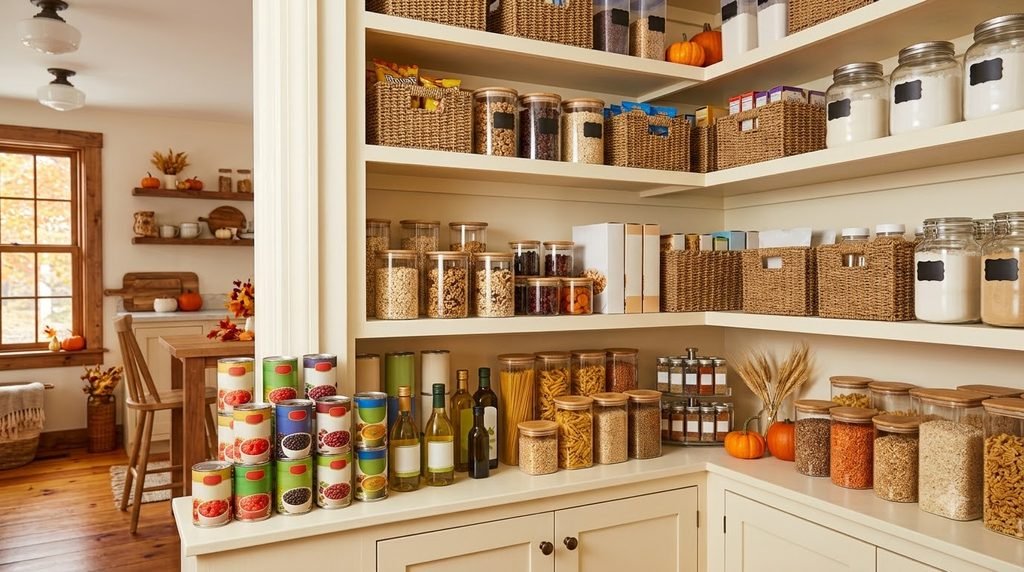
12. Create a Soup and Dinner Staples Zone
Fall cooking isn’t only about baking.
Create a separate zone for ingredients you’ll use for soups, stews, casseroles, and quick weeknight meals.
Consider grouping:
- Broth
- Canned tomatoes
- Beans
- Pasta
- Rice
- Stock
- Seasonings
Recent fall pantry guidance also recommends stocking staples around the seasonal meals you actually expect to make rather than buying ingredients simply because they’re associated with fall.
13. Make Backstock Less Visible
Extra supplies don’t need to occupy the easiest-to-reach shelves.
If you buy multiples of an item, keep the current package in your everyday zone and move unopened backups to a designated backstock area.
This prevents the pantry from becoming visually crowded.
It also makes it easier to see when you’re actually running low.
14. Use the Pantry Door
If your pantry has a door, don’t ignore the back of it.
Depending on the available clearance, a suitable door organizer can hold smaller items such as:
- Spices
- Wraps
- Snack bags
- Small baking supplies
- Kitchen accessories
Always check measurements first.
The door needs enough clearance to close without hitting shelves or containers.
15. Make a “Use First” Area
One of the simplest ways to make your pantry more functional is to create a small Use First zone.
Place items there that:
- Are already open
- Have shorter remaining shelf life
- Need to be finished
- Were purchased for a specific recipe
- Are approaching their best-by date
This can reduce forgotten food and help you shop more intentionally.
16. Don’t Store Everything in the Pantry
An organized pantry isn’t supposed to hold every food item in your kitchen.
Some foods are better stored elsewhere depending on the product, packaging, temperature, humidity, and manufacturer’s instructions.
For example, some opened products, certain oils, nuts, seeds, yeast, and other ingredients may benefit from refrigeration or different storage conditions.
If you’re unsure, follow the package storage instructions rather than forcing an ingredient into your pantry system.
17. Create a Five-Minute Weekly Pantry Reset
The best pantry organization system is one you can maintain.
Once a week, spend five minutes:
- Returning items to their zones
- Moving older items forward
- Checking for empty packages
- Combining compatible partial packages when appropriate
- Wiping an obvious spill
- Updating your shopping list
This tiny routine prevents the pantry from slowly returning to chaos.
A pantry doesn’t need a complete makeover every month.
It needs a system that is easy to maintain.
Fall Pantry Organization for a Small Kitchen
You don’t need a walk-in pantry to create a useful fall pantry system.
If you only have one cabinet or a few shelves, prioritize.
Keep:
Eye level: daily and fall baking essentials
Middle shelves: breakfast and dinner staples
Lower shelves: heavier items and backstock
Top shelves: rarely used seasonal items
Use shelf risers, narrow bins, and clear containers selectively.
And don’t fill every inch.
A little breathing room makes it much easier to remove and replace ingredients.
How to Organize a Pantry When You Don’t Have a Pantry
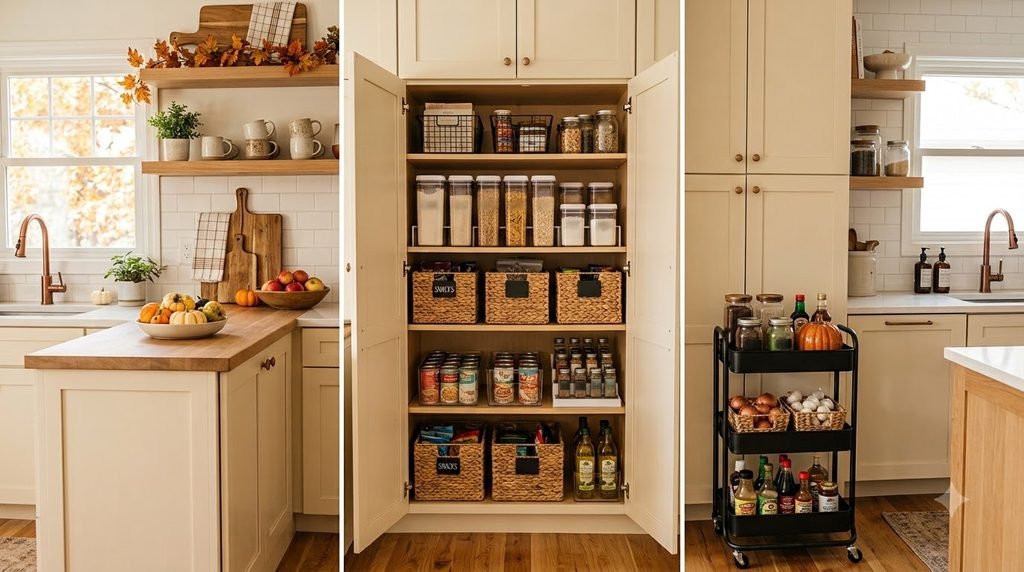
Many small kitchens don’t have a traditional pantry at all.
You can create a pantry zone using:
- One tall cabinet
- A section of kitchen cabinets
- A narrow rolling cart
- Shelving
- A small closet
- The cabinet above the refrigerator, where appropriate
Choose one area and make it the predictable home for dry goods.
The key is not having a dedicated room.
The key is having a dedicated system.
Recent small-pantry guidance specifically notes that the same zoning principles can work even when the “pantry” is just a narrow cabinet or a few shelves.
How to Prepare Your Pantry for Fall Baking
If you plan to bake more during fall, check these ingredients before your next grocery trip:
Baking Basics
- All-purpose flour
- Whole wheat flour
- Granulated sugar
- Brown sugar
- Powdered sugar
- Baking powder
- Baking soda
- Cornstarch
Flavor
- Vanilla
- Cinnamon
- Nutmeg
- Ginger
- Cloves
- Pumpkin pie spice
Mix-Ins
- Chocolate chips
- Nuts
- Dried fruit
- Oats
Seasonal Ingredients
- Canned pumpkin
- Applesauce
- Maple-flavored ingredients
- Seasonal baking mixes
Don’t buy every item on the list automatically.
Use your inventory first.
Small Pantry Organization Mistakes to Avoid
Buying Containers Before Measuring
A beautiful container that doesn’t fit your shelf is wasted storage.
Measure first.
Decanting Everything
Not every food needs a new container.
Focus on frequently used dry goods where clear storage genuinely improves visibility.
Overfilling Shelves
A pantry packed from front to back may look impressive but can be frustrating to use.
Ignoring Food Storage Requirements
Organization should never override the product’s storage instructions.
Keeping Backups at Eye Level
Prime shelf space should go to the things you use most.
Forgetting the “Use First” Zone
Older open packages can easily disappear behind newer groceries.
Frequently Asked Questions
When should I organize my pantry for fall?
Late summer and early fall are ideal because you can reset the pantry before seasonal baking and heavier fall cooking become regular routines.
What should I stock in my pantry for fall?
Focus on the ingredients you actually use for fall meals and baking. Common staples can include flour, sugar, oats, canned tomatoes, beans, broth, pasta, rice, spices, and selected baking ingredients.
How do I organize a small pantry for fall?
Start by decluttering, then create simple zones for baking, breakfast, dinner staples, snacks, and backstock. Keep frequently used ingredients within easy reach and use vertical space where possible.
How can I organize a pantry without buying lots of containers?
Use existing baskets, shelf risers, trays, and simple category zones. You don’t need a matching container collection to have an organized pantry.
What is the best way to organize baking supplies?
Keep frequently used baking ingredients together in a dedicated zone. Clear containers can help with visibility for dry goods, while shelf risers or baskets can make smaller ingredients easier to access.
How do I keep my pantry organized after a fall reset?
Do a quick five-minute reset once a week. Return items to their zones, move older items forward, check your inventory, and add items to your shopping list only when you’re actually running low.
Final Thoughts
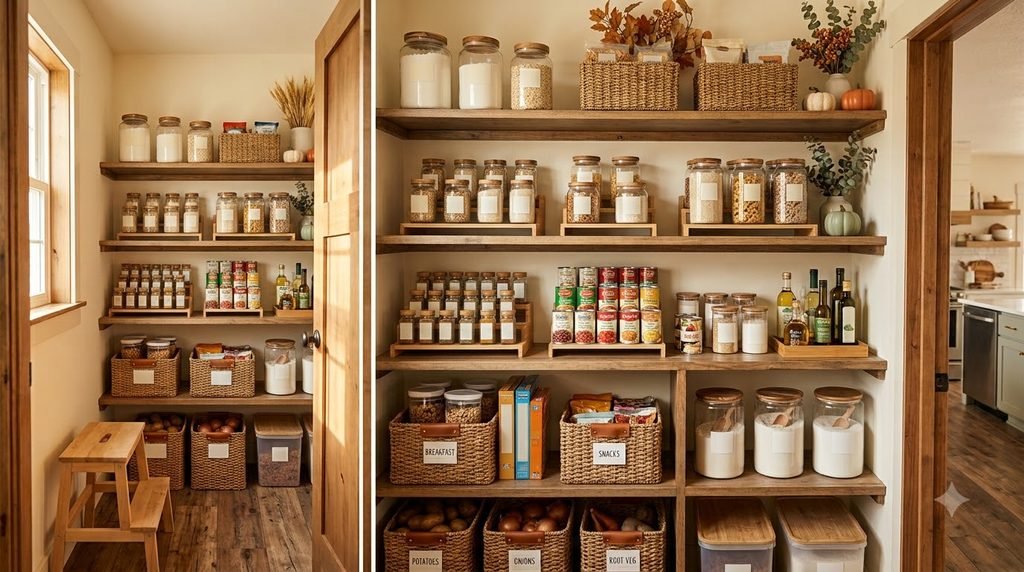
A fall pantry reset doesn’t have to become a weekend-long project.
Start with what you already have.
Clear out expired and unwanted items.
Create a dedicated baking zone.
Move frequently used fall ingredients somewhere easy to reach.
Use vertical space.
Keep backups together.
Create a small Use First area.
And don’t be afraid to leave some shelves partially empty.
The best pantry isn’t the one with the most containers or the most perfectly styled shelves.
It’s the one where you can open the door, immediately find what you need, and know what you already have.
That becomes especially valuable during fall, when baking, cozy dinners, and seasonal cooking start filling the kitchen with more ingredients and more activity.
A simple pantry system now can make the entire fall cooking season feel a little easier.
Releted Article
25 Fall Front Porch Decor Ideas to Create a Cozy Welcome
15 Fall Home Decor Ideas to Make Your Home Feel Cozy
15 Pantry Organization Ideas to Make Your Kitchen Easier to Use
27 Small Laundry Room Organization Ideas to Maximize Every Inch