September is the perfect time for a simple home reset. Summer is winding down, routines are changing, and the items that seemed useful a few months ago may now be taking up valuable space.
You don’t need to declutter your entire house in one weekend. Instead, focus on the things you are no longer using, items that are worn out, and clutter that could make your fall routines harder.
Recent September decluttering advice is similarly focused on high-impact areas such as hallways, school supplies, freezers, junk drawers, summer gear, pantry items, entryways, and seasonal clothing.
Here are 17 things to declutter in September to make your home feel lighter, more functional, and ready for fall.
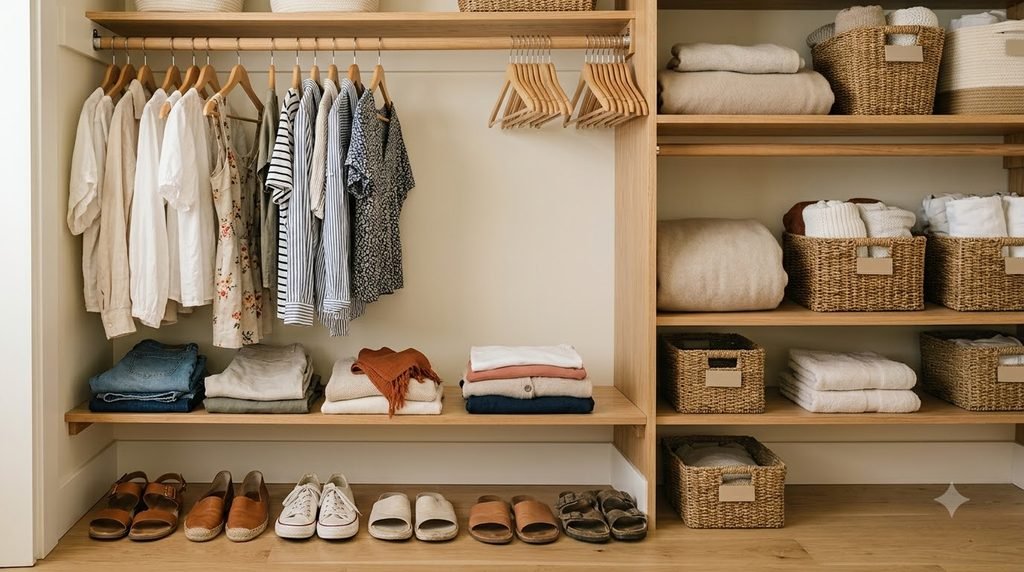
1. Summer Clothes You Didn’t Wear
Before packing away your summer wardrobe, take a quick look at what you actually wore.
If a piece stayed in your closet all summer, ask yourself whether you’re realistically going to wear it next year.
Set aside:
- Clothes that no longer fit
- Items you constantly skipped over
- Damaged pieces
- Uncomfortable clothing
- Duplicates you don’t need
Don’t automatically store everything just because it is seasonal.
Quick rule: If you wouldn’t choose to buy it again today, it may be time to let it go.
2. Outgrown Kids’ Summer Clothes
September is a great time to check children’s clothing before storing summer items.
Kids can grow surprisingly quickly over the summer, so check:
- Shorts
- Swimsuits
- Sandals
- T-shirts
- Pajamas
- Summer dresses
- Hats
Separate sentimental pieces from clothing that can be donated or passed along.
This also creates room for the clothes they’ll actually need during the upcoming season.
3. Worn-Out Summer Shoes
Take a look at your sandals, flip-flops, sneakers, and other warm-weather shoes.
Declutter anything that is:
- Broken
- Uncomfortable
- Heavily worn
- Missing a matching pair
- Unlikely to be repaired
There’s little benefit to giving valuable closet space to shoes you already know you won’t wear again.
4. Beach and Pool Gear
Summer gear can quickly become forgotten clutter once pool and beach days become less frequent.
Check your storage area for:
- Damaged floats
- Broken goggles
- Torn beach bags
- Worn-out towels
- Cracked outdoor toys
- Unused water accessories
Keep the items you genuinely use and remove anything that won’t make it through another season.
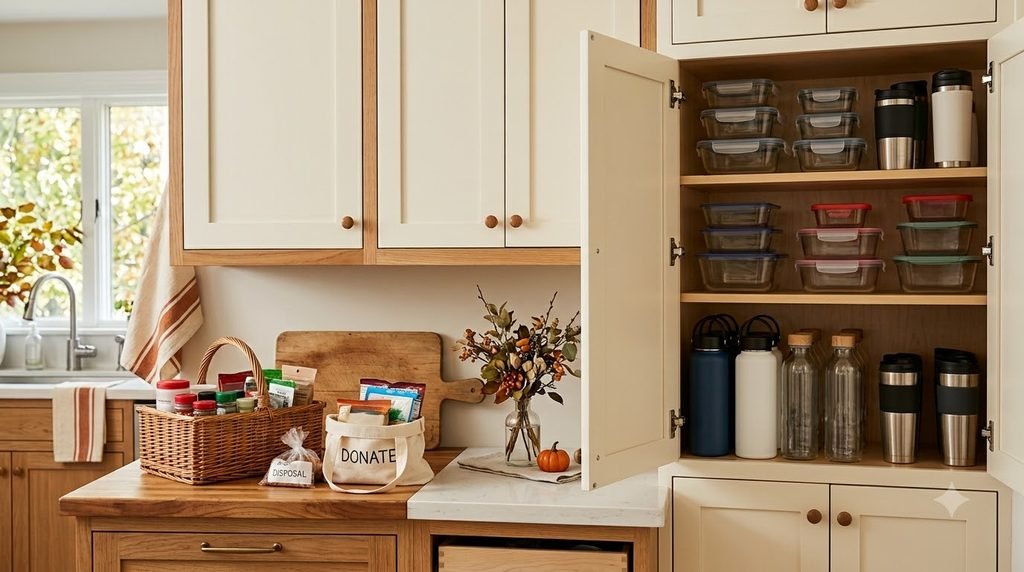
5. Extra Water Bottles and Travel Cups
Open the cabinet where you keep reusable bottles, tumblers, travel mugs, and lunch containers.
You may discover that you have far more than your household actually needs.
Look for bottles that are:
- Leaking
- Cracked
- Missing lids
- Difficult to clean
- Rarely used
Keeping your favorites and letting go of duplicates can make a surprisingly big difference in a crowded kitchen cabinet.
6. Duplicate Food Storage Containers
September is also a good time to tackle the food-storage cabinet.
Take everything out and match containers with their lids.
Declutter:
- Containers without lids
- Lids without containers
- Cracked containers
- Stained containers you no longer want
- Containers that are difficult to stack
- Duplicates you never use
Then organize what’s left so the containers are easy to grab.
For more ideas, see 15 Pantry Organization Ideas to Make Your Kitchen Easier to Use.
7. Expired or Unwanted Pantry Food
Before fall baking and holiday cooking get underway, give your pantry a quick inspection.
Look for:
- Expired food
- Open packages nobody wants
- Stale snacks
- Ingredients you bought for one recipe
- Nearly empty packages
- Foods your family simply doesn’t enjoy
You don’t have to empty the entire pantry. A targeted 10–15 minute check can be enough to remove obvious clutter.
If you’re getting ready for fall baking, 17 Fall Pantry Organization Ideas to Get Your Kitchen Ready for Baking Season is a useful next step.
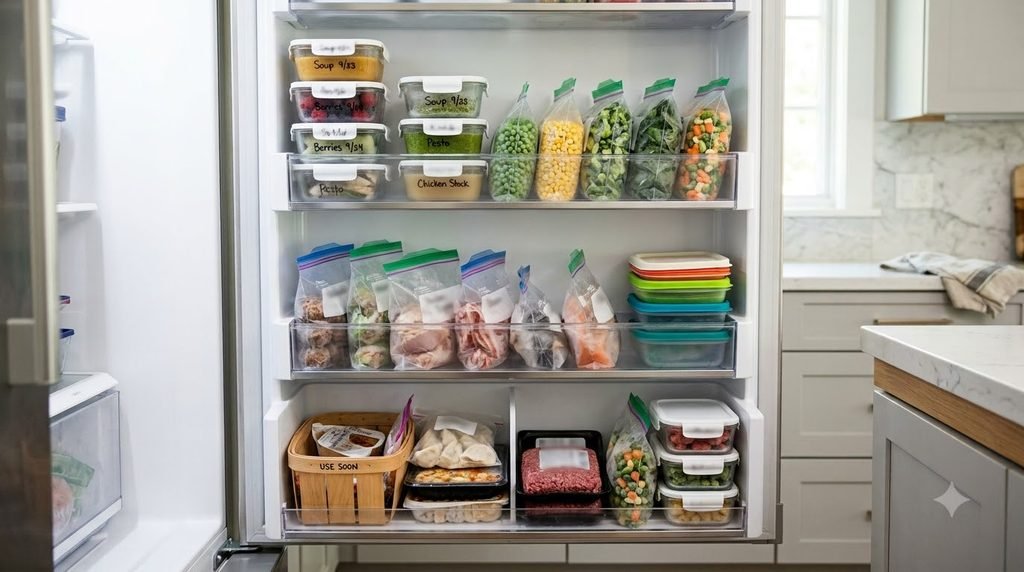
8. Forgotten Freezer Items
Your freezer can hide clutter just as easily as a junk drawer.
Check for:
- Freezer-burned food
- Unlabeled containers
- Old leftovers
- Foods nobody wants
- Mystery packages
- Items you completely forgot about
Dispose of anything that is no longer safe or desirable, following appropriate food-safety guidance.
Then group similar foods together so you can actually see what you have.
9. Summer Outdoor Gear You No Longer Use
September is a useful transition point for evaluating outdoor equipment.
Look through your garage, basement, mudroom, or storage area for items such as:
- Broken camping equipment
- Damaged sports gear
- Unused outdoor games
- Worn-out picnic accessories
- Duplicate gardening tools
- Items from hobbies you no longer enjoy
Don’t let “maybe someday” turn your storage space into a permanent holding area.
If you haven’t used something all summer, ask whether there’s a realistic reason you’ll use it next year.
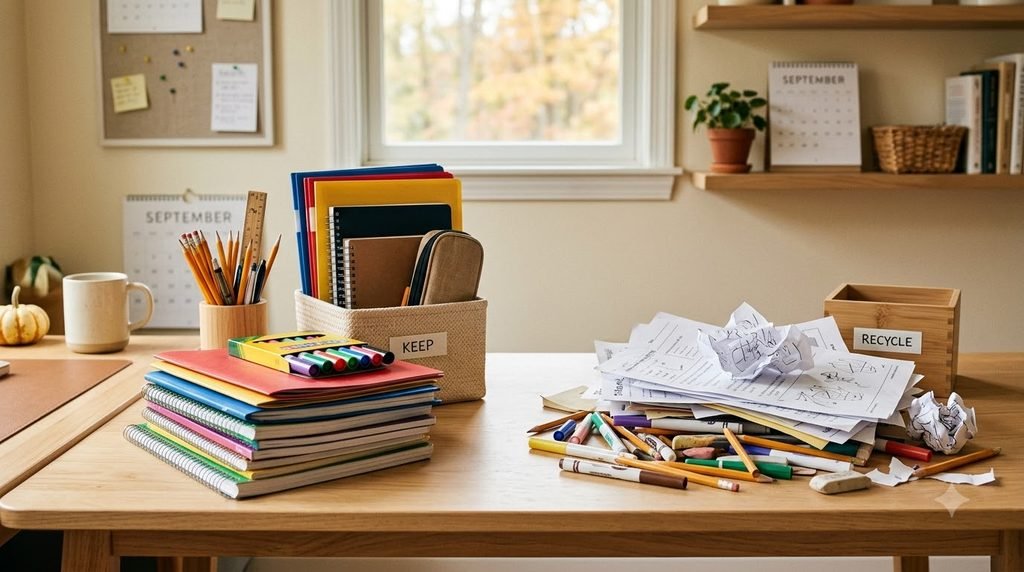
10. Old or Unused School Supplies
For families with school-age children, September can create a flood of notebooks, pens, folders, markers, and miscellaneous supplies.
Before buying more, check what you already have.
Gather everything together and remove:
- Dried-out markers
- Pens that don’t work
- Broken pencils
- Empty glue sticks
- Damaged folders
- Duplicate supplies you don’t need
Keep usable extras together in one designated location.
This simple step can prevent your home from accumulating another drawer full of random supplies.
11. Old School Papers and Worksheets
School paperwork can accumulate quickly.
Instead of keeping every worksheet, permission slip, handout, and old assignment, create a simple system.
Consider keeping:
- Important school records
- Special artwork
- Meaningful accomplishments
- A few favorite projects
Recycle routine papers that no longer serve a purpose.
For sentimental items, consider taking photographs before letting the physical copies go.
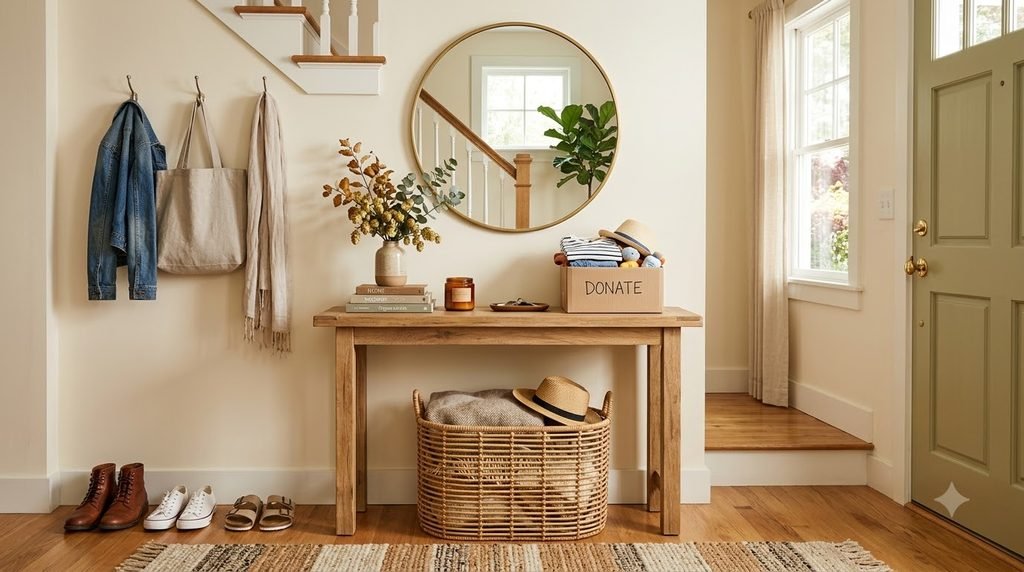
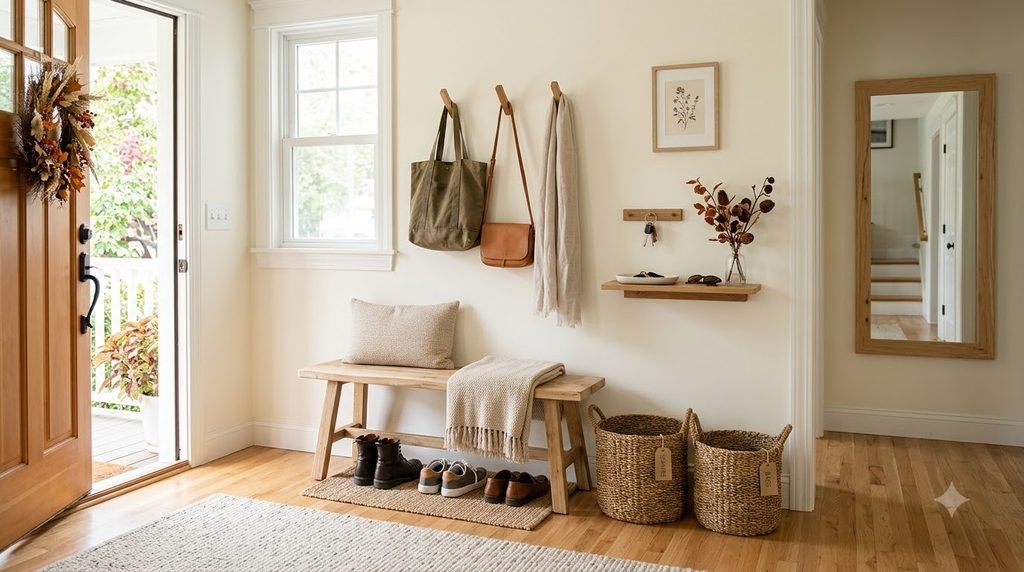
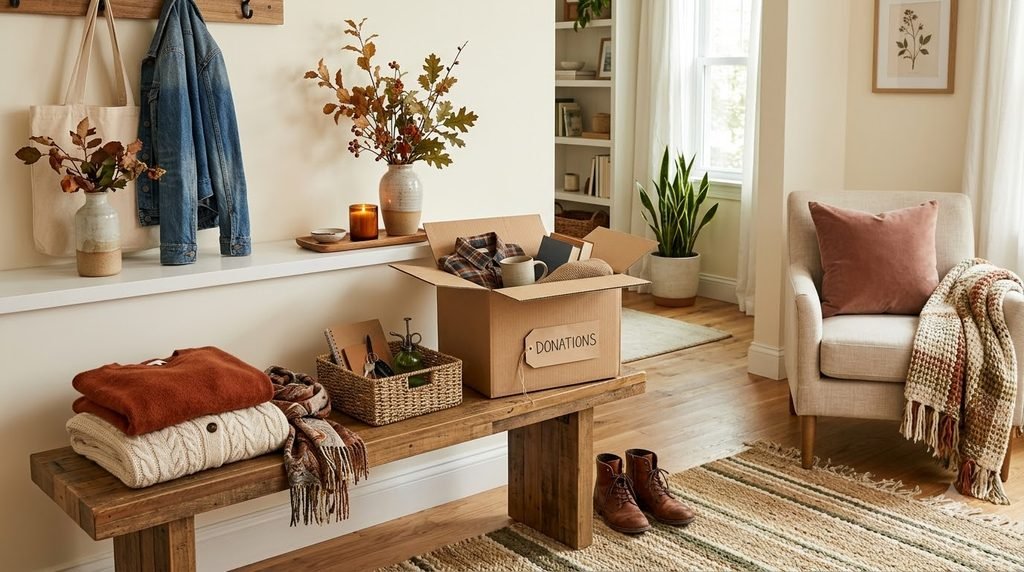
12. Entryway Clutter
Your entryway is one of the first places where seasonal clutter becomes obvious.
Clear out:
- Shoes nobody wears
- Old bags
- Summer accessories
- Broken umbrellas
- Empty packages
- Random items that don’t belong there
Then make room for the things your household will actually use during fall.
This is especially useful because coats, shoes, backpacks, and other everyday items can make entryways feel crowded as the weather changes.
For more ideas, see 15 Entryway Organization Ideas to Keep Your Home Clutter-Free.
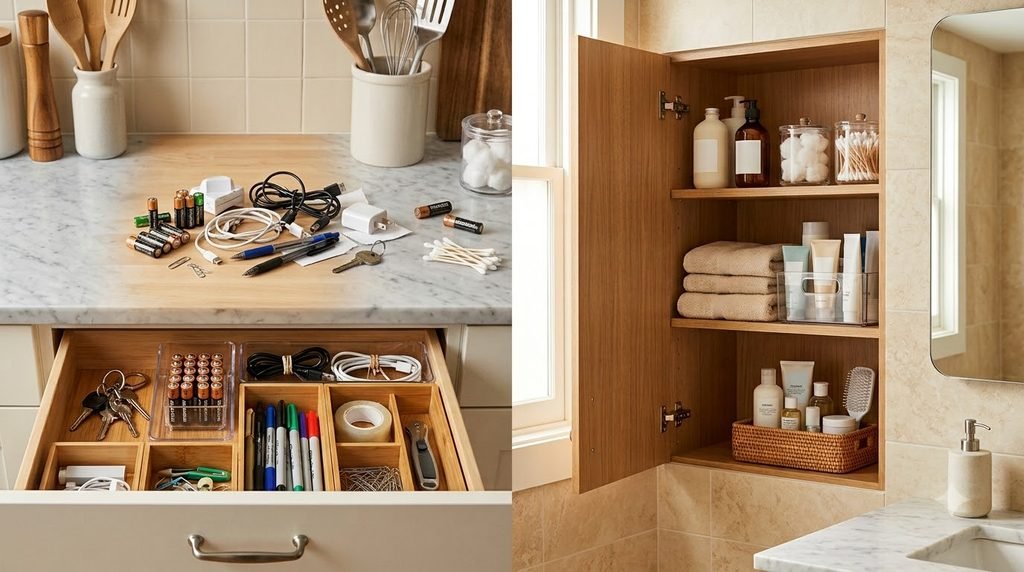
13. Junk Drawer Items
September is a great excuse to finally open that drawer.
Take everything out and sort it into three groups:
Keep: Things you regularly use.
Move: Things that belong somewhere else.
Let go: Broken, duplicate, unidentified, or unnecessary items.
Pay special attention to:
- Mystery keys
- Dead batteries
- Broken chargers
- Random hardware
- Dried-up pens
- Duplicate tools
- Takeout items you never use
A small drawer can often be completely reset in 10 minutes.
14. Unused Bathroom Products
Check your bathroom cabinets and drawers for products that have been sitting untouched.
Look for:
- Products you don’t like
- Nearly empty containers
- Old travel-size products
- Duplicate items
- Products that no longer suit your routine
- Damaged packaging
For anything with an expiration or safety concern, follow the manufacturer’s disposal guidance rather than simply putting it down the drain.
Once you’ve cleared the excess, you’ll have a much easier time seeing what you actually need.
For a more comprehensive bathroom reset, see 15 Bathroom Organization Ideas to Make Your Space Feel Bigger.
15. Candles You Don’t Enjoy
Fall is prime cozy-home season, which makes September a good time to review your candle collection.
You don’t need to keep every candle you’ve accumulated.
Consider letting go of candles that:
- Have a scent you dislike
- You never reach for
- Are damaged
- You bought but never enjoyed
- No longer fit your home
Keep the scents you genuinely love and give them a designated storage spot.
The goal isn’t to own more seasonal items. It’s to make room for the things you actually enjoy using.
16. Dead Plants and Worn-Out Outdoor Decor
Take a walk around your home and evaluate your plants and seasonal outdoor decorations.
Remove or replace items that are:
- Permanently damaged
- Broken
- Dead beyond recovery
- Faded
- Missing pieces
- No longer suited to your space
You don’t need to keep something simply because you paid for it.
A smaller collection of items that look good and function well is often easier to maintain.
17. Random “Just in Case” Items
Finally, tackle the things you keep because you might need them someday.
This category can include:
- Random packaging
- Duplicate household items
- Old instruction manuals
- Broken objects waiting for repair
- Unused containers
- Miscellaneous cords
- Things you can’t remember why you kept
Ask yourself:
“What specific situation am I saving this for?”
If you can’t think of a realistic answer, that’s useful information.
You don’t have to become an extreme minimalist. The goal is simply to stop storing things that aren’t contributing value to your home.
A Simple September Decluttering Rule
If 17 categories feel like too much, don’t try to complete them all at once.
Choose one category per day or spend just 10–15 minutes on one small area.
A useful decision framework is:
Do I use it?
If not, continue to the next question.
Do I need it for the coming season?
If not, consider letting it go.
Would I buy it again today?
If the answer is no, you probably don’t need to keep it.
This approach makes September decluttering feel more manageable than trying to reorganize the entire house in one weekend. Recent decluttering guidance also emphasizes small, targeted areas rather than an overwhelming whole-house purge.
September Decluttering Checklist
Save this quick checklist and work through it when you have a few spare minutes:
- ☐ Summer clothes
- ☐ Outgrown kids’ clothes
- ☐ Worn-out shoes
- ☐ Beach and pool gear
- ☐ Extra water bottles
- ☐ Duplicate food containers
- ☐ Expired pantry food
- ☐ Forgotten freezer items
- ☐ Unused outdoor gear
- ☐ Old school supplies
- ☐ School paperwork
- ☐ Entryway clutter
- ☐ Junk drawer
- ☐ Unused bathroom products
- ☐ Unwanted candles
- ☐ Dead plants and damaged decor
- ☐ Random “just in case” items
Final Thoughts
You don’t need a perfectly minimalist home to feel organized.
Sometimes the biggest improvement comes from removing the handful of things that are taking up space, creating visual clutter, or making everyday routines harder.
September is an especially useful time to do this because you’re naturally transitioning from summer routines into fall. A little decluttering now can make room for the clothes, supplies, seasonal items, and cozy touches you’ll actually use over the next few months.
Start small. Pick one category from this list, set a timer for 10–15 minutes, and see how much lighter your space feels.