Collections can make a home feel personal in a way that mass-produced decor often cannot. Books you’ve collected over the years, travel souvenirs, vintage ceramics, records, framed recipes, small figurines, family keepsakes, or even a collection of favorite mugs can tell a story about the people who live there.
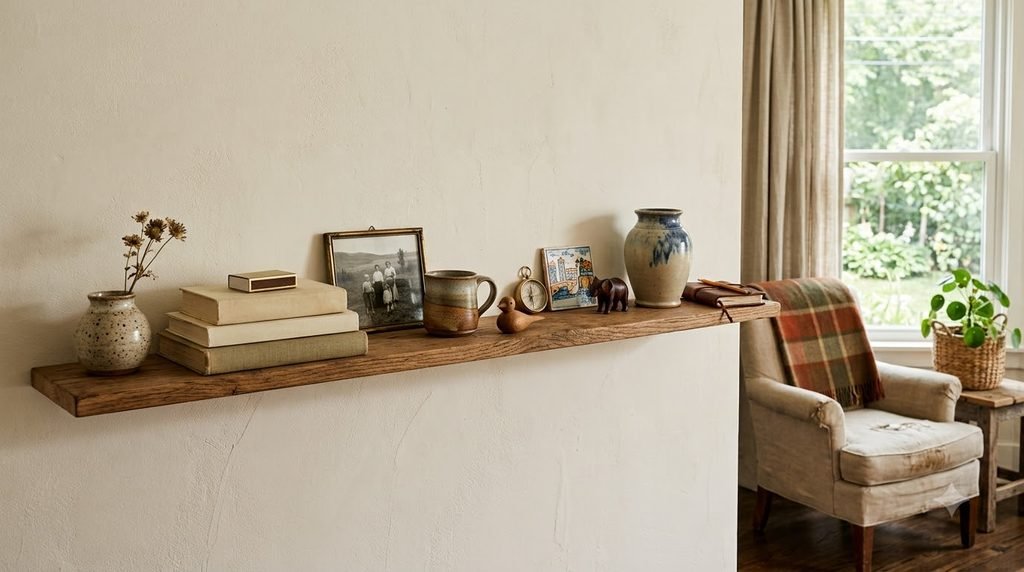
The problem starts when the collection spreads across every available surface.
A few meaningful objects can quickly turn into crowded shelves, overflowing tables, and small items that are difficult to clean around. The solution isn’t necessarily to put everything away or get rid of the things you love. Instead, the goal is to give your collection boundaries and make the display feel intentional.
That means choosing where the collection belongs, deciding which pieces deserve attention, creating visual breathing room, and rotating items when you have more than your space can comfortably hold.
Here are practical ways to display collections without making your home feel cluttered.
1. Give Your Collection One Clearly Defined Home
One of the easiest ways to make a collection look cluttered is to spread it throughout the house.
A few figurines on the living room console, some souvenirs on a bedroom dresser, postcards near the entryway, and another group of objects on the kitchen counter may not seem excessive individually. Together, however, they can make the entire home feel visually busy.
Instead, choose one defined area for the collection.
This could be:
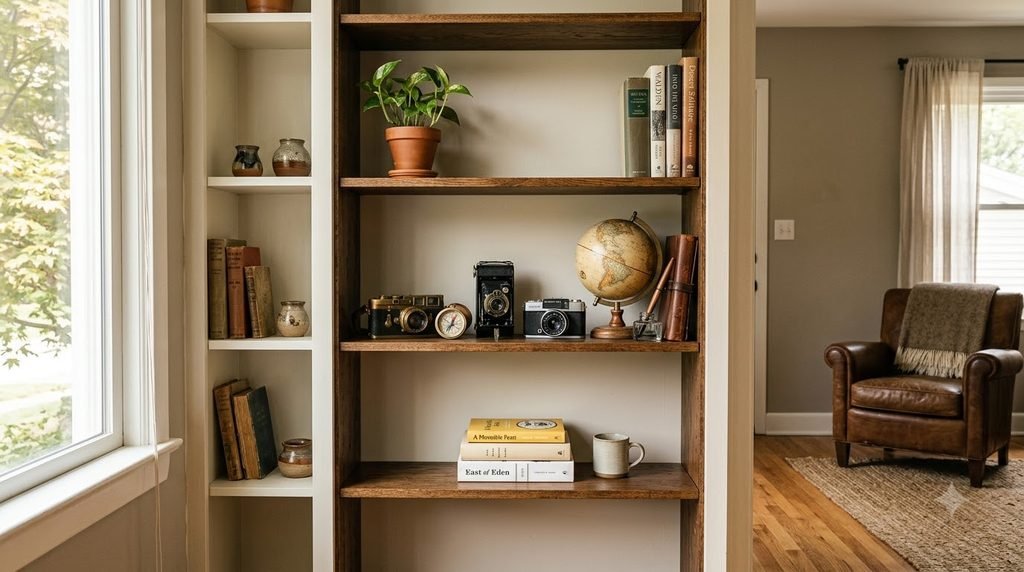
- One section of a bookcase
- A narrow wall shelf
- A display cabinet
- A console table
- A small corner of a room
- One gallery wall
The boundary is important because it tells the eye where the collection starts and ends.
Best for: travel souvenirs, small vintage finds, ceramics, figurines, and sentimental objects.
2. Display Your Favorite Pieces First
You don’t have to display everything simply because you own it.
Start by choosing the pieces you genuinely enjoy seeing. These might be your most unusual objects, your favorite souvenirs, family pieces, or items with a story behind them.
Put those pieces on display first.
Then look at the remaining collection and ask:
- Does this piece add something different?
- Is it meaningful to me?
- Does it work with the pieces already displayed?
- Do I have enough space for it?
- Would I rather rotate it in later?
This approach prevents the common mistake of filling a shelf simply because there is empty space.
Your collection should feel selected, not squeezed onto a surface.
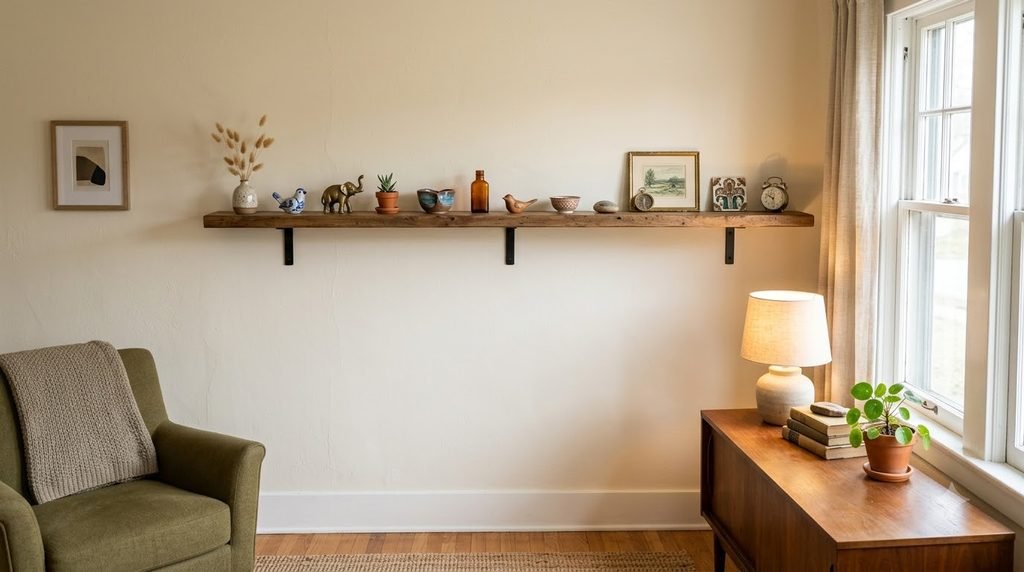
3. Use a Narrow Trinket Shelf for Small Collections
Small collections often create the biggest visual mess because individual pieces are easy to scatter around a room.
A narrow trinket shelf can solve that problem by giving small objects a dedicated vertical display area.
It works particularly well for:
- Miniature figurines
- Small ceramics
- Travel souvenirs
- Tiny vintage objects
- Collectible figures
- Small framed pieces
- Keepsakes
Pinterest’s current Curated Clutter trend is a particularly strong signal for this type of display, with searches for “trinket shelf ideas” showing a major increase in 2026.
If your collection is small, you don’t need a large shelving unit. A compact shelf can actually make the collection look more intentional while keeping other surfaces available for everyday use.
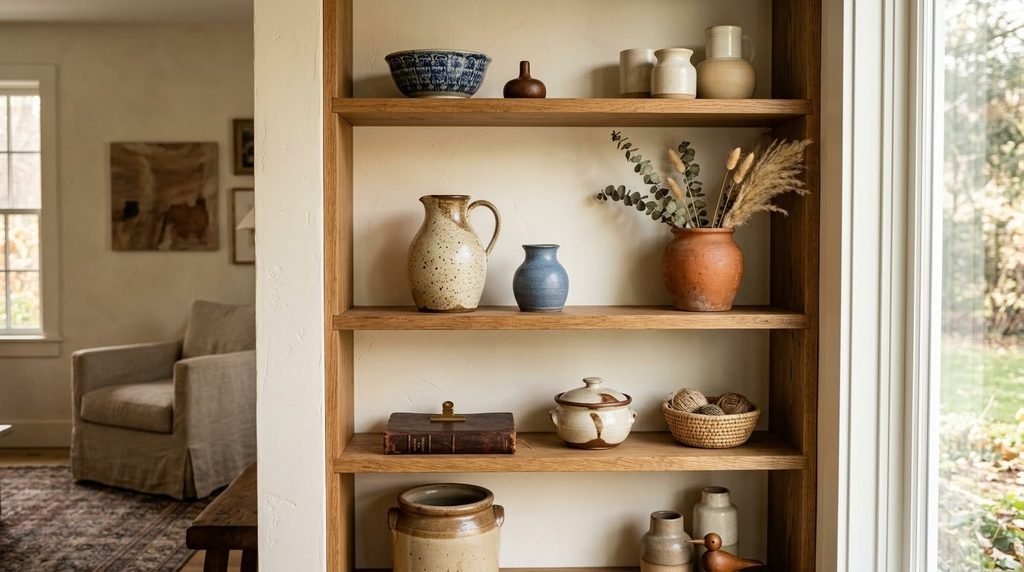
4. Group Similar Items Together
A collection usually looks more organized when related objects are kept together.
Instead of placing individual pieces wherever you find an empty spot, create a visual group.
For example:
- Keep travel souvenirs together.
- Display similar ceramics on one shelf.
- Group vintage bottles in one area.
- Keep records near the record player.
- Display framed recipes together.
- Put small figurines on a dedicated shelf.
Grouping gives the objects a clear purpose.
It also helps the collection read as one design element instead of many unrelated objects.
This is one reason collections can look much better when concentrated in a single display area rather than scattered throughout the room. Similar grouping and common themes are also recommended in collection-display guidance from IKEA.
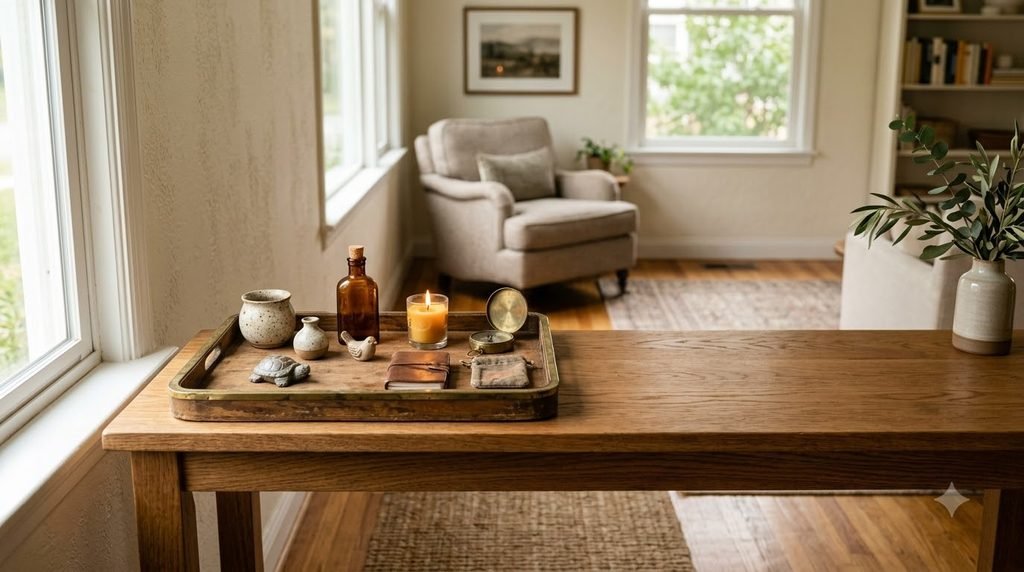
5. Use Color to Make a Mixed Collection Feel Intentional
Your collection doesn’t have to match perfectly.
In fact, some of the most interesting collections contain objects from different periods, materials, or places.
If the pieces look unrelated, use color to create a connection.
For example, you might group:
- Cream and white ceramics
- Blue and green glass
- Warm wood and brass objects
- Black, white, and neutral books
- Earth-tone vintage pieces
You don’t need every item to match.
Instead, look for one or two colors that appear repeatedly throughout the collection.
This creates visual continuity without making the display look overly coordinated.
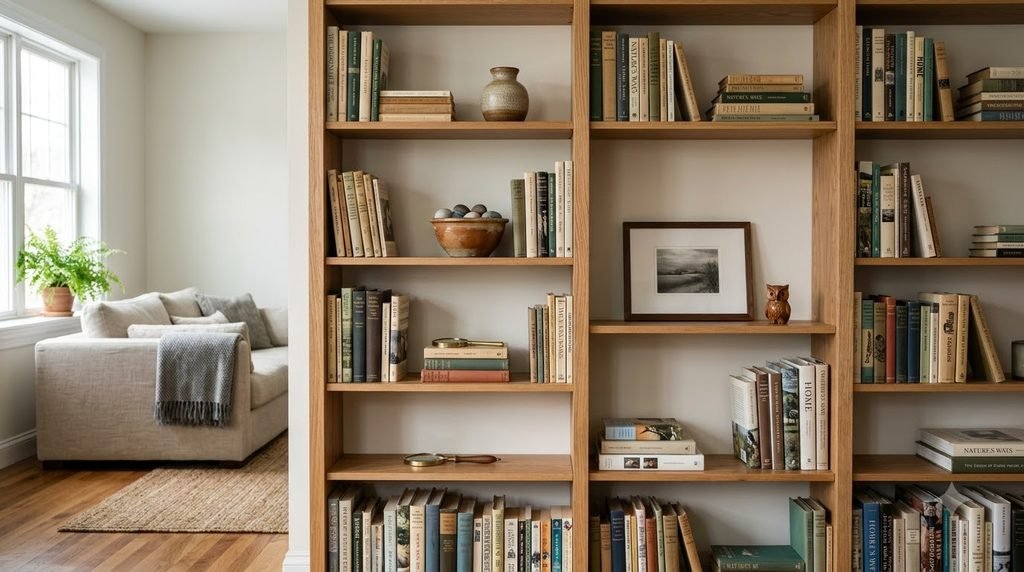
6. Try a Vintage Tray or Shallow Display Box
A tray can create an instant boundary for a small collection.
Instead of placing several little objects directly across a dresser, coffee table, or console, put them together on one tray.
For example, a tray could hold:
- Small perfume bottles
- Vintage matchbooks
- Travel souvenirs
- Decorative stones
- Small candles
- Miniature ceramics
- Sentimental keepsakes
The tray acts like a visual frame.
It tells you exactly where the collection belongs and makes it easier to move or clean the display when necessary.
For fragile or especially valuable small pieces, a shallow display box or protected case can provide the same sense of containment while keeping the objects visible.
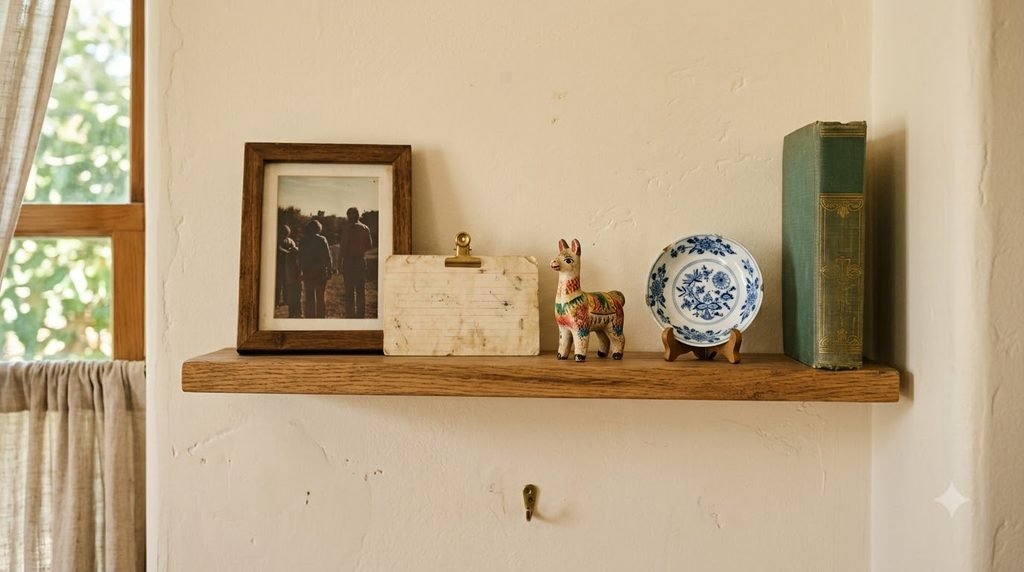
7. Turn Books Into Part of the Collection Display
Books are useful because they can provide both storage and visual height.
If you collect books, don’t automatically hide them away.
Stack a few horizontally and place a smaller object on top. Then place taller books vertically beside them.
This creates different heights without requiring additional decor.
You can also use books as a visual bridge between different parts of a collection.
For example, a stack of travel books can sit underneath travel souvenirs, while vintage design books can support a small collection of ceramics or decorative objects.
The important thing is to avoid turning every available surface into a book stack. Keep the arrangement intentional and leave some open space around it.
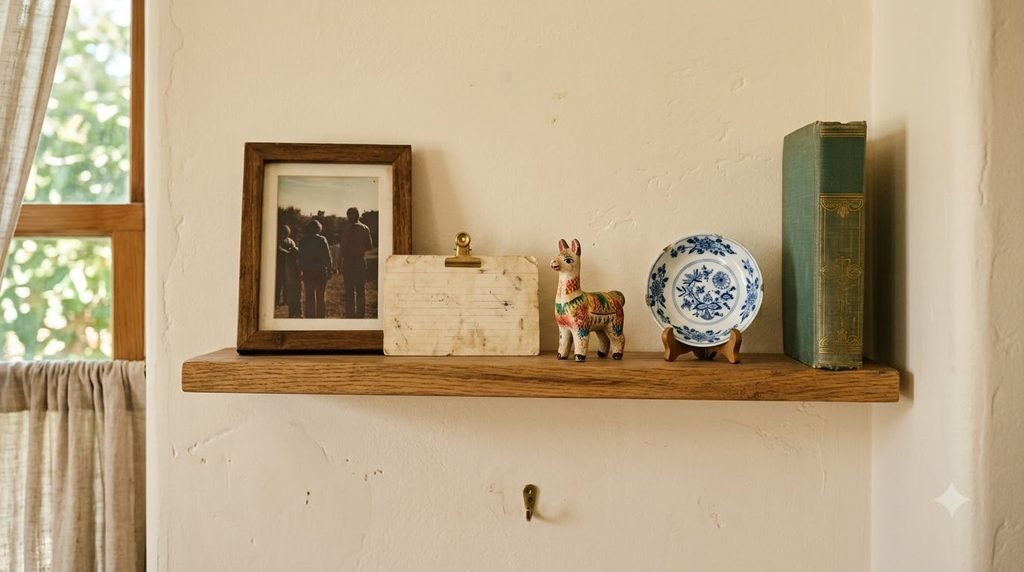
8. Create a Small Memory Shelf
Sentimental collections don’t need an entire room.
A small shelf can become a dedicated memory display for objects that have personal meaning.
You might include:
- A vacation souvenir
- A family photograph
- A small inherited object
- A handwritten recipe
- A meaningful book
- A child’s small keepsake
- A special piece of pottery
The goal isn’t to display every sentimental object you own.
Choose a few pieces that represent the memory and allow them to have enough space around them.
This makes the display feel personal without turning the entire room into a storage area for memories.
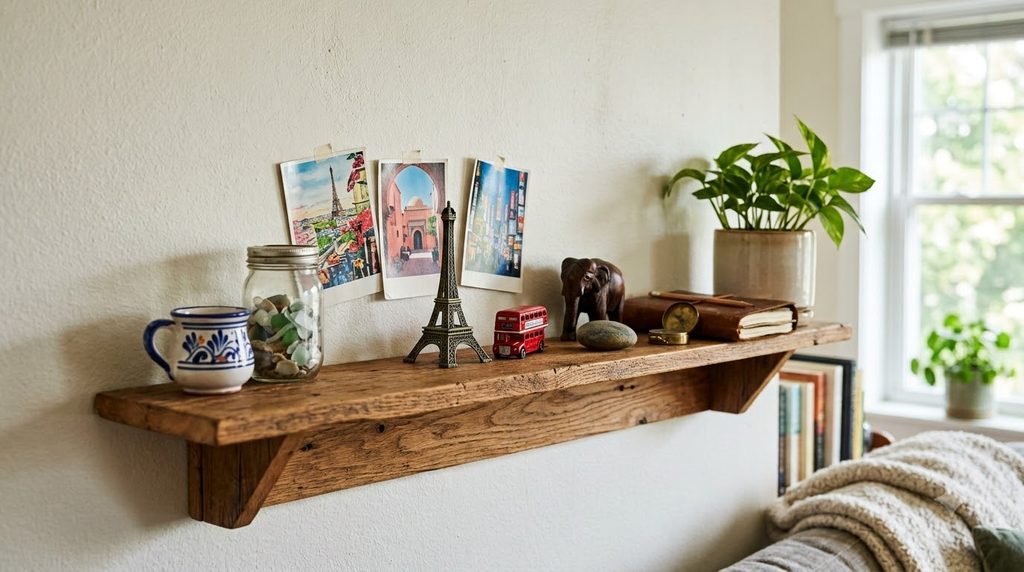
9. Keep Travel Souvenirs Together
Travel souvenirs are particularly easy to scatter around a home.
A shell might end up in the bathroom, a small ceramic piece on the kitchen counter, postcards in a drawer, and another souvenir on the bedroom dresser.
Instead, create a small travel display.
You could use:
- A dedicated shelf
- A shadow box
- A gallery wall
- A glass cabinet
- A small tray
- A narrow bookcase
You can also organize souvenirs by destination rather than displaying them randomly.
For example, one shelf could represent a particular trip, while another could hold objects from different destinations.
The result feels more like a visual travel story than a collection of unrelated objects.
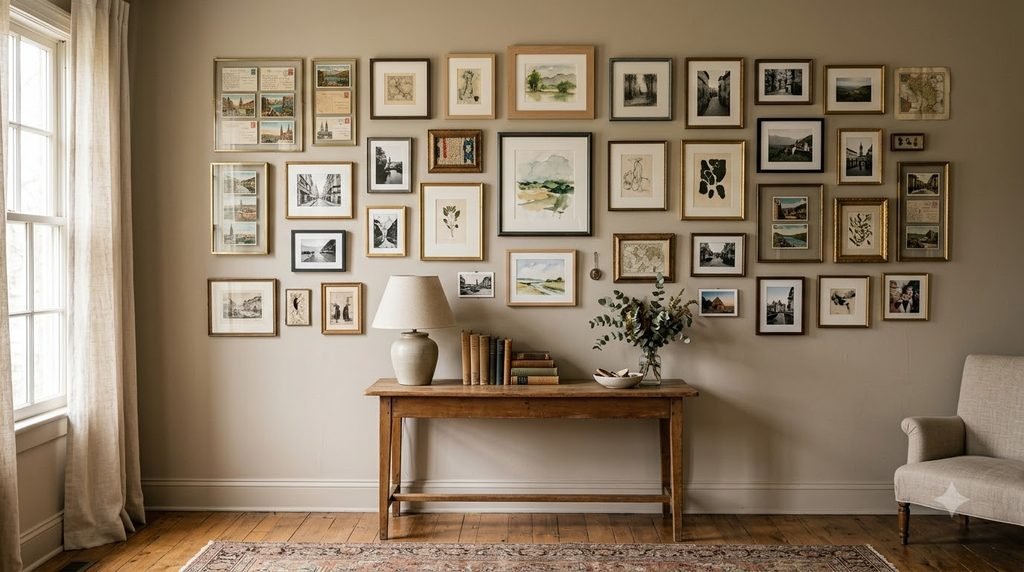
10. Use Vertical Wall Space
When floor and furniture space are limited, look up.
Walls can be particularly useful for collections that are flat or lightweight.
Good candidates include:
- Plates
- Framed recipes
- Postcards
- Small artwork
- Record covers
- Vintage signs
- Photographs
- Textile pieces
A gallery-style arrangement can turn the collection into a feature rather than allowing it to take over tables and shelves.
The key is to establish a layout before putting everything on the wall.
Lay the pieces out on the floor first and experiment with spacing.
You may discover that displaying fewer pieces creates a stronger composition than trying to fit the entire collection into one arrangement.
Gallery walls and vertical displays are also commonly recommended for collections because they move objects away from crowded horizontal surfaces.
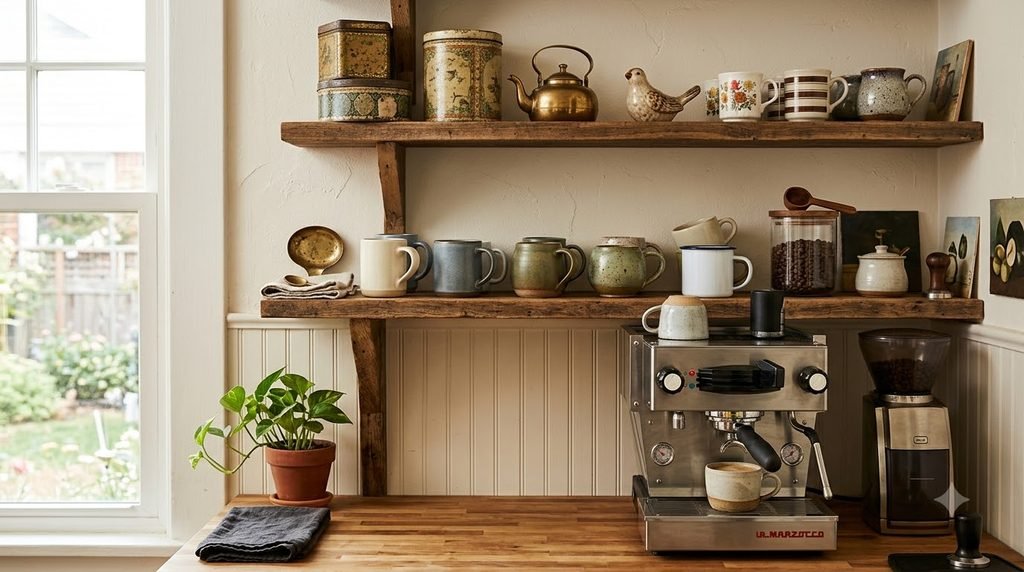
11. Create a Small Collection Around Your Coffee Station
A collection doesn’t always have to be purely decorative.
You can combine things you collect with objects you actually use.
For example, a coffee station could include a small collection of:
- Vintage mugs
- Coffee tins
- Small ceramic pieces
- Spoons
- Coffee books
- Favorite cups
This approach works particularly well because the collection has a practical purpose.
Pinterest’s 2026 Home Café Engineering trend is also showing increased interest in coffee stations, vintage coffee corners, espresso corners, and other personalized coffee setups.
Just keep the everyday essentials accessible and let the collectible pieces act as accents rather than allowing the entire counter to become a display shelf.
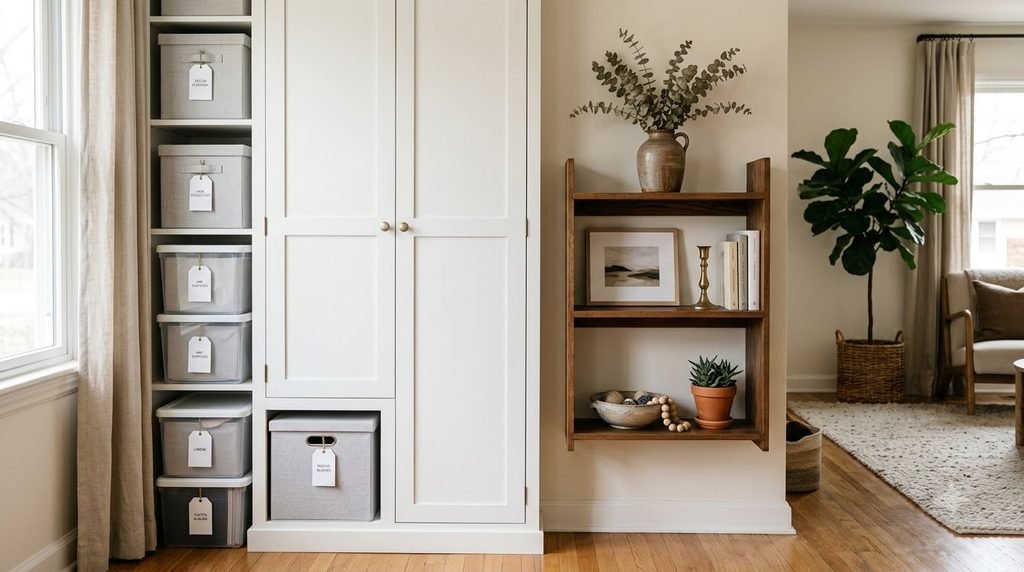
12. Rotate Your Collection Instead of Displaying Everything
This is one of the most useful solutions if you have more pieces than your home can comfortably display.
You don’t need to choose between displaying everything and putting everything into storage.
Create a rotation.
For example:
Spring: lighter colors and floral pieces
Summer: travel souvenirs and colorful ceramics
Fall: warm-toned objects and vintage pieces
Winter: darker colors, books, and sentimental items
You can also rotate simply when you get tired of looking at the same pieces.
Keep the remaining items safely organized in labeled storage so you know what you have.
Rotating collections allows you to enjoy more of what you’ve collected without filling every shelf at the same time. Professional-organizing guidance also recommends rotation when a collection is larger than the available display space.
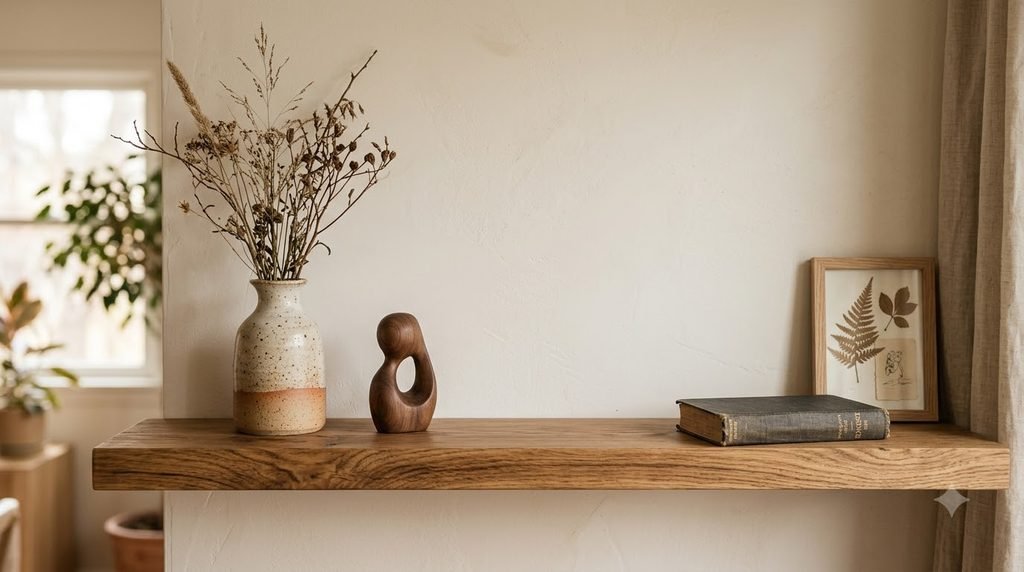
13. Leave Empty Space Around the Collection
One of the biggest mistakes people make when displaying collections is treating empty space as wasted space.
It’s not.
Empty space gives your collection room to breathe.
If every inch of a shelf is filled, individual pieces become harder to notice. The eye sees one large mass rather than individual objects.
Try leaving:
- Space between groups
- An empty section at one end of a shelf
- Some wall space around a gallery
- Open space above smaller objects
You don’t need to fill every gap.
Sometimes removing one or two objects makes the entire collection look more intentional.
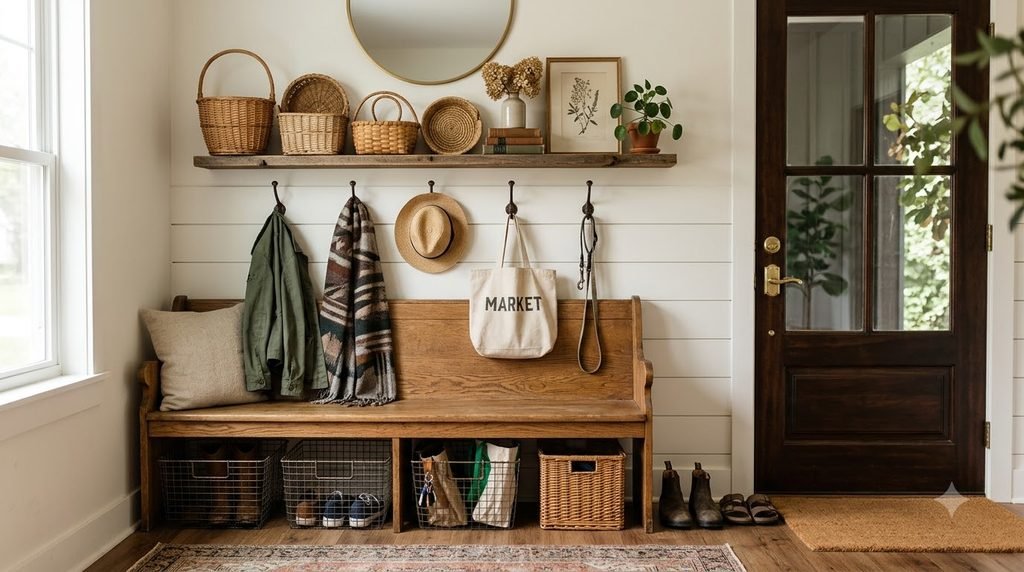
14. Mix Your Collection With Functional Objects
A collection doesn’t always need to live in a completely separate display area.
You can combine decorative pieces with things you already use.
For example:
Entryway: a small collection of vintage baskets with keys and everyday essentials.
Living room: books mixed with a few collected objects.
Kitchen: favorite ceramics mixed with everyday serving pieces.
Home office: framed keepsakes alongside books and supplies.
Bedroom: a few sentimental objects mixed with functional storage.
This works because the collection becomes part of the room instead of looking like an isolated display.
The important distinction is that the functional objects should still be easy to use.
Don’t place decorative pieces in the middle of a surface you need every day.
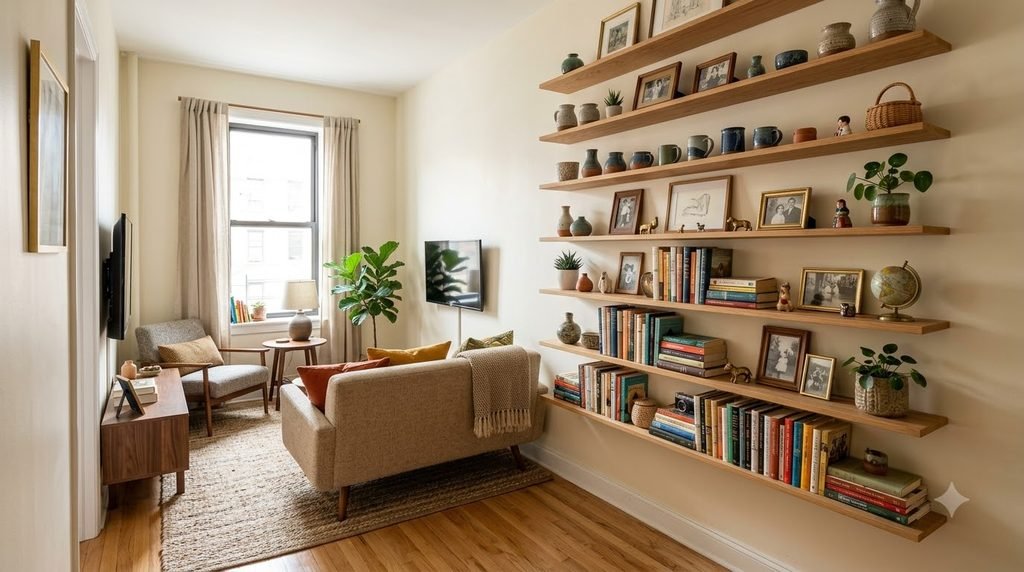
15. Know When a Collection Has Become Clutter
The final step is knowing when to stop adding.
A collection can gradually become clutter even when every individual piece is meaningful.
Ask yourself:
- Can I still see and enjoy the pieces?
- Is the display easy to dust and clean?
- Are objects blocking useful surfaces?
- Do I have duplicates I don’t really care about?
- Does the collection still feel intentional?
- Would removing a few pieces improve the display?
- Am I keeping something only because I feel guilty getting rid of it?
If the answer to several of these questions is yes, it’s time to edit the display.
That doesn’t necessarily mean throwing things away.
You can rotate them, store them safely, give some away, photograph sentimental objects, or create a smaller curated display.
The goal isn’t minimalism.
The goal is to make room for the things you genuinely want to live with.
How to Display Collections in a Small Home
Small homes require more intentional boundaries because there are fewer surfaces available for decorative objects.
Instead of spreading a collection throughout the room, choose one vertical or compact display area.
Good options include:
- A narrow wall shelf
- The top section of a bookcase
- A small glass cabinet
- A picture ledge
- A corner shelf
- A shadow box
- One section of a console
If floor space is limited, prioritize wall space and furniture that already has a storage function.
A small collection can actually look more impressive when it occupies one carefully chosen area than when the same objects are scattered around the room.
How to Display Collectibles Without Making a Room Look Messy
Think about containment, grouping, and breathing room.
Containment gives the collection a boundary.
Grouping makes similar objects read as one visual element.
Breathing room prevents the display from feeling overcrowded.
For very small objects, a tray, shallow shelf, glass-front cabinet, or shadow box can help. For flat objects, a gallery wall may work better. For larger pieces, a bookcase or dedicated cabinet can provide enough separation.
And if you have a large collection, don’t feel pressured to display it all at once.
A curated selection usually has more visual impact than an overcrowded shelf.
Common Collection Display Mistakes to Avoid
Filling every shelf
Empty space isn’t a problem. It often makes the pieces you display more noticeable.
Scattering one collection around the house
Keeping related pieces together usually makes them feel more intentional.
Using too many different display systems
A shelf, cabinet, wall rack, tray, and several unrelated containers can make a collection feel visually fragmented.
Choose one primary display method whenever possible.
Displaying everything at once
If you have a large collection, rotation is often better than overcrowding.
Ignoring cleaning and maintenance
A beautiful collection that is difficult to dust will eventually become frustrating.
Choose displays that you can realistically maintain.
Buying storage before editing the collection
More shelves aren’t always the answer.
First decide what you actually want visible. Then choose the display furniture around the collection.
Budget-Friendly Collection Display Ideas
You don’t need expensive display furniture to make a collection look intentional.
Try using things you already have first.
Use a tray
A decorative tray can instantly create a defined zone for small objects.
Repurpose a bookshelf
Dedicate one shelf or section to your collection instead of buying a new display unit.
Frame flat pieces
Postcards, recipes, tickets, illustrations, and other paper items can become wall art when grouped together.
Stack books
Books can create inexpensive height and structure for smaller decorative objects.
Use existing jars or containers
Small collections such as shells, buttons, beads, or other tiny objects can sometimes be displayed in clear containers you already own.
Rotate instead of buying more storage
If your collection is larger than your available space, changing the display may be more useful than purchasing another cabinet.
A Simple Way to Curate Your Collection
If your collection currently feels overwhelming, don’t try to reorganize the entire thing in one afternoon.
Start with one display area.
Remove everything.
Clean the surface.
Then divide your collection into three groups:
Display: pieces you love seeing.
Rotate: pieces you still enjoy but don’t need out right now.
Reconsider: pieces that no longer feel meaningful or useful.
Put the display group back first.
Leave some empty space.
Then step away and look at the arrangement from across the room.
If the collection still feels crowded, remove one or two more pieces.
This simple process often produces a better result than continually adding storage.
Frequently Asked Questions
How do you display a collection without making it look cluttered?
Give the collection a defined area, group similar pieces together, use vertical space where possible, and leave empty space between objects. If you own more pieces than you can comfortably display, rotate them instead of filling every available surface.
How do you make a collection look intentional?
Create a visual connection between the pieces through location, color, theme, material, or arrangement. Keeping related objects together usually makes them feel like a deliberate collection rather than random decorations.
How many items should you display on a shelf?
There isn’t a fixed number. The right amount depends on the shelf and the size of the objects. Start with fewer pieces and add only when the arrangement still has enough breathing room.
What is the best way to display a large collection?
Use a combination of dedicated shelving, cabinets, wall displays, and rotation. Trying to display an entire large collection on one shelf usually creates unnecessary visual crowding.
How can I display collectibles in a small room?
Prioritize vertical space, narrow shelves, wall displays, glass-front cabinets, and compact display areas. Keeping the collection contained to one defined zone can make a small room feel more organized.
Should I display my entire collection?
Not necessarily. Display the pieces you enjoy most and rotate the rest. This allows you to appreciate a larger collection without overwhelming the room.
Final Thoughts
A collection doesn’t have to make your home feel cluttered.
The difference usually comes down to how the collection is edited and displayed, not simply how many objects you own.
Give your collection a clear home. Group related pieces. Use vertical space when you can. Leave room between objects. Mix decorative pieces with functional items when it makes sense, and rotate larger collections instead of trying to display everything simultaneously.
Most importantly, don’t feel like you have to choose between an organized home and a home filled with personality.
The things you collect can become some of the most meaningful parts of your decor when they have a place to belong.
Related Articles
For JessicaMillers, I would use these internal links because they support the organization + small-space + personalized-home cluster without creating another generic fall-content loop:
- 15 Bedroom Organization Ideas to Make Your Room Feel More Spacious
- 12 Small Space Organization Ideas to Make Your Home Feel Bigger
- 15 Simple Home Organization Ideas That Make Everyday Life Easier
- 15 Entryway Organization Ideas to Keep Your Home Clutter-Free
- 15 Fall Home Decor Trends for 2026 That Are Actually Worth Trying