When summer starts winding down, your home often needs more than a seasonal decor change. Outdoor gear may still be sitting by the door, summer clothing is taking up valuable closet space, the kitchen may need a reset, and the rooms you use more often in cooler weather may need a little preparation.

The good news is that you don’t need to deep clean your entire house in one weekend.
A better approach is to prepare your home in stages, focusing first on the spaces that will change the most as the weather cools. This might mean switching seasonal clothing, clearing summer clutter, checking frequently used areas, freshening textiles, and making everyday storage easier to use.
This fall home preparation checklist walks through the main areas of your home so you can decide what actually needs attention before the season gets busy.
Start With a Quick Whole-Home Walk-Through
Before pulling out cleaning supplies or storage bins, walk through your home and look at it as if you’re seeing it for the first time.
Notice the areas that still feel strongly set up for summer and the places that are already becoming harder to use.
You may find that the biggest problems aren’t necessarily the messiest rooms. A crowded entryway, overflowing laundry area, or closet that makes getting dressed difficult can create more daily friction than a room that simply needs dusting.
Make a short list before you start.
Look for:
- Summer items that can be stored
- Clothing that needs to be rotated
- Areas where clutter has accumulated
- Items that need cleaning or repair
- Storage spaces that have become difficult to use
- Rooms that will get more use during fall
- Supplies you may need before colder weather arrives
Don’t turn this into a whole-house inventory. The purpose is simply to identify the changes that will make the biggest difference.
1. Reset the Entryway for Fall
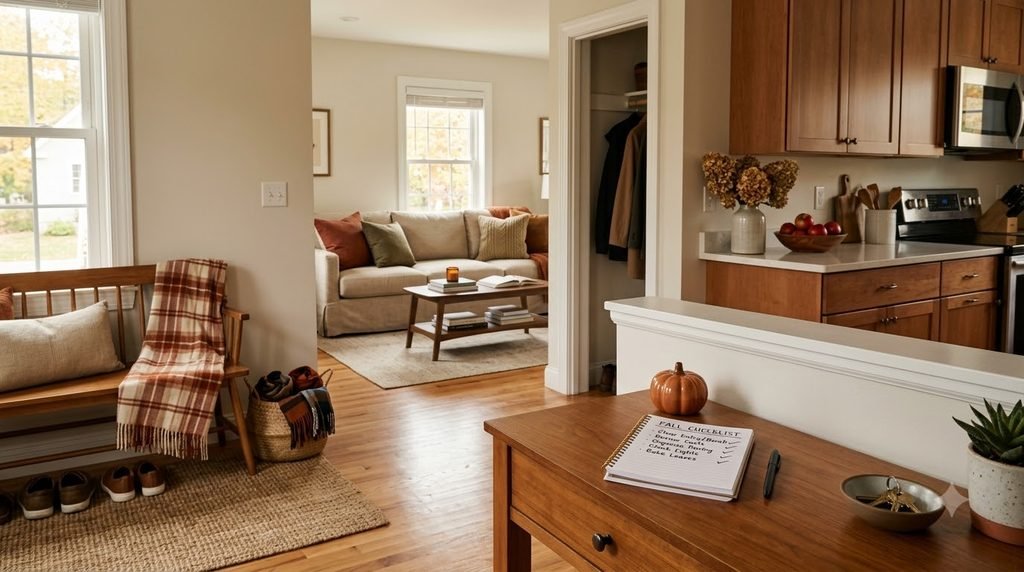
Your entryway is likely to work harder in fall.
As the weather changes, you’ll gradually start dealing with jackets, closed-toe shoes, umbrellas, bags, and other items that weren’t part of your summer routine.
Start by removing things that no longer belong there. Summer sandals, beach bags, pool accessories, and outdoor items can usually move to another storage area.
Then make room for the things you’ll actually use.
If your entryway is small, don’t try to create a storage system for every possible item. Give priority to the things that come through the door every day.
A practical fall entryway setup might include:
- A designated place for everyday jackets
- Easy-to-reach shoe storage
- A basket or tray for small accessories
- Hooks for frequently used bags
- A place for umbrellas if your climate requires them
- A small amount of open space near the door
The goal is simple: make coming home and leaving the house easier.
If an item repeatedly ends up on the floor, that’s useful information. Its current storage location may not be convenient enough.
2. Rotate Your Closet Without Emptying It
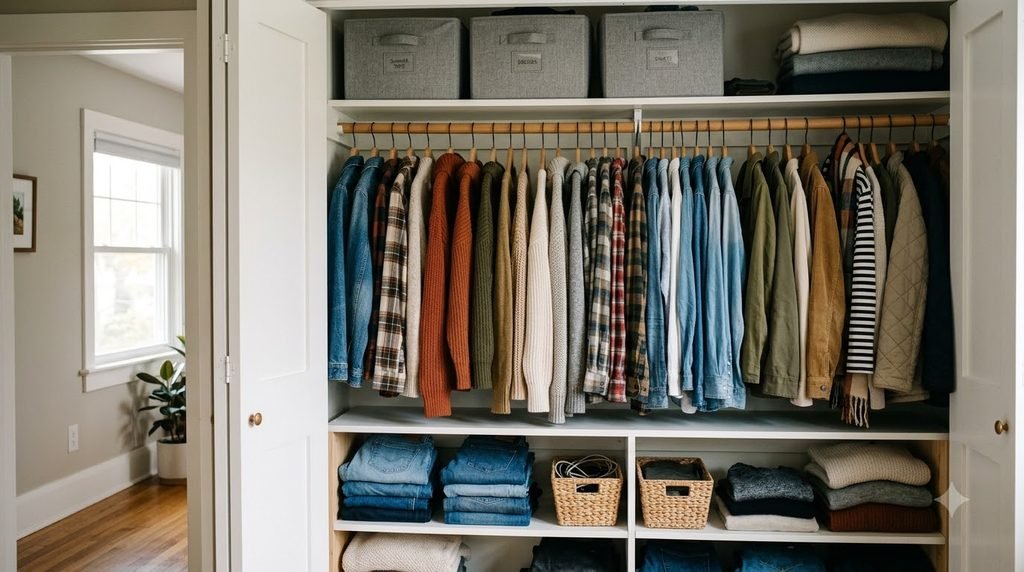
You don’t need to remove every piece of clothing from your closet to prepare it for fall.
Instead, identify what you are actually going to wear over the next few months.
Bring sweaters, jeans, long-sleeve tops, jackets, and other fall-friendly layers into easier-to-reach positions. Move genuinely summer-only clothing to secondary storage if you won’t need it.
Keep some transitional clothing accessible too. Early fall temperatures can still fluctuate, so packing away every lightweight item can make your closet less practical.
Before storing summer clothing:
- Wash or clean it.
- Make sure it is completely dry.
- Remove pieces you no longer wear.
- Fold or store items appropriately.
- Label seasonal containers.
- Put them somewhere clean and dry.
If your closet is already crowded, decluttering before buying more organizers is usually the better first step.
For a more detailed seasonal closet system, see our guide to [How to Organize Your Closet for Fall in 15 Easy Steps].
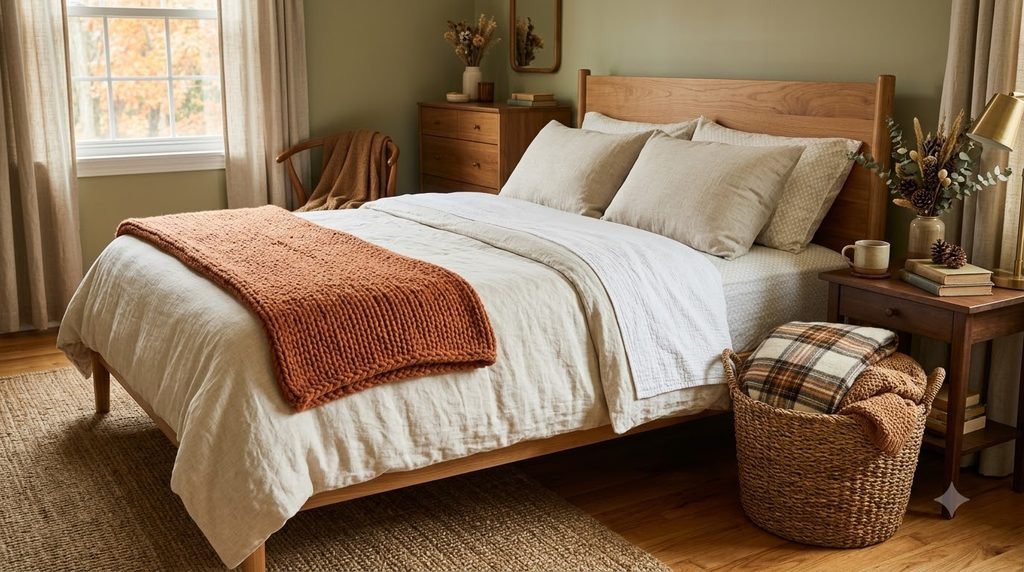
3. Check Your Bedding and Bedroom Textiles
Fall is a good time to look at the textiles you use most often.
You may want heavier blankets, warmer bedding, additional throws, or simply cleaner and fresher layers as temperatures change.
Start by checking what you already own before buying anything.
Wash or clean seasonal bedding according to its care instructions, inspect blankets for damage, and decide which pieces actually need to remain accessible.
You don’t necessarily need a completely new bedding setup.
Sometimes changing one or two practical layers is enough to make a bedroom more comfortable for the season.
Check:
- Blankets and throws
- Comforters and duvets
- Sheets
- Pillow covers
- Mattress protectors
- Bedroom rugs
- Curtains or other washable textiles
If something is rarely used, damaged, or difficult to store, fall is a good time to decide whether it deserves the space.
4. Give the Living Room a Functional Fall Reset
As evenings become cooler, many households naturally spend more time indoors.
That makes the living room worth preparing for increased use.
Start by removing summer-specific items that have accumulated and returning everyday objects to their proper places.
Then look at the things you will use more often during fall.
Throws should be easy to reach. Reading materials should have a designated spot. Remotes, chargers, games, and other frequently used items shouldn’t require a complicated storage routine.
Before adding fall decor, ask:
Does this room work well for the way we actually use it?
If people regularly leave blankets on the sofa, for example, a basket next to the seating area may be more useful than another decorative piece.
If the coffee table constantly collects clutter, reduce the number of items that permanently live there.
A seasonal refresh should improve the room’s function—not simply make it look different.
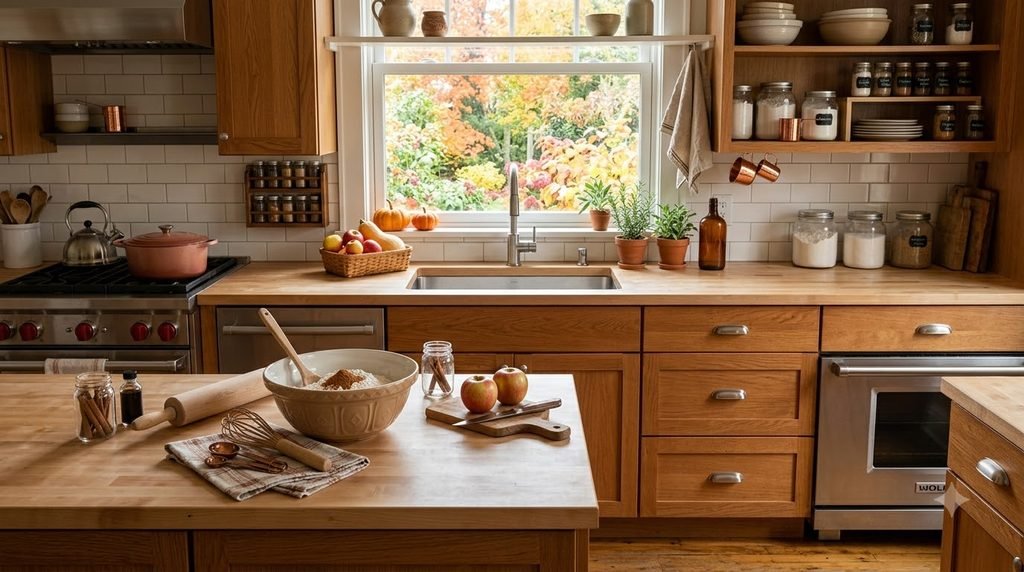
5. Clean the Kitchen Before Fall Cooking Gets Busier
Your kitchen can become noticeably busier during fall.
Between baking, larger meals, school routines, and eventually holiday preparation, cabinets, pantry shelves, refrigerator space, and countertops may get more use.
That makes early fall a useful time to remove things that are expired, duplicated, broken, or rarely used.
You don’t need to reorganize every cabinet.
Focus on the areas that create the most friction.
Start with:
- Pantry staples
- Refrigerator shelves
- Freezer contents
- Frequently used cookware
- Baking supplies
- Food storage containers
- Countertop appliances
Check expiration dates where appropriate and group similar items together.
If you have containers or organizers that make everyday items harder to access, don’t keep using them simply because you already bought them. Storage should make the kitchen easier to use.
6. Reorganize the Pantry for Cooler-Weather Cooking
Fall often changes the types of foods and ingredients you reach for.
Before buying more containers or pantry organizers, take a quick look at what is already there.
Group similar ingredients together and bring frequently used items into easier-to-reach positions.
For example, baking ingredients may deserve a more accessible location if you regularly bake during fall. On the other hand, summer-specific items that you rarely use can move to a less convenient area.
A simple pantry reset:
- Remove expired products.
- Group similar foods.
- Check duplicate purchases.
- Bring frequently used ingredients forward.
- Make space for fall staples.
- Wipe shelves where needed.
- Avoid overfilling containers.
You can also use this opportunity to notice what you repeatedly buy but rarely finish.
That information can help prevent future pantry clutter.

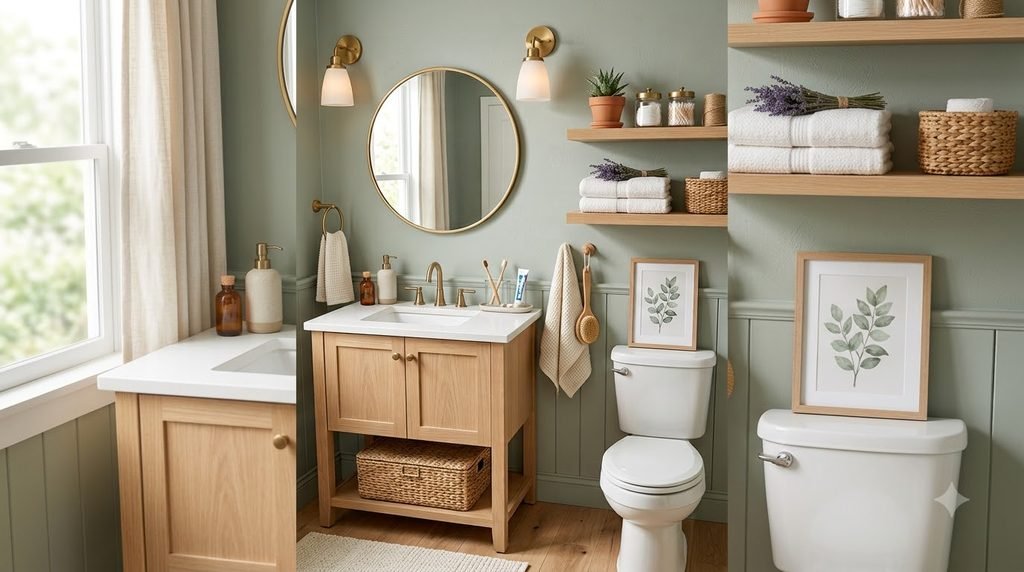
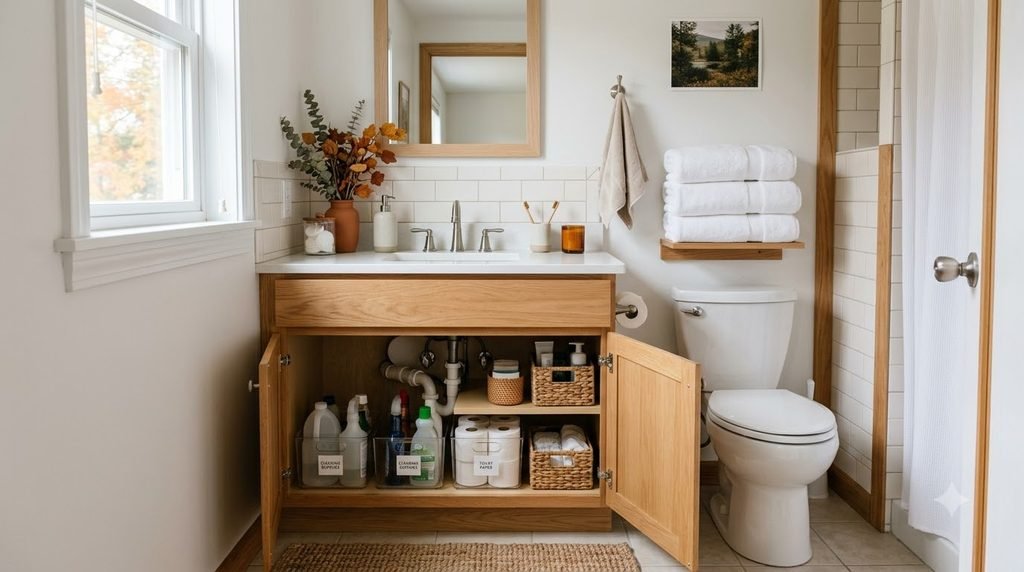
7. Give the Bathroom a Seasonal Check
The bathroom may not need a major seasonal makeover, but a quick reset can make everyday routines easier.
Start by checking products that accumulated during summer.
Look at sunscreen, travel-size products, hair products, skincare, and other seasonal items. Dispose of products according to their labels and local disposal guidance when they’re expired or no longer usable.
Then check your everyday storage.
If countertops are becoming crowded, move less frequently used products into drawers or cabinets.
Look at:
- Under-sink storage
- Medicine cabinet organization
- Towels
- Toiletries
- Hair tools
- Cleaning supplies
- Extra personal-care products
The objective isn’t to make the bathroom look empty.
It’s to make the products you use regularly easy to find and easy to put away.
For more storage ideas, see our guide to [27 Small Bathroom Organization Ideas to Maximize Every Inch].
8. Reset the Laundry Room Before Cooler Weather
Your laundry routine may change in fall as heavier clothing and layers enter the rotation.
That makes the laundry room another useful place to prepare.
Start by removing products and supplies that have accumulated without a clear purpose.
Check whether detergent, stain removers, cleaning products, and laundry accessories are still organized in a way that makes sense.
If the room is small, keep the items you use most often within easy reach and move backups or occasional products to higher or less accessible storage.
A useful laundry room reset includes:
- Clearing the floor
- Organizing laundry products
- Checking empty or nearly empty containers
- Creating a place for lost socks or small items
- Making frequently used supplies easy to reach
- Removing summer-specific clutter
- Checking that folding space is usable
The goal is not a picture-perfect laundry room. It is a room that supports the routine you already have.
9. Prepare Your Cleaning Supplies for More Indoor Time
Fall can mean more time indoors, which makes regular cleaning and maintenance more noticeable.
Instead of buying an entirely new collection of cleaning products, take stock of what you already have.
Group products by purpose or room if that makes them easier to use.
For example, you might keep frequently used bathroom cleaners together and everyday surface-cleaning supplies somewhere accessible.
Also check whether you’re storing products safely and according to their labels.
Before fall:
- Consolidate unnecessary duplicates where appropriate.
- Remove empty containers.
- Check product labels and storage instructions.
- Make everyday cleaners easy to reach.
- Store cleaning supplies away from children and pets.
- Keep specialized products with the areas where they’re actually used.
A smaller, organized cleaning collection is often easier to manage than a crowded cabinet full of products you rarely use.
10. Bring Seasonal Decor Out Before Buying More
If you decorate for fall, don’t start by shopping.
Start by looking through what you already own.
Take your seasonal decor out of storage and place similar items together. This lets you see what you actually have before buying something that duplicates an existing piece.
As you sort, separate items into three groups:
Use: pieces you still enjoy and plan to display.
Store: items you like but won’t use this year.
Let go: damaged, unwanted, or repeatedly unused decorations.
This is especially useful if you have limited storage space.
You don’t need a completely different home every season. A few intentional changes—such as textiles, table decor, lighting, or natural elements—can create a seasonal feeling without creating another large collection of things to store.

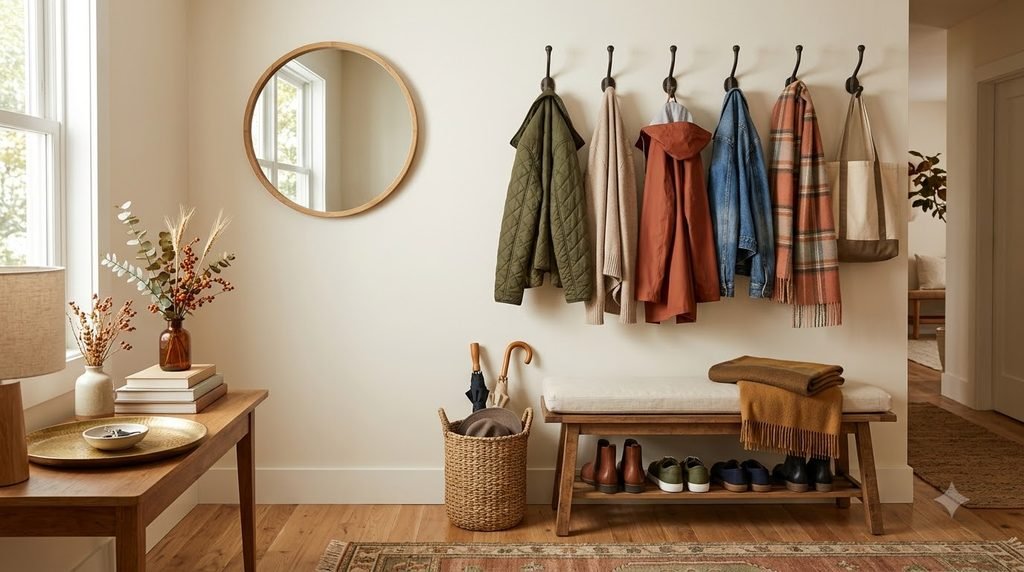
11. Make Space for Fall Shoes and Outerwear
As temperatures change, shoes and outerwear usually take up more space near the entryway.
Before adding another shoe rack or coat organizer, review what you already have.
Move summer-only footwear into secondary storage and bring the shoes you’re most likely to wear into easier reach.
For jackets, use the storage method that fits your actual routine.
If a jacket is worn every day, a convenient hook may be more practical than folding it into a closet. If something is only used occasionally, it can stay in secondary storage.
Storage should follow frequency of use.
The things you reach for every day should generally be the easiest things to put away.
12. Check Your Home’s High-Traffic Surfaces
Some of the most noticeable clutter in a home isn’t hidden inside cabinets.
It’s sitting on surfaces.
Look at:
- Kitchen counters
- Dining tables
- Entryway consoles
- Bathroom counters
- Coffee tables
- Bedroom dressers
- Desks
For each surface, ask:
What actually needs to live here?
If an item is used every day, keeping it accessible may make sense.
If something is rarely used, consider giving it a proper storage location.
This small distinction can make a room feel significantly more manageable without requiring a large decluttering project.
13. Check the Spaces You Usually Ignore
Fall preparation is also a good time to look at storage areas that aren’t part of your everyday routine.
You don’t have to clean every hidden corner at once.
Choose one or two areas that are becoming difficult to access.
That might be:
- A crowded hall closet
- Under-bed storage
- A linen closet
- A utility cabinet
- A garage shelf
- A seasonal-decor bin
- A miscellaneous drawer
The important part is to avoid turning this into an entire-house purge.
Choose the spaces that will make future seasonal changes easier.
For example, organizing your holiday-decor storage in September can save time when you eventually need to find those items.
14. Handle Small Home Maintenance Tasks Before They Become Urgent
Not every fall preparation task is about organization.
Some basic home-maintenance checks are worth putting on your seasonal list, particularly before colder or wetter weather arrives.
The exact needs depend on your climate and home, but you may want to review:
- Smoke and carbon-monoxide detector operation
- HVAC or heating-system maintenance
- Drafts around doors and windows
- Outdoor hoses and faucets
- Gutters and drainage
- Exterior lighting
- Weather-related repairs
Some tasks should be handled by a qualified professional rather than treated as a DIY project.
The goal here isn’t to create a technical home-maintenance manual. It’s simply to identify seasonal issues early enough that they don’t become last-minute problems.
15. Create a Fall Home Maintenance List That Fits Your Schedule
The biggest mistake with seasonal home preparation is trying to complete everything immediately.
Instead, divide your list according to priority.
Do first
Tasks that affect everyday use or need attention before the weather changes.
Do next
Organization and cleaning projects that will make fall routines easier.
Do later
Optional decorating, deeper organizing, and projects that aren’t time-sensitive.
You can even divide the work across several short sessions.
For example:
Saturday: entryway + closet
Sunday: kitchen + pantry
Next weekend: bedroom + living room
Following weekend: storage + seasonal decor
This approach makes a fall home reset much more realistic than trying to complete an exhausting whole-house project in one day.
What You Don’t Need to Do Before Fall
Preparing your home for fall doesn’t mean everything needs to be cleaned, replaced, reorganized, or redecorated.
You can skip anything that doesn’t solve an actual problem.
You don’t need to:
- Buy new organizers for every room.
- Replace perfectly usable storage.
- Completely redecorate your home.
- Remove every summer item immediately.
- Deep clean every room in one weekend.
- Follow someone else’s exact seasonal schedule.
- Keep decorative items simply because they are “fall trends.”
Your home doesn’t need to look like a seasonal catalog.
It needs to work for the people who live there.
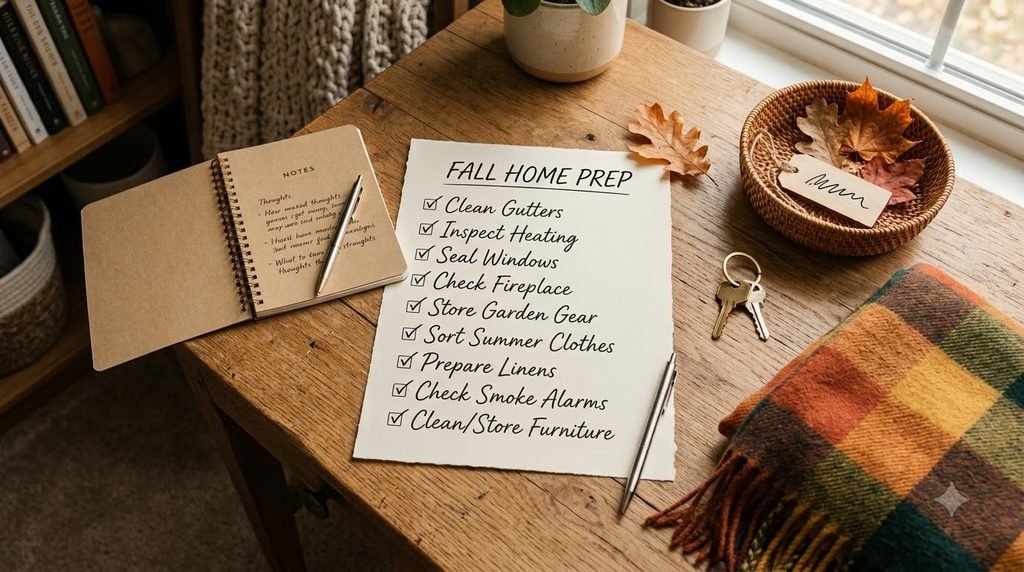
A Simple Fall Home Preparation Checklist
Save or print this checklist as you work through your home:
Entryway
- ☐ Remove summer-only items
- ☐ Make room for jackets and fall shoes
- ☐ Check everyday storage
- ☐ Clear unnecessary surface clutter
Closet
- ☐ Bring fall clothing forward
- ☐ Store genuinely out-of-season pieces
- ☐ Review clothing that no longer gets worn
- ☐ Check shoes and accessories
Bedroom
- ☐ Check bedding and blankets
- ☐ Wash seasonal textiles as needed
- ☐ Clear unnecessary bedside clutter
- ☐ Make warmer layers accessible
Kitchen
- ☐ Check pantry expiration dates
- ☐ Reorganize frequently used ingredients
- ☐ Review freezer contents
- ☐ Make room for fall cooking and baking
Bathroom
- ☐ Review seasonal products
- ☐ Clear crowded counters
- ☐ Organize under-sink storage
- ☐ Check towels and everyday supplies
Laundry Room
- ☐ Organize laundry supplies
- ☐ Clear the floor
- ☐ Check storage space
- ☐ Make frequently used items accessible
Living Areas
- ☐ Remove unnecessary summer clutter
- ☐ Check blankets and throws
- ☐ Reset high-traffic surfaces
- ☐ Adjust storage for increased indoor use
Seasonal Storage
- ☐ Review fall decor
- ☐ Remove damaged items
- ☐ Label seasonal containers
- ☐ Make holiday storage easier to access
Home Maintenance
- ☐ Check seasonal maintenance needs
- ☐ Test safety devices
- ☐ Look for obvious drafts or repairs
- ☐ Schedule professional maintenance when needed
How to Keep Your Home Organized Through Fall
The best fall reset is one you don’t have to repeat from scratch every few weeks.
Once you’ve prepared the main areas, create a few simple habits that match your routine.
When you come home, put jackets and shoes in their designated places. When seasonal clothing enters the laundry cycle, return it to the same storage area. When you buy something new, look at whether something else needs to leave or move.
You can also do a 10-minute weekly reset focused only on the areas that become messy fastest.
The purpose isn’t perfection.
It’s catching small problems before they become larger organizing projects.
Final Thoughts
Preparing your home for fall doesn’t have to mean spending a weekend deep cleaning every room or buying a house full of new storage products.
Start with the spaces that will change the most as the season changes: your entryway, closet, kitchen, living areas, and seasonal storage.
Then handle the practical details that will make everyday life easier.
The most useful fall preparation is usually the work that removes friction from your normal routine. When frequently used items are easier to reach, seasonal belongings have a clear home, and unnecessary clutter has been dealt with before the busy months arrive, your home becomes easier to maintain.
You don’t need a perfect fall home. You need a home that is ready for the season you’re actually going to live in.
Frequently Asked Questions
When should I start preparing my home for fall?
Early September is a practical time to begin because summer routines are winding down and cooler-weather routines are beginning. Starting early also gives you time to spread the work over several weekends instead of trying to finish everything at once.
What should I do first when preparing my home for fall?
Start with a quick walk-through and identify the areas that will change most with the season. For many homes, that means the entryway, closet, kitchen, living room, and seasonal storage.
Do I need to deep clean my whole house for fall?
No. A full deep clean isn’t necessary just because the season is changing. Prioritize the areas that need attention and combine seasonal cleaning with practical organization.
What should I put away for fall?
Put away items that are genuinely summer-specific and unlikely to be used during the cooler months. Examples may include certain outdoor gear, beach accessories, and summer-only clothing. Keep transitional items accessible when temperatures can still fluctuate.
Should I buy new storage containers for fall?
Not necessarily. First declutter and assess how your existing storage works. Buy organizers only when you can identify a specific problem they will solve.
Related Articles
- 31 Fall Home Reset Ideas That Make Your Home Easier to Live In
- 17 Things to Declutter in September for a More Organized Home
- How to Organize Your Closet for Fall in 15 Easy Steps
- 15 Fall Home Decor Ideas to Make Your Home Feel Cozy
- 15 Fall Home Decor Trends for 2026 That Are Actually Worth Trying
- 25 Fall Front Porch Decor Ideas to Create a Cozy Welcome