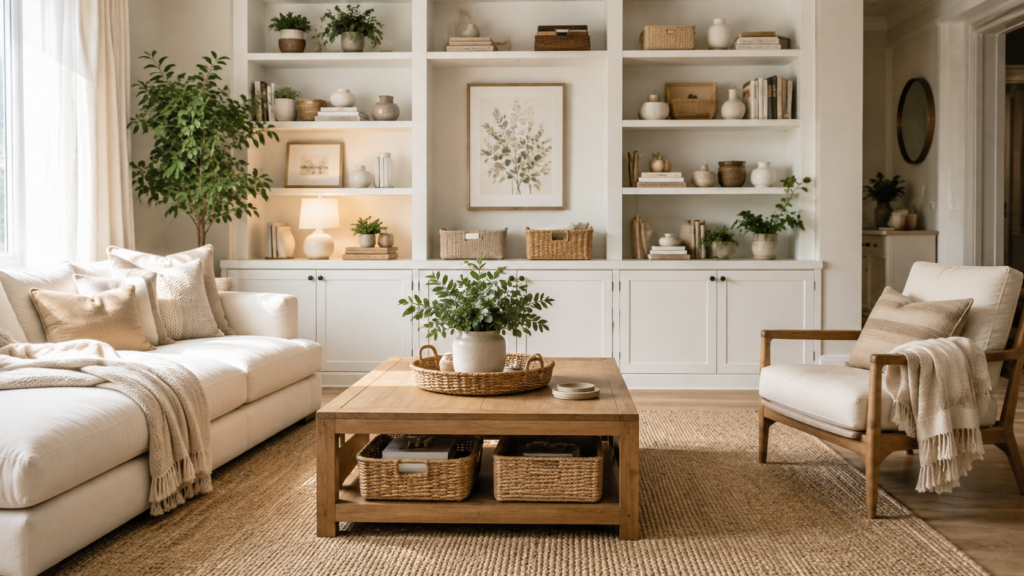
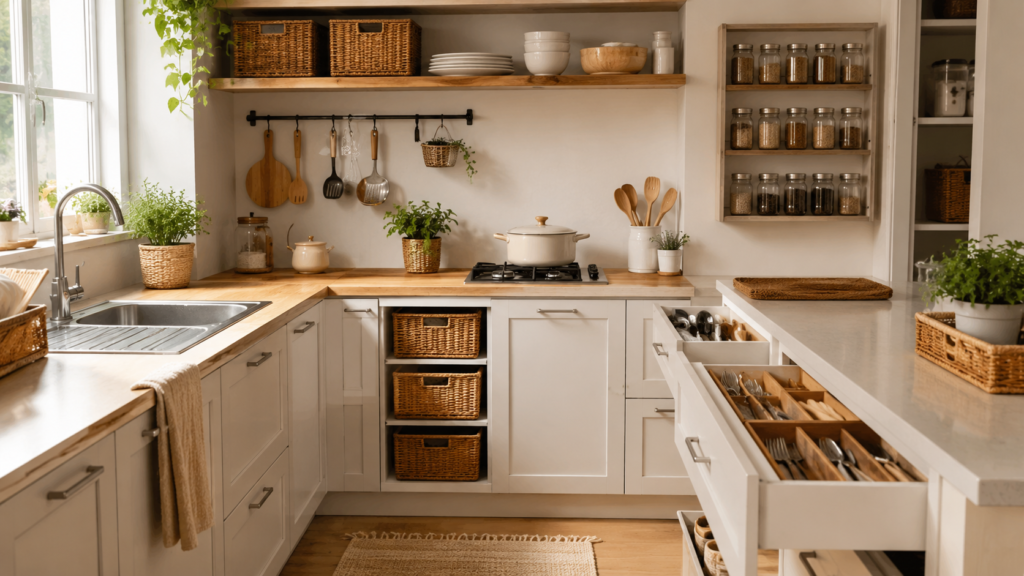
There is a point every year when summer starts to feel like it has overstayed its welcome.

The lighter clothes are still taking up closet space. Outdoor gear is sitting by the door. The pantry has collected random snacks and half-used ingredients. Blankets are coming back out, evenings are getting longer, and suddenly the way your home worked in June doesn’t feel quite right anymore.
That’s your cue for a fall home reset.
A fall reset isn’t the same thing as spring cleaning. You don’t need to empty every cabinet, scrub every baseboard, or spend an entire weekend trying to make your house look perfect.
Instead, the idea is simple:
Close out summer, make room for fall, and fix the small systems that are about to become annoying.
That’s especially useful right now. Recent home-organization coverage is emphasizing small, practical changes—seasonal storage, entryway systems, closet edits, and targeted organization—rather than massive makeovers.
So instead of giving you another giant cleaning checklist, this guide focuses on 31 changes that make your home function better as fall arrives.
What Is a Fall Home Reset?
A fall home reset is a seasonal adjustment to your home’s storage, cleaning, organization, comfort, and daily routines.
Think of it as changing your home’s operating system for a new season.
In summer, you may need:
- Beach towels
- Sandals
- Outdoor toys
- Picnic supplies
- Lightweight bedding
- Patio accessories
In fall, those priorities change.
You need easier access to:
- Jackets
- Closed-toe shoes
- Blankets
- Baking supplies
- Cozy bedding
- Rain gear
- School or work essentials
- Seasonal decorations
A good fall reset makes that transition feel natural instead of chaotic.
31 Fall Home Reset Ideas
1. Do a “Summer Exit” Walk Through Your Home
Don’t start by cleaning.
Start by walking through the house and asking:
“What is still here because it’s summer, not because I actually need it?”
Look for beach bags, outdoor gear, lightweight blankets, summer clothing, pool accessories, and other seasonal items.
Make three quick categories:
Keep nearby
Store
Let go
This gives you a clearer picture of what needs to change before you start organizing.
2. Give Your Entryway a Fall Job Description
Your entryway is about to become a much harder-working space.
Instead of simply making it look pretty, decide what it needs to handle.
For example:
- Shoes
- Jackets
- Bags
- Keys
- Umbrellas
- Hats
- Everyday mail
Once you know its job, remove anything that interferes with it.
A small entryway doesn’t need more furniture. It needs clear zones.
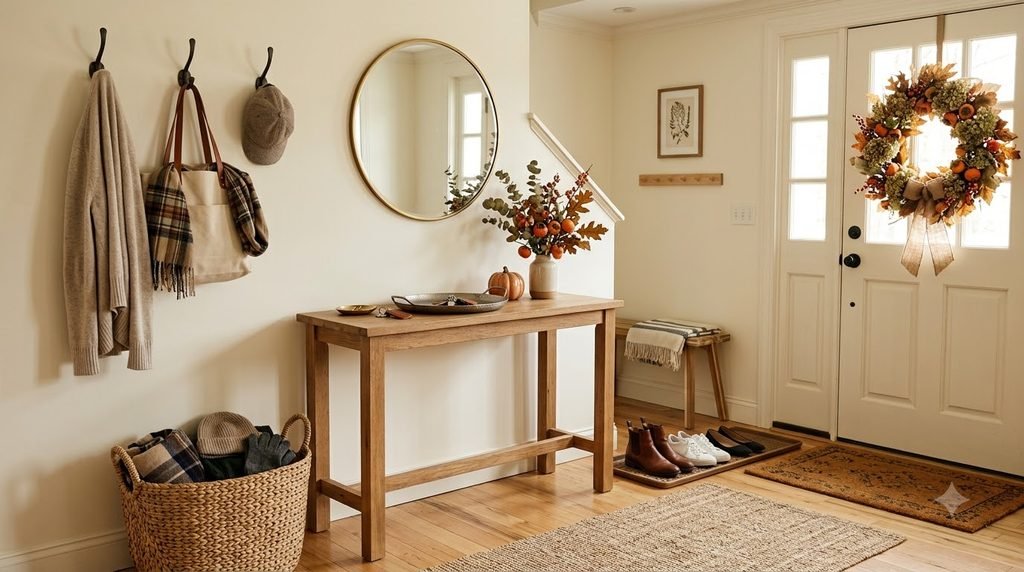
3. Create a “Grab-and-Go” Zone
Fall routines tend to become busier.
Create one small area near the door for things that leave the house with you every day.
A tray can hold keys.
A basket can hold hats.
Hooks can hold bags.
A shoe rack can handle everyday footwear.
The goal is to eliminate the morning search for things you use constantly.
4. Move Summer Shoes Out of Prime Closet Space
You don’t necessarily need to pack every sandal away.
But shoes you won’t realistically wear during cooler weather don’t need to occupy the easiest-to-reach part of your closet.
Move them to:
- Under-bed storage
- A labeled seasonal bin
- Upper closet shelving
- A secondary shoe rack
Keep the footwear you’re actually going to use where you can reach it.
5. Audit Your Fall Clothes Before Shopping
Before buying new sweaters, jackets, or boots, check what you already own.
Pull out your fall clothing and ask:
- Does it fit?
- Is it in good condition?
- Did I wear it last year?
- Does it still suit my style?
- Does it need cleaning or repair?
This simple audit can prevent unnecessary purchases and reveal what you actually need.
Recent organizer guidance specifically recommends auditing fall clothing and seasonal items during the August transition.
6. Make One Closet “Fall Ready”
You don’t have to reorganize your entire wardrobe.
Start with the closet you use most.
Move fall essentials toward eye level and relocate summer-only pieces.
Then group clothing by function:
Everyday
Work
Outerwear
Occasional
Accessories
A smaller, useful system is easier to maintain than an elaborate closet makeover.
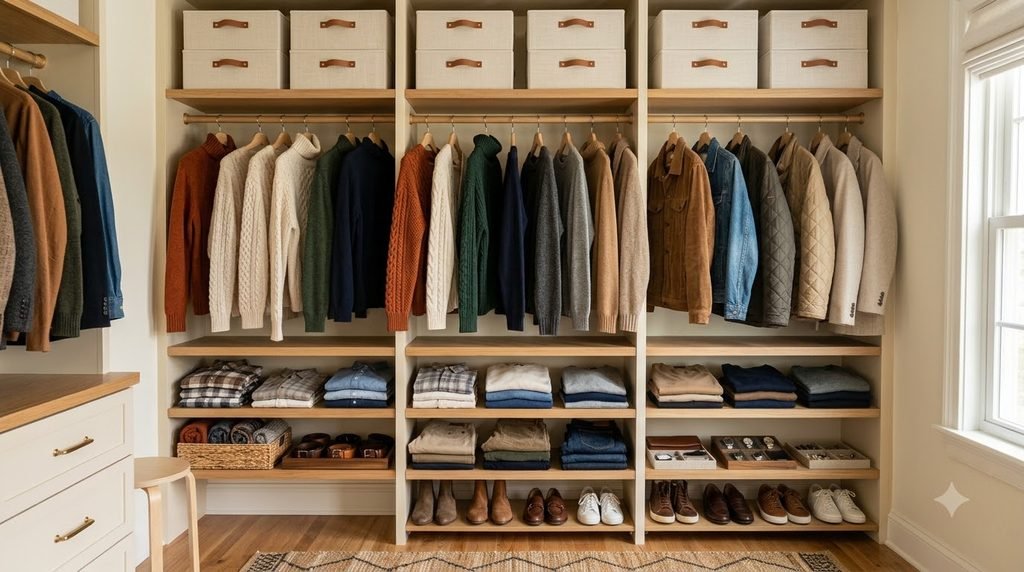
7. Give Your Living Room a Comfort Audit
Instead of immediately buying fall pillows and blankets, look at how the living room actually feels.
Ask:
- Is the seating comfortable?
- Is there enough light in the evening?
- Are blankets easy to reach?
- Is the coffee table overloaded?
- Are there things here that belong elsewhere?
Fix those problems first.
Then add seasonal details.
8. Bring Back the Blanket Basket
If you packed away your throws for summer, bring them back before the first genuinely chilly evening.
Put them somewhere convenient rather than hiding them in a closet.
A large basket beside the sofa works well because it turns storage into part of the room’s decor.
9. Create an Evening Lighting Layer
Fall means earlier sunsets.
That makes lighting a practical part of your seasonal reset.
Instead of relying on one ceiling light, create layers:
- Floor lamp
- Table lamp
- Reading light
- Accent lamp
Warm lighting can make a room feel significantly more comfortable without changing the furniture.
10. Reset the Kitchen “Landing Zone”
Every kitchen has a surface where things seem to land.
It might be:
- The counter beside the refrigerator
- A kitchen island
- The dining table
- A coffee station
Clear it completely.
Then decide what deserves to live there permanently.
Everything else needs another home.

11. Do a Refrigerator Reality Check
Before fall cooking gets busier, look inside your refrigerator.
Don’t just clean the shelves.
Look for:
- Expired sauces
- Forgotten leftovers
- Empty containers
- Duplicate ingredients
- Produce that needs using
Then group similar foods together.
A refrigerator that’s easier to see is easier to keep organized.
12. Build a Fall Baking Shelf
If you bake more during fall, create a dedicated baking zone.
Keep frequently used ingredients together where possible:
- Flour
- Sugar
- Baking spices
- Baking powder
- Chocolate
- Measuring tools
This doesn’t require a whole cabinet.
One shelf or basket can be enough.
13. Give the Pantry a “Use First” Zone
Instead of reorganizing the entire pantry, create one small area for ingredients that should be used soon.
Place there:
- Open packages
- Nearly expired products
- Duplicate items
- Ingredients left over from summer
This reduces food waste and makes meal planning easier.
14. Clear the Dining Table Completely
Take everything off the dining table.
Not “most things.”
Everything.
Then put back only what belongs there.
If you want a seasonal centerpiece, keep it compact enough that people can still comfortably use the table.
A functional dining table is more valuable than a perfectly styled one.
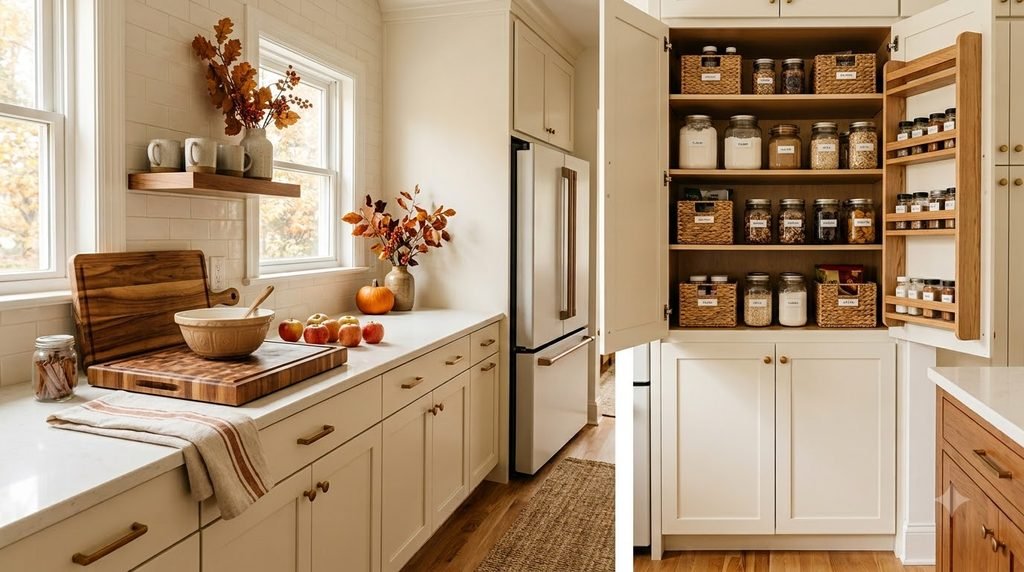
15. Reset Your Bedroom Around Cooler Nights
The bedroom doesn’t need a makeover.
It needs to be ready for the way you’ll use it.
Check:
- Bedding
- Throws
- Pillows
- Nightstand
- Closet
- Lighting
If you’re reaching for warmer layers again, put them somewhere accessible.
16. Wash the Bedding You’re About to Use
Before bringing heavier bedding back into rotation, wash it according to the manufacturer’s care instructions.
This includes:
- Comforters
- Quilts
- Blankets
- Mattress protectors
- Pillow covers
Store only clean, completely dry textiles.
17. Empty the Bedroom Chair
If you have a chair that has quietly become a clothes pile, now is the time to reset it.
Return clean clothes to the closet.
Put laundry where it belongs.
Move bags and miscellaneous items elsewhere.
Give the chair its original purpose back.
It’s a tiny change, but it can dramatically improve how organized a bedroom feels.
18. Give the Bathroom Cabinets a Seasonal Edit
Pull out products you haven’t used in months.
Check for:
- Expired products
- Empty bottles
- Duplicates
- Products nobody likes
- Samples that have been sitting around
Then make everyday products easy to reach and move backups elsewhere.
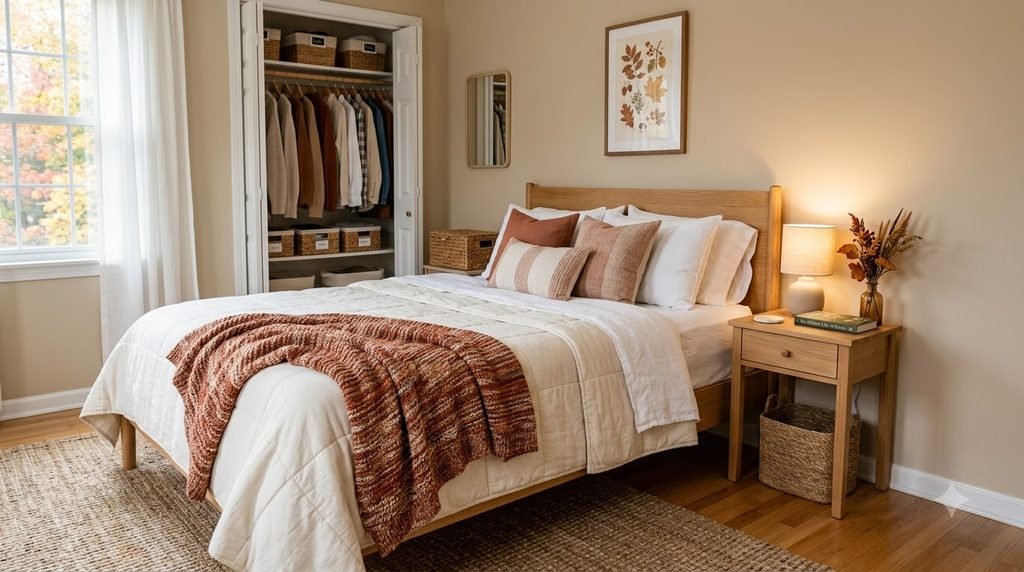
19. Reset the Laundry Room Before It Gets Busier
Fall usually means more layers, towels, bedding, and indoor laundry.
So give the laundry room a functional reset now.
Check:
- Detergent
- Stain-treatment supplies
- Drying equipment
- Hampers
- Cleaning cloths
- Storage
If the room is small, prioritize vertical storage and slim solutions.
Our small laundry room organization guide goes deeper into shelves, rolling carts, drying racks, hooks, and compact storage.
20. Create a “Backstock” Rule
One of the easiest ways to create household clutter is keeping too many backup products in the most convenient storage locations.
Choose one area for extras.
For example:
Daily-use products → accessible
Backstock → designated cabinet
That way, you don’t have detergent bottles occupying every shelf in the laundry room.
21. Clean the Areas You Notice at Night
Here’s a different way to approach seasonal cleaning.
Walk through your home after dark.
Turn on the lights.
Look at the areas that become noticeable when you’re spending more time indoors.
You may suddenly see:
- Dusty lamps
- Smudged windows
- Dirty switches
- Cluttered side tables
- Dust around furniture
These are the areas worth prioritizing.
22. Reset Your Home’s “Forgotten Surfaces”
Don’t chase every speck of dust.
Instead, identify the surfaces that haven’t been touched in months.
Examples:
- Top of the refrigerator
- Tops of cabinets
- Ceiling fan blades
- Behind small appliances
- Light fixtures
- Window screens
Choose a few at a time.
A seasonal reset is about catching up on neglected areas—not creating an impossible cleaning marathon.
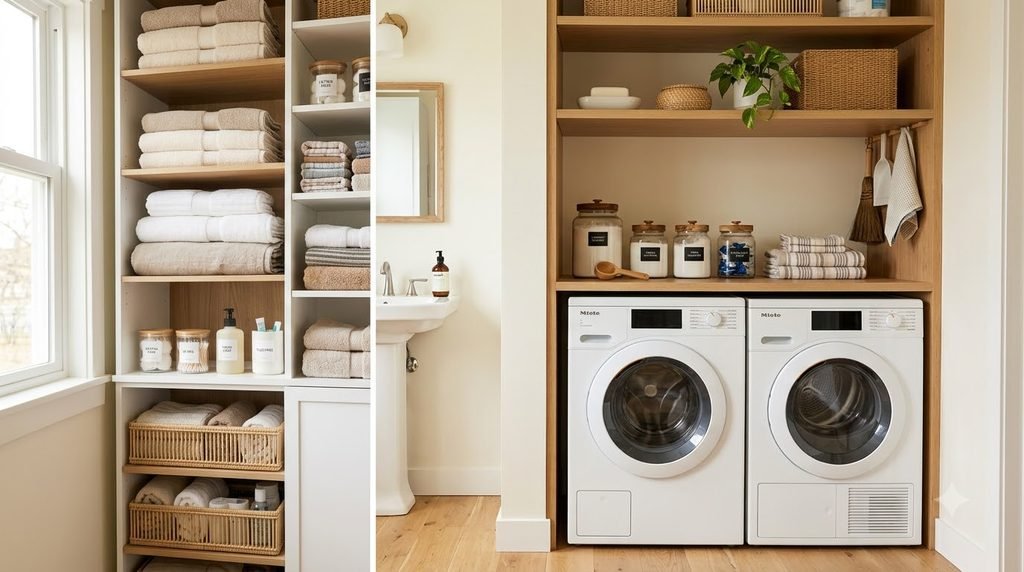
23. Create One Seasonal Storage Headquarters
Instead of storing fall decorations and seasonal items in five different places, create one central storage zone if possible.
Use labeled containers such as:
Fall Decor
Halloween
Thanksgiving
Winter
This makes decorating and packing away much easier.
24. Audit Your Fall Decorations Before Buying Anything
Take everything out—or at least review your inventory.
Ask:
Would I buy this again today?
If the answer is no, consider donating it.
Also check for:
- Broken pieces
- Duplicate decorations
- Items you never display
- Decorations that no longer match your style
The best seasonal collection is one you actually enjoy using.
25. Separate Fall Decor From Halloween Decor
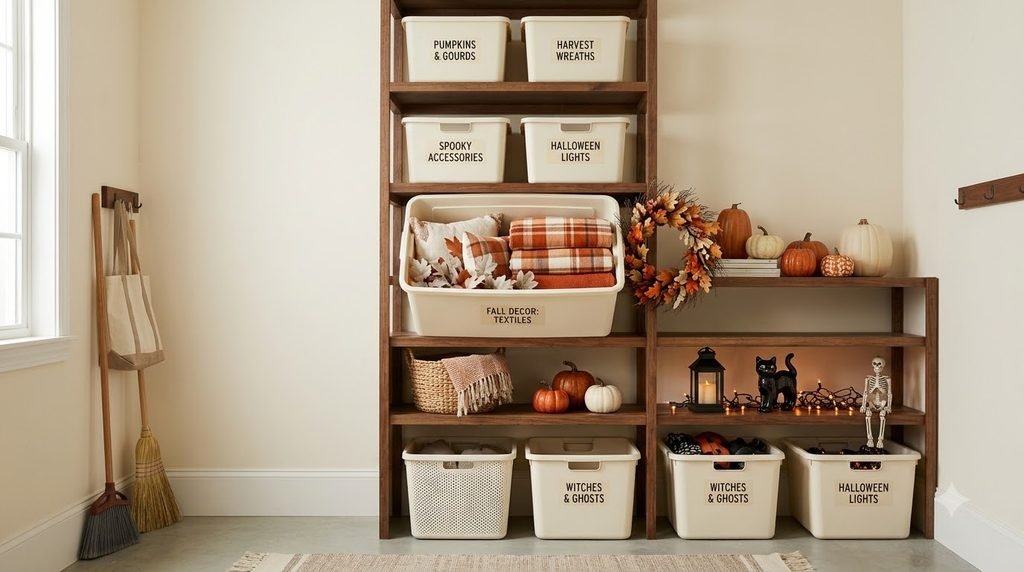
This is particularly useful if you decorate for both.
Keep general fall pieces separate from Halloween-specific items.
Fall
- Pumpkins
- Dried foliage
- Warm textiles
- Wreaths
- Neutral seasonal decor
Halloween
- Black accents
- Spooky figures
- Costumes
- Halloween lighting
- Party supplies
That way, you can decorate for fall early and add Halloween later without pulling out every storage box.
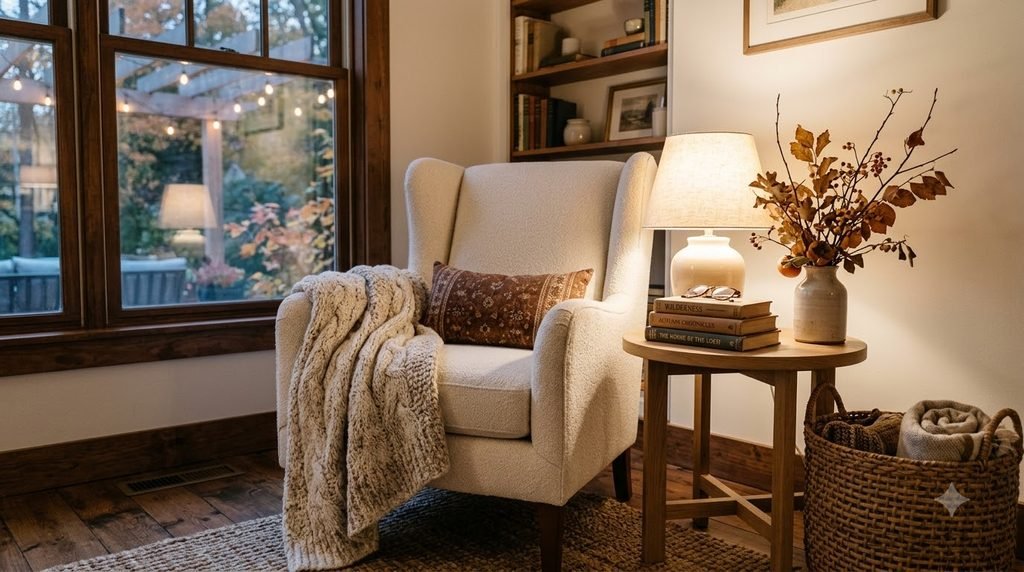
26. Choose a “Cozy Zone”
You don’t need to make the entire house look like fall.
Choose one place where you want maximum coziness.
It could be:
- Living room corner
- Reading chair
- Bedroom
- Fireplace area
- Kitchen breakfast nook
Add:
- Soft lighting
- Blanket
- Books
- Natural textures
- One seasonal accent
This gives you the seasonal feeling without creating visual clutter.
27. Use Texture Before Buying More Decor
If your home feels too plain for fall, don’t automatically shop.
Try changing texture first.
Add:
- Woven baskets
- Wood
- Linen
- Knitted textiles
- Ceramic pieces
- Natural foliage
These changes can make a room feel warmer without turning it into a seasonal display.
Current fall home coverage is similarly emphasizing warm materials, natural textures, and more intentional decorating rather than simply adding more seasonal objects.
28. Fix One Annoying Household System
This might be the most useful step on the entire list.
Ask:
“What small thing annoys me every day?”
Maybe:
- Shoes pile up at the door.
- Towels don’t have a home.
- Cleaning supplies are scattered.
- Mail covers the counter.
- Laundry baskets are always in the hallway.
- Chargers are everywhere.
Don’t organize the entire house.
Fix that one problem.
A fall reset should improve daily life, not just make photos look better.
29. Prepare One Guest-Ready Area
You don’t need the entire house guest-ready.
Choose one area visitors are most likely to use.
Usually that’s:
Entryway + living room + bathroom.
Make those spaces clean, uncluttered, and comfortable.
This becomes especially useful as fall gatherings and holiday preparations start approaching.
30. Build a 15-Minute Evening Reset
Instead of waiting until the weekend, create a short reset you can actually repeat.
For example:
5 minutes: put things back
5 minutes: clear visible surfaces
5 minutes: prepare tomorrow’s essentials
That’s it.
A small repeatable routine can prevent the seasonal clutter from rebuilding.
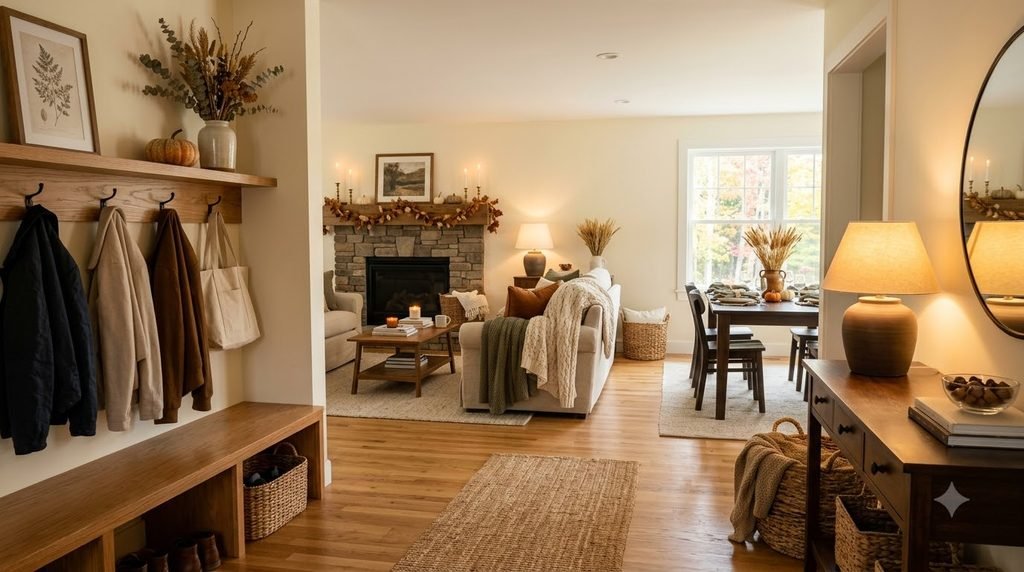
31. Finish by Making the Home Easier, Not Perfect
Once you’ve finished the obvious tasks, don’t invent more work.
Walk through your home and ask:
What feels easier now?
What still annoys me?
What seasonal item do I need access to?
What can stay stored?
What can leave the house?
Then stop.
The purpose of a reset is to make the next few months easier—not to create another never-ending project.
A Simple Fall Home Reset Plan
If 31 ideas feel like too much, use this four-stage approach.
Stage 1 — Remove
Take out:
- Summer clutter
- Broken items
- Expired products
- Unused seasonal pieces
Stage 2 — Reposition
Move fall essentials into easier-to-reach locations:
- Jackets
- Blankets
- Bedding
- Baking supplies
- Seasonal decor
Stage 3 — Repair
Fix the systems that aren’t working:
- Entryway storage
- Laundry storage
- Pantry zones
- Closet organization
- Household drop zones
Stage 4 — Warm Up
Only after the functional reset, add:
- Texture
- Lighting
- Cozy textiles
- Natural materials
- Small seasonal accents
This order matters.
Function first. Cozy second.
Fall Reset for a Small Home
Small homes don’t need fewer systems.
They need more intentional systems.
If you’re short on space, prioritize:
- Vertical storage
- Multi-purpose furniture
- Under-bed storage
- Slim carts
- Over-the-door organizers
- Hooks
- Baskets
But don’t fill every empty space with storage.
Sometimes the best small-space solution is simply owning less.
What Not to Do During a Fall Home Reset
Don’t Buy Organizers First
Measure the problem before buying the solution.
Don’t Decorate Over Clutter
Seasonal decorations can’t fix an overloaded room.
Don’t Empty Every Cabinet
Only work on areas that actually need attention.
Don’t Create a System Nobody Will Maintain
The simplest useful system usually wins.
Don’t Try to Finish Everything in One Weekend
A reset can happen over several short sessions.
Recent fall-reset guidance from organizers similarly emphasizes manageable tasks rather than trying to overhaul an entire house in one exhausting session.
Fall Home Reset Checklist
Save this quick version:
Entryway
☐ Clear summer items
☐ Reset shoe storage
☐ Add hooks
☐ Create a grab-and-go zone
Closet
☐ Audit fall clothes
☐ Move seasonal pieces
☐ Remove unwanted items
☐ Prepare outerwear
Kitchen
☐ Clear counters
☐ Clean refrigerator
☐ Reset pantry
☐ Create baking zone
Living Room
☐ Wash blankets
☐ Reset cushions
☐ Improve lighting
☐ Clear surfaces
Bedroom
☐ Change seasonal bedding
☐ Declutter nightstand
☐ Reset closet
☐ Clear the chair
Bathroom
☐ Check products
☐ Remove duplicates
☐ Organize backups
Laundry
☐ Reset supplies
☐ Organize storage
☐ Check hampers
☐ Prepare drying area
Seasonal Storage
☐ Review fall decor
☐ Separate Halloween items
☐ Label storage
☐ Remove damaged pieces
Frequently Asked Questions
When should I do a fall home reset?
Late August and September are good times to begin because you’re transitioning from summer routines into the months when you’ll spend more time indoors. Starting gradually also gives you time to prepare before Halloween and the later holiday season.
What should I do first in a fall home reset?
Start with removing summer clutter and identifying what your home will need more of during fall. Then prioritize the areas that affect your daily routine, such as the entryway, kitchen, bedroom, and laundry room.
How can I make my home feel ready for fall without decorating?
Focus on function and comfort first. Rotate bedding, bring out blankets, improve evening lighting, organize your entryway, clear visual clutter, and introduce warmer textures.
How do I reset my home without spending money?
Start by using what you already own. Rearrange storage, move seasonal items, declutter, clean neglected areas, wash textiles, and repurpose baskets and containers you already have.
How long should a fall home reset take?
There’s no required timeline. You can do a quick 15-minute reset each day, dedicate an hour to one room, or spread the entire process across a week.
Should I decorate for fall before Halloween?
Yes, if you enjoy seasonal decorating. A useful approach is to establish a general fall foundation first—pumpkins, warm textures, foliage, and neutral seasonal decor—then add Halloween-specific pieces later.
Final Thoughts
A good fall home reset isn’t about making your house look like a showroom.
It’s about noticing that the season is changing and your home needs to change with it.
Summer had its own routines.
Fall will have different ones.
So put the summer gear away. Make room for jackets. Bring your blankets back. Reset the pantry. Give the laundry room some attention. Fix that annoying drop zone you’ve been ignoring.
Then add a little warmth.
You don’t need to transform the whole house.
Make the next season easier to live in.
That’s the real purpose of a fall home reset.
Releted Article
15 Fall Home Decor Ideas to Make Your Home Feel Cozy
25 Fall Front Porch Decor Ideas to Create a Cozy Welcome
15 Entryway Organization Ideas to Keep Your Home Clutter-Free
27 Small Laundry Room Organization Ideas to Maximize Every Inch