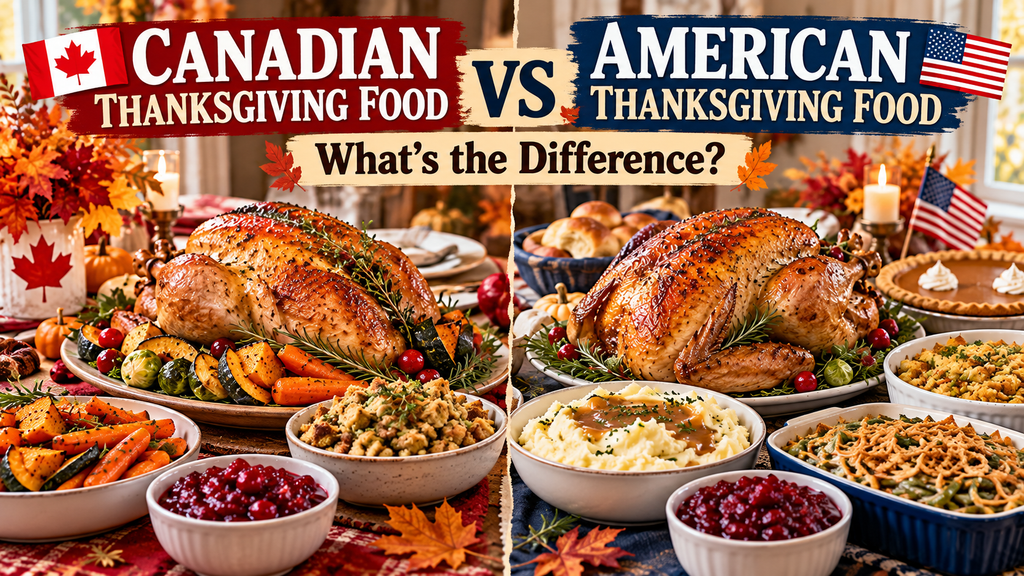
Canadian Thanksgiving food and American Thanksgiving food have more in common than many people realize. Both holiday meals often feature roast turkey, stuffing, potatoes, gravy, cranberry sauce, seasonal vegetables, and pumpkin pie. The biggest differences usually come from regional traditions, the timing of the holiday, family recipes, and the foods available during the fall harvest.
Canadian Thanksgiving takes place on the second Monday in October, while American Thanksgiving is celebrated on the fourth Thursday in November. Because the holidays fall at different points in the season, families may choose different ingredients, side dishes, and desserts depending on their region and personal traditions.
If you are comparing Canadian Thanksgiving food vs American Thanksgiving food, this guide explains the similarities, the dishes that may differ, regional influences, and how to create a holiday menu inspired by both traditions.
Canadian Thanksgiving Food vs American Thanksgiving Food: The Quick Answer
The main difference is not a completely different menu. Both countries commonly serve turkey, stuffing or dressing, potatoes, gravy, cranberry sauce, vegetables, and pumpkin pie. Differences are more noticeable in regional dishes, family traditions, seasonal ingredients, and the way each household plans its holiday meal.
Here is a quick comparison:
| Food category | Canadian Thanksgiving | American Thanksgiving |
|---|---|---|
| Main dish | Roast turkey is common; some families serve ham or other meats | Roast turkey is a traditional centerpiece; other mains are also served |
| Stuffing | Bread-based stuffing with herbs and vegetables is common | Bread-based stuffing or dressing; cornbread versions are popular in some regions |
| Potatoes | Mashed or roasted potatoes, often with gravy | Mashed, roasted, sweet, or scalloped potatoes, depending on the family |
| Cranberries | Cranberry sauce or relish | Cranberry sauce, relish, or regional variations |
| Vegetables | Seasonal squash, carrots, Brussels sprouts, and other vegetables | Green bean casserole, sweet potatoes, corn, squash, and other regional sides |
| Dessert | Pumpkin pie, apple pie, and other fall desserts | Pumpkin pie, pecan pie, apple pie, and regional favorites |
| Seasonal influence | October harvest and early fall produce | Late-November traditions and a wider range of regional holiday dishes |
These are common patterns, not strict rules. There is no single menu that represents every Canadian or American family.
1. Turkey Is a Thanksgiving Favorite in Both Countries
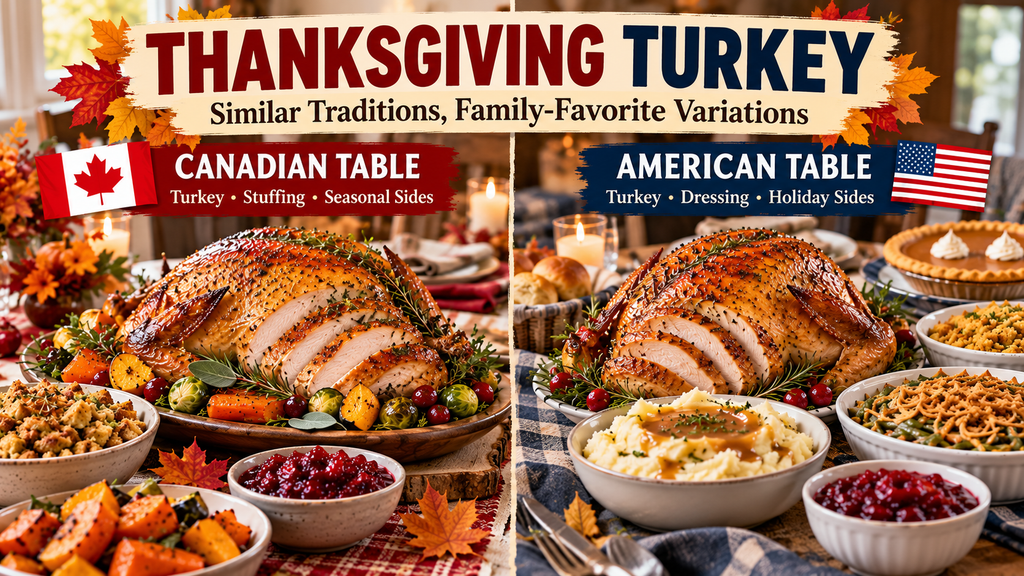
Roast turkey is one of the most recognizable dishes associated with Thanksgiving in Canada and the United States.
In both countries, the turkey may be roasted with butter, herbs, onions, celery, garlic, or other aromatics. Some families prefer a simple preparation, while others use brining, compound butter, or a more elaborate seasoning mixture.
The way turkey is served also varies. One household may offer a whole roasted bird with gravy, while another may prepare a smaller turkey breast for a compact gathering. Some families choose ham, chicken, or a plant-based main instead.
What is different about Canadian and American turkey dinners?
There is no universal country-specific turkey preparation that separates the two holidays. The more noticeable differences often come from family recipes and regional cooking traditions.
For example, an American Southern Thanksgiving menu might include cornbread dressing, while a Canadian household might serve a family-favorite bread stuffing with herbs. Neither choice is exclusive to one country.
Planning tip: If you are hosting a Thanksgiving dinner, choose a main dish that fits your guest count and oven capacity. A smaller turkey or turkey breast can be practical for a smaller gathering.
2. Stuffing and Dressing Can Reflect Regional Traditions
Stuffing is another familiar part of Thanksgiving dinner. It usually combines bread with ingredients such as onion, celery, herbs, broth, and seasonings.
In many Canadian households, bread-based stuffing with sage, onion, and celery is a traditional choice. American stuffing and dressing recipes vary widely by region and family background.
Cornbread dressing is particularly associated with parts of the American South. Other recipes use white bread, sourdough, sausage, apples, mushrooms, or dried fruit.
The terms stuffing and dressing are sometimes used differently depending on regional custom and cooking method. Stuffing traditionally refers to a mixture cooked inside the bird, while dressing is often baked separately in a dish. In everyday usage, however, the names are not always consistent.
Which should you serve?
Choose a version that complements the rest of your menu. A simple herb stuffing works well with turkey, mashed potatoes, and cranberry sauce. Cornbread dressing can add a different texture and flavor to a Southern-inspired meal.
If you are cooking stuffing inside poultry, follow current food-safety guidance and verify that it reaches a safe internal temperature.
3. Potatoes Are Common on Both Thanksgiving Tables
Potatoes are a versatile holiday side dish in both Canada and the United States.
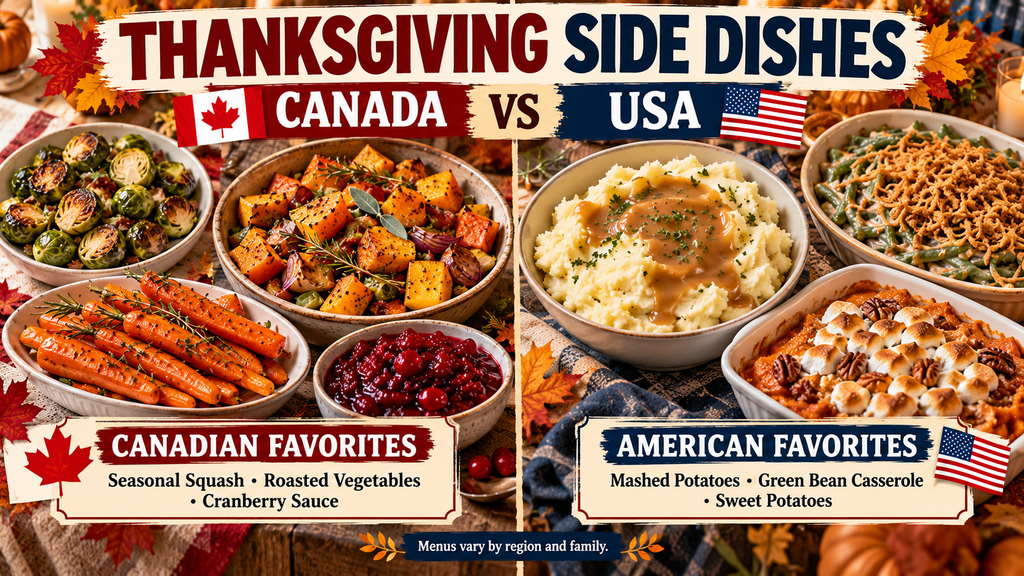
Mashed potatoes served with gravy are a familiar favorite. Roasted potatoes, scalloped potatoes, and other baked potato dishes also appear on Thanksgiving menus.
In the United States, sweet potatoes are especially recognizable as a holiday side. Some families serve them roasted or mashed, while others prepare a sweet potato casserole with a brown sugar topping or marshmallows.
Canadian Thanksgiving menus may also feature sweet potatoes, but the choice depends on the household. Regular potatoes, seasonal root vegetables, and squash can all be part of the meal.
A simple way to plan the potato dishes
If your menu already includes several rich dishes, choose one straightforward potato preparation. Creamy mashed potatoes pair well with turkey and gravy, while roasted potatoes can be easier to prepare in advance.
For a larger dinner, you can offer two options, but you do not need multiple potato dishes to make the meal feel complete.
4. Cranberry Sauce Is a Shared Holiday Tradition
Cranberry sauce is another familiar feature of Canadian and American Thanksgiving meals.
Some families prefer smooth, canned cranberry sauce. Others make homemade cranberry sauce with fresh or frozen cranberries, sugar, and orange zest or juice. Relishes may include additional fruit, spices, or chopped ingredients.
The choice often reflects personal preference rather than nationality.
Cranberry sauce adds a tart, fruity contrast to rich foods such as turkey, gravy, stuffing, and mashed potatoes. It can also be prepared ahead of time, which makes it useful when oven space is limited.
Hosting tip: Serve cranberry sauce in a small bowl rather than directly on the main platter. This makes it easier for guests to take the amount they want and keeps the table organized.
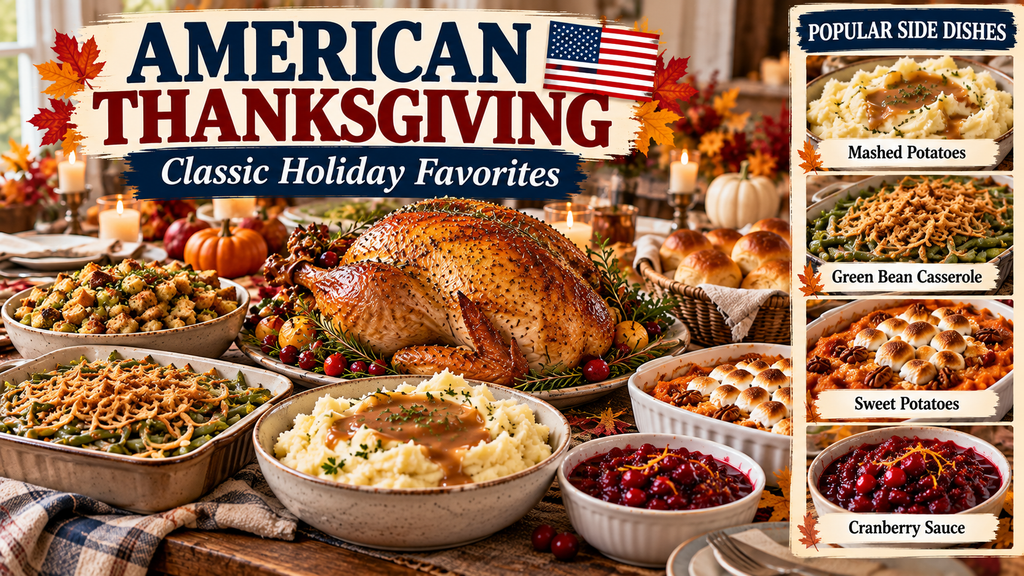
5. American Thanksgiving Is Known for Green Bean Casserole and Sweet Potato Casserole
Some side dishes have become especially recognizable in American Thanksgiving menus.
Green bean casserole is one example. It typically combines green beans with a creamy sauce and a crunchy topping, often fried onions. It is popular at many American holiday tables, although it is not served by every family.
Sweet potato casserole is another familiar dish. Depending on the recipe, it may include butter, brown sugar, pecans, or marshmallows.
These dishes are not exclusive to the United States, and Canadian families may enjoy them too. However, they are useful examples of how American regional and household traditions shape Thanksgiving menus.
How do these dishes fit into a balanced meal?
Green bean casserole offers a creamy vegetable side, while sweet potato casserole brings sweetness and richness. If you serve both, consider balancing them with a simple roasted vegetable or a fresh salad.
You can also prepare green beans with garlic and olive oil or serve roasted sweet potatoes without a sweet topping. Traditional menus are flexible, and there is no need to prepare every popular casserole.
6. Canadian Thanksgiving Often Highlights October Harvest Ingredients
Canadian Thanksgiving arrives earlier in the fall than American Thanksgiving. Its timing often makes October produce a natural part of the meal.
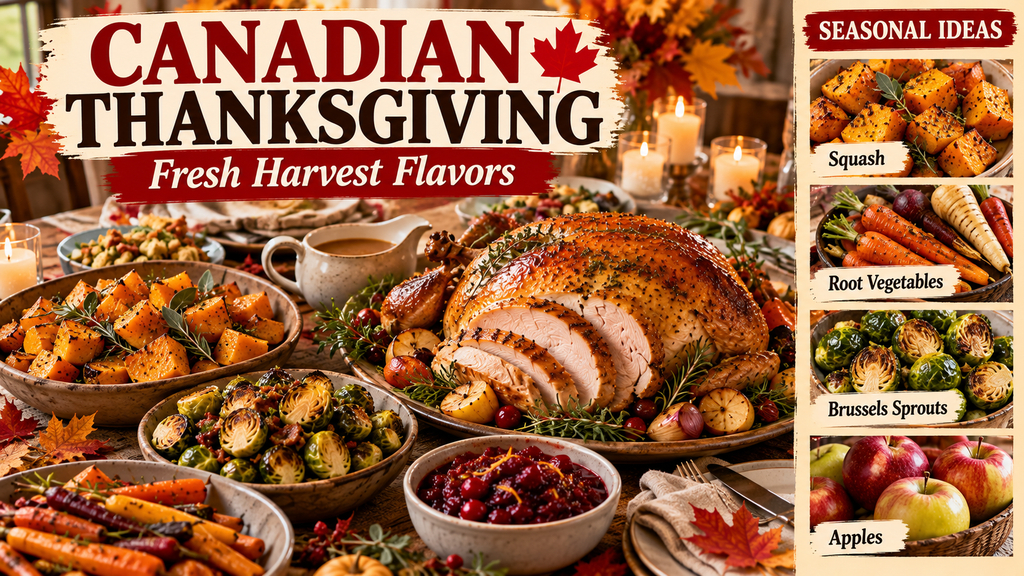
Depending on the region, seasonal ingredients may include squash, carrots, potatoes, apples, Brussels sprouts, and other fall vegetables. Families may roast vegetables, prepare soups, or serve apple-based desserts alongside the main meal.
The holiday’s connection to the harvest is an important part of its history. Canada’s Thanksgiving date was standardized as the second Monday in October in 1957, aligning the holiday with the autumn season in much of the country.
That does not mean Canadian menus are limited to local harvest produce. Modern Canadian Thanksgiving meals are diverse, and family recipes may reflect many cultural backgrounds.
Easy harvest-inspired side dishes
Consider these options for a Canadian-inspired Thanksgiving menu:
- Roasted butternut squash with herbs
- Maple-glazed carrots
- Brussels sprouts roasted until tender
- A simple apple and greens salad
- Roasted root vegetables with olive oil and thyme
These dishes can also work beautifully on an American Thanksgiving table.
7. American Thanksgiving Menus Often Include Regional Favorites
The United States has a wide range of regional Thanksgiving food traditions. A menu in New England may differ from one in the South, Midwest, Southwest, or West Coast.
In parts of the South, cornbread dressing, macaroni and cheese, collard greens, or sweet potato dishes may appear alongside turkey. In some coastal areas, seafood or oyster-based recipes may be part of the family tradition.
Other households serve wild rice dishes, roasted squash, regional breads, or foods connected to their cultural heritage.
These are examples rather than rules. A family in one state may prepare a completely different meal from its neighbors.
Why American Thanksgiving menus vary so much
Regional agriculture, migration, cultural traditions, and family history all influence holiday food. The national holiday creates a shared occasion, but it does not require every household to prepare the same menu.
For hosts, this means it is often more useful to ask guests about their favorite dishes than to assume that one menu represents all Americans.
8. Pumpkin Pie Is Popular in Both Countries
Pumpkin pie is a classic Thanksgiving dessert in Canada and the United States.
The familiar version uses pumpkin puree, warm spices such as cinnamon and nutmeg, a pastry crust, and a custard-style filling. Some families serve it with whipped cream, while others prefer it plain.
American Thanksgiving tables may also include pecan pie, apple pie, sweet potato pie, or regional desserts. Canadian celebrations commonly feature pumpkin pie and apple pie, alongside other family favorites.
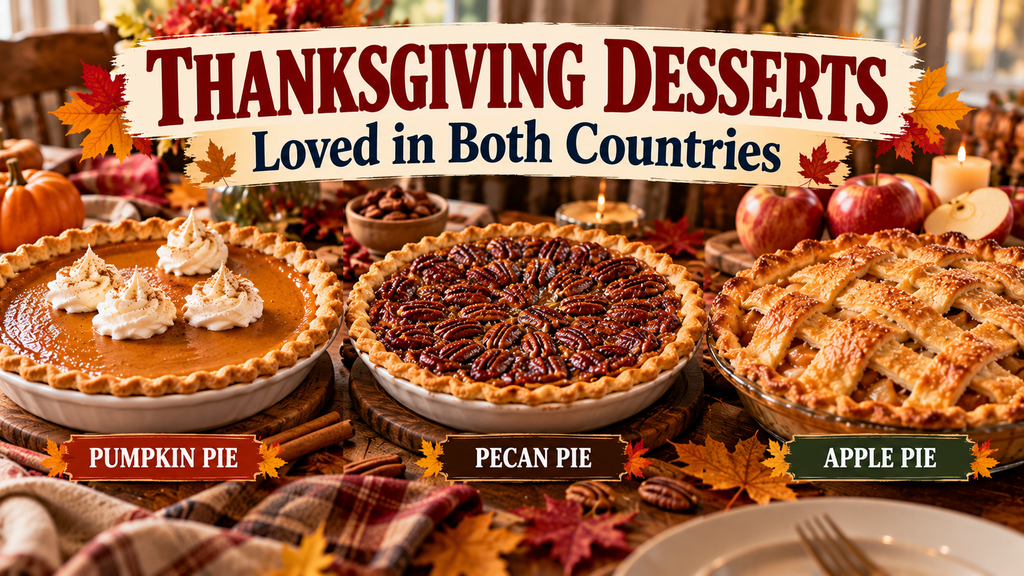
Dessert choices overlap considerably between the two countries.
Other desserts worth considering
If you want a holiday dessert spread, you could include:
- Pumpkin pie
- Apple pie
- Pecan pie
- Apple crisp
- Maple-flavored desserts
- A simple seasonal cake
Maple products are strongly associated with Canada, but maple-flavored desserts are enjoyed in the United States too. They can add a distinctly autumnal note to a mixed Canadian-American menu.
9. Canadian Thanksgiving vs American Thanksgiving: Why the Dates Matter for Food
The dates help explain some of the seasonal differences between the two holidays.
Canadian Thanksgiving is observed on the second Monday in October. American Thanksgiving takes place on the fourth Thursday in November.
In Canada, the meal arrives earlier in the fall, when many regions are experiencing the October harvest season. In the United States, Thanksgiving falls later, closer to the start of the winter holiday period.
This timing can influence produce availability, weather, travel, and the overall feel of the celebration. However, it does not create a strict food divide. Many of the same dishes appear on both sides of the border.
For 2026, Canadian Thanksgiving fell on October 12, while American Thanksgiving falls on November 26.
If you are preparing for an American Thanksgiving gathering, our Thanksgiving kitchen preparation guide can help you organize your cooking space before the holiday.
10. How to Create a Thanksgiving Menu Inspired by Both Countries
You do not have to choose between a Canadian and an American Thanksgiving menu. Since the traditional foods overlap, you can build a balanced meal that borrows ideas from both.
Here is a practical menu example:
Main dish
- Roast turkey or turkey breast
- Vegetarian main dish as an alternative, if needed
Traditional sides
- Herb stuffing or cornbread dressing
- Mashed potatoes and gravy
- Cranberry sauce
- Roasted seasonal vegetables
Additional dishes
- Green bean casserole
- Roasted butternut squash
- Maple-glazed carrots
- A fresh autumn salad
Desserts
- Pumpkin pie
- Apple pie or apple crisp
This menu is flexible enough for a mixed group of guests. You can simplify it by choosing one potato dish, two vegetable sides, one stuffing, and one dessert.
Make the preparation easier
Start by listing the dishes you plan to serve and identifying which ones can be prepared in advance. Cranberry sauce, some desserts, and certain vegetable preparations can often be made ahead, depending on the recipe.
Next, check that your refrigerator has enough room for prepared dishes and ingredients. Clear unnecessary items from the counters and group cooking tools near the areas where you will use them.
For additional practical guidance, see our articles on small kitchen organization and small kitchen counter organization.
If guests will be staying overnight, our guide to preparing your home for holiday guests can help you plan the spaces beyond the dining table.
Frequently Asked Questions
Is Canadian Thanksgiving food different from American Thanksgiving food?
The menus are very similar. Both countries commonly serve turkey, stuffing, potatoes, gravy, cranberry sauce, seasonal vegetables, and pumpkin pie. Differences usually come from regional recipes, family traditions, and the timing of the holiday rather than a completely different national menu.
Do Canadians eat turkey on Thanksgiving?
Yes. Roast turkey is a common Canadian Thanksgiving main dish, although some households serve ham, other meats, or vegetarian alternatives.
What foods are especially popular at American Thanksgiving?
Common American Thanksgiving dishes include roast turkey, stuffing or dressing, mashed potatoes, gravy, cranberry sauce, green bean casserole, sweet potato dishes, and pumpkin pie. Menus vary by region and family.
Do Canadians eat pumpkin pie for Thanksgiving?
Yes. Pumpkin pie is a familiar Canadian Thanksgiving dessert, as it is in the United States. Apple pie and other seasonal desserts are also common choices.
What is the biggest difference between Canadian and American Thanksgiving?
The most obvious difference is the date. Canadian Thanksgiving is on the second Monday in October, while American Thanksgiving is on the fourth Thursday in November. Food traditions overlap considerably, although regional dishes and family recipes can differ.
Is Canadian Thanksgiving celebrated in November?
No. Canada’s national Thanksgiving holiday is observed on the second Monday in October. In 2026, it was October 12.
Can I serve Canadian and American Thanksgiving dishes together?
Absolutely. Because the menus share many ingredients and traditions, you can combine roast turkey, herb stuffing, roasted vegetables, green bean casserole, cranberry sauce, and pumpkin pie into one menu. Choose dishes that complement each other and suit your guests.
Final Thoughts
Canadian Thanksgiving food vs American Thanksgiving food is less about two completely different menus and more about shared traditions shaped by regional cooking, seasonal ingredients, and family preferences.
Both countries celebrate with familiar comfort foods such as turkey, stuffing, potatoes, cranberry sauce, vegetables, and pumpkin pie. American menus may feature regional favorites such as cornbread dressing or green bean casserole, while Canadian meals often reflect October harvest ingredients. Neither country has one menu that every family follows.
If you are planning a Thanksgiving meal, use these traditions as inspiration rather than strict rules. Choose dishes your guests enjoy, prepare what you can in advance, and make the meal manageable for your kitchen and budget.
A thoughtful Thanksgiving menu does not need to be complicated. A few well-prepared favorites, shared with family and friends, are often enough to make the holiday memorable.