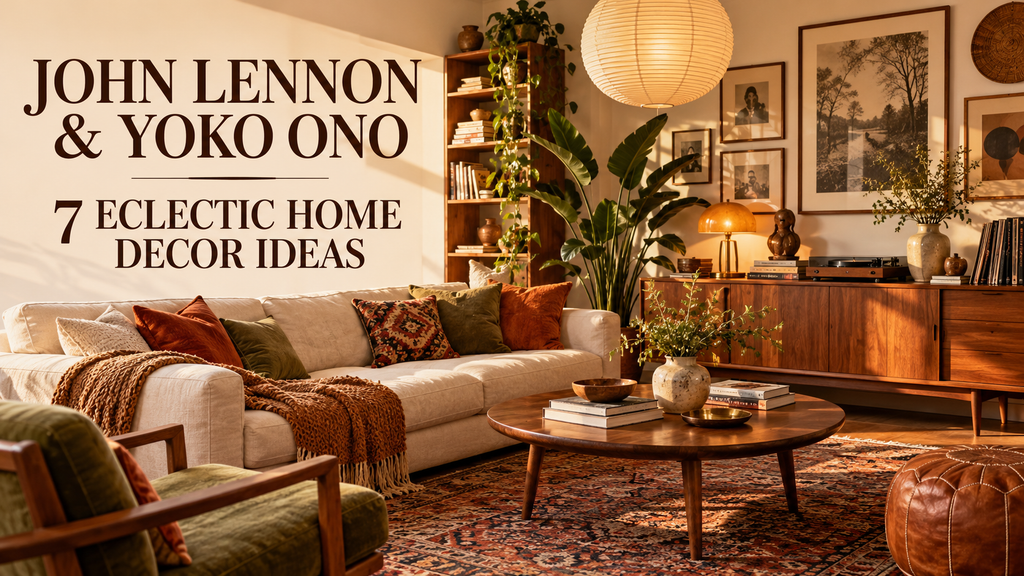
Some homes look as though every piece of furniture was bought on the same afternoon. Others feel as if they came together slowly, with objects collected over the years and furniture chosen because someone genuinely loved it.
That second kind of home is part of what makes vintage interiors so appealing. Looking at the homes associated with John Lennon and Yoko Ono offers a chance to explore a more personal approach to decorating—one that leaves room for character, contrast and objects that mean something to the people who live there.
Their interiors changed over the years, so there isn’t one single John Lennon and Yoko Ono decorating style to copy. But the photographs of their different living spaces provide inspiration for anyone who prefers rooms with a little history and personality over perfectly matched furniture.
The good news is that you don’t need rare antiques or a celebrity-sized budget to create a similar feeling. A few thoughtful choices can make an ordinary living room feel warmer, more collected and much more like your own.
1. Don’t Make Every Piece of Furniture Match
One of the easiest ways to make a room feel personal is to stop trying to make everything look like it came from the same furniture collection.
Imagine a simple cream sofa beside a wooden side table with a little age to it. Add a contemporary floor lamp and a framed print you picked up at a local art market. The pieces may come from different places and periods, but they can still work together.
That mix is what makes eclectic decorating interesting. Instead of creating a room around one matching set, you’re allowing different shapes, materials and finishes to share the space.
You can try this without buying anything new. Look around your home for a piece of furniture that feels different from the rest. Perhaps it’s an old wooden stool, a small inherited table or a chair you’ve had for years. Move it into the room and see whether it adds something the space was missing.
If the combination feels slightly off, look for a connection between the pieces. Similar wood tones, repeated colors or complementary shapes can bring them together.
The idea isn’t to make your home look old-fashioned. It’s to give it a little more character.
2. Let Warm Colors Do the Quiet Work
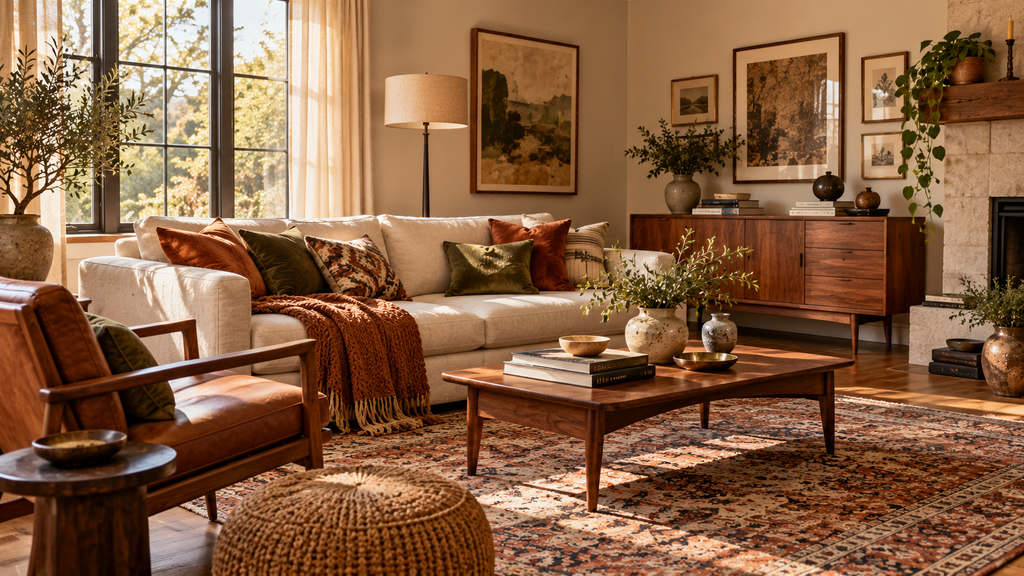
Warm neutrals are a useful starting point for vintage-inspired interiors because they allow furniture, artwork and textiles to stand out without competing for attention.
Cream, warm white, beige, walnut brown and soft taupe are easy to work with. They can make a room feel comfortable without requiring a dramatic color scheme.
You might have white walls and a gray sofa already. There’s no need to replace either one. A rust-colored cushion, a textured cream throw or a wooden lamp base can introduce warmth gradually.
If you’re starting with a fairly neutral room, try choosing two or three accent colors and repeating them in small ways. Olive green might appear in a cushion, while muted red shows up in a rug or piece of artwork. A little black or aged metal can add contrast.
What matters is how the colors relate to one another. You don’t have to recreate a specific 1970s palette to capture the relaxed, collected feeling of an older interior.
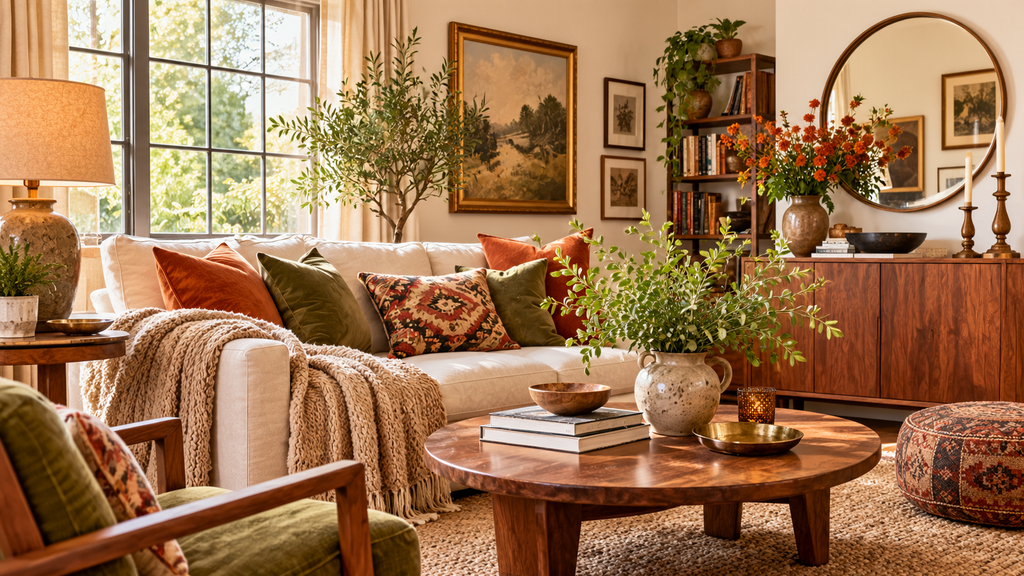
And if you love color, don’t feel you have to keep everything beige. Warm neutrals are a foundation, not a decorating rule.
3. Give Your Lighting More Personality
Lighting can change the entire mood of a room, yet it’s often one of the last things people think about when decorating.
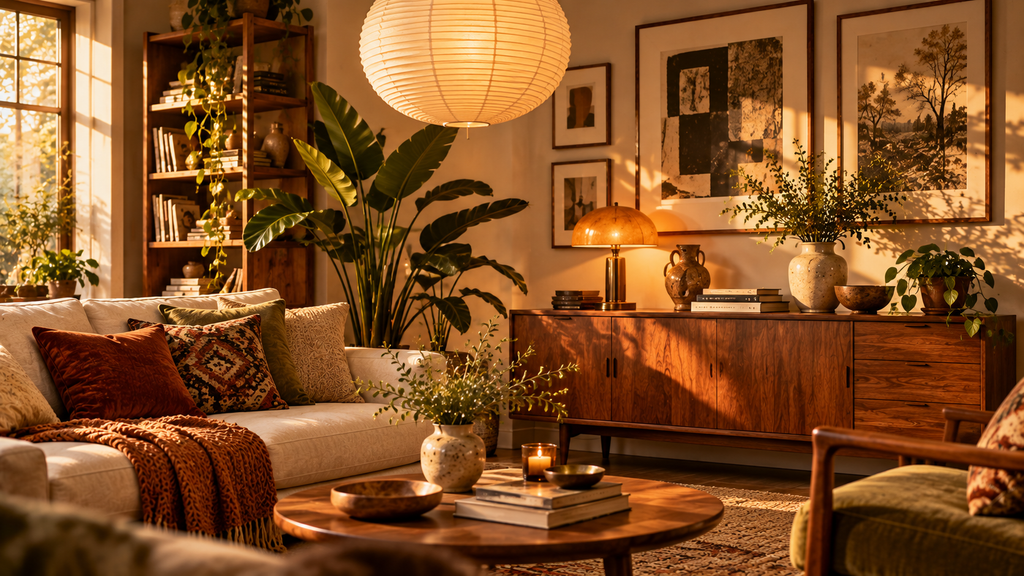
A single overhead light may be practical, but it can leave a living room feeling flat in the evening. A floor lamp beside the sofa or a table lamp on a sideboard creates a softer pool of light and adds another shape to the room.
For a vintage-inspired look, consider a sculptural lamp, a pleated shade or a paper lantern-style fixture. These can bring visual interest without introducing another large piece of furniture.
Think about how you actually use the space. If you read on the sofa, put a lamp where you can comfortably read. If the room is mainly for relaxing, a table lamp with a warm bulb may make more difference than another decorative accessory.
You don’t need to fill every corner with a light. Two well-placed lamps can be enough to make a room feel more inviting.
Before buying a new fixture, try moving the lamps you already own. Sometimes the problem isn’t the lighting itself; it’s where the light falls.
4. Make Texture More Important Than Decoration
A room doesn’t need lots of ornaments to feel interesting. Sometimes the difference comes from the materials you put together.
Think about a wooden coffee table, a woven rug, soft cotton cushions and a ceramic vase. Each surface feels different, even if the colors stay within a fairly narrow range.
That contrast gives a room depth without making it feel busy.
Start with what you already have. If your sofa is smooth and your walls are plain, a textured throw or a rug with a subtle pattern may be enough. If you already have a patterned rug, keep the cushions simpler so the room doesn’t feel crowded.
Wood, linen, cotton, velvet, ceramic and metal can all work in an eclectic space. You don’t need to use every material at once. Choose a few that suit your home and repeat them naturally.
This is particularly useful in a rental, where painting walls or changing flooring may not be an option. Textiles and smaller accessories can change the feeling of a room without requiring permanent alterations.
5. Display the Things You Actually Care About
A home becomes more interesting when it tells you something about the people who live there.
It might be a stack of favorite books, a framed family photograph, a ceramic bowl picked up while traveling or a small object that has been passed down through the family. These details often feel more meaningful than decorations bought simply to fill an empty shelf.
The challenge is knowing when to stop.
If every surface is covered, individual objects can disappear into the crowd. Try clearing one shelf or console table and putting back only the pieces you genuinely want to see.
A larger object can anchor the arrangement. Smaller pieces can sit beside it, with a little space left between them. Varying their heights often makes the display feel more natural.
You don’t have to arrange everything symmetrically, either. A slightly uneven arrangement can feel relaxed, as long as it doesn’t look accidental.
If you enjoy collecting vintage objects, our guide to displaying collections without creating clutter has more ideas for keeping meaningful pieces visible without overwhelming a room.
The aim isn’t to create a perfect shelf. It’s to make room for the things that make your home yours.
6. Use a Rug to Bring Different Pieces Together
A patterned rug can be especially helpful when a room contains furniture from different periods.
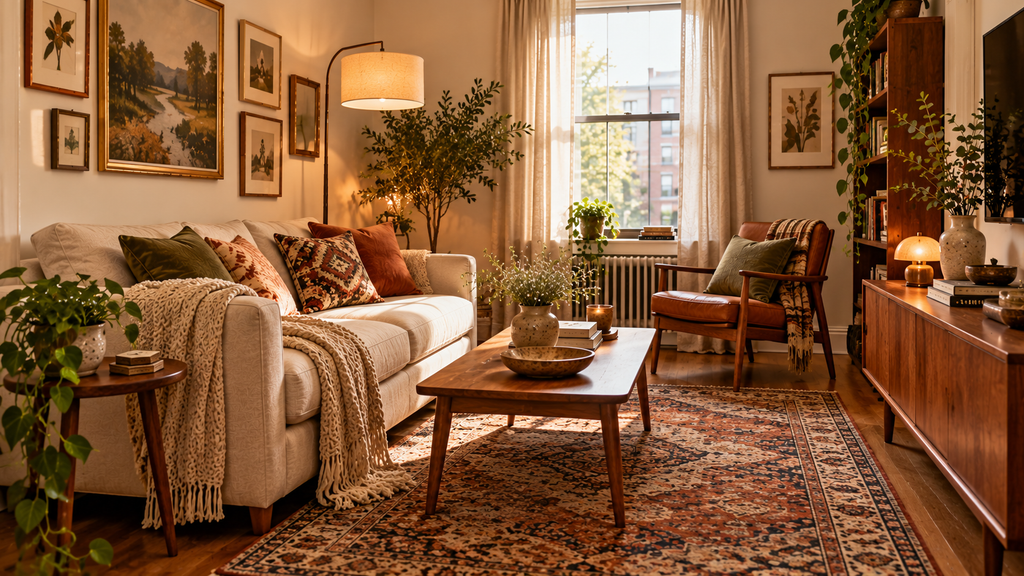
It gives the seating area a visual center and can connect colors that might otherwise feel unrelated. A traditional pattern, for example, can work with a clean-lined sofa if its colors pick up tones already present in the room.
Size matters more than many people expect. A rug that’s too small can make the furniture feel disconnected, almost as if every piece is floating on its own.
When possible, choose a size that lets the front legs of the sofa and chairs rest on the rug. If the room is small, measure the seating area before shopping rather than relying on how large the rug looks in a product photo.
You also don’t have to buy an antique. A new rug with a faded pattern or traditional design can provide a similar visual effect and may be easier to maintain.
For a busy household, check the cleaning instructions and consider how the rug will hold up to pets, children and everyday foot traffic.
A rug should work with your life, not become another thing you’re afraid to use.
7. Let the Room Come Together Over Time
There’s a temptation to finish a room as quickly as possible. You see a style you like, buy several coordinating items and expect the space to feel complete.
But the most personal interiors often develop more gradually.
You might find a secondhand table one month, discover a piece of artwork later and eventually replace a lamp that never quite worked. Each decision gives you a chance to see what the room actually needs rather than guessing in advance.
This approach can also save money. Before shopping, make a short list of the things that would genuinely improve the space. Perhaps you need better lighting, a useful side table or a rug large enough for the seating area.
Start there. Live with the changes for a while before adding more.
If you shop secondhand, inspect furniture carefully for stability, damage, odors and signs of pests. Upholstered pieces deserve particular attention because their condition and cleaning requirements may not be obvious at first glance.
And remember that not everything needs to be vintage. A new sofa can work beautifully with an older table. A modern lamp can sit beside a traditional chair. What matters is whether the combination feels right in your home.
Bringing This Look Into a Small Apartment
A spacious historical interior may not translate directly to a modern apartment, where the living room might also be the home office, dining area and children’s play space.
You can still borrow the same design ideas. The trick is to be selective.
Keep your largest pieces practical and appropriately sized. A comfortable sofa and a useful table matter more than several statement furniture pieces competing for space.
Use one main feature to give the room character. That might be a patterned rug, a distinctive lamp or a small collection of artwork. Let the remaining details support it rather than competing for attention.
Storage matters, too. Books, photographs and decorative objects can stay on display, while chargers, paperwork, remotes and other everyday items go into drawers or baskets.
If you rent, focus on changes you can reverse easily: cushions, lamps, removable artwork arrangements and smaller furniture pieces. Always check your lease before making permanent changes.
You can find more practical ideas in our guide to small-space organization.
A small room doesn’t need to imitate a large one. It simply needs to make good use of the space you have.
What Not to Do When Trying an Eclectic Look
Eclectic decorating can sound like permission to mix anything with everything. In practice, a little restraint makes the result much more comfortable.
Don’t buy a vintage item simply because it’s old. It still needs to suit your space and your taste.
Don’t introduce a new color with every accessory. Repeating a few colors helps different pieces feel connected.
Don’t fill every shelf, wall and tabletop. Empty space gives the objects you keep a chance to stand out.
And don’t sacrifice comfort for appearance. A living room should be pleasant to use on an ordinary Tuesday evening, not just attractive in a photograph.
Most importantly, don’t treat a celebrity’s home as a set of rules. Photographs show particular rooms at particular moments; they can’t tell you everything about how a home functioned or how its owners made every decorating decision.
Use the inspiration, keep the ideas that suit your life and leave the rest behind.
A Simple Way to Start This Weekend
Choose one room and spend a little time looking at it before buying anything.
Clear one surface, move a lamp, bring a favorite object out of storage or try a different arrangement of cushions. If you have a wooden chair or table tucked away elsewhere, see whether it works better in the room you’re updating.
Then live with the changes for a few days.
Notice what feels better and what still seems awkward. Perhaps the room needs a softer light, a more useful side table or less clutter—not a whole new set of decorations.
This small experiment is often more helpful than starting with a shopping list. It shows you what your home needs before you spend money trying to fix it.
Frequently Asked Questions
What is John Lennon and Yoko Ono’s home decor style?
Their homes changed over the years, so it’s more accurate to talk about individual interiors than one fixed style. Their historical spaces can inspire an interest in characterful furnishings, personal objects and a mix of materials, but any modern interpretation should reflect your own needs and taste.
How can I get a 1970s-inspired look without spending much?
Start with furniture and accessories you already own. Add warmth through a secondhand wooden table, a textured cushion, a patterned rug or a distinctive lamp. One carefully chosen piece can make more difference than several inexpensive decorations bought at once.
Can vintage and modern furniture work together?
Yes. Look for a shared color, material or shape that connects the pieces. A modern sofa can work with an older wooden table, for example, if their proportions and finishes suit the room.
Does eclectic decor work in a small living room?
It can. Choose furniture that fits the space, keep everyday clutter under control and avoid introducing too many focal points. A rug, lamp or small artwork collection can provide personality without making the room feel crowded.
Do I need authentic antiques?
No. Secondhand furniture, modern reproductions and contemporary accessories can all contribute to a collected look. Choose items for their quality, usefulness and character rather than their age alone.
Final Thoughts
The most useful thing to take from John Lennon and Yoko Ono’s home decor inspiration isn’t a particular lamp, rug or color combination. It’s the idea that a home can feel more personal when it isn’t assembled entirely from matching pieces.
Start with furniture you already enjoy. Add texture where the room feels flat, improve the lighting where you need it and give meaningful objects enough space to be noticed.
You may discover that the room needs only one or two thoughtful changes. And if you do decide to bring something new home, choose it because you love it and know where it will fit—not because a trend says you should.
A home doesn’t have to look perfectly finished to feel complete. Sometimes the details that make it yours are the ones that arrive slowly.