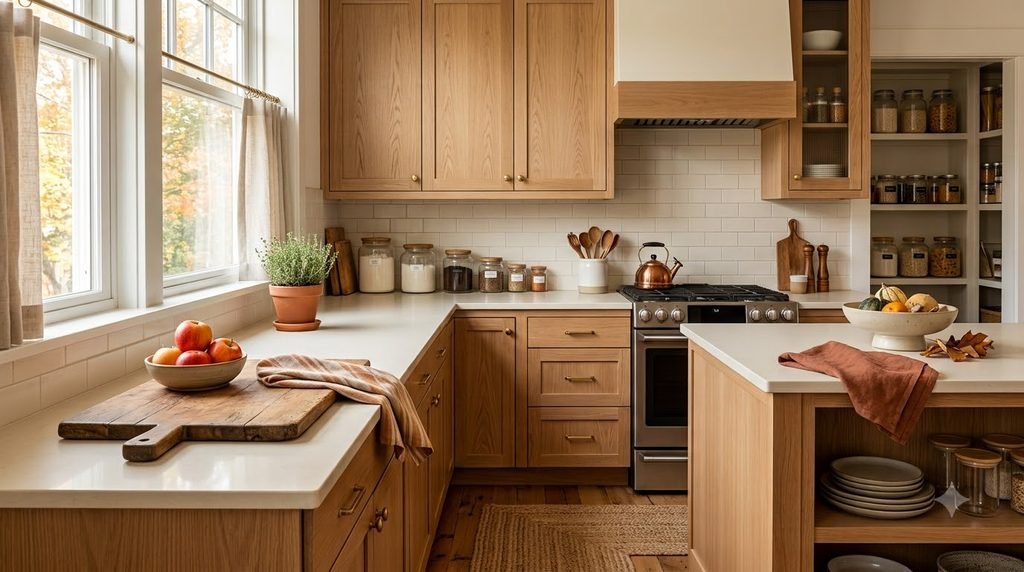
Fall is a good time to give your kitchen a small reset.
As the weather gets cooler, many kitchens naturally become busier with baking, soups, warm drinks, family dinners, and seasonal gatherings. That makes September a useful time to clear out things you no longer use and make everyday cooking supplies easier to reach.
But organizing your kitchen for fall doesn’t mean buying a whole collection of matching containers or covering every counter with pumpkins.
The goal is simpler: make your kitchen easier to use while adding a little warmth for the season.
From creating a dedicated fall cooking zone to organizing your refrigerator, baking supplies, cookware, and everyday counters, these fall kitchen organization ideas can help you create a kitchen that feels cozy without becoming cluttered.
1. Create a Fall Cooking Zone
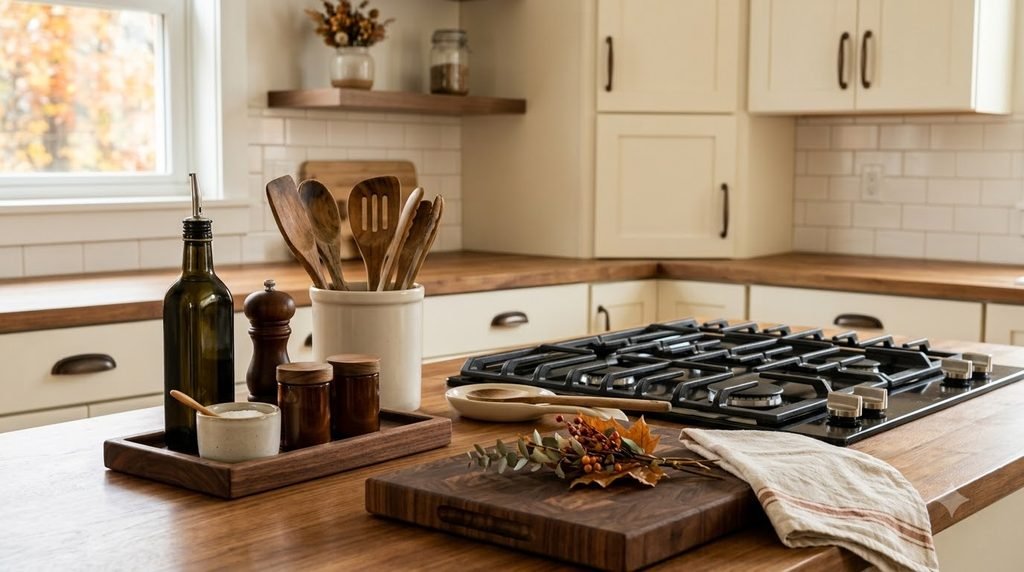
One of the easiest ways to make your kitchen more functional for fall is to create a small cooking zone.
Think about the meals you make more often during this season. You might be cooking more soups, roasted vegetables, pasta dishes, casseroles, or one-pot meals.
Keep the tools you regularly use for those meals close to the main cooking area.
For example, your cooking zone might include:
- Olive oil and frequently used seasonings
- Wooden spoons
- Salt and pepper
- Everyday cooking utensils
- A spoon rest
- Frequently used pans
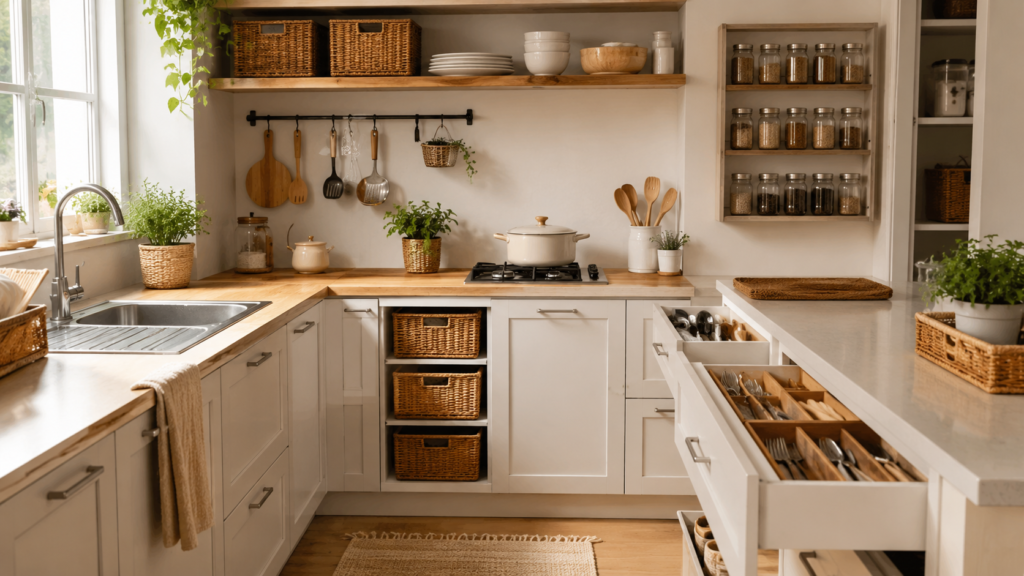
You don’t need everything sitting on the counter.
Keep only daily-use items visible and move occasional tools into nearby cabinets.
This creates a more efficient workspace without adding more storage.
2. Reset Your Pantry for Fall
Fall cooking often means using different ingredients than you did during summer.
Before stocking up on baking ingredients, canned goods, grains, soup ingredients, and seasonal staples, take a few minutes to look through your pantry.
Remove expired products and move older items toward the front.
Then create simple zones based on how you actually use your pantry.
For example:
- Baking
- Breakfast
- Quick dinners
- Soups and canned foods
- Snacks
- Backstock
If you have a small pantry, don’t try to fit everything into one large system.
Use the storage space you already have and give each category a predictable home.
For more ideas, see our complete guide to Fall Pantry Organization Ideas.
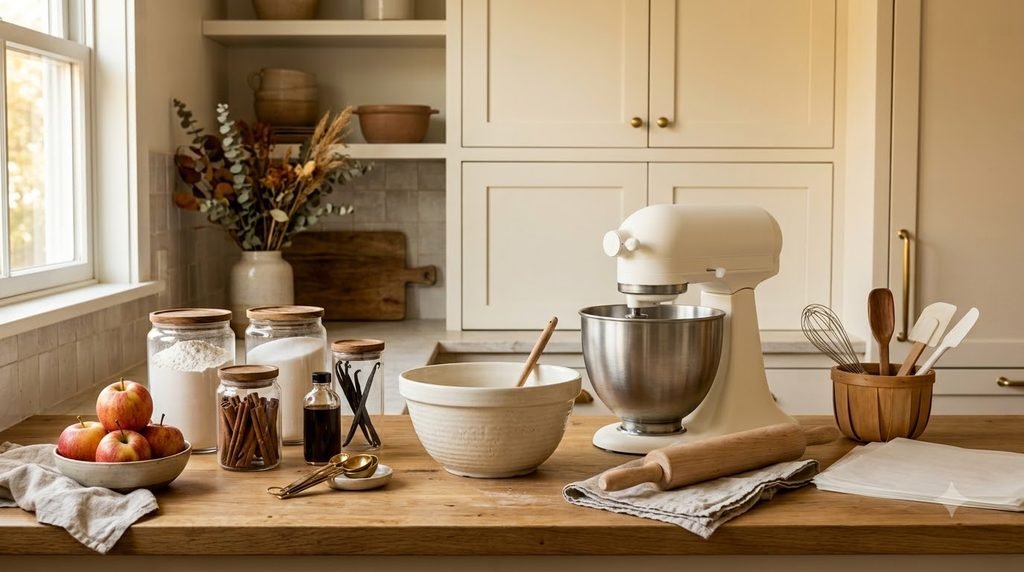
3. Create a Compact Fall Baking Station
Fall is a great time to bring baking supplies back into regular rotation.
Instead of searching through different cabinets every time you bake, create a small baking zone.
You could use:
- One cabinet shelf
- A deep drawer
- A pantry section
- A rolling cart
- A lower kitchen cabinet
Keep commonly used items together, such as flour, sugar, baking powder, vanilla, cinnamon, measuring cups, measuring spoons, parchment paper, and mixing tools.
If you use a stand mixer or hand mixer regularly, make sure it has a practical home rather than moving around the kitchen every time you need it.
You can also check the dates on older baking ingredients before fall baking gets busy.
4. Give Your Warm Drinks a Defined Home
Cooler mornings naturally make coffee, tea, cocoa, and other warm drinks more appealing.
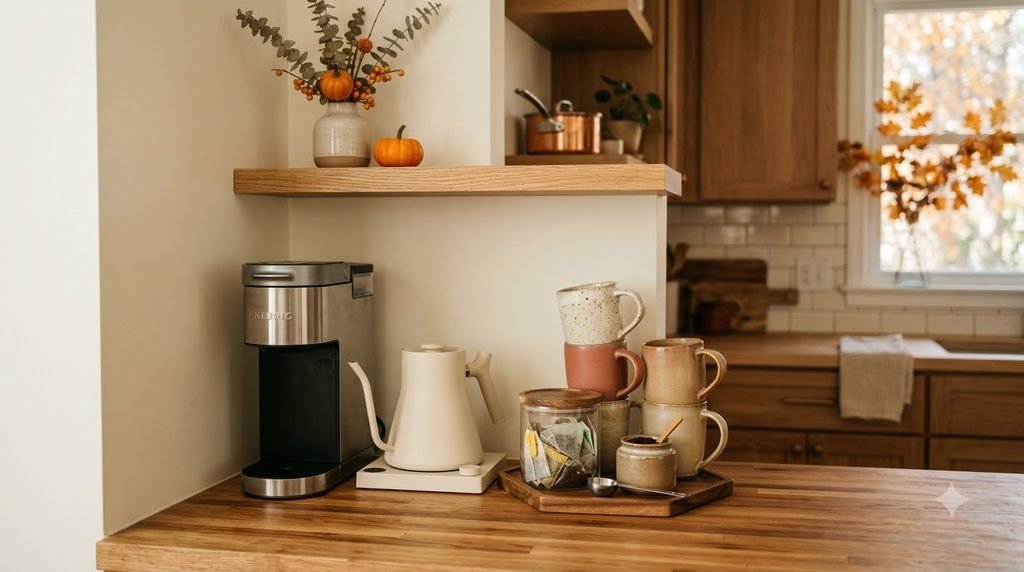
Instead of letting mugs, coffee supplies, tea bags, and sweeteners spread across the kitchen, create one defined beverage zone.
A simple setup might include:
- Coffee or tea
- Everyday mugs
- A coffee maker or kettle
- Sweetener
- One small tray
- Frequently used accessories
If you have limited counter space, keep only the appliance and one or two essentials visible.
Store backup supplies nearby.
A defined beverage zone makes the kitchen feel more organized without requiring a dedicated coffee bar.
For small-kitchen layouts, see our 15 Coffee Station Ideas for Small Kitchens.
5. Reset Your Refrigerator Before Fall Cooking Begins
Your refrigerator can become surprisingly crowded when seasonal cooking begins.
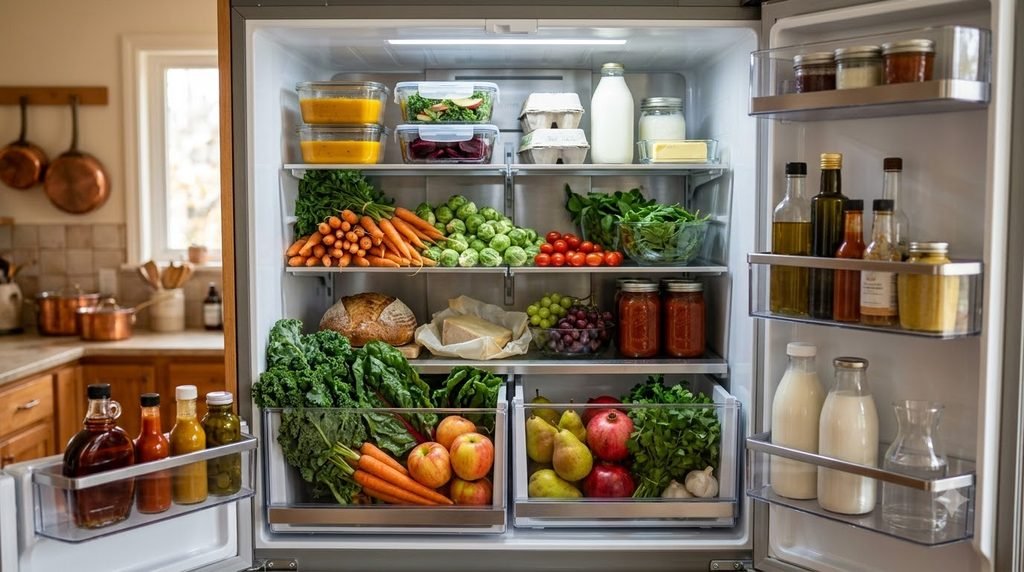
Before buying new ingredients, take everything out of one section at a time.
Check:
- Expiration dates
- Open containers
- Leftovers
- Sauces
- Produce
- Duplicate items
Then create simple refrigerator zones.
For example:
Top shelf: ready-to-eat foods and leftovers
Middle shelf: everyday ingredients
Lower shelf: larger containers and meal-prep foods
Drawers: fruits and vegetables
Door: condiments and frequently used bottles
Don’t try to make every section perfectly symmetrical.
The goal is to know where things belong.
You can also see our Fridge Organization Ideas for more refrigerator storage ideas.
6. Create an “Eat First” Refrigerator Bin
One small refrigerator change can make a noticeable difference.
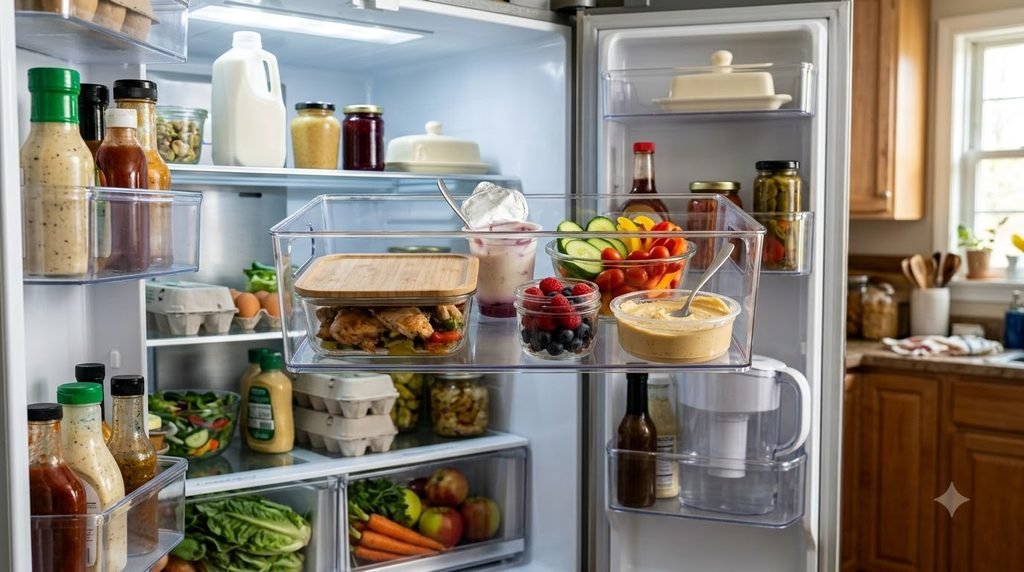
Create an “Eat First” bin for food that should be used soon.
This could include:
- Opened yogurt
- Leftover vegetables
- Cut fruit
- Open containers
- Leftover ingredients
- Foods approaching their use-by date
Place the bin somewhere visible.
When you open the refrigerator, you’ll immediately see what needs attention instead of forgetting about it behind newer groceries.
This is particularly useful during fall when cooking more frequently can mean having several partially used ingredients at once.
7. Organize Fall Baking Supplies by Frequency of Use
Not every baking ingredient needs to occupy prime storage space.
Separate your supplies into three groups:
Use Often
Keep these easy to reach:
- Flour
- Sugar
- Cinnamon
- Vanilla
- Baking powder
- Measuring tools
Use Sometimes
Store these in a nearby cabinet or pantry section.
Use Rarely
Move specialty tools and ingredients into higher or less convenient storage.
This approach makes more sense than organizing everything according to container size alone.
Your kitchen should reflect how you use it, not simply how storage containers look together.
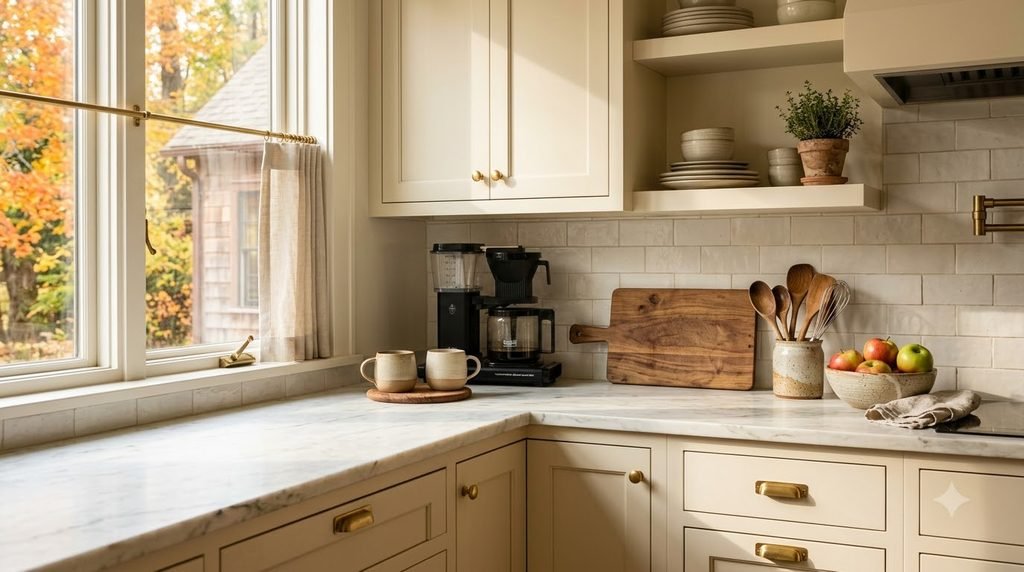
8. Store Seasonal Kitchen Items Together
Fall may bring out items that aren’t used throughout the rest of the year.
These might include:
- Special serving dishes
- Seasonal mugs
- Large baking dishes
- Thanksgiving serving pieces
- Specialty cookie cutters
- Holiday table linens
Instead of scattering these items across multiple cabinets, create a seasonal storage zone.
Use one cabinet shelf, storage bin, or higher shelf for things you only need occasionally.
Labeling the container can also make it easier to find everything next year.
The important part is not to give seasonal items your best everyday storage space.
9. Protect One Clear Kitchen Counter
A kitchen doesn’t need completely empty counters to look organized.
But having at least one usable prep area makes a major difference.
Look at everything currently sitting on your counters and ask:
Do I use this every day?
If the answer is no, consider moving it.
You may be able to relocate:
- Rarely used appliances
- Extra serving pieces
- Decorative objects
- Backup supplies
- Specialty cooking tools
Keep the appliances and tools that genuinely support your daily routine.
Your goal isn’t a completely empty kitchen.
It’s a counter that still gives you enough room to cook.
This approach also connects with our guide to Small Kitchen Counter Organization.
10. Organize Cooking Oils and Spices Around Your Cooking Zone
Cooking oils and spices are often easier to use when they’re stored close to the stove.
But keeping every bottle directly beside the stove can quickly create visual clutter.
Instead, choose a small defined area.
You could use:
- A narrow tray
- A shallow cabinet shelf
- A spice drawer
- A small riser
- A dedicated cabinet section
Keep your most frequently used oils and seasonings within easy reach.
Store specialty spices elsewhere.
This gives you the convenience of a cooking zone without turning your counter into a collection of bottles.
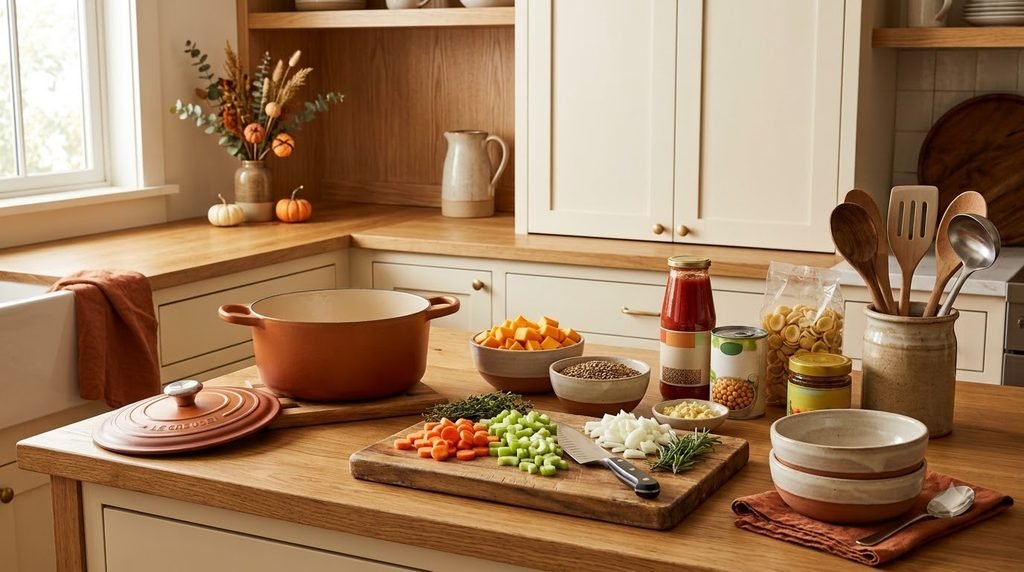
11. Create a Simple Soup and Dinner Zone
Fall dinners often become more centered around soups, stews, pasta, casseroles, and other comforting meals.
Create a small storage zone for the ingredients and tools you use most often.
Depending on your kitchen, this could include:
- Soup bowls
- Stock or canned ingredients
- Pasta
- Rice
- Seasonings
- Wooden spoons
- Dutch oven or frequently used pot
You don’t have to create a completely separate cabinet.
Even grouping related items together can reduce the amount of searching you do while preparing dinner.
The same principle works throughout the kitchen:
Store things near the task they support.
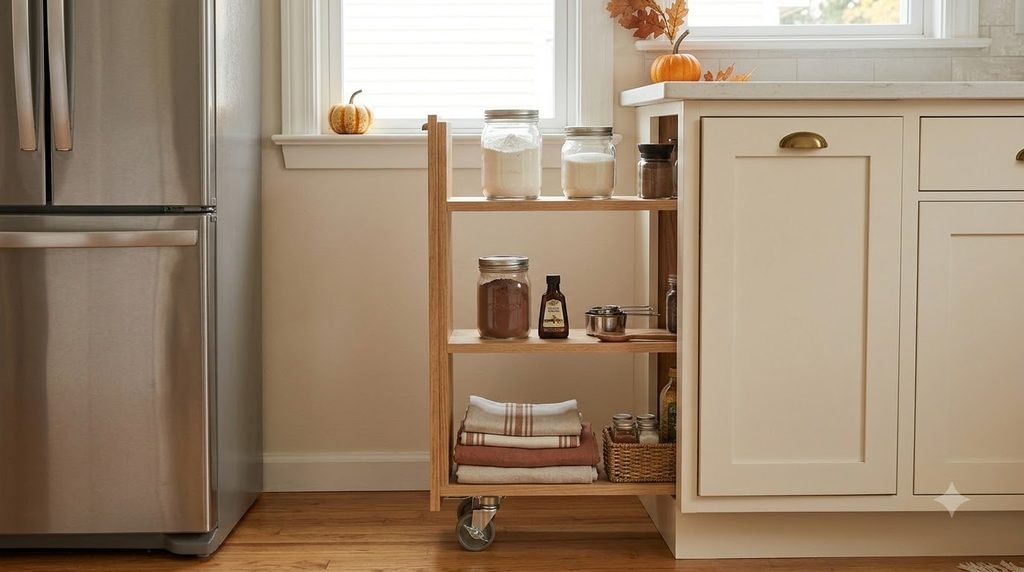
12. Use a Rolling Cart for Extra Fall Storage
If cabinet space is limited, don’t automatically assume you need more built-in storage.
A slim rolling cart can turn an unused gap into useful kitchen storage.
You might place one:
- Beside the refrigerator
- At the end of a counter
- Between cabinets
- Beside a pantry
- In an unused corner
Use the shelves for things such as:
- Baking supplies
- Coffee and tea
- Extra pantry items
- Kitchen towels
- Seasonal serving pieces
Choose a narrow cart that leaves enough walking space.
If you already have a small kitchen, you can find more ideas in our Small Kitchen Organization Ideas guide.
13. Organize Thanksgiving Prep Supplies Early
You don’t have to wait until Thanksgiving week to organize your kitchen.
If you regularly host fall gatherings, create a small hosting zone before the busy season arrives.
Gather items such as:
- Serving platters
- Extra plates
- Serving spoons
- Table linens
- Baking dishes
- Food storage containers
Store them together when possible.
This can prevent the last-minute cabinet search that happens when you’re trying to prepare several dishes at once.
You can also check whether you actually need everything you’re storing.
If a serving platter hasn’t been used in years, fall is a good time to decide whether it deserves valuable cabinet space.
14. Create a 5-Minute Fall Kitchen Reset
A kitchen doesn’t stay organized simply because you organized it once.
Create a small reset routine that you can repeat every evening.
Try this five-minute routine:
Minute 1: Clear the counters
Put away anything that doesn’t belong.
Minute 2: Reset the sink
Load or wash dishes and clear the surrounding area.
Minute 3: Return ingredients
Put spices, oils, containers, and cooking tools back where they belong.
Minute 4: Check the refrigerator
Move leftovers into the “Eat First” zone.
Minute 5: Prepare for tomorrow
Put out anything you know you’ll need in the morning.
Small resets are easier to maintain than waiting until the kitchen becomes overwhelming.
15. Leave Some Empty Space
This may be the most overlooked fall kitchen organization idea.
You don’t need to fill every shelf, drawer, counter, or basket.
Empty space is useful.
It gives you room to:
- Put groceries away
- Prepare food
- Store temporary items
- Handle larger cooking projects
- Add seasonal pieces without creating clutter
Current fall kitchen styling is also moving toward warmer, more personal spaces while keeping kitchens functional rather than overloaded with seasonal decoration.
Instead of adding more things, consider removing a few things first.
A little breathing room can make the entire kitchen feel calmer.
How to Organize Your Kitchen for Fall
If your kitchen feels overwhelming, don’t try to reorganize everything in one afternoon.
Use this order:
Step 1: Clear the counters
Remove things that don’t belong.
Step 2: Check the refrigerator
Discard expired food and create an “Eat First” area.
Step 3: Reset the pantry
Group ingredients according to how you use them.
Step 4: Organize fall cooking supplies
Bring baking ingredients, cookware, and seasonal serving pieces into useful zones.
Step 5: Create beverage and cooking zones
Keep daily-use items close to where they’re used.
Step 6: Remove unnecessary items
Donate or relocate things that are taking up valuable storage.
Step 7: Create a simple reset routine
Spend a few minutes maintaining the system each day.
Fall Kitchen Organization Ideas for Small Kitchens
A small kitchen doesn’t need a complicated organization system.
Start by protecting the space that you use most.
Keep your counters as clear as practical and move occasional-use appliances into cabinets, a pantry, or a rolling cart.
Use vertical space where possible.
A narrow shelf, cabinet riser, wall-mounted storage, or slim cart can give you additional storage without requiring a remodel.
Most importantly, avoid buying organizers before identifying the actual problem.
If your problem is too many appliances, another container won’t solve it.
If your problem is spices, create a spice zone.
If your problem is limited counter space, remove or relocate occasional-use items.
For more small-kitchen strategies, see 21 Small Kitchen Organization Ideas to Make Every Inch Count.
How to Make a Fall Kitchen Feel Cozy Without Clutter
Organization and seasonal decorating don’t have to compete with each other.
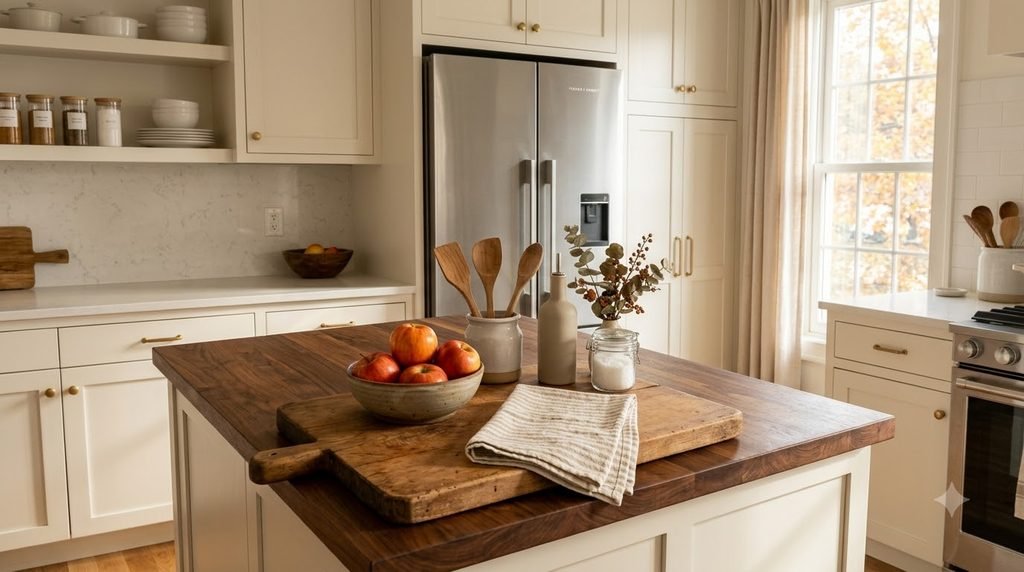
Instead of adding lots of decorative objects, choose a few functional pieces that also bring seasonal warmth.
For example:
- A warm-toned kitchen towel
- A wooden cutting board
- A bowl of apples
- A ceramic pitcher
- A simple seasonal branch
- A small lamp
- A few earthy-colored linens
The current fall kitchen design conversation is emphasizing warmth, natural materials, personal character, and functional seasonal elements rather than simply filling countertops with decorations.
The key is to decorate around your organization system—not on top of it.
A Simple Fall Kitchen Reset Checklist
Save this checklist for your next kitchen reset:
☐ Clear unnecessary countertop items
☐ Check refrigerator expiration dates
☐ Create an “Eat First” refrigerator bin
☐ Reset the pantry
☐ Check baking ingredients
☐ Group fall cooking supplies
☐ Organize frequently used spices
☐ Create a beverage zone
☐ Store seasonal serving pieces together
☐ Remove rarely used appliances
☐ Organize food storage containers
☐ Create one clear prep area
☐ Wipe frequently used surfaces
☐ Create a five-minute evening reset
☐ Leave some empty storage space
Common Fall Kitchen Organization Mistakes
Buying storage before decluttering
More containers won’t solve a kitchen that simply has too much stuff.
Keeping everything on the counter
Only daily-use items need to occupy your most valuable workspace.
Creating too many categories
If your system is complicated, you’re less likely to maintain it.
Ignoring the refrigerator
A clean pantry won’t help much if your refrigerator is still difficult to navigate.
Overdecorating for fall
Seasonal decor should complement your kitchen rather than make cooking harder.
Filling every shelf
Leave some room for groceries, cooking projects, and everyday flexibility.
Final Thoughts
The best fall kitchen organization ideas don’t require a major makeover.
A few small changes can make a noticeable difference: create practical cooking zones, reset your refrigerator, organize baking supplies, protect your counter space, and give seasonal items a predictable home.
Then keep the system simple enough that you can maintain it.
A cozy fall kitchen doesn’t have to look perfect.
It should simply feel easy to use, welcoming, and ready for the season ahead.
Related Articles
Looking for more ways to organize your home this fall? Explore these Jessica Millers guides:
- Fall Pantry Organization Ideas — practical ways to reset your pantry for seasonal cooking.
- 21 Small Kitchen Organization Ideas — make better use of limited kitchen storage.
- Small Kitchen Counter Organization Ideas — protect prep space while keeping everyday essentials accessible.
- 15 Coffee Station Ideas for Small Kitchens — create a compact beverage zone without taking over your counter.
- Fridge Organization Ideas — simple ways to create more useful refrigerator zones.
- 7 Easy Ways to Organize a Small Kitchen — budget-friendly ideas for getting a compact kitchen under control.