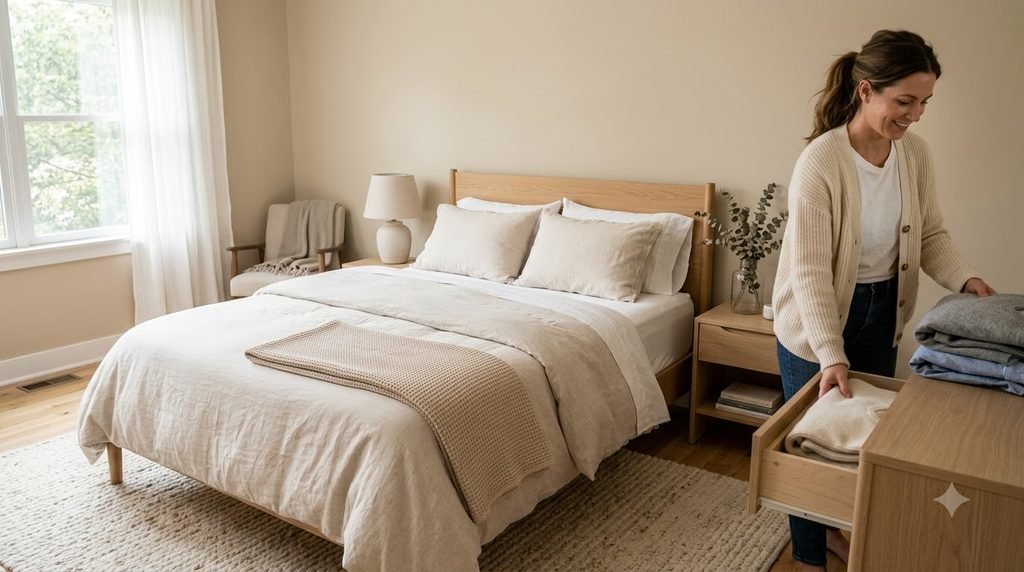
A small bedroom without a closet can feel difficult to organize, especially when clothes, shoes, bedding, and everyday essentials have nowhere to go. Even a beautiful bedroom can start feeling crowded when everything has to stay out in the open.
The good news is that you do not need a built-in closet or a complete bedroom makeover to create a more functional space. With a few thoughtful storage solutions, you can create a place for your clothes, make better use of unused space, and keep your bedroom feeling comfortable.
The key is to organize your bedroom around the way you actually live. Your everyday clothes should be easy to reach, seasonal items can be stored out of the way, and frequently used essentials should have a designated home.
If you are looking for small bedroom storage ideas with no closet, these 15 practical solutions will help you make the most of your available space without making your room feel like a storage unit.
1. Create a Small Freestanding Wardrobe

A freestanding wardrobe is one of the most straightforward alternatives to a built-in closet. It gives your clothes a dedicated place and helps keep the rest of your bedroom from becoming cluttered.
For a small bedroom, look for a narrow wardrobe with a combination of hanging space and shelves. A tall, slim design can use vertical space without taking up as much floor area as a wide dresser.
Before purchasing one, measure the available wall space and check that the doors can open comfortably. Sliding doors may be useful when there is not enough clearance for traditional doors.
Choose a wardrobe that accommodates your most frequently worn clothes rather than trying to fit your entire wardrobe into one piece of furniture.
Small-space tip: A wardrobe with drawers or shelves at the bottom can eliminate the need for a separate storage unit.
2. Use a Clothing Rack for Everyday Outfits

A clothing rack can work well when you do not have enough room for a traditional wardrobe. It is especially useful for everyday outfits, work clothes, jackets, or items you wear frequently.
Choose a compact rack with a sturdy frame and a lower shelf for shoes or baskets. Keep the number of hanging garments limited so the rack looks intentional instead of overcrowded.
Arrange clothes by category or color to make getting dressed easier. You can also use matching hangers to create a more coordinated appearance.
If your bedroom is extremely small, place the rack against a wall or in an unused corner rather than directly beside the bed.
For a more finished look, add a simple curtain panel around the rack if the layout allows it. This can visually separate your clothing storage from the sleeping area.
3. Make Use of Under-Bed Storage

The space underneath your bed is valuable storage real estate, especially when there is no closet.
Measure the clearance beneath your bed before buying storage containers. Flat rolling bins, fabric drawers, or shallow lidded containers can work well for items you do not need every day.
Use under-bed storage for:
- Off-season clothing and sweaters.
- Extra sheets and pillowcases.
- Spare blankets and comforters.
- Shoes that are not part of your daily rotation.
Keep everyday clothing somewhere more accessible. Having to pull heavy bins from under the bed every morning can make your storage system frustrating to maintain.
If your bed sits very close to the floor, consider a bed frame with built-in drawers when it is time to replace your existing one. This provides more accessible storage without adding another piece of furniture.
4. Add a Dresser That Fits Your Layout

A dresser can provide essential storage for folded clothes, undergarments, pajamas, and accessories.
In a small bedroom, a tall and narrow dresser is often more practical than a wide, low unit. It uses vertical space while leaving more of the floor open.
Measure the wall and the drawer extension before choosing a dresser. You should be able to open the drawers fully without blocking the bedroom door or walking path.
Organize each drawer by category. For example, use one drawer for tops, one for bottoms, another for undergarments, and another for sleepwear.
Drawer dividers can help prevent smaller items from becoming mixed together.
If you already have a dresser, reorganize it before purchasing another one. Removing clothes you no longer wear can free up more room than adding additional storage furniture.
5. Install Renter-Friendly Wall Shelves

When floor space is limited, look upward.
Wall shelves can provide storage for folded sweaters, small baskets, accessories, books, and decorative items. They are especially helpful in bedrooms where a dresser or wardrobe cannot fit comfortably.
Install shelves above a dresser or along a wall that is not needed for furniture.
For renters, removable adhesive organizers may be appropriate for lightweight items when the product is rated for the intended surface and load. However, heavier shelves generally require properly secured mounting, which may not be permitted by every rental agreement.
Always check weight limits and installation requirements before using wall-mounted storage.
Styling tip: Keep frequently used items on lower shelves and less frequently used belongings higher up. Avoid filling every shelf with small decorative objects, as this can make a compact room look busy.
6. Turn a Bedroom Corner Into a Mini Closet

An unused corner can become a practical clothing zone without requiring a separate room.
Start with a compact clothing rack or narrow wardrobe. Add a small hamper and a basket for accessories if there is enough space.
A full-length mirror beside the clothing area can make getting dressed more convenient while serving a practical purpose.
Keep the arrangement simple. You do not need a dresser, wardrobe, shoe cabinet, and multiple baskets in the same corner.
For particularly small rooms, select one main storage piece and add only the accessories that solve a specific problem.
If you share a bedroom, consider dividing the available storage into clearly defined zones so each person knows where their belongings belong.
7. Use the Back of the Bedroom Door

The back of a bedroom door is often overlooked, but it can hold a surprising number of lightweight everyday items.
An over-the-door organizer can be useful for scarves, belts, small bags, accessories, or other items that do not need drawer space.
Choose an organizer designed for your door thickness and make sure it does not prevent the door from closing.
You can also use a few suitable over-door hooks for robes, jackets, or frequently used bags.
Avoid hanging too many heavy items on the door. Excess weight can strain hardware or make the door difficult to operate.
For a small bedroom, this is a useful way to add storage without taking up additional floor space.
8. Store Seasonal Clothing in Labeled Bins

Not every item in your wardrobe needs to remain within easy reach throughout the year.
Separate clothing into everyday, seasonal, and occasional-use categories. Keep your current-season clothes accessible and move the rest into labeled storage containers.
Depending on your bedroom layout, seasonal bins can be stored under the bed, on a suitable high shelf, or in another designated storage area.
Use labels such as “Winter Sweaters,” “Summer Clothes,” or “Extra Bedding” so you can quickly find what you need.
Before storing clothes for several months, make sure they are clean and completely dry. Choose containers appropriate for the fabric and storage conditions.
Avoid placing heavy containers on unstable furniture or high shelves that are difficult to access safely.
This simple rotation system reduces the amount of clothing competing for space in your everyday storage area.
9. Choose a Bedside Table With Hidden Storage

A bedside table can do more than hold a lamp and phone charger.
Choose a nightstand with drawers or a closed cabinet to store smaller items such as sleep masks, charging cables, personal accessories, and reading materials.
In a room without a closet, even a small amount of concealed storage can help keep everyday surfaces clear.
If there is no room for a traditional nightstand, consider a narrow bedside cabinet or a wall-mounted shelf paired with a small drawer unit where appropriate.
Keep the top surface simple. A lamp, a small tray, and one or two frequently used items are usually enough.
The goal is to make the bedroom easier to use without introducing more visual clutter.
10. Use Baskets for Bags, Shoes, and Accessories

Baskets can make open storage look more organized and help group belongings that would otherwise be scattered around the room.
Use a few baskets for specific categories, such as handbags, casual shoes, scarves, or accessories.
Choose sizes that fit your available shelves or the space beside your wardrobe. Matching baskets can create a coordinated look, but you do not need to buy an entire set.
For shoes, use containers that allow adequate ventilation and are suitable for the footwear being stored.
Avoid placing several large baskets around the floor simply because they look attractive. Every basket should have a defined purpose and a convenient home.
If a basket is consistently overflowing, it may be a sign that the category needs decluttering or a different storage solution.
11. Make a Small Space for Laundry

Without a closet, dirty laundry can quickly end up on the floor, chair, or bed.
A slim laundry hamper can help keep worn clothes contained and prevent them from mixing with clean garments.
Look for a narrow design that fits beside a dresser, behind a door, or inside a suitable wardrobe compartment.
If your room is very small, a collapsible hamper can be useful when you need to save space between laundry days.
Create a simple routine: place worn clothes in the hamper immediately, and return clean laundry to its designated storage area as soon as possible.
For more practical laundry organization ideas, see our guide to small laundry room organization ideas .
12. Add a Storage Bench at the Foot of the Bed

If you have enough room to walk around the bed, a storage bench can provide an additional place to keep belongings.
A bench with a lift-up lid or built-in compartments can hold extra blankets, spare pillows, or seasonal accessories.
Choose a size that leaves enough clearance around the bed. In a narrow room, a large bench may create more problems than it solves.
A small storage ottoman can be an alternative when a full bench is too wide.
Before adding one, consider whether you already have sufficient under-bed storage. Avoid purchasing duplicate storage furniture that makes the room harder to navigate.
13. Use Vertical Space for Shoes and Accessories

Shoes can take up valuable floor space when there is no closet.
A slim vertical shoe rack or narrow shoe cabinet can keep footwear organized without spreading it across the room.
Choose a design that fits your collection and the available floor space. A tall rack may work well in an unused corner, while a low cabinet can fit beneath a window if the layout allows.
Keep the shoes you wear most often on the easiest-to-reach shelves.
Store occasional footwear separately so your everyday shoe area does not become overcrowded.
You can also use a small tray near the entrance to contain frequently worn shoes, particularly if your bedroom is part of a studio or shared living space.
14. Create a Simple Accessory Station

Jewelry, belts, watches, sunglasses, and small accessories are easy to lose when they do not have a dedicated place.
Create a small accessory station using a drawer organizer, jewelry box, tray, or suitable wall hooks.
Keep the items you use regularly together, preferably near your dresser or clothing area.
For jewelry, use compartments that prevent delicate pieces from tangling. For belts and scarves, hooks or hanging organizers may save drawer space.
Avoid turning the accessory station into another cluttered surface. Return items to their designated place after using them.
A small, consistent system is easier to maintain than multiple storage containers scattered throughout the bedroom.
15. Keep Your No-Closet Bedroom Organized With a Weekly Reset

Even the most thoughtfully organized bedroom needs occasional maintenance.
Without a closet, clothing and accessories can quickly accumulate on chairs, the bed, or other surfaces. A short weekly reset helps prevent that from becoming a bigger problem.
Try this simple routine:
- Return clean clothes to the dresser, wardrobe, or clothing rack.
- Put dirty laundry in the hamper.
- Return shoes and accessories to their designated storage areas.
- Check baskets and drawers for items that no longer belong there.
- Clear the floor and bedside surfaces.
You can also use a monthly review to remove clothes you no longer wear and rotate seasonal items.
For a more complete room-by-room routine, explore our Sunday Reset Checklist .
The goal is not to keep every item hidden. It is to create a bedroom where your belongings have a logical place and the room remains comfortable to use.
How to Organize a Small Bedroom Without a Closet
Before purchasing storage furniture, take a few minutes to evaluate your bedroom.
The right solution depends on how much floor space you have, what kind of clothing you own, and whether you rent or own your home.
Start by Decluttering Your Clothes
Begin with your current wardrobe.
Remove clothing that no longer fits, is damaged beyond repair, or has not been worn for a long time. Set aside items that need repair or donation.
You do not need to get rid of everything you love. Focus on reducing the number of items competing for limited storage space.
A smaller, well-organized wardrobe is often easier to manage than a large collection stored in several overcrowded places.
Divide Your Clothes Into Three Categories
A simple three-zone system makes it easier to decide where everything belongs.
| Category | Where to store it |
|---|---|
| Everyday clothes | Dresser, wardrobe, or clothing rack |
| Seasonal clothing | Labeled bins, under-bed storage, or designated overflow area |
| Occasional items | Upper shelves or less frequently accessed storage |
Keep your everyday clothes easy to reach. Store less frequently used items in places that do not interfere with your daily routine.
Measure Before Buying Storage Furniture
Small bedrooms can be difficult to furnish because every inch matters.
Measure the wall width, bed clearance, door swing, and walking paths before buying a wardrobe, dresser, or storage bench.
A storage unit that looks compact online may be too deep for your actual room.
When possible, choose furniture that serves more than one purpose, such as a bed with drawers or a nightstand with concealed storage.
Best Storage Solutions for Different Small Bedroom Layouts
Not every bedroom without a closet needs the same setup.

If Your Bedroom Is Extremely Small
Focus on one main clothing storage solution, such as a narrow wardrobe or dresser.
Use under-bed storage for seasonal items and avoid adding several separate storage pieces.
Wall-mounted storage may help if the room has suitable walls and your rental agreement permits installation.
If You Have No Room for a Wardrobe
Consider a compact clothing rack, a tall dresser, or a combination of hanging and folded storage.
Keep only your most frequently worn clothes on the rack and use drawers or containers for the rest.
If the room is too small for a clothing rack, prioritize folded clothing and use a separate storage area for seasonal overflow if one is available.
If You Rent Your Home
Choose storage solutions that can move with you, such as freestanding wardrobes, rolling carts, clothing racks, and portable drawers.
Before installing wall shelves or hooks, check your lease and the product’s installation requirements.
Avoid assuming that every adhesive product will work on every painted, textured, or wallpapered surface.
If You Share a Small Bedroom
Assign separate drawers, shelves, or clothing zones to each person.
Use labels or distinct baskets if that helps prevent belongings from becoming mixed together.
Keep shared walkways and access to doors clear, particularly when both people use the room at the same time.
Common Mistakes to Avoid in a No-Closet Bedroom
A few storage mistakes can make even a well-designed small bedroom feel cramped.
Buying storage before decluttering: More containers do not automatically create more usable space. Start by deciding what you actually need to store.
Using too many open shelves: Open storage can be useful, but filling every wall with visible belongings can make a small room feel busy.
Keeping everyday clothes in hard-to-reach bins: Under-bed storage is useful for seasonal items, but it is not always practical for clothing you wear daily.
Ignoring walking space: A wardrobe or dresser should not block doors, drawers, or the natural path around the bed.
Creating too many storage zones: Keep the system simple enough that you can put everything away without thinking about it.
Frequently Asked Questions
How do you store clothes in a small bedroom with no closet?
Use a combination of a freestanding wardrobe, dresser, clothing rack, or under-bed storage. Keep everyday clothes accessible and store seasonal items in labeled containers. The best combination depends on your room’s layout and available floor space.
What is the best alternative to a closet in a small bedroom?
A narrow freestanding wardrobe is a practical alternative when there is enough room. If floor space is limited, a tall dresser combined with a compact clothing rack or under-bed storage may work better.
How can I organize a bedroom without a closet on a budget?
Start by decluttering and using furniture you already own. Repurpose suitable baskets, add drawer dividers, use existing under-bed space, and consider secondhand dressers or clothing racks. You do not need to purchase every storage solution at once.
How do I make a small bedroom look less cluttered without a closet?
Limit the number of visible storage pieces, group similar items together, and keep everyday surfaces clear. Closed storage can help conceal smaller belongings, while a coordinated clothing rack can make necessary open storage look intentional.
Can I use a clothing rack instead of a closet?
Yes. A sturdy clothing rack can hold frequently worn clothes and is particularly useful in rental homes. Choose a rack with an appropriate weight capacity and avoid overloading it.
Where should I store seasonal clothes when I have no closet?
Use suitable labeled containers under the bed, on safe and accessible shelves, or in another designated storage area. Store clean, dry clothing in containers appropriate for the fabric and storage conditions.
Final Thoughts
Organizing a small bedroom without a closet is about making thoughtful use of the space you already have.
Start with the clothes and belongings you use most often, choose storage furniture that fits your layout, and use vertical and under-bed space where practical.
You do not need a large wardrobe or expensive custom storage to make your bedroom feel more functional. A few well-chosen solutions and a simple weekly reset can make everyday life much easier.
If you are working on other areas of your home, explore more practical organization ideas below.
Related Articles
Use this section at the end of the published article. These links connect the new bedroom article to relevant existing JessicaMillers.com content.
More Small-Space Organization Ideas