How to Transition Your Living Room From Summer to Fall
The transition from summer to fall doesn’t have to happen all at once.
In early September, you may still have warm afternoons while evenings start to feel cooler. That makes a complete seasonal makeover impractical for many homes. Instead of removing everything that feels like summer and replacing it with pumpkins, plaid, and dark colors, you can gradually adjust the room as the season changes.
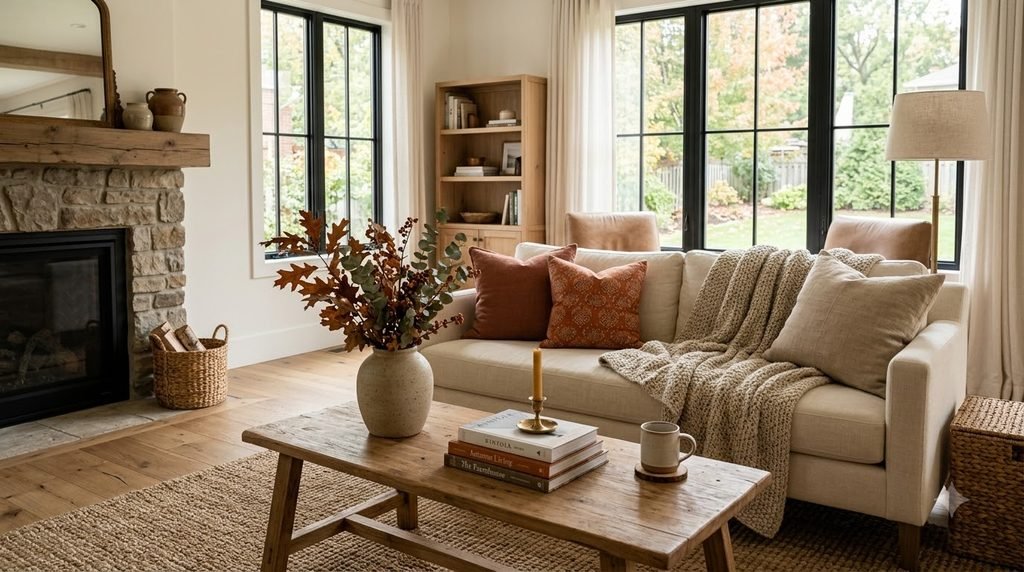
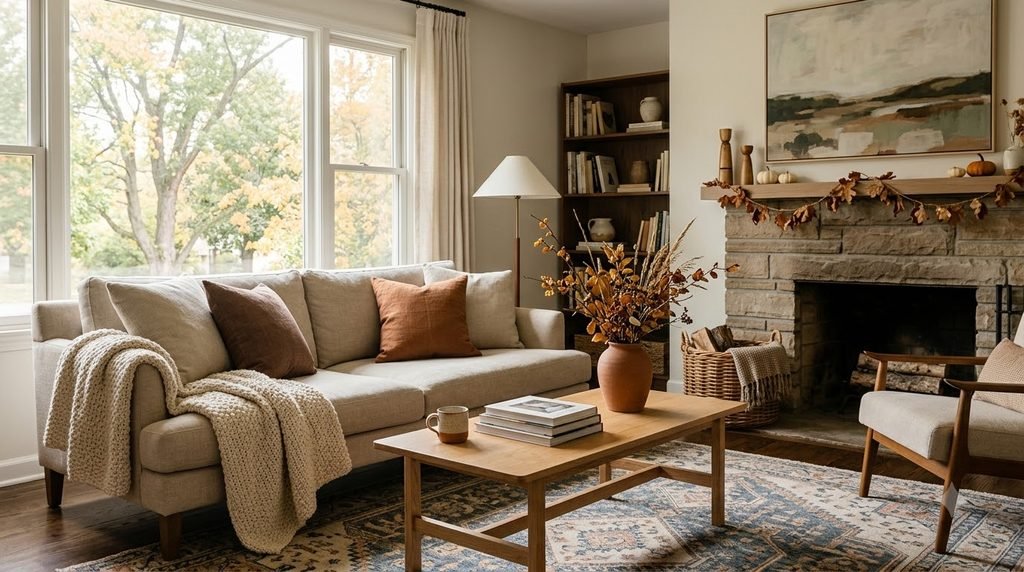
A few thoughtful changes can make a living room feel warmer without making it look overly decorated. Softer textures, deeper colors, warmer lighting, natural materials, and a few carefully chosen seasonal details can shift the atmosphere while allowing most of your existing furniture and decor to stay.
The key is to layer fall into your existing living room rather than completely redesigning it.
1. Start With What Already Works
Before moving furniture or buying anything new, look at your living room and decide what already works year-round.
Your sofa, coffee table, rug, artwork, curtains, books, and most of your everyday accessories probably don’t need to change simply because the season is changing.
Instead, identify the pieces that make the room feel particularly summery.
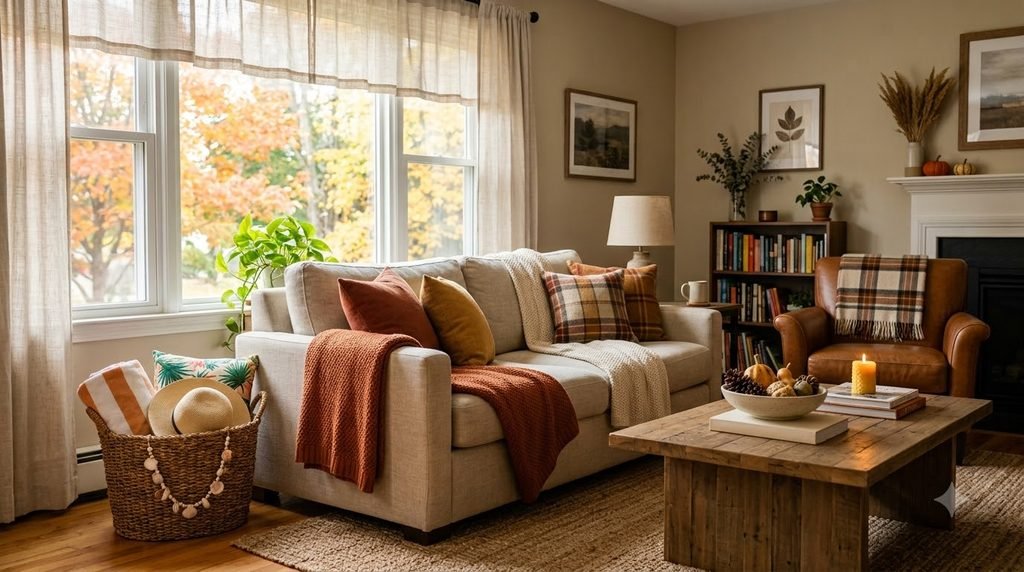
Bright tropical patterns, lightweight throws, beach-inspired accessories, and very cool color combinations may be the easiest places to start.
Try this first:
- Keep your main furniture.
- Keep neutral artwork that works year-round.
- Keep useful baskets and storage.
- Keep decor you genuinely love.
- Remove only the pieces that strongly signal summer.
This gives you a stable foundation before you begin adding fall elements.
You don’t need a new living room for a new season.
2. Remove Only the Most Obvious Summer Elements
A common mistake is treating seasonal decorating like a complete reset.
You don’t need to remove every light-colored item or anything made from natural fibers. Many summer pieces can work beautifully into fall.
Instead, focus on the elements that make the room feel specifically like summer.
For example, you might put away:
- Bright tropical prints
- Beach-themed accessories
- Very lightweight seasonal textiles
- Seashell displays
- Summer-specific decorative objects
- Bright vacation-inspired accents
Keep versatile pieces that can work through multiple seasons.
A neutral linen pillow, woven basket, wooden bowl, or light-colored ceramic vase doesn’t automatically need to disappear in September.
3. Keep a Transitional Layer Between Seasons
Early fall is an in-between season.
The weather may still be warm during the day, while evenings become noticeably cooler. Your living room can reflect that transition instead of jumping directly into winter-like coziness.
Keep some lightweight summer pieces while introducing a few warmer elements.
For example, a lightweight neutral throw can stay on the sofa while you add a textured pillow in a deeper color.
This creates a gradual visual shift.
A simple transition formula:
Summer foundation + warmer texture + deeper accent + softer lighting
You don’t need all four changes on the same day. Add them as the season progresses.
4. Introduce One Warmer Color
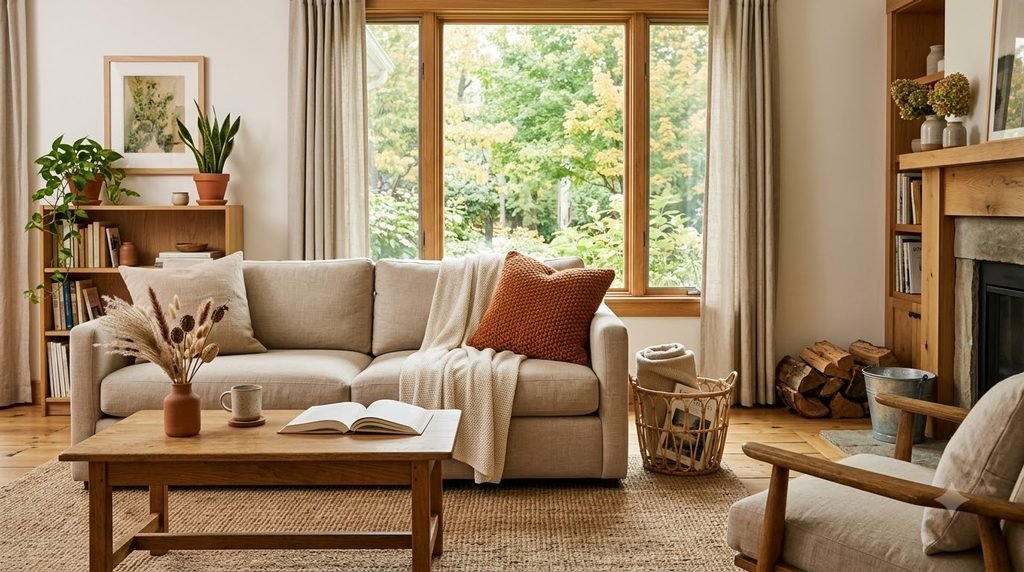
You don’t have to turn your living room orange to make it feel like fall.
In fact, current fall decorating guidance is moving toward more subtle seasonal palettes, including earthy browns, burgundy, olive, muted plum, warm neutrals, and deeper natural tones.
Choose one warmer color that already works with your room.
For example:
- Rust with cream
- Chocolate brown with beige
- Olive with warm white
- Muted plum with taupe
- Terracotta with natural wood
Then repeat that color in two or three small places.
A pillow, throw, vase, or artwork can be enough.
Repeating one color usually looks more intentional than introducing five different fall colors.
5. Swap Lightweight Textiles for Richer Ones
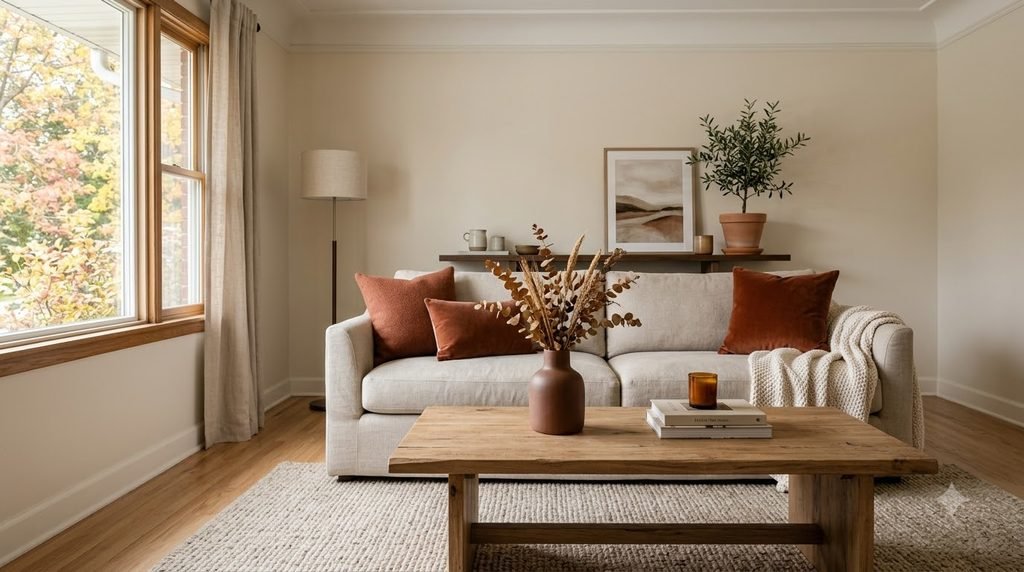
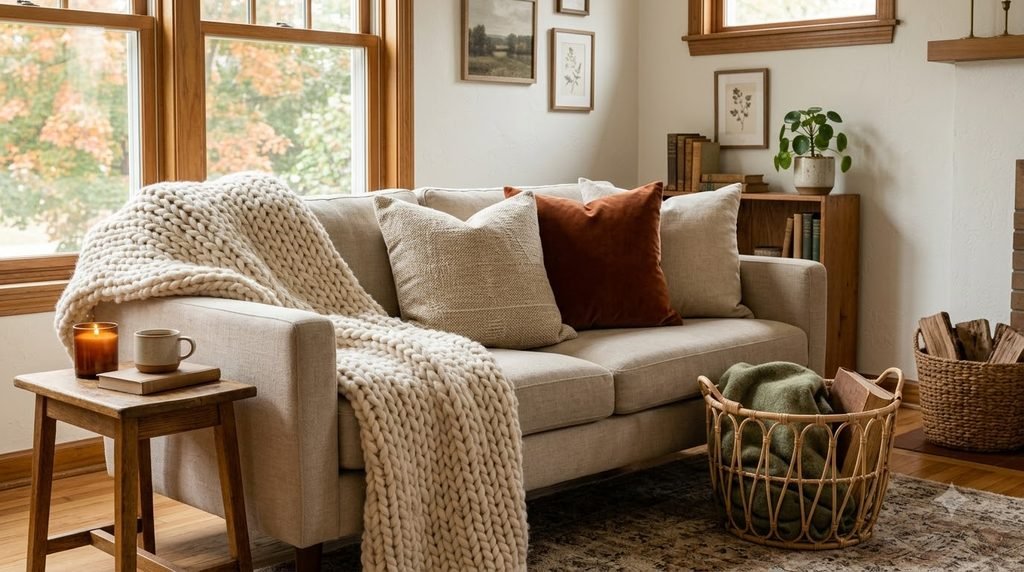
Texture is one of the easiest ways to make a living room feel more appropriate for fall without changing its overall style.
Start with the textiles you touch and see most often.
You might replace a very lightweight throw with a knitted or textured one. Pillow covers can also make a noticeable difference without requiring new pillow inserts.
Current designer coverage continues to emphasize richer textures as a way to create fall warmth without relying heavily on themed decorations.
Consider:
- Knitted throws
- Woven pillows
- Velvet accents
- Heavier cotton
- Wool-like textures
- Textured linen
- Chunkier woven baskets
You don’t need every texture at once.
Choose two or three and let the existing furniture remain the visual foundation.
6. Warm Up the Lighting
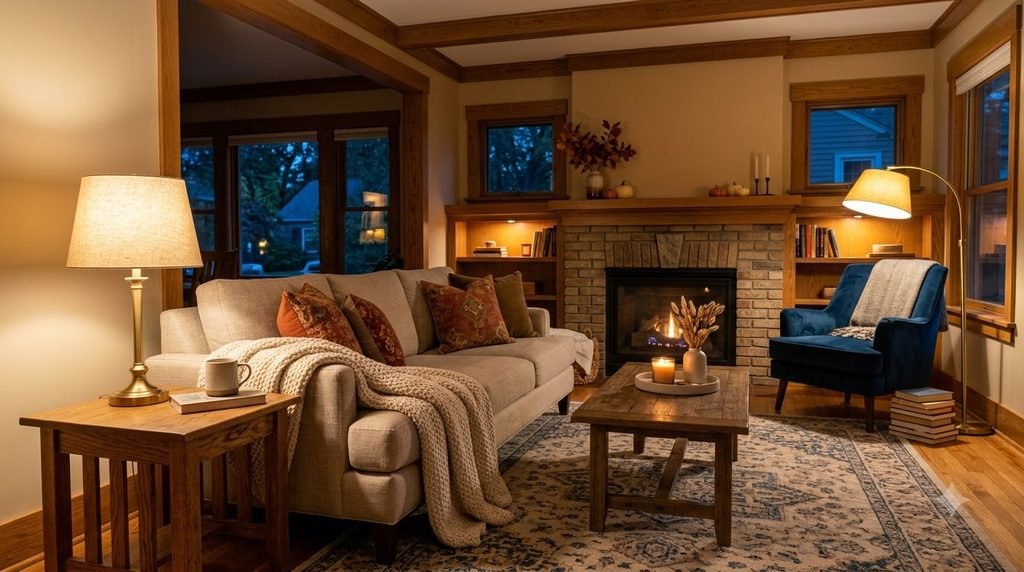
Lighting can change the mood of a living room more dramatically than adding another decorative object.
As evenings become darker earlier, this becomes especially useful.
Instead of relying entirely on one overhead fixture, use smaller sources of light around the room.
A table lamp near a sofa, floor lamp in a reading corner, or small accent lamp on a console can create different pools of light.
Recent fall decorating guidance specifically highlights warmer bulbs, lower lighting, and layered illumination for creating a more intimate atmosphere.
Think about lighting in layers:
- General room lighting
- Task lighting for reading
- Accent lighting for shelves or corners
You don’t need to replace every light fixture.
Sometimes changing the way you use the lights you already have makes the bigger difference.
7. Bring in More Natural Materials
Natural materials can make a room feel warmer without making the seasonal change obvious.
Wood, woven fibers, stone, ceramics, dried branches, and other organic-looking materials work well because they don’t necessarily look “seasonal.”
This is also consistent with current interior design direction toward warmer woods, aged materials, natural stone, and more personalized spaces.
Easy places to introduce natural texture:
- Wooden tray
- Woven basket
- Ceramic vase
- Stone or ceramic bowl
- Wooden picture frame
- Dried branches
- Natural-fiber accent
Choose materials that already make sense with your room instead of adding something simply because it is trending.
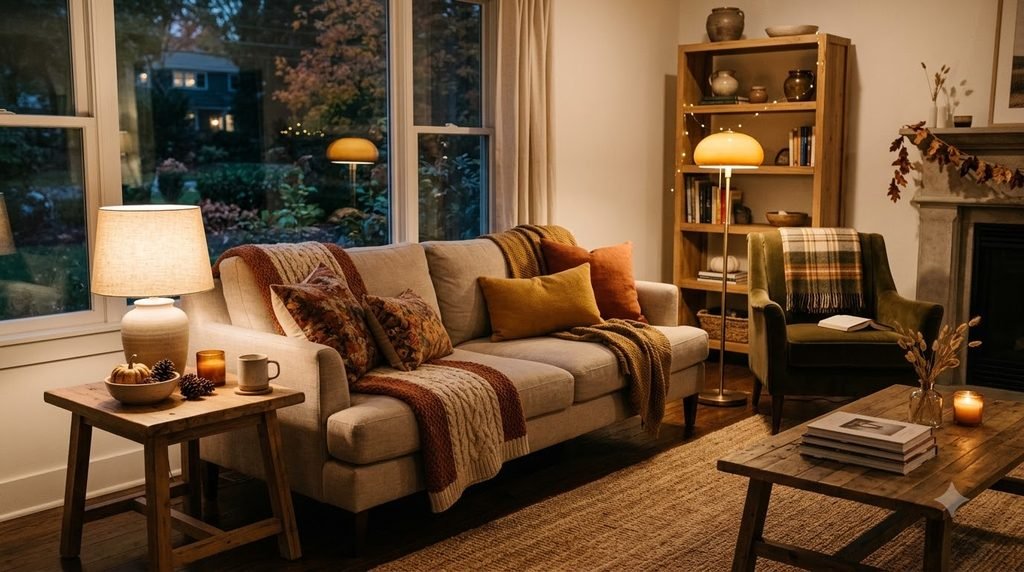
8. Use Wood to Add Fall Warmth
If your living room feels visually cool, wood can be an easy way to introduce warmth.
You don’t need to replace furniture.
Instead, look for smaller pieces already suited to the room:
- Wooden trays
- Side tables
- Picture frames
- Decorative bowls
- Small stools
- Shelving
- Natural wood accessories
If you already have wood furniture, you may not need to add anything.
Simply removing some brighter summer accessories can allow the warmer materials already in the room to stand out more.
9. Create One Fall Focal Point
One intentional seasonal display is often more effective than decorating every surface.
Choose one location that naturally draws attention.
That might be:
- The coffee table
- Fireplace mantel
- Console table
- Bookshelf
- Sideboard
Then create a small grouping using a few compatible elements.
For example, a tray might hold a ceramic vase, a small stack of books, and a natural seasonal element.
The goal is composition rather than quantity.
Current fall styling advice increasingly favors intentional displays and natural elements over filling the room with literal seasonal objects.
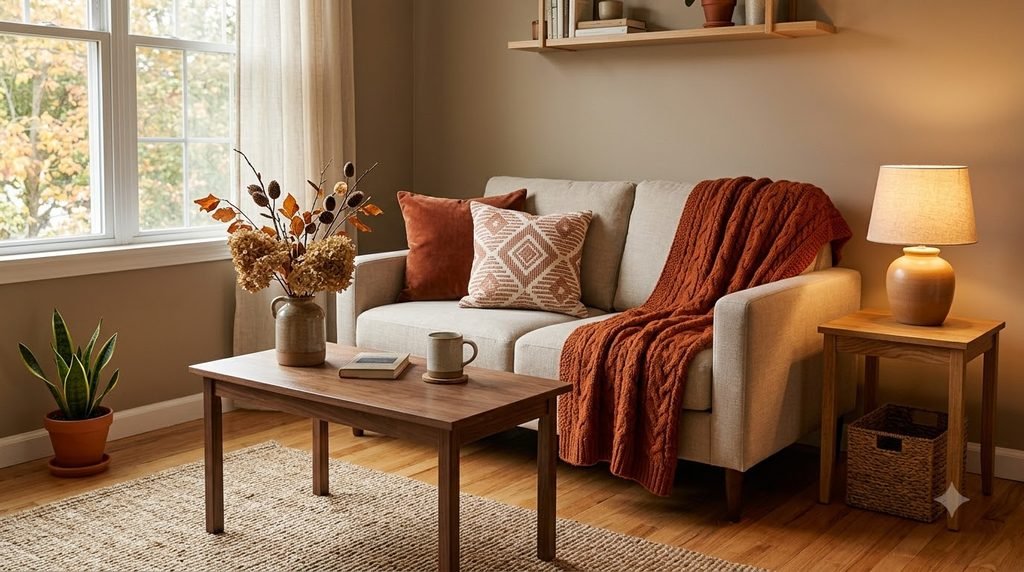
10. Refresh the Coffee Table Without Overdecorating
The coffee table is one of the easiest places to make a seasonal change—and one of the easiest places to create clutter.
Start by removing anything that doesn’t need to stay there.
Then create a simple grouping.
Try:
- A small tray
- One vase or bowl
- A few books
- One natural element
- A candle if appropriate for your household
Leave some empty space.
A coffee table that has room for a mug, remote, book, or everyday use will usually function better than one covered entirely in decorations.
Decor should work around your life, not prevent you from using the furniture.
11. Make a Small Living Room Feel Cozy Without Making It Smaller
A small living room needs a slightly different approach.
Adding too many blankets, pillows, baskets, and decorations can make the room feel visually crowded.
Instead, focus on changes that add warmth without taking up much physical space.
Good options include:
- One textured throw
- One or two seasonal pillow covers
- Warm lighting
- A small natural arrangement
- One deeper accent color
- A compact basket that also provides storage
Keep the floor and major walking paths clear.
If your living room already feels full, remove something before adding something else.
That simple rule can prevent seasonal decorating from turning into clutter.
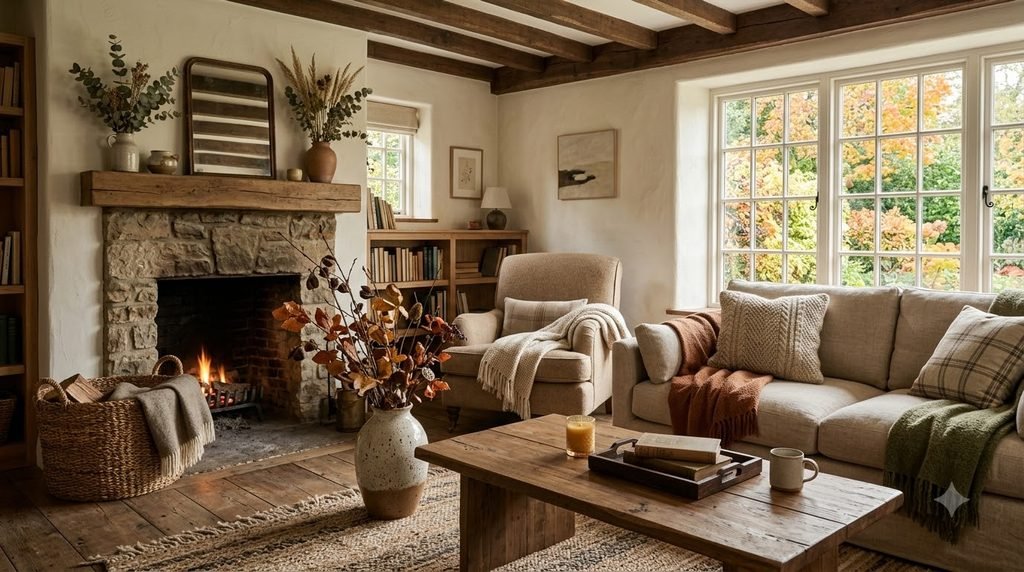
12. Use Art and Accessories to Shift the Season
You don’t necessarily need new artwork for fall.
Instead, look at the smaller decorative elements around the room.
A darker frame, botanical print, vintage-looking object, ceramic piece, or warm-toned book cover can subtly shift the room’s visual balance.
If you have artwork that works across seasons, leave it where it is.
Then use smaller accessories to introduce the seasonal change.
This creates a room that still feels like your home rather than a completely different themed space.
13. Bring Nature Indoors
Natural seasonal elements can make a living room feel like fall without relying on obvious decorations.
Depending on what is available in your area, you might use:
- Dried branches
- Seasonal foliage
- Natural grasses
- Pinecones
- Small bowls of seasonal fruit
- Simple dried flowers
Keep the arrangement restrained.
One branch-filled vase can have more visual impact than several small decorative objects scattered around the room.
Natural elements also work well with neutral interiors because they introduce color and texture without requiring a major palette change.
14. Add Fall Scent Carefully
Scent can influence how a room feels, but it should be treated as an optional layer rather than a requirement.
If your household enjoys fragrance, you might choose a subtle seasonal scent such as:
- Cedar
- Apple
- Vanilla
- Cinnamon
- Amber
You don’t need multiple candles or diffusers throughout the room.
One subtle scent is often enough.
And if anyone in your household is sensitive to fragrance, simply skip this step. You can create a cozy fall atmosphere through lighting, texture, color, and natural materials without using scented products.
15. Know When to Stop Decorating
This may be the most important part of a seasonal living room transition.
Once the room feels warmer and more comfortable, stop adding things.
If you already have:
- A warmer accent color
- Richer textures
- Better evening lighting
- A few natural materials
- One seasonal focal point
you may not need anything else.
A room can stop feeling intentional when every surface has been given a seasonal object.
Current design coverage is increasingly emphasizing authenticity, personalization, and lived-in spaces rather than interiors that look temporarily themed.
Fall should feel like a layer of your home—not a theme taking over your home.
What Should You Keep From Your Summer Living Room?
Not everything needs to be packed away.
Keep pieces that are:
- Neutral
- Functional
- Comfortable
- Made from versatile materials
- Compatible with your fall color palette
- Used regularly
A woven basket, neutral rug, light wood furniture, cream-colored pillows, and simple artwork can often work throughout the year.
The goal is to identify what feels seasonal versus what is simply part of your home’s style.
That distinction can save you both storage space and money.
What Should You Store Before Fall?
Consider storing pieces that strongly communicate summer or no longer work with the room’s cooler-season atmosphere.
These might include:
- Beach-themed accessories
- Seashell displays
- Very bright tropical patterns
- Summer-specific decorative signs
- Extremely lightweight seasonal throws
- Vacation-themed accents
Don’t remove something simply because it is light-colored.
If it works with your room and you still enjoy it, keep it.
Common Summer-to-Fall Living Room Mistakes
Changing everything at once
A complete seasonal makeover can be expensive and unnecessary.
Using too much orange
Fall doesn’t require a single color. Earthy neutrals, brown, olive, burgundy, muted plum, and natural wood can create seasonal warmth too.
Buying decor before checking what you own
You may already have enough pieces to create the look you want.
Adding too many textures
Texture creates warmth, but too many competing materials can make the room feel visually busy.
Ignoring lighting
A beautifully decorated room can still feel cold if the evening lighting is harsh.
Decorating every surface
Leave some empty space. It helps the seasonal pieces you do use feel more intentional.
Forgetting the room’s actual function
If your family uses the coffee table every day, don’t cover it with decorations. If you need clear floor space, don’t sacrifice it for seasonal baskets.
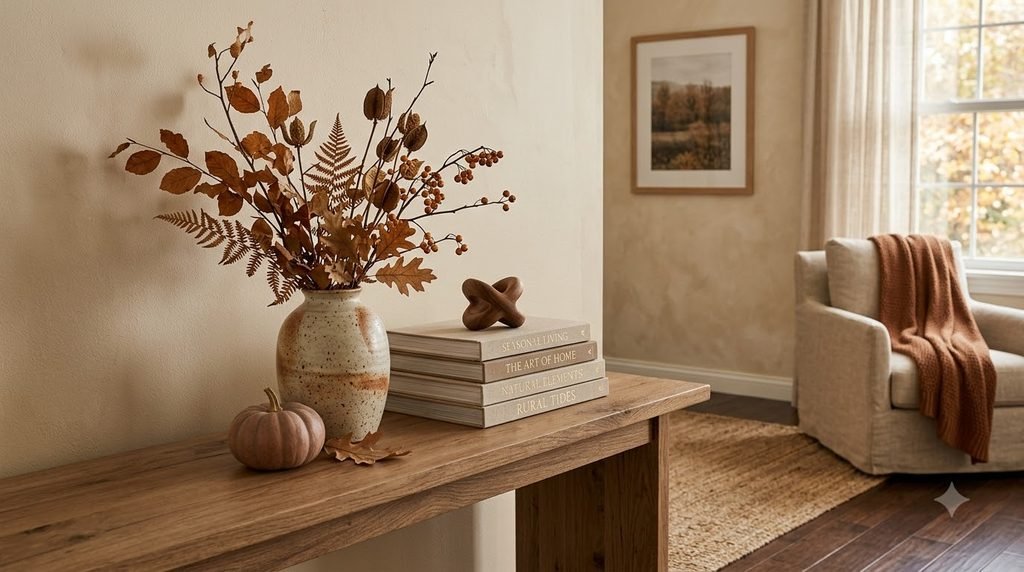
How to Transition a Small Living Room From Summer to Fall on a Budget
You don’t need a large budget to make the seasonal shift.
Start with what you already own.
A simple low-cost order of operations:
1. Declutter
Remove obvious summer-only items and unnecessary accessories.
2. Rearrange
Try moving existing furniture or accessories to improve comfort and flow.
3. Shop your home
Look in bedrooms, storage areas, and other rooms for pieces that could work better in the living room.
4. Change textiles
If you want to buy something, start with a pillow cover or throw rather than a major furniture piece.
5. Adjust lighting
Use existing lamps differently before buying new fixtures.
6. Add one natural element
Branches, foliage, or a simple ceramic arrangement can provide seasonal interest.
This approach keeps the transition affordable and prevents you from accumulating more seasonal storage.
A Simple Summer-to-Fall Living Room Reset
If you want to make the transition in one afternoon, use this order:
Step 1: Remove obvious summer decor
Take out only the pieces that clearly belong to summer.
Step 2: Clear the surfaces
Reset the coffee table, shelves, and other high-traffic areas.
Step 3: Choose one fall color
Pick a color that works with your existing room.
Step 4: Add texture
Bring in one or two richer textiles.
Step 5: Adjust the lighting
Create warmer, lower pools of light where possible.
Step 6: Add natural elements
Use wood, branches, ceramics, or another organic material.
Step 7: Create one seasonal focal point
Choose one area rather than decorating everything.
Step 8: Stop and live with it
Give yourself a few days before deciding whether anything else is actually needed.
That final step matters.
Sometimes a room feels unfinished simply because you’re looking at it immediately after changing it.
Frequently Asked Questions
When should I transition my living room from summer to fall?
Early September is a practical time to begin making gradual changes, especially if your local weather is starting to cool. You don’t need to make the entire transition in one day. Keeping some lightweight pieces accessible can make the room more comfortable during changing temperatures.
How can I make my living room look more like fall without using pumpkins?
Focus on color, texture, lighting, and natural materials. A deeper accent color, textured throw, warm lamp lighting, wooden accessories, or dried branches can create a seasonal feeling without obvious pumpkin decor. Recent designer advice similarly emphasizes subtle seasonal layering over heavily themed decorating.
What colors work for a summer-to-fall living room transition?
Warm neutrals, brown, rust, olive, burgundy, muted plum, cream, and natural wood tones can work well. Choose one or two colors that complement your existing furniture rather than changing the entire palette.
Do I need to replace my summer decor?
No. Many neutral and natural pieces can work throughout the year. Store only items that strongly communicate summer or no longer fit the room’s fall direction.
How do I make a small living room cozy for fall?
Prioritize texture and lighting rather than adding lots of objects. One throw, a couple of pillow covers, warm lighting, and a small natural arrangement can create warmth without taking up much space.
How can I decorate for fall without making my living room look cluttered?
Start by removing unnecessary items before adding seasonal decor. Keep seasonal displays concentrated in one or two areas and leave functional surfaces and walking paths clear.
Final Thoughts
Transitioning your living room from summer to fall doesn’t have to be dramatic.
The most successful changes are often small: removing a few summer-specific pieces, introducing a warmer color, adding richer texture, adjusting the lighting, and bringing in a little natural material.
You can keep most of the furniture and everyday decor you already love.
Instead of asking “What new fall decorations should I buy?”, ask:
“What small changes would make this room feel warmer and more comfortable for the season ahead?”
That question usually leads to a better-looking room, less seasonal clutter, and a transition that feels natural rather than forced.
Related Articles
For readers who want to continue their fall home refresh:
- 15 Fall Home Decor Ideas to Make Your Home Feel Cozy
- 15 Fall Home Decor Trends for 2026 That Are Actually Worth Trying
- How to Prepare Your Home for Fall: A Practical Room-by-Room Checklist
- 31 Fall Home Reset Ideas That Make Your Home Easier to Live In
- 25 Fall Front Porch Decor Ideas to Create a Cozy Welcome
- 17 Things to Declutter in September for a More Organized Home