You don’t need a dedicated library, a large house, or an extra room to create a cozy reading nook.
That little corner beside a window, the empty space next to your bedroom dresser, an awkward living room corner, or even a section of a closet can become a comfortable place to read, relax, and enjoy a few quiet minutes.
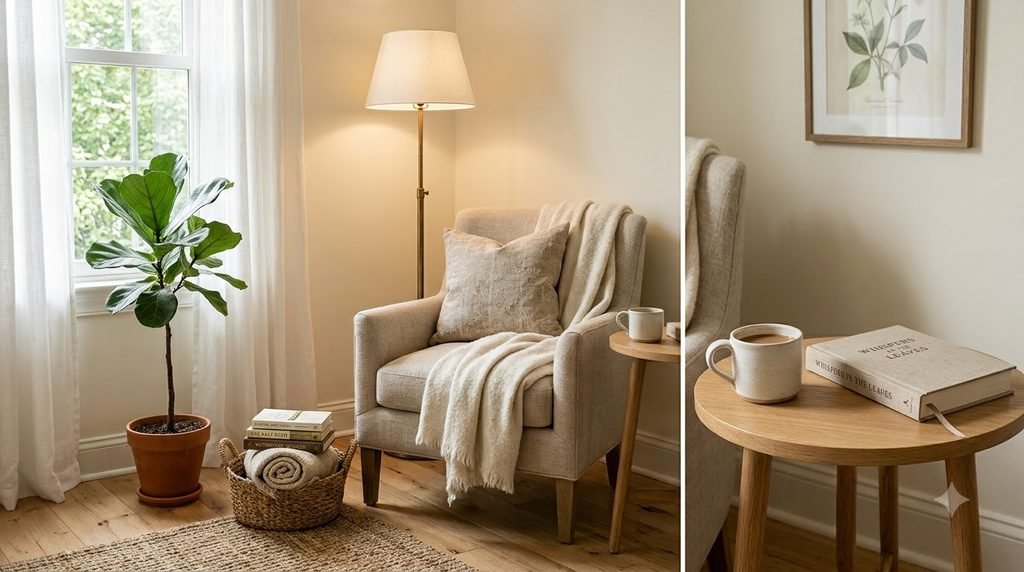
The best reading nook ideas are often surprisingly simple. A comfortable chair, soft lighting, a small table, a blanket, and a few favorite books can completely change an unused part of your home.
Whether you live in a small apartment, a suburban home, or a house with a few awkward spaces that are difficult to decorate, these cozy reading nook ideas can help you turn unused square footage into a space you’ll actually want to use.
What Makes a Reading Nook Feel Cozy?
A cozy reading nook does not need lots of furniture or expensive decor. In fact, too many pieces can make a small corner feel crowded.
A simple reading nook usually needs five things:
- A comfortable place to sit
- Good lighting
- A small surface for a book or drink
- Soft texture such as a throw or pillow
- A little personality
Think about comfort first and decoration second.
Choose furniture that fits the actual size of your corner. Add lighting that makes reading easy in the evening. Then bring in a few details that make the space feel like yours.
A small basket for books, a plant, framed artwork, or a favorite candle can be enough.
The goal is not to create a picture-perfect corner that nobody uses. It is to create a place that makes you want to sit down.
21 Cozy Reading Nook Ideas
1. Create a Reading Nook Beside a Sunny Window
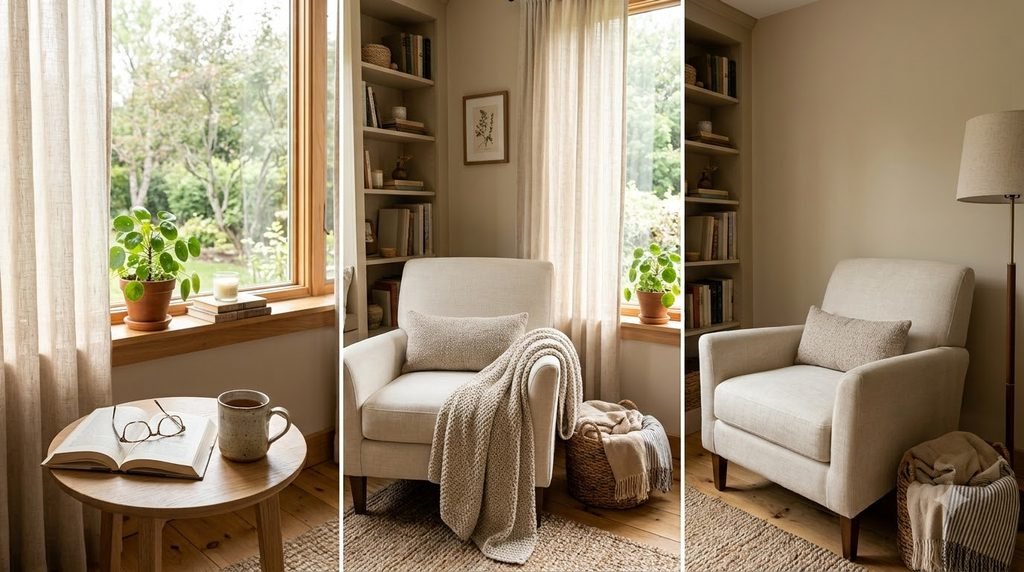
One of the easiest places to create a reading nook is beside a window.
Natural light makes the space feel bright during the day, while the view can make reading feel more relaxing. Place a comfortable accent chair near the window and add a small side table for books, tea, or a reading lamp.
Avoid blocking the window completely. Keeping the area visually open will help a small room feel larger.
A lightweight curtain can also soften the space without taking away too much natural light.
2. Turn an Empty Bedroom Corner Into a Reading Nook
An empty bedroom corner often becomes a place where random items collect.
Instead of filling it with more storage, consider turning it into a quiet reading area.
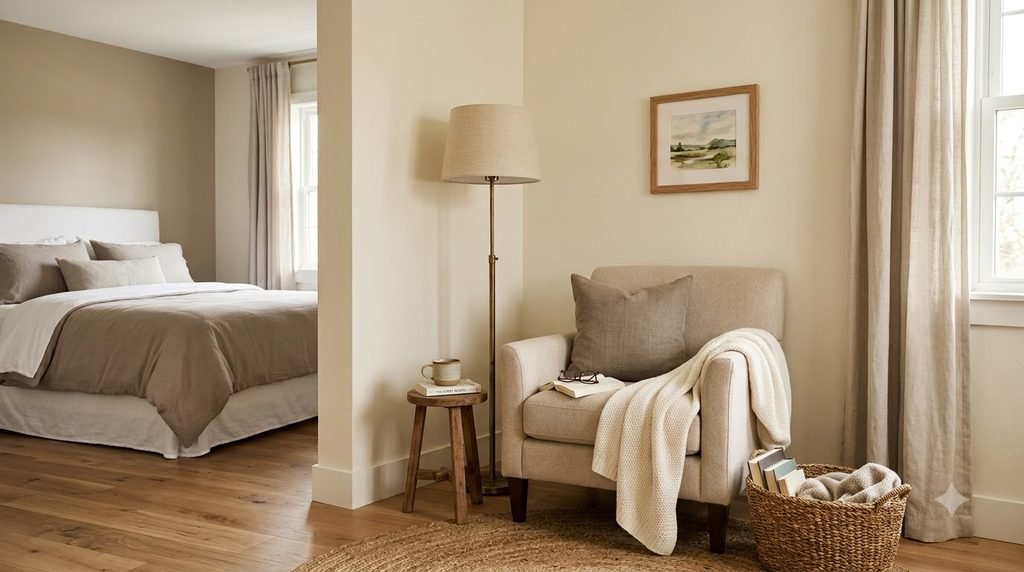
A compact upholstered chair, small floor lamp, and soft throw can create a comfortable corner without taking up much room.
This works especially well in bedrooms where there is enough floor space beside the bed but not enough room for a full seating area.
Keep the styling simple so the nook feels calm rather than cluttered.
3. Create a Small Living Room Reading Corner
You do not need a separate room for reading.
An unused corner of the living room can become a dedicated reading spot while still working with your existing furniture.
Try placing a chair slightly away from the main sofa and orienting it toward a window, bookshelf, or floor lamp.
A small reading corner can actually make a living room feel more layered and functional.
For another small-space seating idea, see our guide to choosing a swivel recliner for small spaces.
4. Use a Slim Reading Chair in a Tiny Corner
Large armchairs can quickly overwhelm a small room.
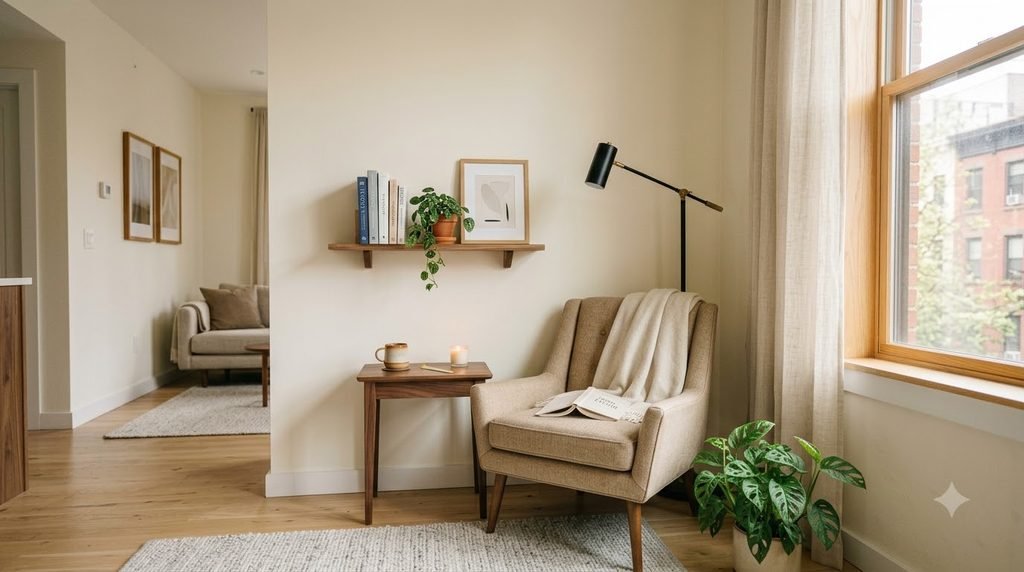
Look for a chair with a relatively narrow footprint and enough back support for longer reading sessions. Measure the available space before buying anything.
Remember to account for the area around the chair too. You still need enough room to walk comfortably.
A compact chair paired with a narrow table can create a reading nook even in a surprisingly small corner.
5. Turn a Closet Into a Cozy Reading Nook
A closet reading nook can be an excellent solution when floor space is limited.
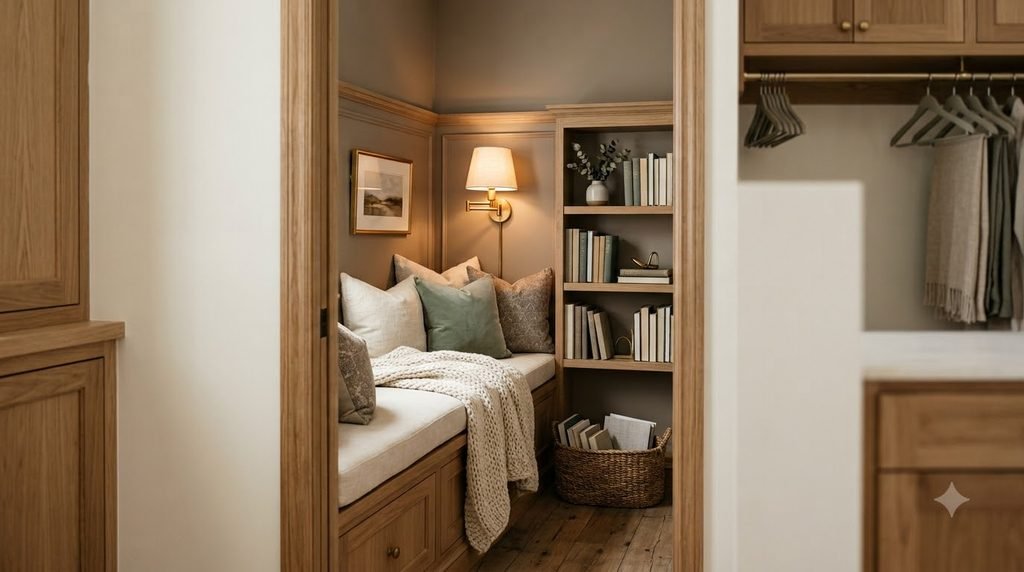
If you have an unused closet, consider removing unnecessary storage and creating a small seating area with cushions, pillows, a reading light, and a few shelves.
You do not need a major built-in renovation.
Even a simple setup can work beautifully when the space has enough room to sit safely and comfortably.
This idea is particularly appealing for adults who want a private little escape without dedicating an entire room to reading.
6. Create an Under-the-Stairs Reading Nook
The space beneath a staircase is often difficult to decorate because of its unusual shape.
Instead of trying to force standard furniture into it, use the shape of the space to your advantage.
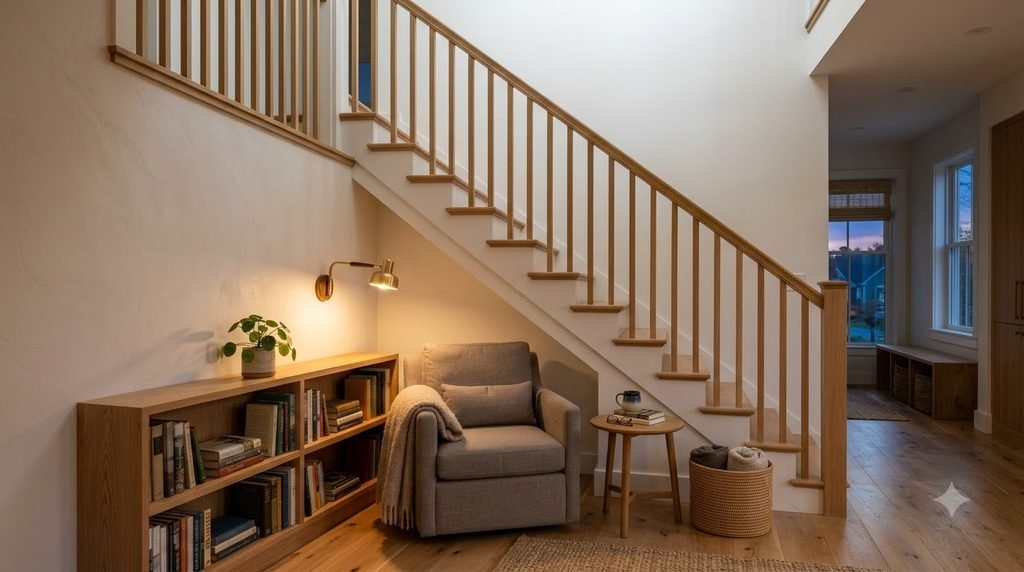
A small chair or built-in bench can fit naturally beneath the stairs. Add a wall-mounted light, a small shelf, or a basket for books.
This can turn what was once dead space into one of the most interesting corners of the home.
7. Turn a Window Bench Into a Reading Spot
Already have a window seat?
Make it your reading nook.
Add a comfortable cushion, two or three pillows, and a soft throw. Keep a basket nearby for books so the seat remains relatively clear.
If the window receives strong afternoon sunlight, lightweight curtains or shades can make the area more comfortable.
A window bench is especially useful because it combines seating and storage without requiring much additional furniture.
8. Make a No-Renovation Reading Nook
You do not need built-ins or a home renovation project to create a reading nook.
Start with items you already own.
Try moving an accent chair into an underused corner. Add a floor lamp from another room, bring over a small side table, and use an existing throw blanket.
Before buying anything, shop your own home.
You may already have everything necessary to create the basic setup.
This approach is also a great way to test whether you will actually use the space before spending money on new furniture.
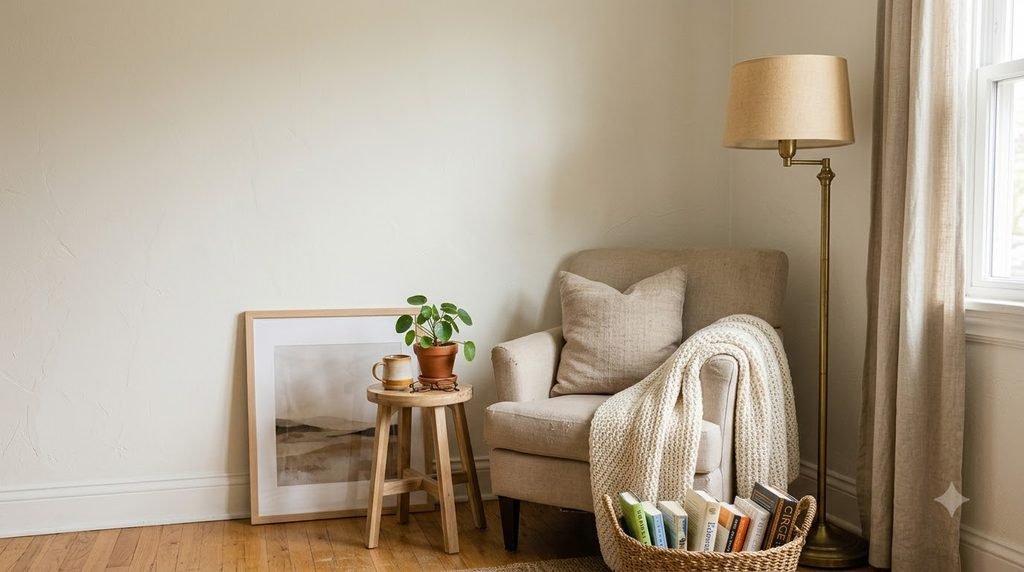
9. Add a Small Bookshelf Beside the Chair
A reading nook becomes even more functional when your favorite books are within reach.
A narrow bookshelf can work well beside the chair, but you don’t necessarily need a traditional bookcase.
You can use:
- A small ladder shelf
- Floating shelves
- A narrow vertical bookcase
- A compact cube shelf
- A small side table with lower storage
Keep only your current favorites or most-used books nearby.
Too many books in a tiny corner can quickly make the area feel crowded.
10. Create a Warm Neutral Reading Nook
For a calm and timeless look, use warm neutral colors.
Think cream, beige, oatmeal, soft brown, warm white, and natural wood.
Layer different textures instead of relying on lots of colors.
For example, combine a linen or upholstered chair with a knitted throw, a woven basket, and a wooden side table.
This creates warmth while keeping the visual palette simple.
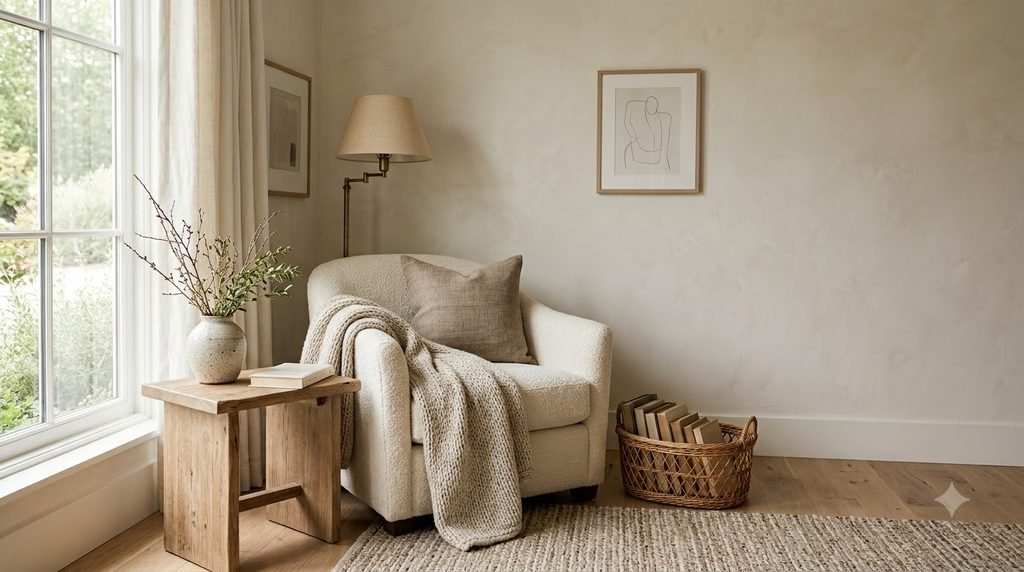
11. Try a Moody and Cozy Reading Corner
Not every reading nook needs to be light and airy.
Darker colors can create a cozy, cocoon-like atmosphere that works especially well in evening reading spaces.
Consider deep green, navy, charcoal, chocolate brown, or muted plum.
You don’t have to paint the entire room. A darker accent wall, lamp shade, artwork, or throw can create the same feeling in a smaller way.
Add warm lighting to prevent the darker colors from making the corner feel cold.
12. Create a Floor-Cushion Reading Nook
A floor cushion can be an inexpensive alternative to a traditional reading chair.
This can work particularly well in casual homes, children’s rooms, bedrooms, or small apartments.
Add a large floor cushion, a back cushion, a soft rug, and a nearby basket for books.
The advantage is flexibility. You can move the cushions when you need the floor space for another purpose.
13. Add a Small Side Table for Books and Coffee
A side table does more than make a reading nook look finished.
It gives you a place for the things you actually use.
A compact table can hold:
- Your current book
- Reading glasses
- A cup of coffee or tea
- A small lamp
- A candle
- Your phone
Choose the smallest table that comfortably does the job.
This same idea of giving everyday items a defined zone works well throughout a small home. For example, a compact coffee setup can keep morning essentials organized without taking over valuable counter space.
14. Create a Bedroom Reading Nook With Soft Lighting
If you like reading before bed, a bedroom reading nook can be especially practical.
Place a chair near a wall or corner where it won’t interfere with the bed or walking path.
Then add a warm floor or table lamp rather than depending entirely on the room’s overhead light.
Soft lighting immediately changes the feeling of a reading corner.
Choose a lamp with a shade that directs comfortable light toward your book without creating glare.
15. Use a Narrow Wall for a Reading Corner
A narrow wall doesn’t have to remain empty.
A slim chair, wall-mounted sconce, small artwork, and tiny shelf may be all you need.
This approach works particularly well in apartments and smaller bedrooms where every inch matters.
Think vertically rather than trying to spread everything across the floor.
A wall shelf can hold a few books, while the floor remains open and easier to move around.
16. Create a Farmhouse-Inspired Reading Nook
For a relaxed farmhouse look, combine natural materials and comfortable textures.
Try:
- A neutral upholstered chair
- Natural wood
- Woven baskets
- A soft plaid throw
- Simple framed artwork
- A small plant
Avoid filling the space with too many decorative farmhouse signs or accessories.
A few natural, useful pieces usually create a more comfortable result than a heavily themed corner.
17. Make a Minimalist Reading Nook
Minimalist doesn’t mean boring.
The key is choosing fewer pieces and making each one useful.
Start with a comfortable chair, a simple lamp, and one small table.
Then add one or two personal touches such as a favorite book, small plant, or framed print.
Leaving some empty space around the nook will make the area feel calmer.
This approach is especially useful in small rooms because visual simplicity can make the available space feel more open.
18. Create a Cozy Fall Reading Nook
Fall is a natural time to make a reading nook feel warmer.
Instead of covering the space in seasonal decorations, focus on comfort.
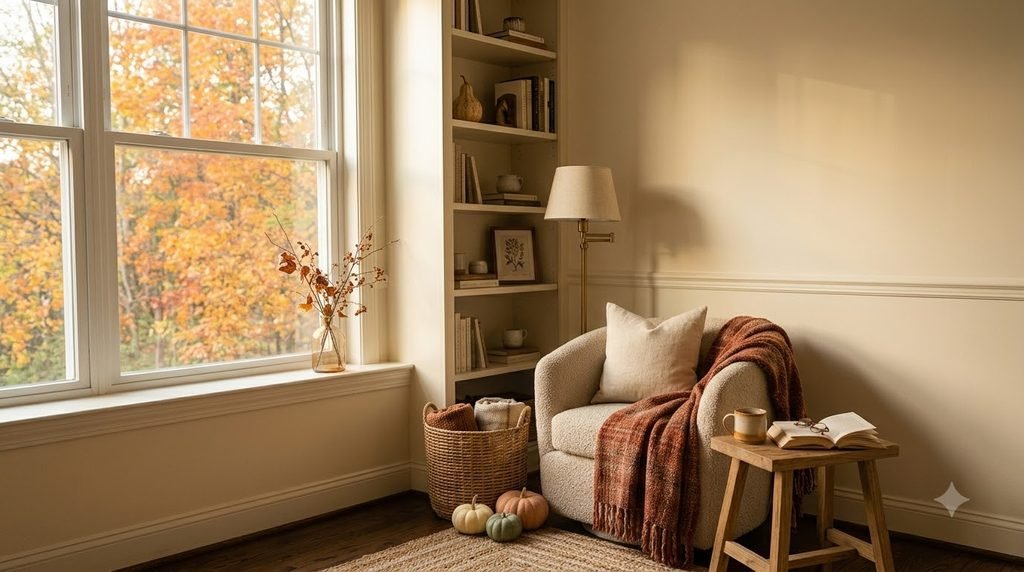
Add a thicker throw blanket, warmer-toned pillow, soft lighting, and perhaps a small arrangement of branches or dried foliage.
Colors such as warm brown, cream, olive, muted rust, and deep plum can create an autumn feeling without making the corner look overly themed.
For more ideas on creating a warm seasonal atmosphere, see our guide to fall home decor trends for 2026.
19. Make a Renter-Friendly Reading Nook
Renters can create a beautiful reading nook without permanent changes.
Choose freestanding furniture and avoid unnecessary wall modifications.
A floor lamp can replace a hardwired light. A freestanding bookshelf can replace built-in shelving. Removable artwork or leaning frames can add personality without creating a major installation project.
The best renter-friendly reading nook is one that can be packed up and moved to another room or home later.
20. Turn an Awkward Corner Into a Reading Retreat
Every home has at least one awkward corner.
It may be too narrow for a sofa, too far from the main furniture arrangement, or shaped in a way that makes normal decorating difficult.
Instead of trying to hide it, give the corner a purpose.
Measure the area first.
Then choose furniture that matches the proportions of the space. A narrow chair, compact lamp, small table, and artwork can make an awkward corner look intentional.
Sometimes the best decorating solution is simply giving an underused area a clear function.
21. Create a Budget-Friendly Reading Nook With Things You Already Own
You don’t need a shopping list to create a cozy reading nook.
Start with what you already have.
Move a comfortable chair into an unused corner. Bring in a lamp from another room. Use a basket you already own for books. Add a pillow and throw from your sofa or bedroom.
Then step back and see what is actually missing.
Maybe the corner needs a small table.
Maybe the lighting isn’t good enough.
Maybe the chair isn’t comfortable.
Solve the actual problem instead of buying accessories simply because they look good in a styled photo.
That approach can save money and prevent another unused collection of decor from building up.
How to Make a Small Reading Nook Feel Bigger
When space is limited, the layout matters as much as the decor.
Start by choosing appropriately sized furniture. An oversized chair may look comfortable, but if it blocks a walkway or makes the room feel crowded, it may not be the right choice.
Use vertical space whenever possible.
A wall shelf takes up much less floor area than a large bookcase. A floor lamp can provide lighting without requiring another table. A narrow side table can replace a bulky cabinet.
Keep the floor around the chair relatively open.
You should also avoid filling every surface with books and decorative objects. A little empty space helps the reading nook feel more intentional.
If the room already contains a lot of collections or decorative items, consider creating a clearly defined display rather than spreading everything around the space. Our guide on displaying collections without making your home feel cluttered has additional ideas for keeping small displays organized.
Reading Nook Essentials
A reading nook can be simple, but a few essentials make it more comfortable.
Comfortable seating
This is the most important part.
Choose a chair or bench that supports your preferred reading position. Think about seat depth, back support, and how long you normally sit.
Good lighting
Natural light is wonderful during the day, but you will still need artificial lighting after sunset.
A floor lamp, table lamp, or appropriate wall light can make evening reading much easier.
Small surface
You don’t need a full-size table.
A small side table or stool may be enough for your book, drink, glasses, or phone.
Soft textures
A throw blanket and pillow can make a basic chair feel much more inviting.
Book storage
Keep storage proportional to the space.
You only need enough nearby storage for the books you are currently reading or regularly reaching for.
How to Create a Reading Nook on a Budget
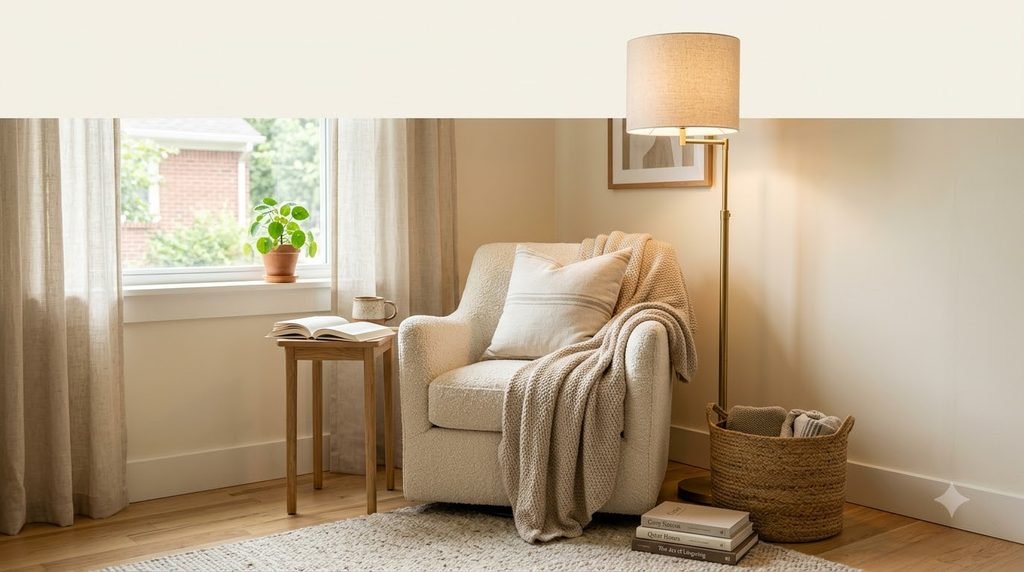
The easiest way to save money is to start with what you already own.
Before buying anything, look around your home for a comfortable chair, spare lamp, basket, pillow, throw, stool, bookshelf, or small table.
You can also repurpose furniture.
A small stool can become a side table. An existing basket can become book storage. A spare wall shelf can hold your current reading collection.
Once the basic nook is working, live with it for a few days.
You’ll quickly notice what is missing.
Maybe you need better lighting. Maybe you need a place for your coffee. Maybe the chair isn’t actually comfortable enough.
Buy only those things.
This makes the decorating process more intentional and keeps the reading nook from becoming another place where unnecessary stuff accumulates.
Frequently Asked Questions
What is the best place for a reading nook?
The best location is usually a quiet corner that has enough room for comfortable seating and adequate lighting. A window, bedroom corner, living room corner, unused hallway section, or under-stairs area can all work.
How much space do you need for a reading nook?
A reading nook can be surprisingly small. The exact amount depends on the chair and layout, but you generally need enough space for the seat, a comfortable walkway, and whatever lighting or small table you plan to use.
How do you make a reading nook in a small bedroom?
Choose a compact chair and position it in an unused corner without blocking the bed, closet, or main walkway. Add one light source, a small table if space allows, and a soft throw or pillow.
How do you create a reading nook without a window?
Focus on lighting and comfort. Use a warm floor or table lamp, comfortable seating, soft textures, and a few personal details to make the area feel inviting even without natural light.
What should every reading nook have?
At minimum, aim for comfortable seating and good reading light. Everything else—bookshelves, side tables, plants, artwork, blankets, and decorative accessories—can be added according to your space and budget.
How can I make a reading nook cozy on a budget?
Use furniture and decor you already own before buying anything new. A chair, lamp, blanket, pillow, basket, and a few books may be enough to create a comfortable reading corner.
Final Thoughts
A cozy reading nook doesn’t have to be complicated.
Sometimes the most inviting reading space is simply an unused corner with a comfortable chair, warm lighting, a soft blanket, and a few books you genuinely love.
Look around your home before deciding that you need more space. That awkward corner, empty bedroom wall, window seat, closet, or unused area beneath the stairs may already have everything you need to create a peaceful little retreat.
Start small.
Choose the location, make it comfortable, add useful lighting, and decorate only as much as the space needs.
The result doesn’t need to look perfect.
It just needs to make you want to sit down, open a book, and stay awhile.