A pantry can make everyday cooking much easier—until it becomes difficult to find anything inside it.
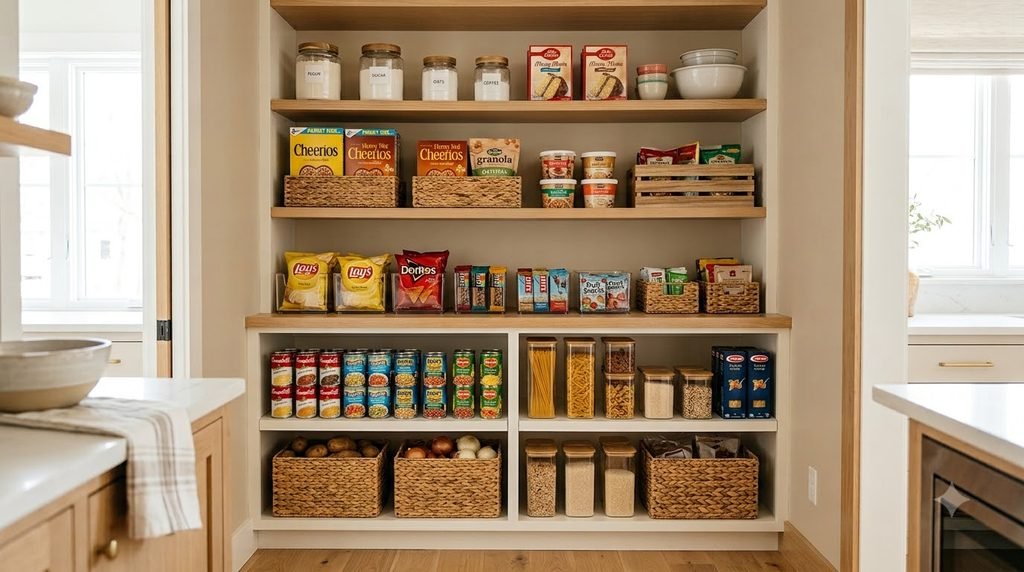
Half-used bags, cereal boxes, canned foods, snacks, baking supplies, spices, and extra groceries can quickly turn a pantry into a crowded storage space. When everything is mixed together, it’s harder to see what you already have and easier to buy duplicates.
The good news is that you don’t need a huge walk-in pantry or expensive custom storage to create a system that works.
The best pantry organization ideas focus on visibility, easy access, and simple categories that fit the way your household actually uses the kitchen.
Here are 15 practical ways to organize your pantry and make everyday cooking easier.
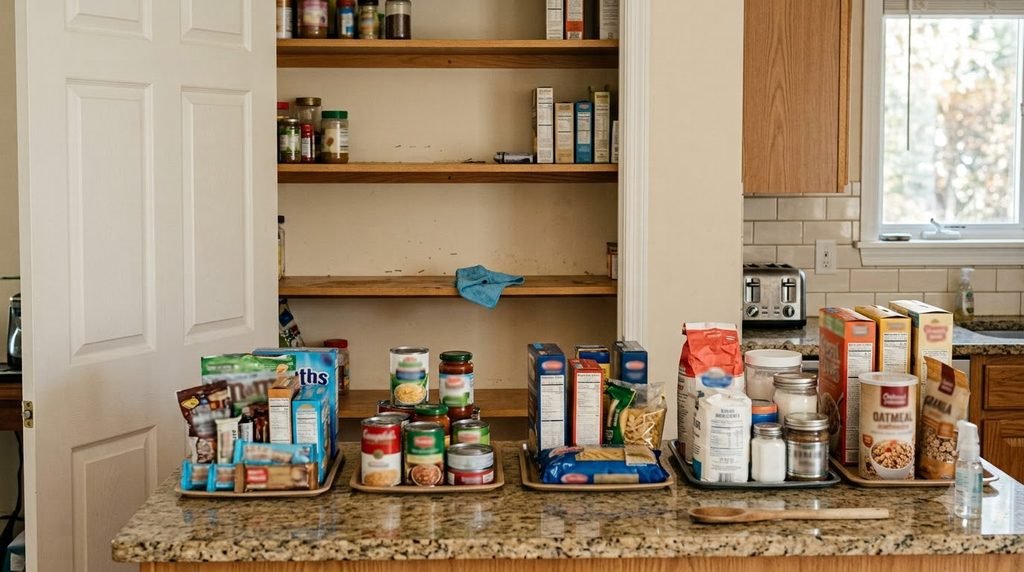
1. Empty the Pantry Before You Organize It
Before adding baskets, bins, or shelves, take everything out.
This may seem like extra work, but it gives you a much better picture of what you’re actually storing.
As you empty the pantry, separate items into simple groups:
- Snacks
- Breakfast foods
- Baking supplies
- Canned goods
- Pasta and grains
- Spices
- Cooking ingredients
- Backstock
Check expiration dates and remove anything that is expired or no longer useful.
Starting with an empty pantry also makes it easier to clean the shelves before putting everything back.
2. Create Pantry Zones
One of the easiest ways to make a pantry easier to use is to create zones.
Instead of organizing items only by container size, group them according to how you use them.
For example:
Breakfast Zone: Cereal, oatmeal, pancake mix
Snack Zone: Crackers, granola bars, chips
Baking Zone: Flour, sugar, baking powder
Dinner Zone: Pasta, rice, sauces
Backstock Zone: Extra packages and unopened items
Professional organizers commonly recommend creating zones based on household routines rather than simply making everything look uniform.
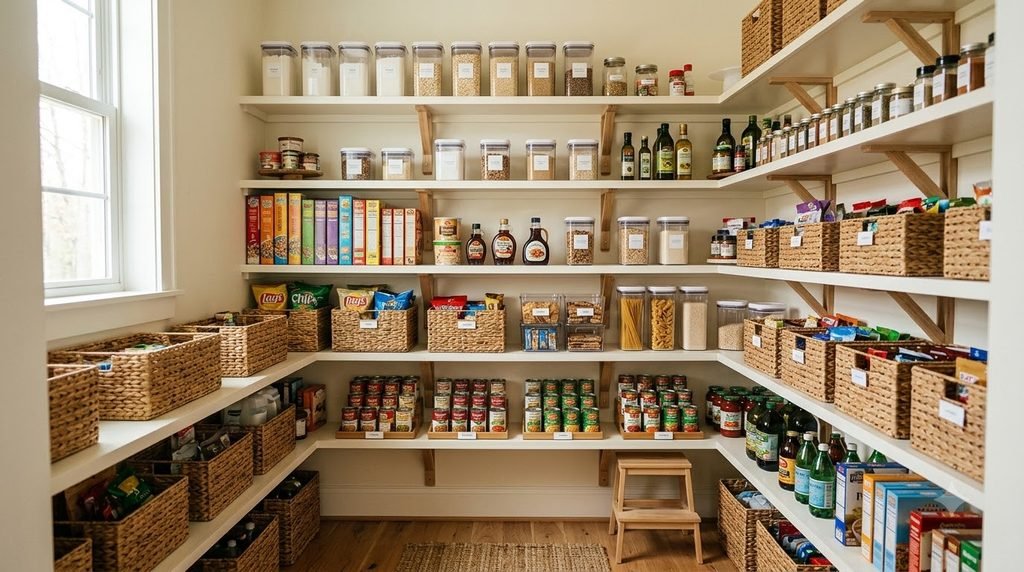
3. Keep Everyday Foods at Eye Level
Not every pantry item needs to be equally accessible.
Keep foods you reach for every day around eye level.
This might include:
- Cereal
- Coffee
- Snacks
- Pasta
- Frequently used ingredients
- Breakfast foods
Less frequently used items can go on higher shelves.
This simple arrangement makes the pantry easier to navigate because the products you use most are immediately visible.
4. Use Clear Containers for Frequently Used Dry Foods
Clear containers can make it easier to see how much of a frequently used ingredient remains.
They’re particularly useful for foods such as:
- Rice
- Pasta
- Flour
- Sugar
- Cereal
- Oats
- Baking ingredients
You don’t have to transfer everything into matching containers.
Start with the foods that are frequently used, difficult to store in their original packaging, or easy to forget about.
The goal is better visibility—not creating a picture-perfect pantry.
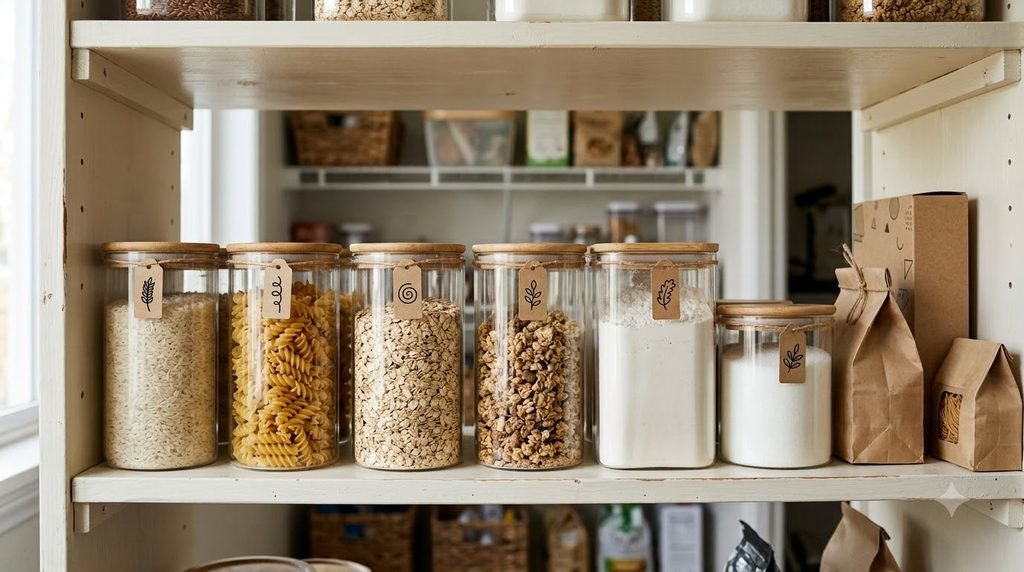
5. Use Baskets to Group Similar Items
Baskets can help contain smaller packages that would otherwise spread across a shelf.
Try using separate baskets for:
- Snacks
- Baking supplies
- Kids’ foods
- Extra condiments
- Packaged meals
- Backstock
A basket also makes it easier to pull an entire category forward when you need it.
Choose storage containers that are easy to lift and clean.
6. Make Better Use of Vertical Space
Look at the space between your pantry shelves.
If there is a lot of unused vertical room, consider adding shelf risers or another way to create a second storage level.
Vertical organization can help you see items that would otherwise disappear behind taller containers.
This is particularly helpful for canned goods, jars, small boxes, and shorter packages.
7. Organize Deep Pantry Shelves
Deep shelves can create one of the biggest pantry problems: items disappear into the back.
Instead of pushing everything toward the rear, create accessible sections.
You can use:
- Pull-out baskets
- Shallow bins
- Turntables for suitable items
- Categorized containers
- Clearly defined zones
The objective is to make the back of the shelf accessible without having to remove everything in front of it.
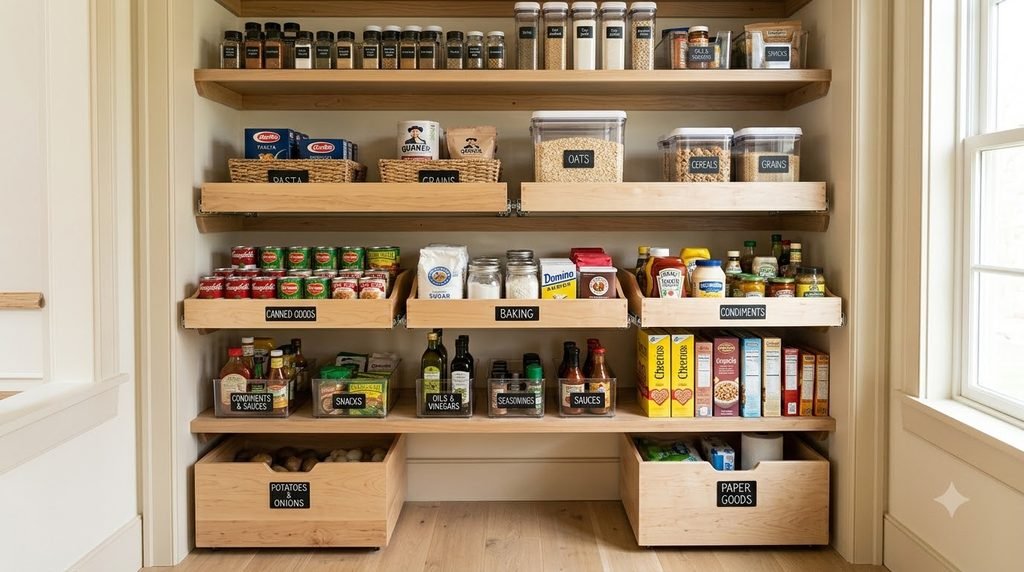
8. Give Canned Goods Their Own Section
Canned foods can quickly become difficult to manage when they’re mixed with everything else.
Create a dedicated canned-food area.
You can organize cans by type:
- Vegetables
- Beans
- Soups
- Tomatoes
- Fruit
- Other pantry staples
Keep newer cans behind older ones when practical so older items are easier to use first.
A simple system can help reduce forgotten food and make meal planning easier.
9. Create a Dedicated Snack Area
If your household goes through a lot of snacks, give them their own zone.
You can separate:
Everyday snacks
from
Occasional treats
and
Lunchbox items
This can be especially helpful for busy families because everyone knows where snacks belong.
A low, accessible basket can also make it easier for children to choose items without disrupting the rest of the pantry.
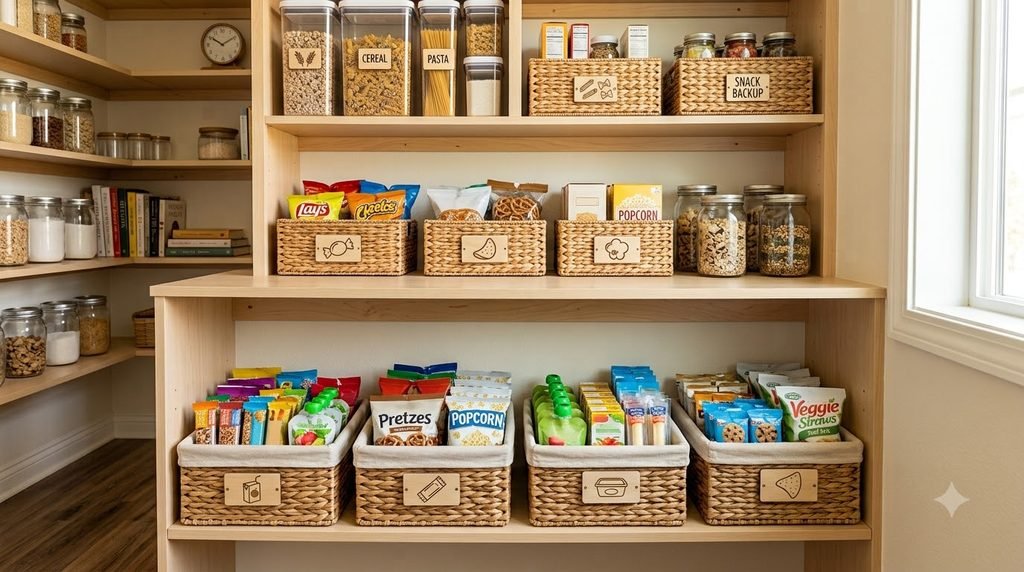
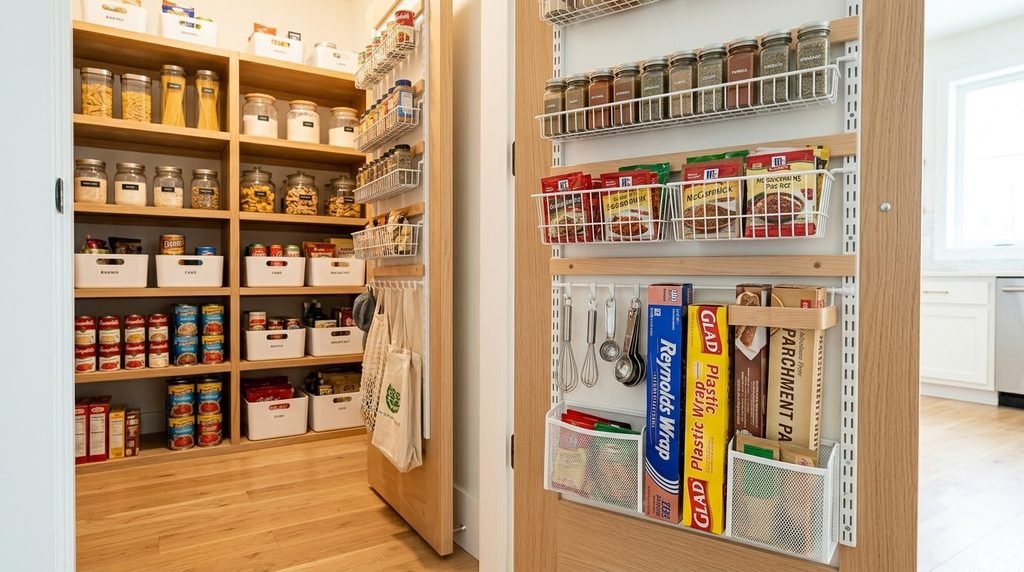
10. Use the Pantry Door
The back of the pantry door can provide valuable storage space.
Depending on the door and available clearance, you can use it for lightweight items such as:
- Spices
- Small packets
- Snack bags
- Measuring tools
- Wraps
- Small kitchen accessories
Before adding door storage, make sure it doesn’t interfere with shelves or prevent the pantry door from closing properly.
11. Label Only What Needs Labeling
Labels can be helpful, but you don’t need to label every container.
Focus on categories that are easy to confuse.
For example:
- Baking
- Snacks
- Pasta
- Grains
- Backstock
- Pet supplies
Simple labels can help family members return things to the correct location.
The goal is to make the system easier to maintain—not create more work.
12. Create a Backstock Area
If you buy certain foods in bulk, give those extras a dedicated place.
Keep unopened packages separate from the items currently being used.
For example:
Active: One box of cereal
Backstock: Extra cereal boxes
This prevents your everyday shelves from becoming overcrowded.
It also makes it easier to see what you already have before shopping.
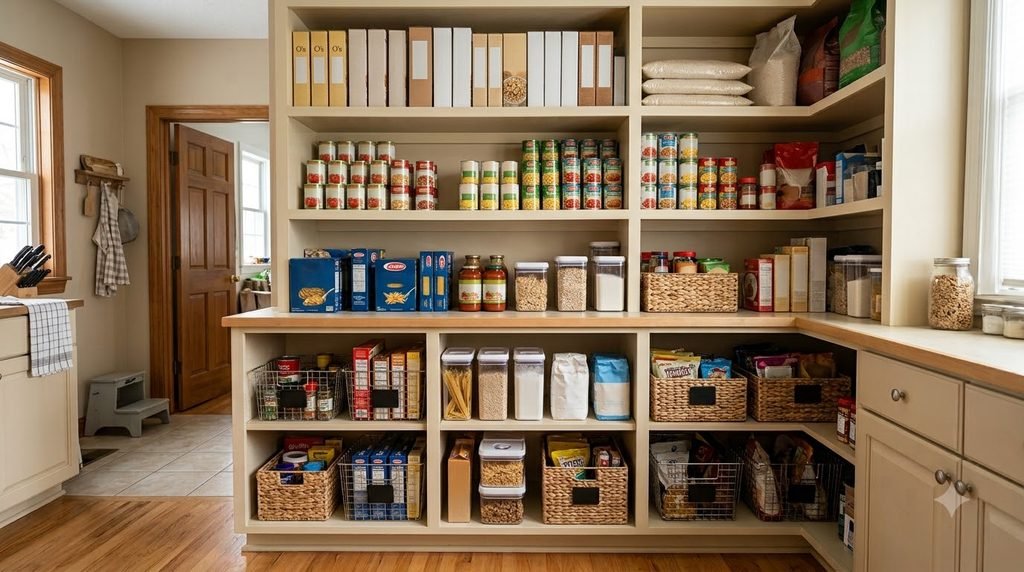
13. Use the Floor Wisely
If your pantry has floor space, don’t automatically fill it with random boxes.
Use the bottom area for heavier or larger items that are awkward to place on shelves.
Depending on your household, this could include:
- Bulk food
- Large containers
- Small appliances
- Extra paper products
- Pet food
Keep the main walking area clear if you have a walk-in pantry.
14. Do a Pantry Reset Before Grocery Shopping
One of the best ways to maintain pantry organization is to do a quick reset before a major grocery trip.
Spend a few minutes checking:
- What is running low?
- What do you already have?
- What needs to be used soon?
- Are there duplicate items?
- Are any shelves becoming cluttered?
This simple habit can help prevent overbuying and make your grocery list more accurate.
It also keeps the pantry from gradually becoming disorganized again.
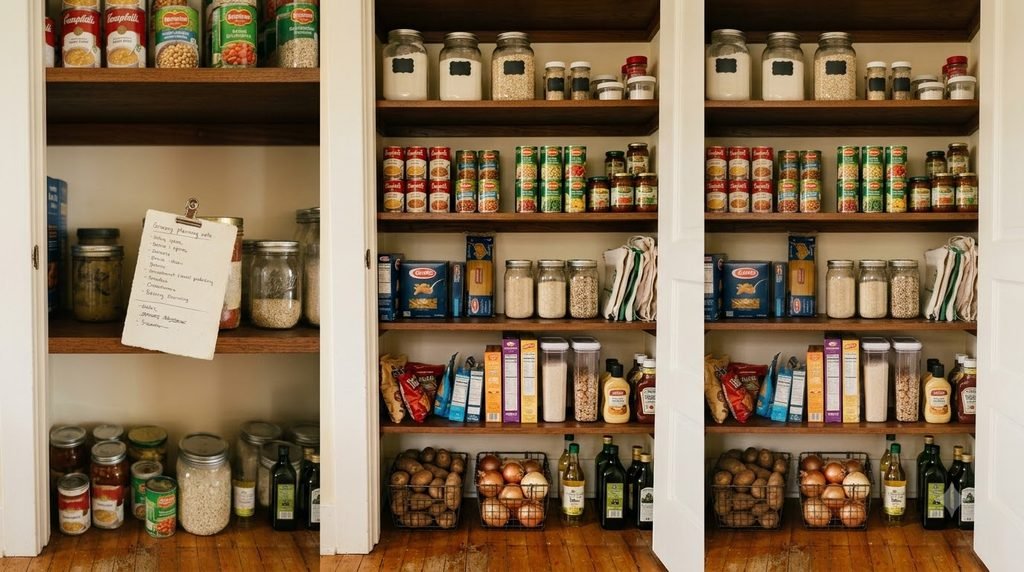
15. Organize the Pantry Around Your Family’s Habits
There is no single pantry organization system that works for every household.
A family with young children will use a pantry differently from a couple who cooks mostly from scratch.
Think about what your household actually reaches for.
If you make coffee every morning, create a coffee zone.
If your children frequently pack lunches, create a lunchbox and snack zone.
If you bake every weekend, keep baking ingredients together.
The most successful organization system is the one that supports your everyday habits.
Small Pantry Organization Ideas
You don’t need a walk-in pantry to create an organized food-storage area.
For a small pantry, prioritize:
- Vertical storage
- Narrow bins
- Door storage
- Stackable containers
- Shelf risers
- Clear categories
- Frequently used items at eye level
Avoid filling a small pantry with oversized containers.
Every organizer should solve a specific storage problem.
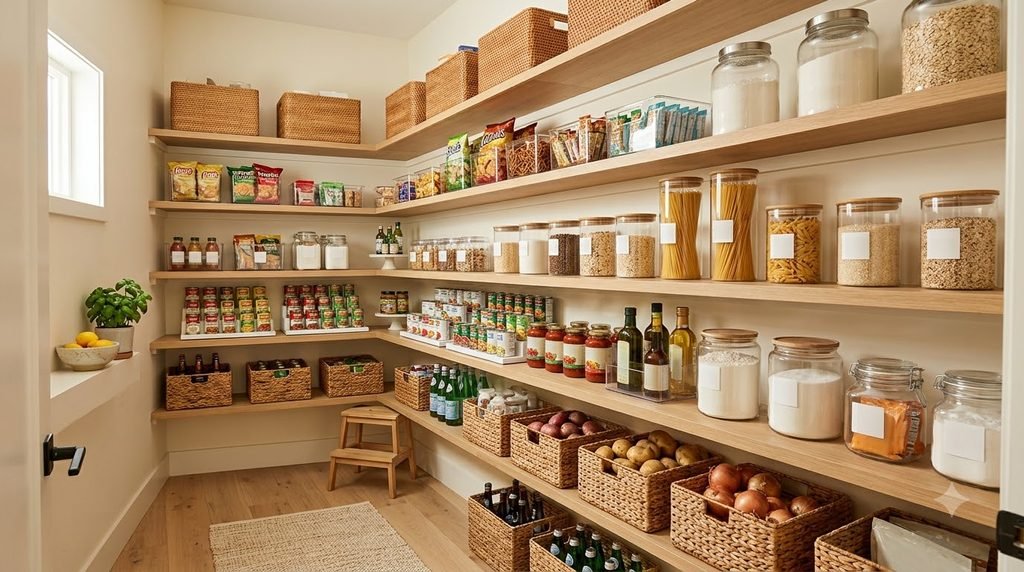
How to Organize a Deep Pantry
Deep shelves can make food difficult to find.
Start by grouping similar items together.
Then use shallow bins or pull-out storage where appropriate so items at the back remain accessible.
Avoid creating several layers of food that you have to move every time you need something.
If you can’t see it, there’s a good chance you’ll forget you have it.
Pantry Organization on a Budget
You don’t need a complete pantry makeover to improve organization.
Start with what you already own.
Repurpose baskets, containers, and small bins before buying new storage.
Affordable improvements can include:
- Simple shelf risers
- Basic baskets
- Stackable containers
- Small bins
- Labels
- Door hooks
The goal is to solve the biggest storage problems first.
Don’t buy a dozen organizers before you know exactly what your pantry needs.
How to Keep Your Pantry Organized
A pantry reset shouldn’t be something you have to do from scratch every few months.
Build a few simple habits.
Put Items Back in Their Zones
When you finish using something, return it to its category.
Use Older Items First
Keep older products easier to reach when possible.
Check Your Pantry Before Shopping
This can help prevent unnecessary duplicates.
Reset One Shelf at a Time
You don’t need to reorganize the entire pantry every week.
Declutter Regularly
Remove expired or unwanted items before they take up valuable space.
Small maintenance habits are easier to maintain than occasional major cleanouts.
Common Pantry Organization Mistakes
Buying Storage Before Decluttering
You may end up creating a prettier place for things you don’t actually need.
Creating Too Many Categories
If your system is complicated, it becomes harder to maintain.
Ignoring Deep Shelves
Items hidden at the back are easy to forget.
Overfilling Containers
Storage should make food easier to access, not harder.
Trying to Copy a Perfect Pinterest Pantry
A beautiful pantry isn’t useful if the system doesn’t match your family’s shopping and cooking habits.
Recent organizing advice increasingly emphasizes designing storage around real routines rather than appearance alone.
Final Thoughts
The best pantry organization ideas don’t necessarily require expensive containers, custom cabinets, or a huge pantry.
Start with decluttering.
Then create practical zones, improve visibility, use vertical space, and make frequently used foods easy to reach.
Most importantly, organize the pantry around how you actually live.
A pantry doesn’t need to look perfect every day.
It needs to make finding food easier, prevent forgotten items from disappearing at the back, and help your kitchen function better.
Start with one shelf today.
Once that system works, expand it to the rest of the pantry.
Related Articles
For more practical home organization ideas:
- 7 Easy Ways to Organize a Small Kitchen Without Spending Much
- 15 Fridge Organization Ideas for a Cleaner, More Organized Refrigerator
- 10 Simple Home Organization Ideas That Make Everyday Life Easier
- 15 Bathroom Organization Ideas to Make Your Space Feel Bigger
- 12 Small Space Organization Ideas to Make Your Home Feel Bigger