Toys have a way of spreading throughout the house. One basket becomes three, stuffed animals end up on the couch, and small pieces somehow find their way into every room.
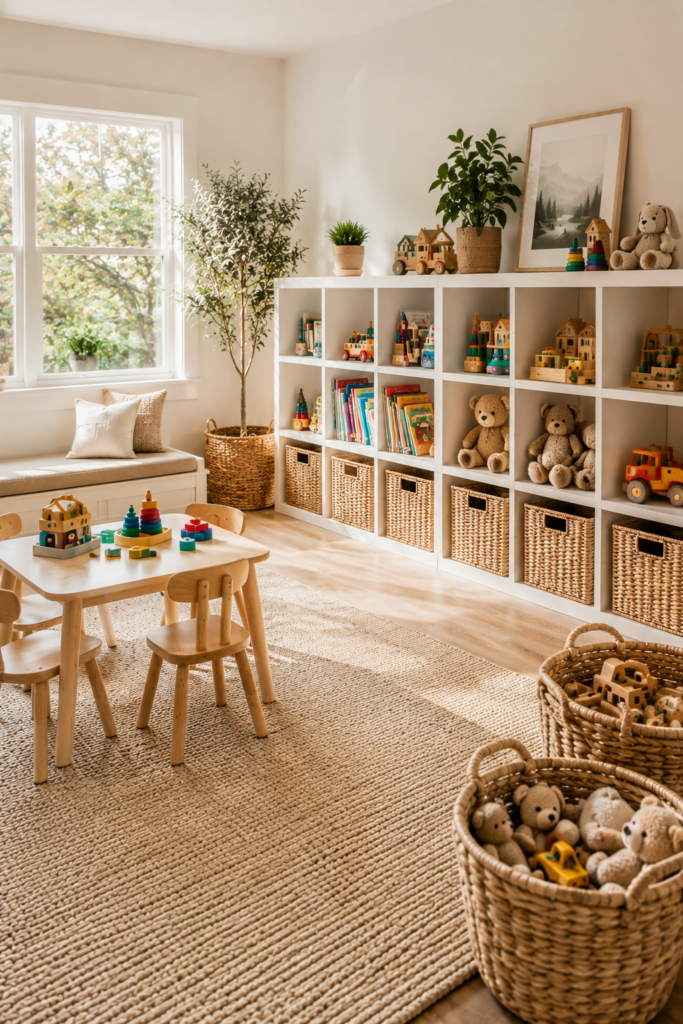
The good news is that you don’t need a huge playroom or expensive storage system to keep toys under control. A few simple organization strategies can make it easier for kids to find what they want and easier for everyone to clean up afterward.
If you’re looking for toy organization ideas that work in real family homes, these practical solutions can help you create a cleaner, calmer space without making organization complicated.
1. Sort Toys by Category
One of the easiest ways to organize toys is to stop treating them as one giant collection.
Group similar toys together so children know exactly where everything belongs.
For example, you could create categories such as:
- Building blocks
- Dolls and figures
- Cars and trucks
- Arts and crafts
- Puzzles
- Board games
- Pretend-play toys
- Stuffed animals
- Outdoor toys
Use separate baskets, bins, or shelves for each category.
When everything has a designated home, cleanup becomes much easier.
2. Use Open Storage Bins
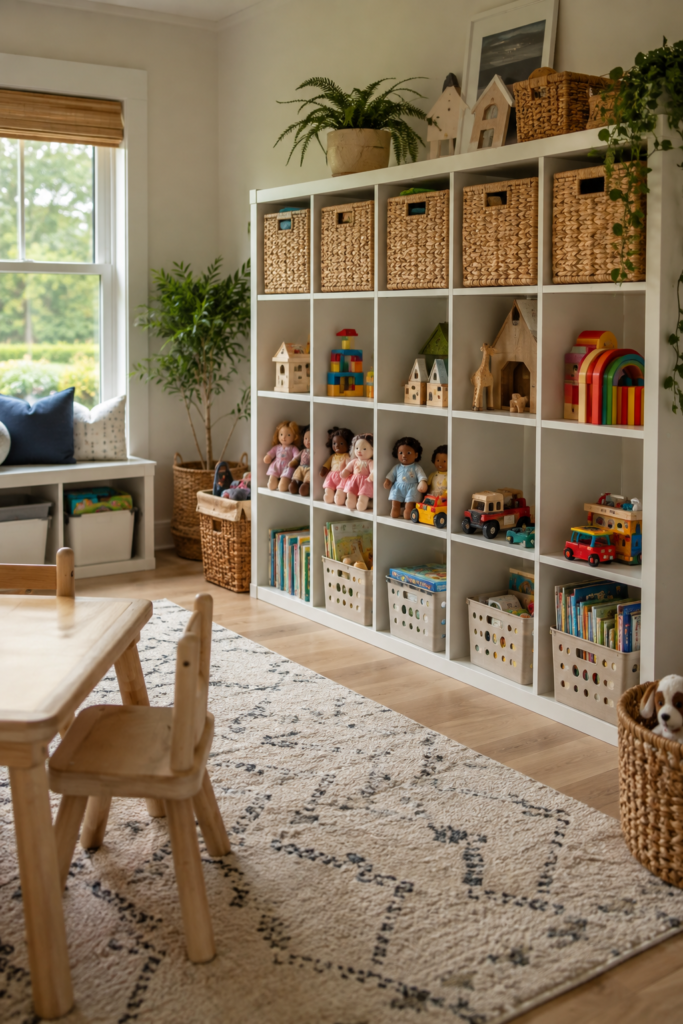
Open bins are especially useful for younger children because they don’t require complicated lids or drawers.
Place frequently used toys in easy-to-reach baskets or bins. Children can grab what they want and return it when they’re finished.
Choose sturdy bins that are large enough to hold several toys without becoming difficult to carry.
For a cohesive look, use similar baskets throughout the room.
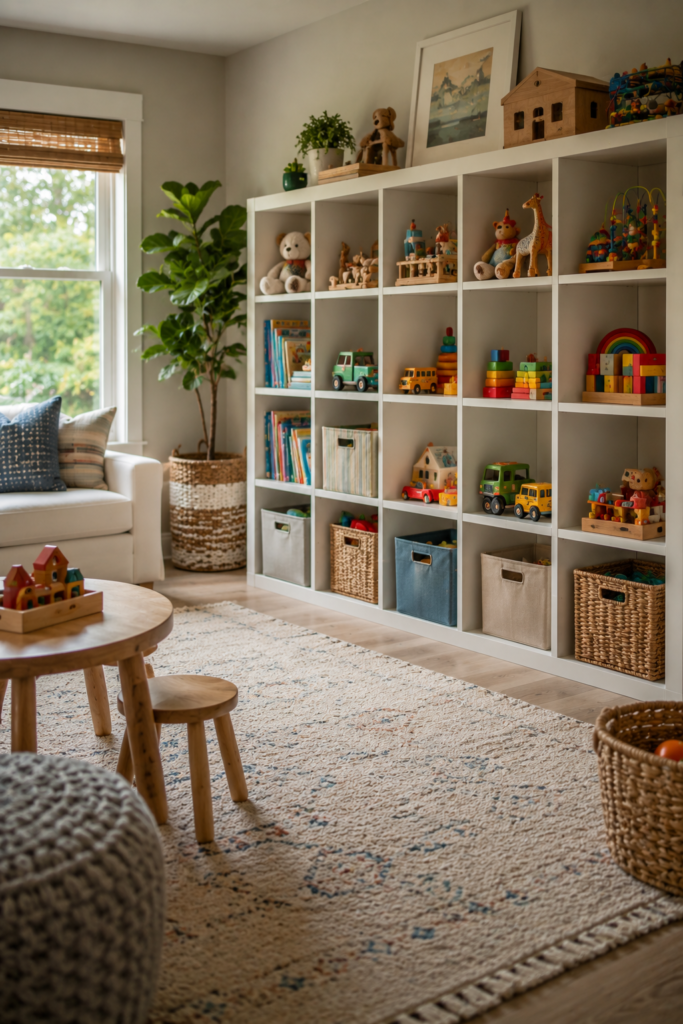
3. Try Cube Shelving
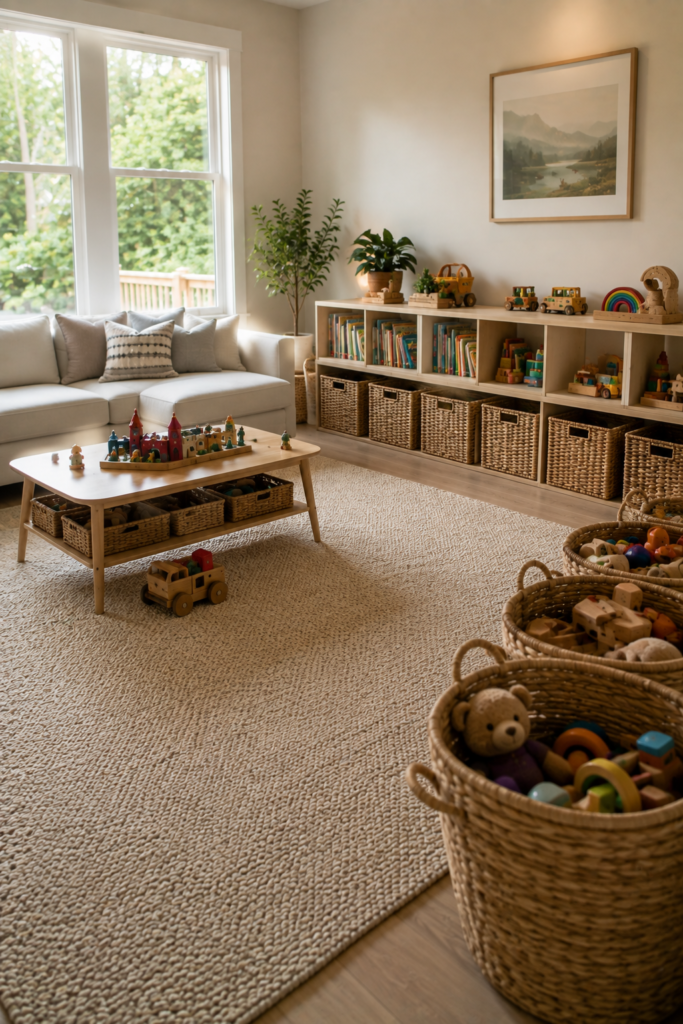
Cube shelving is one of the most versatile storage options for toys.
Each cube can become its own storage zone. You can use fabric baskets inside some cubes while leaving others open for books, puzzles, or favorite toys.
Cube shelves also work well in small bedrooms, living rooms, and dedicated playrooms.
Anchor tall furniture securely according to the manufacturer’s instructions, especially in spaces used by children.
4. Create a Toy Rotation System
Children don’t necessarily need access to every toy they own at the same time.
A simple toy rotation system can reduce visible clutter while keeping playtime interesting.
Choose a selection of toys to keep available and store the rest in a closet or storage area.
Every few weeks, switch some toys.
This keeps the play area manageable and can make older toys feel new again without buying more.
5. Give Every Toy a Home
The most effective organization systems are usually the simplest.
Every category of toy should have a clear place where it belongs.
If a toy doesn’t have a home, it will probably end up on the floor, under furniture, or somewhere else in the house.
Use baskets, bins, drawers, shelves, or cabinets to create designated homes.
The goal isn’t perfection. It’s making cleanup obvious.
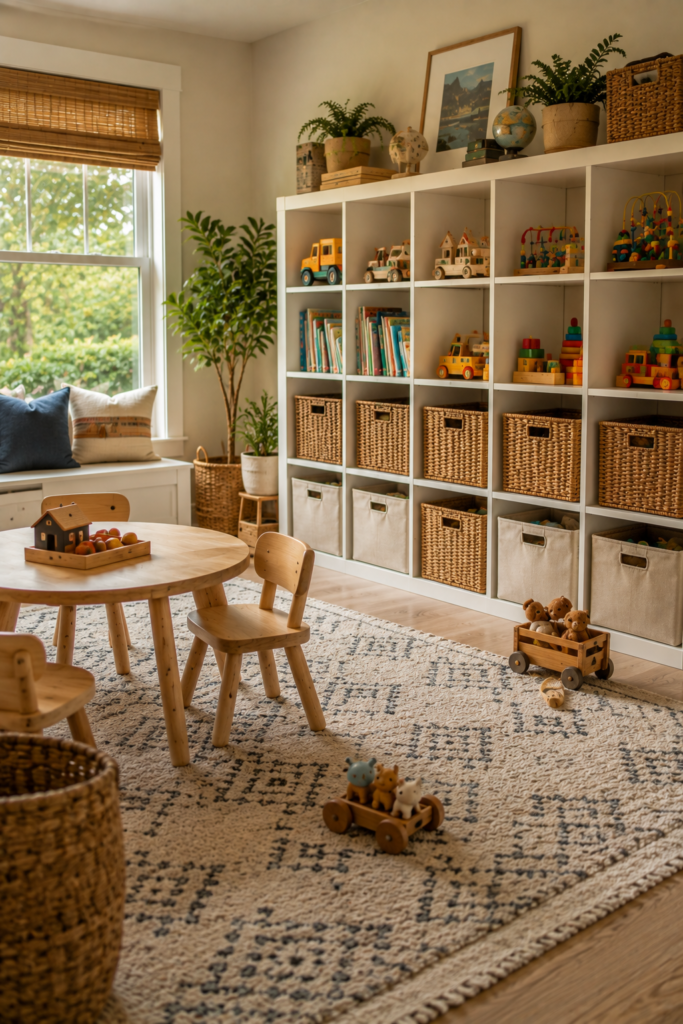
6. Add Simple Picture Labels
Labels can make toy organization easier for young children who aren’t reading yet.
Instead of using words only, add simple pictures to storage bins.
For example, a basket containing cars can have a small car picture, while a craft basket can have an art-supply symbol.
Older children can use written labels instead.
The idea is to make it obvious where each category belongs.
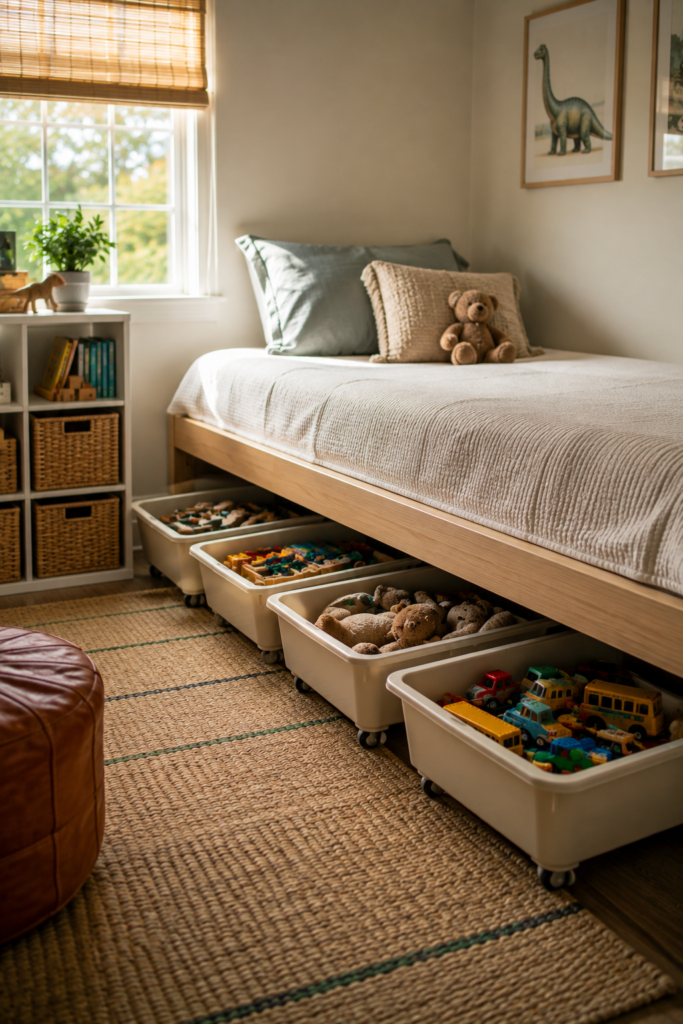
7. Use Under-Bed Toy Storage
The space underneath a bed can become valuable hidden storage.
Low-profile bins or rolling containers can hold toys that aren’t used every day.
This works particularly well for bedrooms with limited closet space.
Use under-bed storage for things such as:
- Extra stuffed animals
- Seasonal toys
- Large puzzles
- Dress-up accessories
- Toy collections
- Building sets
Choose containers that are easy to pull out and put away.
8. Create a Small Toy Zone in the Living Room
Not every home has a separate playroom.
If toys regularly end up in the living room, create a dedicated toy zone instead of constantly moving everything back to a bedroom.
A small basket, storage ottoman, cabinet, or cube shelf can provide a defined area for children’s belongings.
Choose storage that complements your existing decor.
This makes the space feel intentional rather than cluttered.
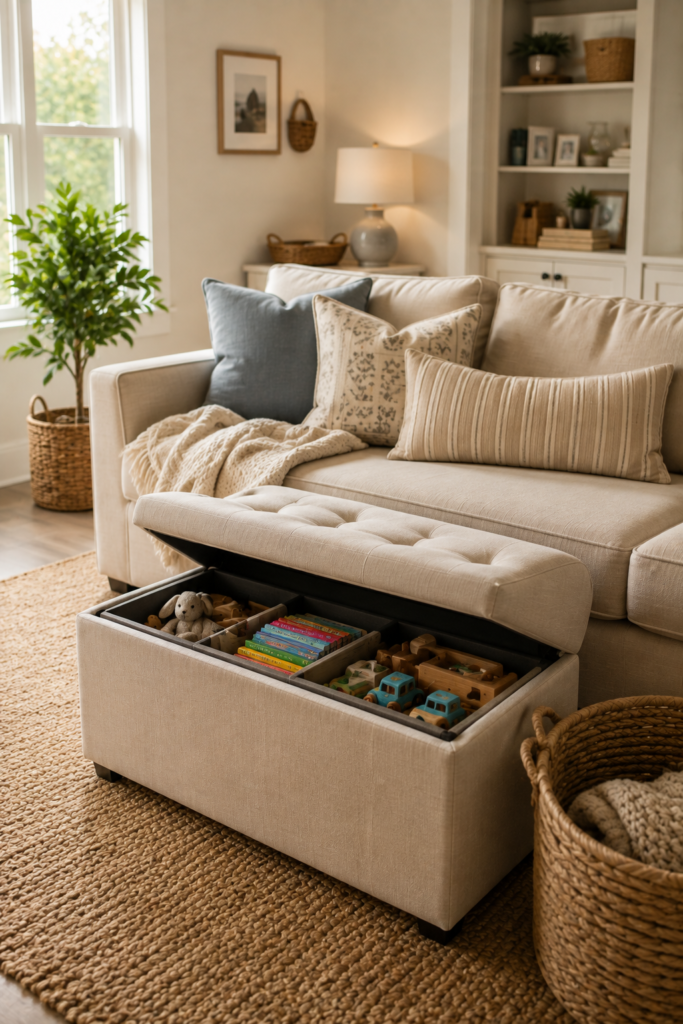
9. Use a Storage Ottoman for Toys
A storage ottoman can provide two functions at once.
It can act as seating or a footrest while hiding toys inside.
This is especially useful in smaller homes where every piece of furniture needs to serve a purpose.
Keep frequently used toys inside and avoid overfilling the ottoman so children can easily put things away.
10. Organize Small Toy Pieces in Clear Containers
Small toy pieces can create some of the biggest organization problems.
Use clear containers or divided organizers for small items such as building pieces, doll accessories, craft supplies, and miniature toys.
Transparent containers make it easier to see what’s inside without opening every box.
For safety, keep small parts appropriate to the child’s age and follow manufacturer recommendations.
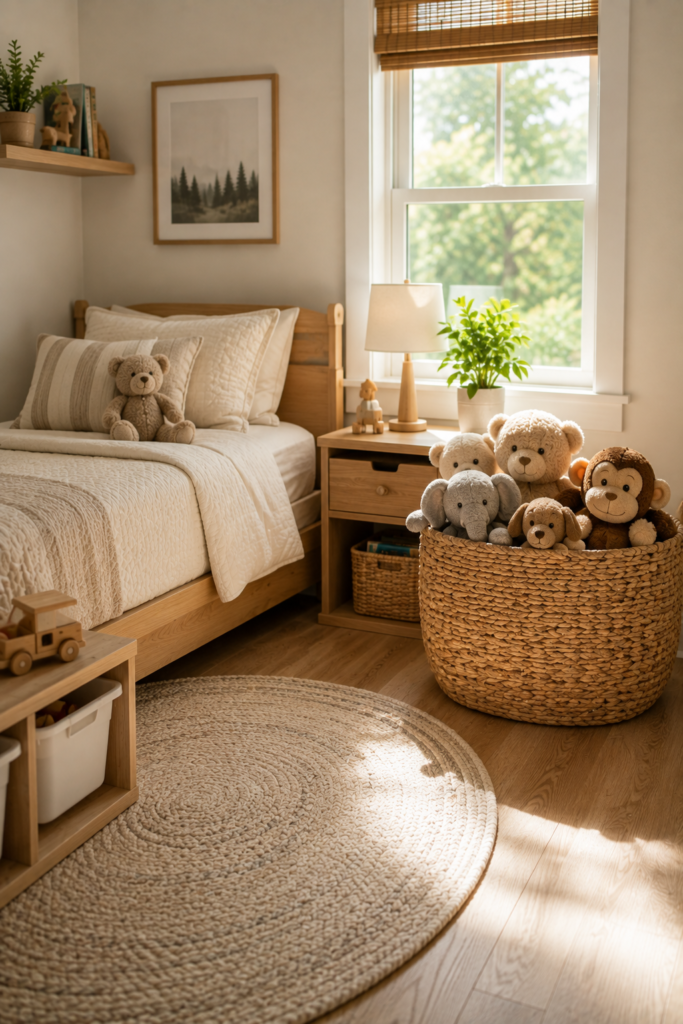
11. Create a Stuffed Animal Storage Spot
Stuffed animals are soft and cute, but they can quickly take over a child’s bedroom.
Instead of letting them cover the bed or floor, create one dedicated storage area.
You could use:
- A large basket
- A fabric hammock
- A corner storage bin
- A low shelf
- A large open basket
Choose a solution that allows children to easily take their favorite stuffed animals out and put them back.
12. Use Wall Space for Toy Storage
When floor space is limited, look at the walls.
Wall-mounted shelves, pegboards, hooks, and hanging organizers can provide additional storage without taking up valuable floor area.
Use wall storage for lightweight items such as dress-up accessories, small baskets, books, or art supplies.
Keep heavier items on stable, appropriately installed storage furniture.
13. Make Cleanup Easy for Kids
A complicated organization system is unlikely to last.
If children need to open several drawers, move multiple containers, or sort tiny categories every time they clean up, the system may become frustrating.
Instead, make cleanup simple.
Large categories and easy-access baskets often work better than creating too many individual storage locations.
You can even turn cleanup into a short routine:
Play → Sort → Put Away → Quick Floor Check
The easier the process, the more likely children are to participate.
14. Create a Small Art and Craft Station
Arts and crafts can create a lot of little items that are difficult to organize.
Create one dedicated area for craft supplies instead of spreading them throughout the house.
Use small containers for:
- Crayons
- Colored pencils
- Markers
- Glue sticks
- Child-safe scissors
- Paper
- Stickers
A small rolling cart or shelf can work well if you don’t have room for a full craft table.
Keep supplies that require supervision or have age restrictions stored appropriately.
15. Declutter Toys Regularly
Even the best organization system will eventually become overcrowded if new toys continue coming in.
Make toy decluttering a regular household habit.
Look for toys that are:
- Broken
- Missing important pieces
- Outgrown
- No longer used
- Duplicates
- No longer age-appropriate
Consider donating usable toys that your family no longer needs.
You don’t have to remove dozens of toys at once. A small seasonal reset can make the entire storage system easier to maintain.
How to Keep Toys Organized Long-Term
Creating an organized toy space is only the first step.
The real goal is to create a system your family can actually maintain.
Start by keeping frequently used toys within easy reach. Store less-used items higher up or in a closet. Avoid buying storage containers before you know what you’re actually storing.
A simple rule can help:
One toy category, one home.
When children know where things belong, cleanup becomes less overwhelming.
You can also schedule a quick five-minute reset at the end of the day. Put stray toys back into their baskets, return books to shelves, and clear the main play area.
Small resets are much easier than waiting for clutter to become overwhelming.
Toy Organization Ideas for Small Spaces
If you live in an apartment, smaller home, or house without a dedicated playroom, focus on storage that uses space efficiently.
Try:
- Under-bed bins
- Storage ottomans
- Vertical shelving
- Wall-mounted baskets
- Narrow bookcases
- Multi-purpose furniture
- Small rolling carts
- Baskets that fit underneath tables
- Over-the-door organizers
The goal is to use overlooked spaces without making the room feel crowded.
How to Organize Toys in a Living Room
If your living room doubles as a family play area, choose storage that blends with your existing furniture.
A large woven basket beside the sofa can hold frequently used toys. A storage ottoman can hide toys when guests arrive. A low cabinet can provide concealed storage while maintaining a clean appearance.
You don’t need to hide every toy.
Instead, create a balance between accessible children’s storage and the overall style of the room.
A Simple Toy Reset Routine
A quick weekly reset can help keep the system working.
Step 1: Gather Everything
Collect toys from the living room, bedrooms, hallway, and other areas.
Step 2: Sort by Category
Return similar toys to the same group.
Step 3: Remove Broken or Unused Items
Set aside toys that are broken, incomplete, outgrown, or no longer used.
Step 4: Return Everything to Its Home
Use your existing baskets, shelves, bins, and cabinets.
Step 5: Check the Floor
A clear floor instantly makes the room feel more organized.
This routine can take only a few minutes when done regularly.
Final Thoughts
The best toy organization ideas aren’t necessarily complicated or expensive.
A few well-placed baskets, shelves, bins, and storage zones can make a major difference in how your home looks and functions.
Start by sorting toys into simple categories, give each category a home, and make cleanup easy enough for the whole family to participate.
Whether you’re organizing a dedicated playroom, a child’s bedroom, or simply trying to control toys in the living room, the goal is the same: create a system that makes everyday life easier.
And remember, an organized home doesn’t have to mean a perfectly tidy home. The best system is one that works for your family and can be reset quickly when life gets busy.
Related Articles
For more ideas, explore these Jessica Millers articles: