A well-organized refrigerator can make everyday life surprisingly easier. When you can quickly see what you have, find ingredients without moving everything around, and know which foods should be used first, meal preparation becomes less stressful.
Fridge organization does not have to mean buying dozens of expensive containers or creating a perfectly styled refrigerator. The best system is one that fits the way your household actually shops, cooks, and stores food.
Whether you have a large family refrigerator or a small apartment fridge, these practical fridge organization ideas can help you create a cleaner, more functional space.
1. Group Similar Foods Together
One of the easiest ways to organize a refrigerator is to create simple food zones.
Instead of placing food wherever there happens to be space, group similar items together. Keep dairy products in one area, drinks in another, snacks together, and produce in its appropriate storage area.
This makes it easier to find things and also helps you notice when you are running low on commonly used foods.
You do not need a complicated labeling system. Even a few simple categories can make a noticeable difference.
Try these basic zones:
- Dairy and breakfast foods
- Drinks
- Fruits and vegetables
- Snacks
- Leftovers
- Condiments
- Ready-to-use ingredients
The exact arrangement will depend on your refrigerator and the manufacturer’s storage recommendations.
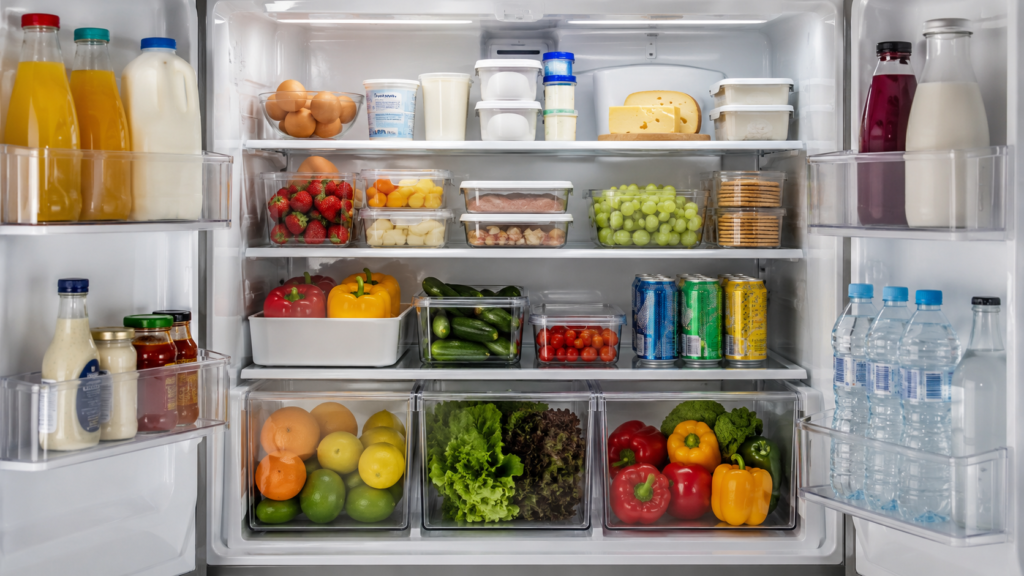
organized refrigerator with food grouped into simple zones2. Use Clear Pull-Out Bins
Clear bins can make refrigerator shelves much easier to manage.
Instead of reaching behind several packages to find something, you can pull out one container and see the items stored inside.
They work especially well for smaller foods that tend to become scattered, such as yogurt cups, cheese, snacks, and individually packaged ingredients.
Before purchasing bins, measure the shelf depth and height. A container that looks perfect online may not fit comfortably in your refrigerator.
The goal is to improve accessibility without overcrowding the shelves.
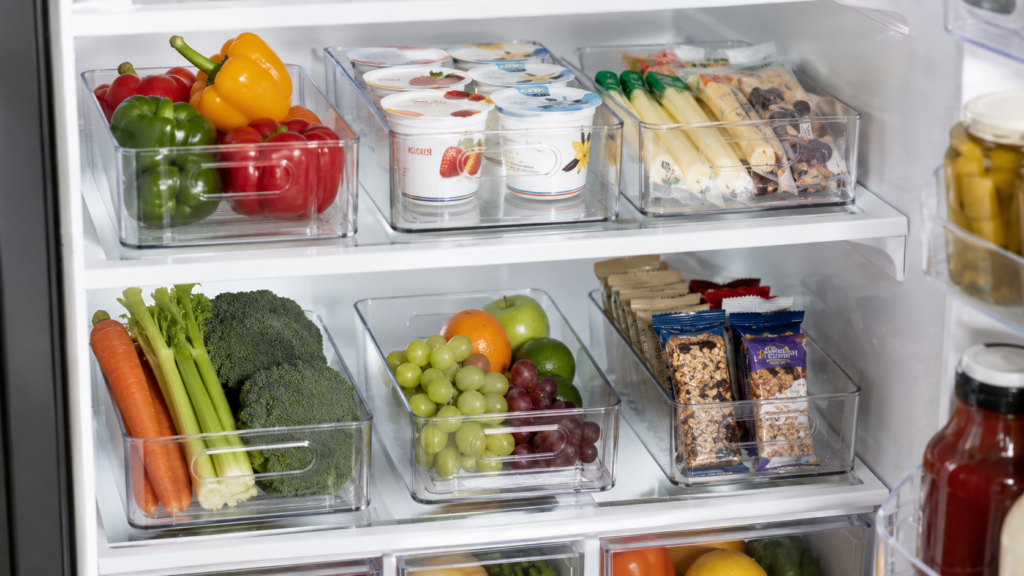
clear pull out bins organizing food inside a refrigerator3. Create an “Eat First” Section
Food can easily get forgotten when it is pushed toward the back of the refrigerator.
A simple solution is to create a small area for foods that should be used soon.
This might include leftovers, opened packages, prepared ingredients, or foods approaching their use-by date.
You can use a small clear container or designated shelf area for this purpose.
The important thing is to make the area visible and check it regularly.
This can also help reduce unnecessary food waste because you are more likely to notice what needs attention before buying more.
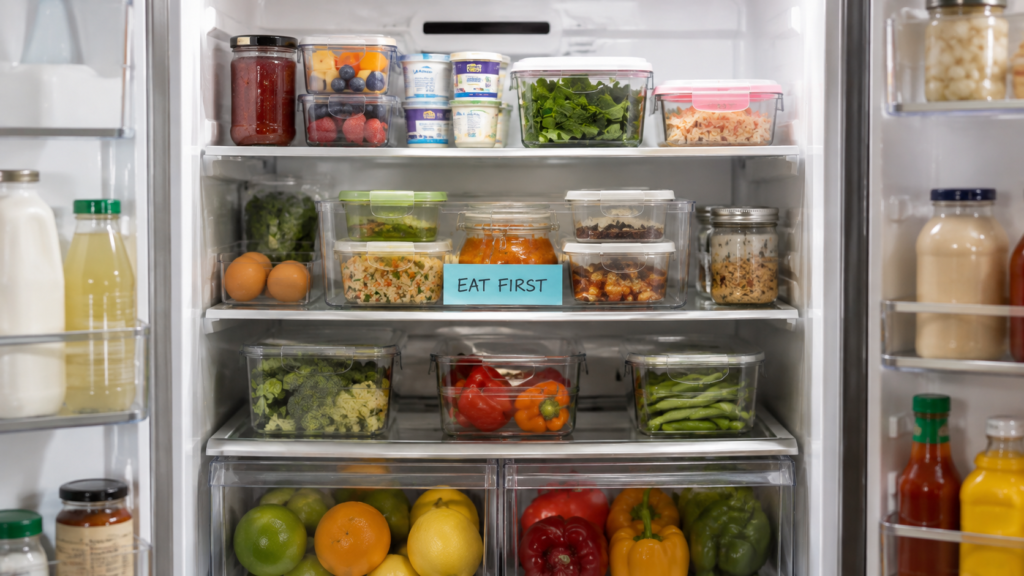
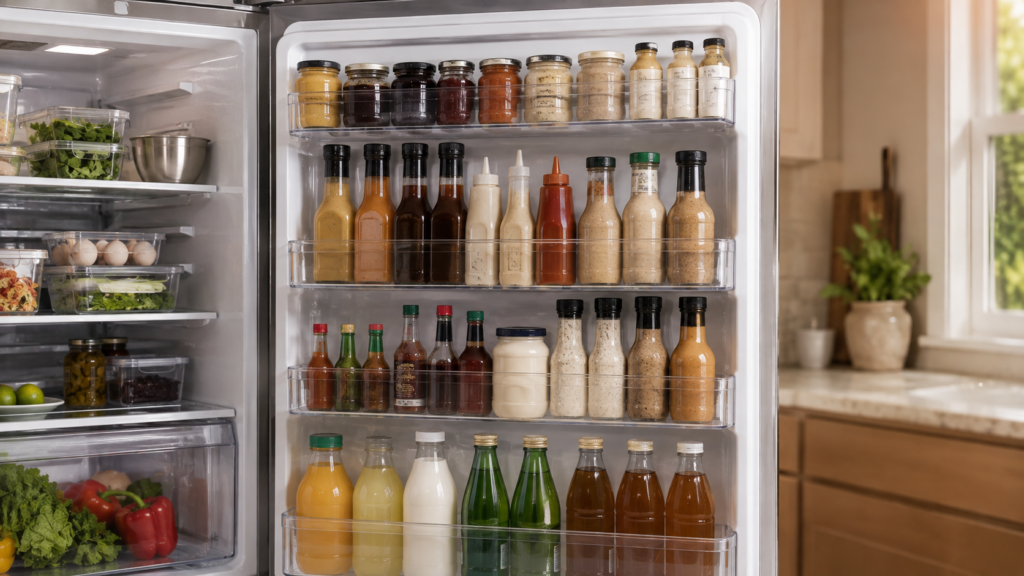
4. Organize the Refrigerator Door
The refrigerator door is useful for items that fit comfortably in its shelves.
Group similar bottles and containers together instead of mixing everything randomly.
For example, you might keep sauces together, beverages together, and frequently used condiments in an easily accessible section.
Avoid placing foods in the door simply because there is room. Follow your refrigerator manufacturer’s storage guidance for temperature-sensitive foods.
A little grouping can make the door easier to scan and keep it from becoming cluttered.
organized refrigerator door with grouped condiments and drinks5. Try a Lazy Susan for Small Bottles
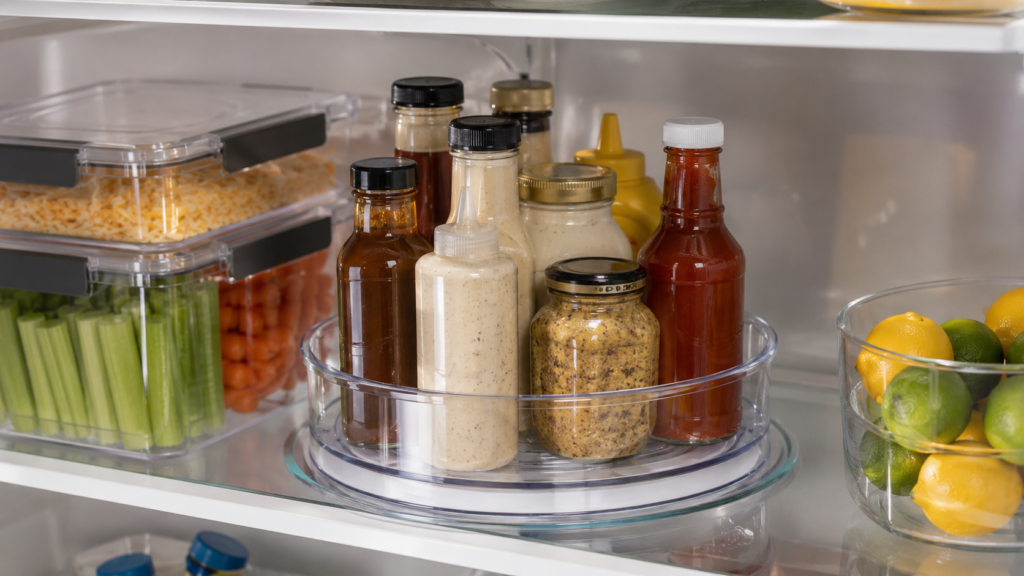
Small bottles can become difficult to reach when they are stored toward the back of a refrigerator shelf.
A clear lazy Susan can make frequently used condiments easier to access.
Instead of moving several bottles to reach one item, you can simply rotate the organizer.
This works particularly well for smaller jars, sauces, dressings, and other similar containers.
Keep the turntable on a stable shelf with enough clearance to rotate without hitting the refrigerator wall.
organized refrigerator door with grouped condiments and drinks6. Give Produce Its Own Zone
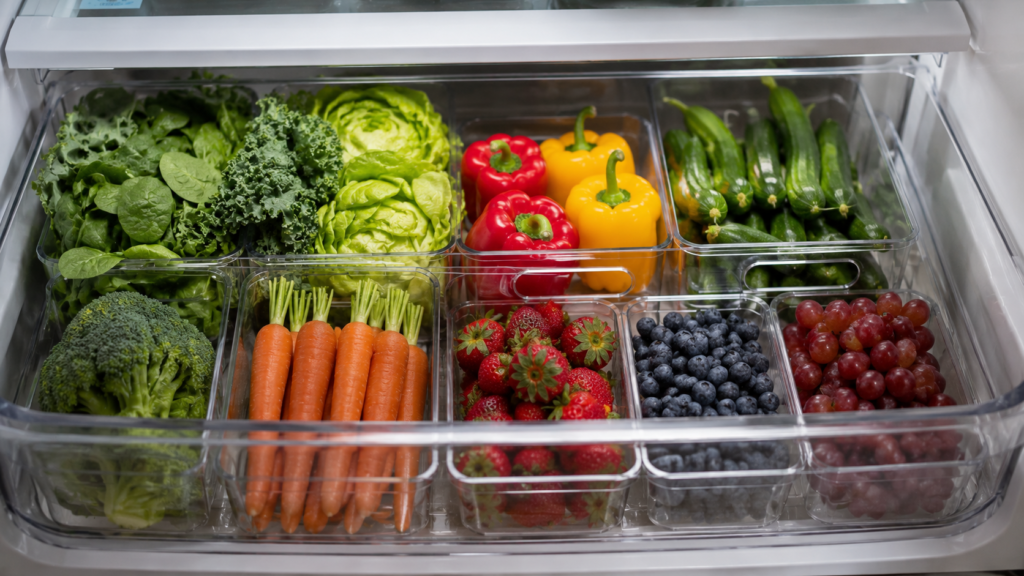
Fresh produce can quickly make a refrigerator look messy when everything is stored together.
Use the refrigerator’s designated produce drawers according to the manufacturer’s guidance, and consider simple bins for items that benefit from being grouped.
For example, you might keep frequently used vegetables together and organize smaller fruits in a separate container.
Avoid packing drawers so tightly that you cannot see what is inside.
Visibility matters because forgotten produce is much easier to overlook when it is buried underneath other food.
fresh produce neatly organized in refrigerator storage bins7. Keep Drinks Together
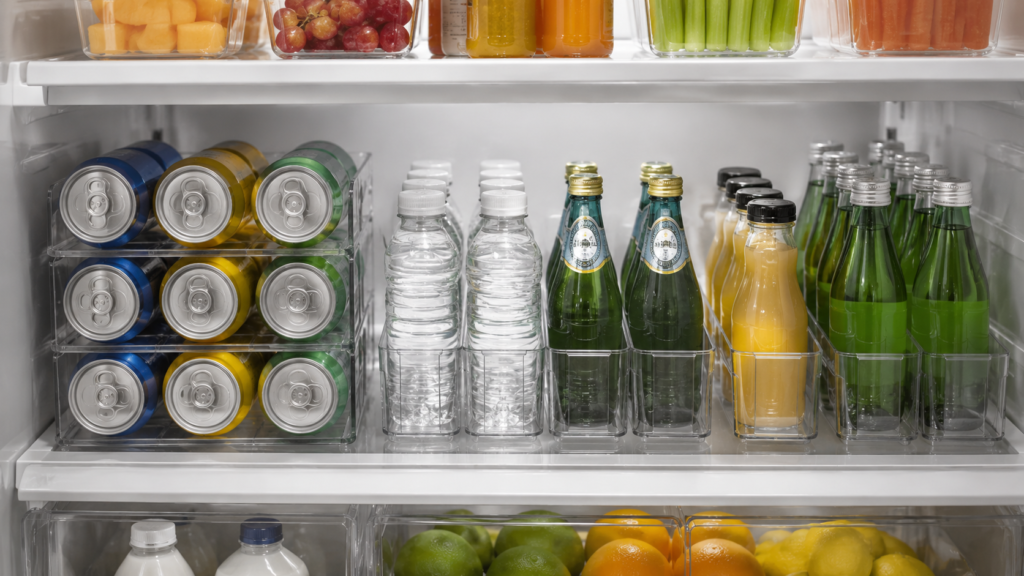
If your household keeps several drinks in the refrigerator, giving them a dedicated area can free up other shelves.
Arrange cans and bottles neatly rather than allowing them to roll around or occupy several different areas.
A compact beverage organizer can be useful if it fits your refrigerator properly.
Keep frequently consumed drinks where they are easy to reach, while less frequently used beverages can be stored in a less convenient area.
This small change can make the refrigerator much easier to scan.
organized refrigerator beverage section with cans and bottles8. Create a Breakfast Zone
If mornings are busy, keeping common breakfast items together can save time.
You could group yogurt, fruit, juice, spreads, and other frequently used breakfast foods in one convenient area.
A clear bin can make this even easier because you can take the entire group out when preparing breakfast.
This approach is particularly helpful for households where several people regularly prepare their own breakfast.
Keep the arrangement flexible and adjust it as your family’s routine changes.
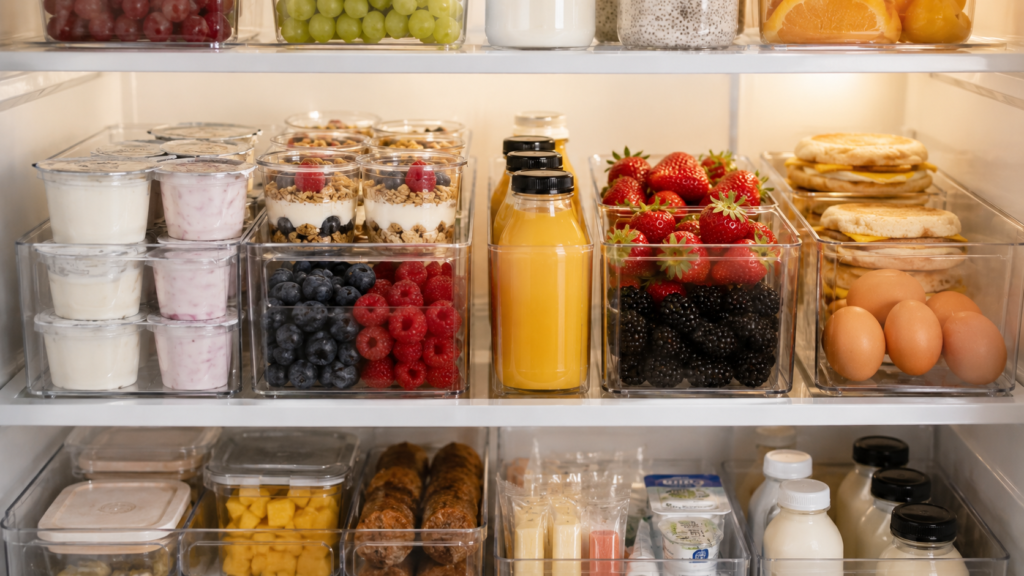
breakfast foods grouped together in an organized refrigerator9. Keep Leftovers Together
Leftovers are much easier to manage when they are stored together.
Use matching or stackable food containers when possible so you can see what is available without opening every container.
Clear containers are especially useful because they make the contents visible.
When storing leftovers, make sure food is cooled and stored safely according to applicable food-safety guidance.
A simple habit is to check your leftover section before planning your next meal.
You may discover that you already have something ready to use.
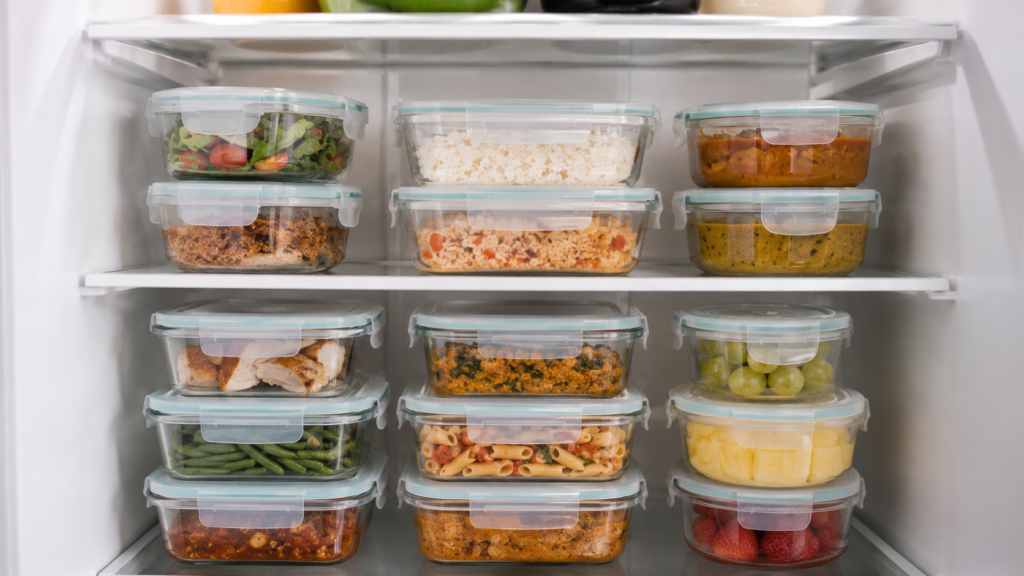
transparent containers neatly organizing refrigerator leftovers10. Use Stackable Containers
Vertical space inside a refrigerator can easily be wasted.
Stackable containers can help you use shelf height more efficiently, especially when storing prepared foods or smaller ingredients.
Choose containers that stack securely and fit comfortably inside your refrigerator.
Do not stack containers so high that they make it difficult to remove food or close the refrigerator door.
A good organization system should make access easier, not create another obstacle.
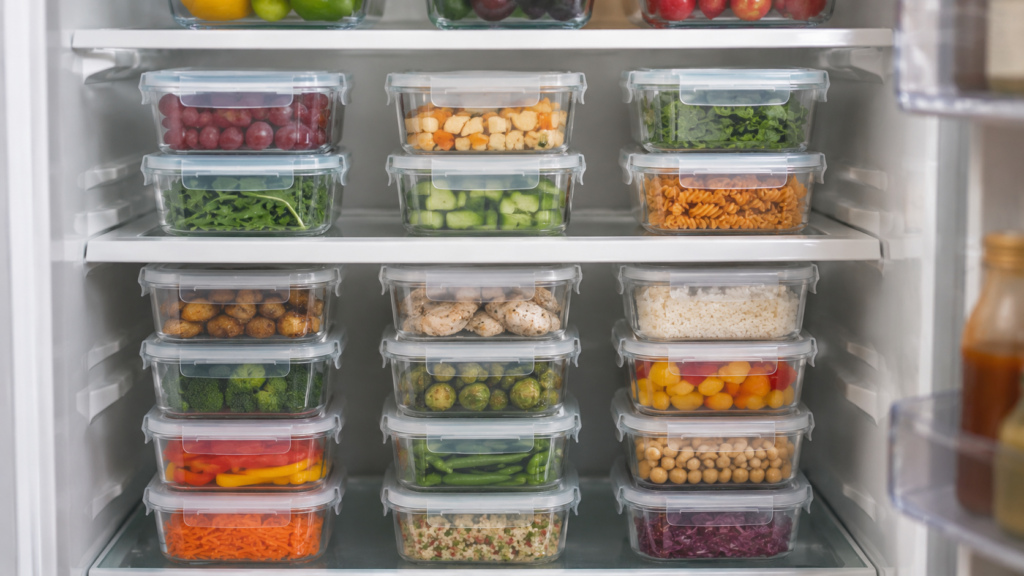
stackable clear containers maximizing refrigerator storage space11. Create a Simple Snack Station
Snacks can quickly spread across several refrigerator shelves.
A dedicated snack container can keep smaller foods together and make them easier to find.
You might use one bin for yogurt, cheese snacks, fruit cups, or other frequently eaten foods.
This is especially convenient for families because everyone knows where to look.
Keep the system flexible and replace items as your household’s preferences change.
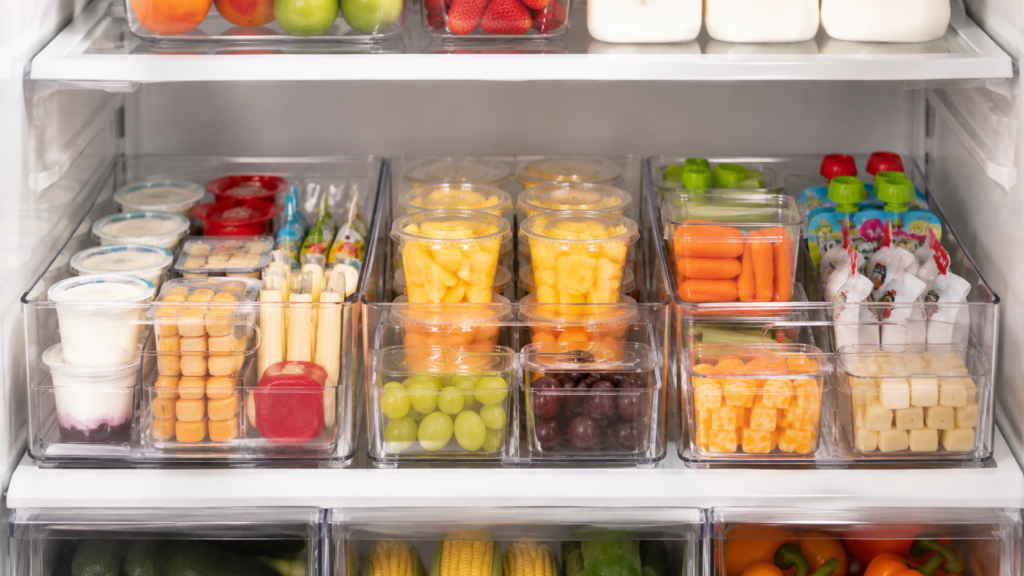
organized refrigerator snack station with clear storage bins12. Organize by Shelf Height
Not every item belongs on the same type of shelf.
Use the available height strategically by grouping taller bottles and containers where they fit comfortably and using shorter spaces for smaller items.
This can prevent awkward gaps and make the refrigerator easier to navigate.
However, always follow the refrigerator manufacturer’s recommended storage arrangement for different food types.
Organization should improve visibility and accessibility without interfering with safe food storage.
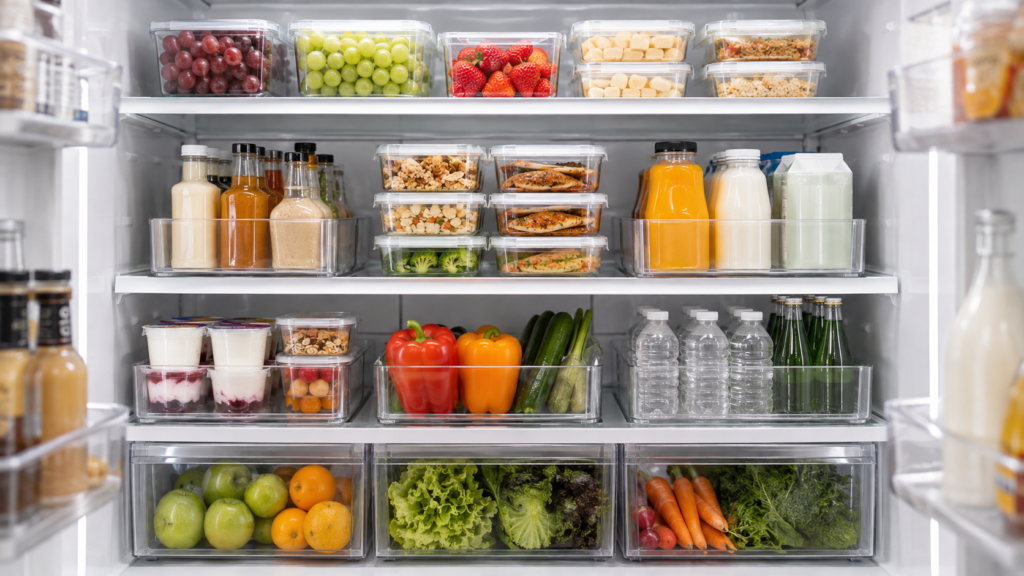
refrigerator organized by shelf height and container size13. Avoid Overfilling the Refrigerator
Sometimes the best organization trick is simply leaving enough visible space.
When shelves are packed tightly, food becomes difficult to see and items can easily get forgotten.
Try to keep enough room to move containers and see what is behind them.
Before your weekly grocery trip, take a quick look through the refrigerator and use what you already have where possible.
A refrigerator does not need to look completely full to be useful.
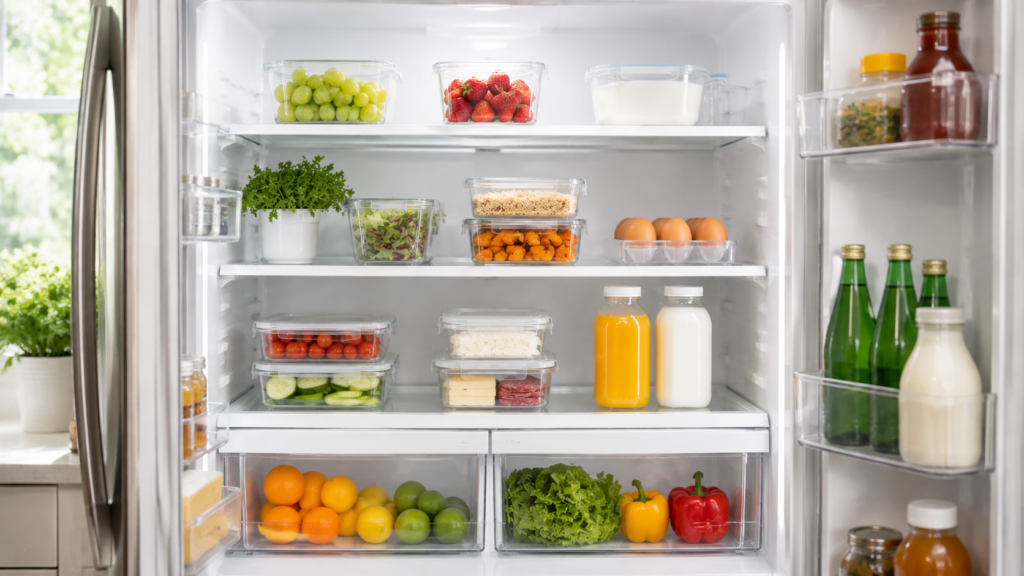
organized refrigerator with open shelf space and less clutter14. Add Simple Labels
Labels can make an organization system easier to maintain.
You can label larger bins according to their purpose, such as snacks, breakfast, produce, or leftovers.
Keep labels simple. The goal is to make the contents obvious, not create unnecessary work.
If the contents of a bin change frequently, consider using removable labels.
That way, your organization system can change along with your shopping habits.
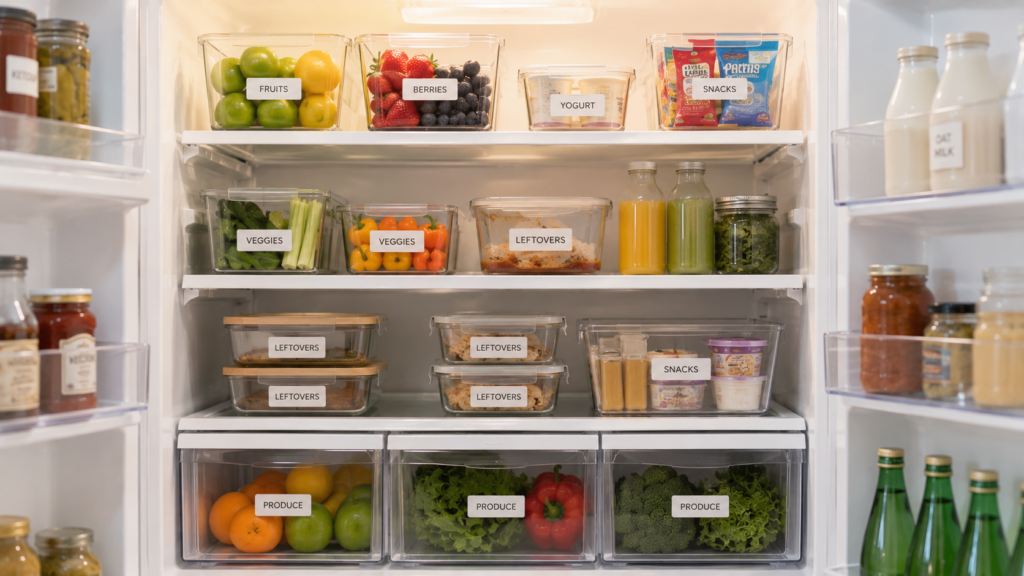
15. Do a 10-Minute Weekly Fridge Reset
You do not need to completely reorganize your refrigerator every week.
Instead, create a short reset routine.
Remove foods that are no longer usable according to food-safety guidance, wipe appropriate surfaces, group similar items, check leftovers, and return containers to their designated areas.
A short weekly reset can prevent small problems from becoming a major organizing project.
Choose a day that naturally fits your routine, such as before your regular grocery trip.
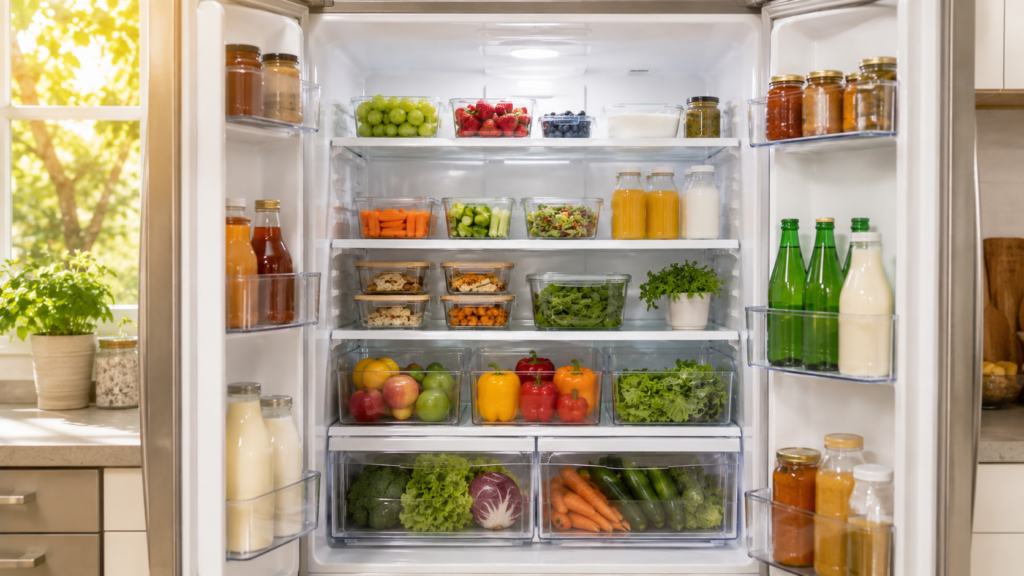
freshly organized refrigerator after a weekly resetA Simple Fridge Organization Checklist
Once your refrigerator is organized, use this quick checklist to keep it that way:
- ☐ Group similar foods together
- ☐ Create an easy-to-see area for foods that should be used soon
- ☐ Organize the refrigerator door
- ☐ Keep drinks together
- ☐ Store leftovers in visible containers
- ☐ Use clear bins where they genuinely improve access
- ☐ Make practical use of vertical space
- ☐ Avoid overcrowding shelves
- ☐ Check the refrigerator before grocery shopping
- ☐ Do a short weekly reset
You can even save this checklist as a simple routine and repeat it whenever your refrigerator starts feeling cluttered.
Frequently Asked Questions
How do I organize my refrigerator efficiently?
Start by removing items that are no longer usable, then group similar foods together. Create practical zones for drinks, snacks, leftovers, produce, and other frequently used foods. Keep the system simple enough that everyone in the household can maintain it.
What are the best fridge organization ideas for a small refrigerator?
Small refrigerators benefit from clear zones, stackable containers, vertical organization, and careful use of door and shelf space. Avoid buying large organizers before measuring your refrigerator.
Are refrigerator organization bins worth it?
They can be useful when they improve visibility and access. Clear bins are particularly helpful for grouping small items that otherwise become scattered. However, you do not need a large collection of organizers to have an organized refrigerator.
How often should I reorganize my fridge?
A short weekly reset can help prevent clutter from building up. A more thorough organization can be done whenever your refrigerator becomes difficult to navigate or your household’s storage needs change.
How can I make my refrigerator look more organized?
Start by grouping similar foods, removing unnecessary clutter, using a few appropriately sized clear containers, and leaving enough visible space between items. A consistent arrangement usually makes a bigger difference than buying lots of storage products.
Final Thoughts
A well-organized refrigerator is not about creating a picture-perfect space. It is about making your everyday routine easier.
When foods are grouped logically, leftovers are easy to see, drinks have a designated area, and frequently used items are accessible, you spend less time searching through crowded shelves.
Start with one shelf or drawer today rather than trying to reorganize everything at once. Once that area works well, move to the next.
The best fridge organization ideas are the ones that fit your actual shopping and cooking habits—and are simple enough to maintain week after week.