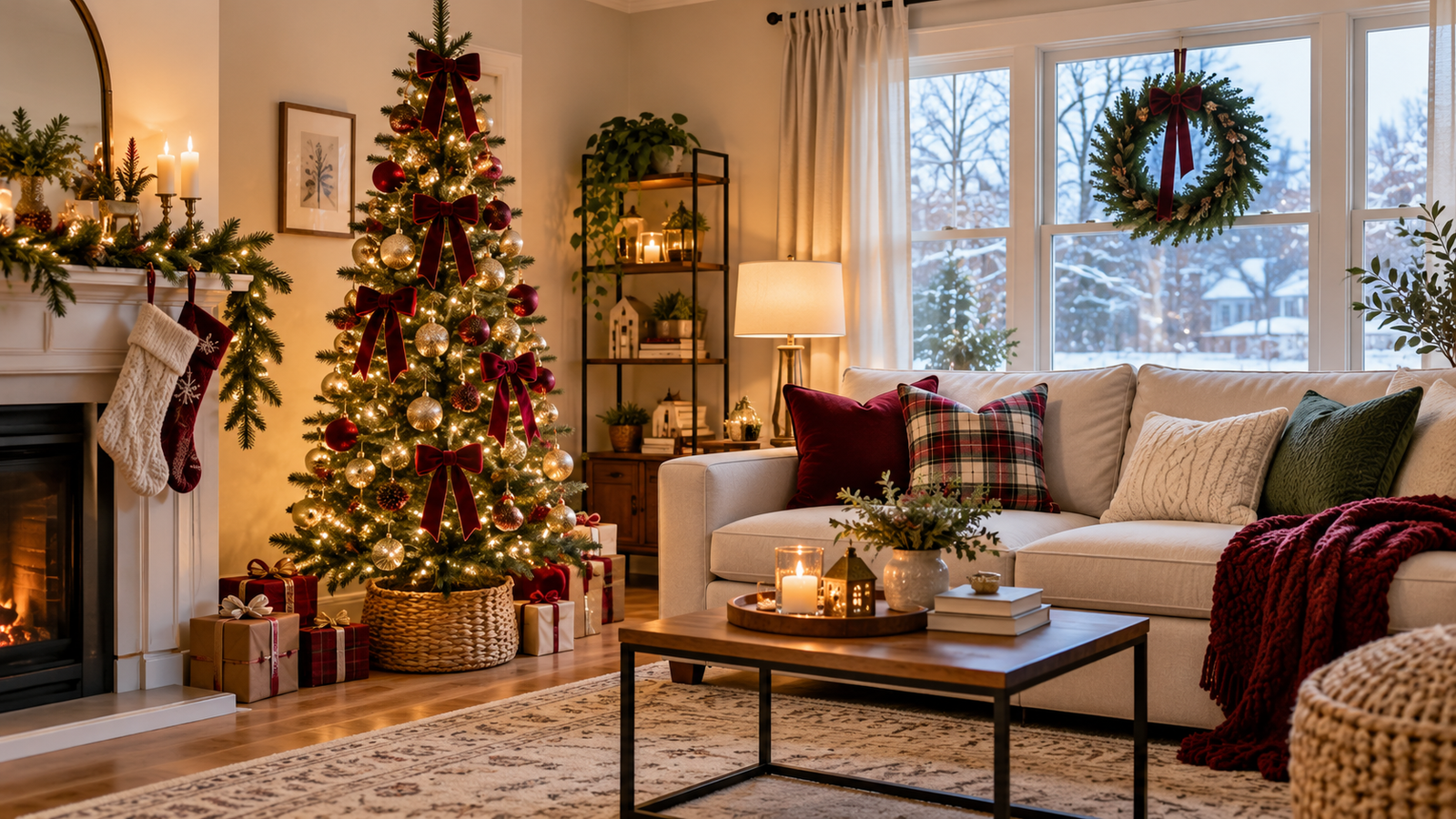
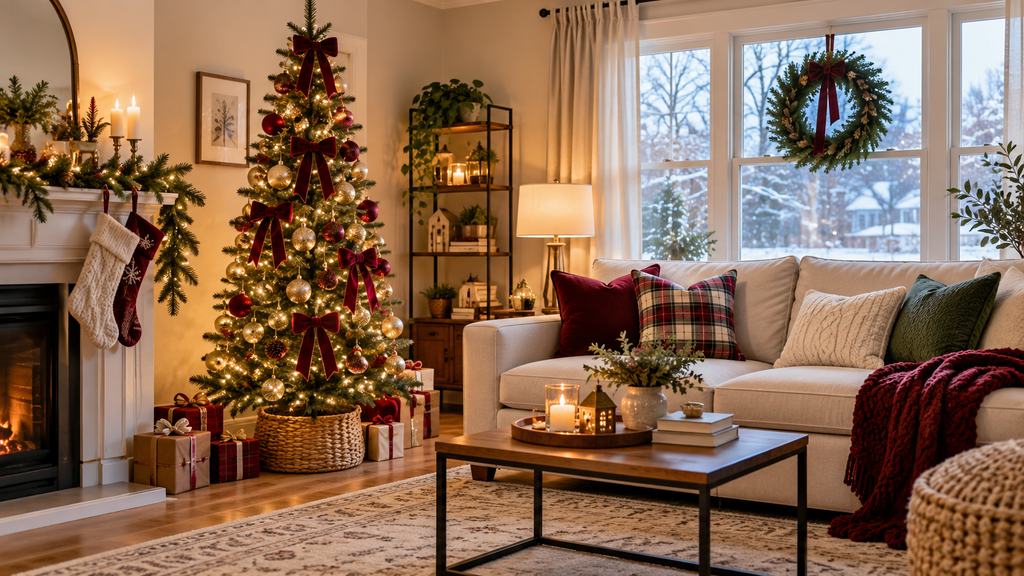
Christmas tree decorating ideas for small spaces can help you create a festive home without sacrificing walking room, seating, or everyday comfort. The trick is to choose a tree that fits your room, decorate it with a clear visual plan, and make the surrounding space feel intentional rather than crowded.
You do not need a huge living room or a towering Christmas tree to create a beautiful holiday display. A slim tree tucked beside a sofa, a tabletop tree on a console, or a small tree styled with coordinated ornaments can make just as much of a seasonal statement.
The best approach is to work with your room instead of trying to fit a full-size holiday display into a space that cannot comfortably accommodate it.
In this guide, you will find 15 practical Christmas tree decorating ideas for apartments, small living rooms, studio spaces, and compact homes, along with styling tips to help your tree look balanced and inviting.
1. Choose a Slim Christmas Tree for a Narrow Corner
A slim or pencil-style Christmas tree is one of the most practical choices for a small home. It gives you the height and traditional silhouette of a Christmas tree while taking up less floor space than many full-width models.
Look for a narrow profile that leaves enough room for nearby furniture, doors, and walkways. Before purchasing, check the tree’s assembled width rather than relying on height alone.
A slim tree works especially well beside a sofa, near a window, or in an unused corner of a living room.
Styling tip: Use warm-white lights, a coordinated ornament palette, and a simple tree skirt or collar. A narrow tree can look elegant without needing an excessive number of decorations.
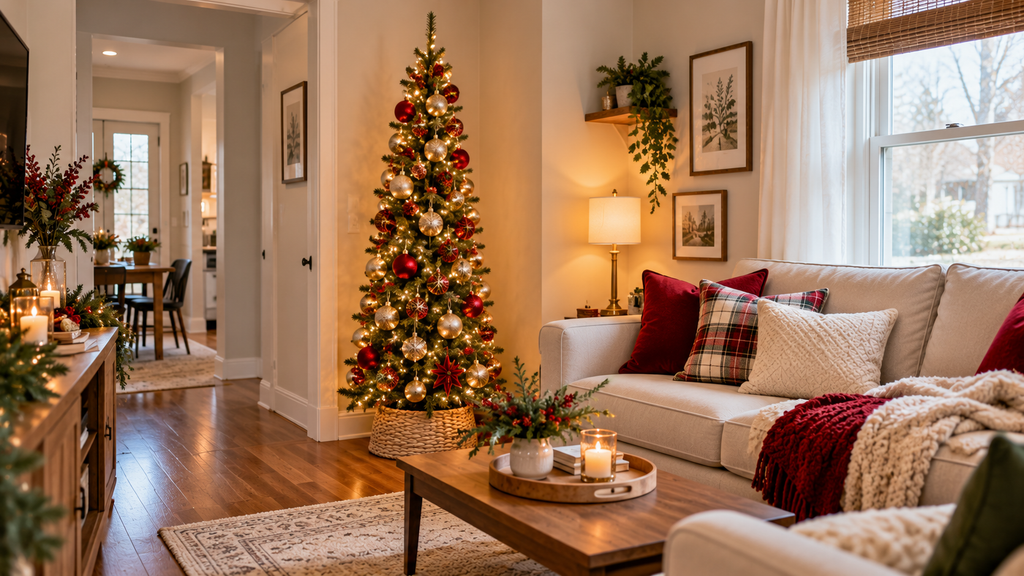
Product worth considering: A slim artificial Christmas tree may be a practical option if you want a reusable tree that fits a limited footprint.
2. Decorate a Tabletop Christmas Tree
A tabletop Christmas tree is ideal when there is no comfortable place for a floor-standing tree. You can display one on a console table, sideboard, sturdy desk, or another stable surface.
Choose a tree that suits the furniture beneath it. A small tree on a narrow table can create a festive focal point without blocking a walkway or taking up valuable seating space.
Decorate it with miniature ornaments, delicate ribbon, and warm lights designed for the tree’s size.
You can also place a few wrapped decorative boxes beside the base to make the display feel complete.
Best for: Studio apartments, bedrooms, small entryways, and homes with limited floor space.
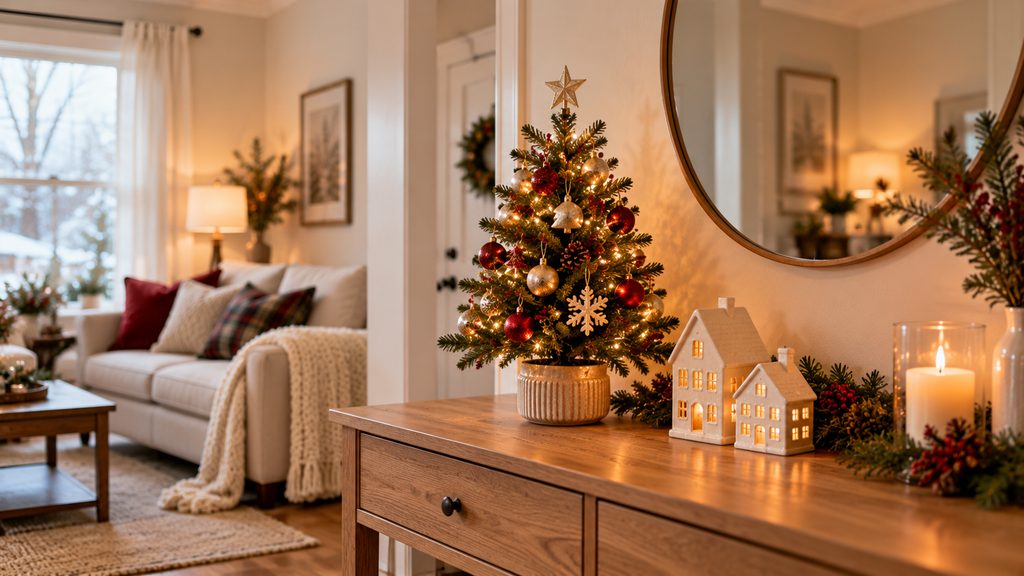
3. Make a Small Christmas Tree Feel Like a Main Feature
A small tree does not have to look like an afterthought. The key is to give it a deliberate setting.
Place your tree where it can be seen from the main seating area, then use a few complementary decorations around it. A small basket-style tree collar, a neatly arranged group of gifts, or a soft rug beneath the display can help create a defined holiday zone.
Avoid scattering unrelated decorations around the room. One well-styled focal point often looks more cohesive than several competing displays.
Try this: Repeat one color from the tree ornaments in a nearby throw pillow, blanket, or decorative cushion. This creates a visual connection without requiring additional furniture or accessories.
4. Use a Corner Without Blocking the Room
Corners can be useful locations for Christmas trees, but not every corner is equally practical.
Before setting up the tree, consider how people move through the room. Check whether branches will interfere with a doorway, curtain, cabinet, or frequently used seating area.
A corner beside a window can work beautifully because natural light highlights the ornaments during the day, while tree lights create a cozy glow in the evening.
If the room is particularly narrow, consider a slimmer tree or a tabletop display instead of forcing a large tree into the available space.
Small-space rule: Protect your walking paths first. The tree should fit comfortably into the room rather than make everyday movement difficult.
5. Decorate with One Coordinated Color Palette
A clear color palette can make a small Christmas tree look intentional without requiring dozens of ornaments.
Choose two or three main colors and repeat them throughout the display. For example:
- Classic Christmas: Red, green, and warm gold.
- Natural and rustic: Forest green, wood tones, and cream.
- Soft and elegant: Ivory, champagne, and muted gold.
- Modern and dramatic: Deep burgundy, dark green, and brushed brass.
You can still include sentimental ornaments or handmade decorations. Simply give the main palette a supporting role so the overall tree does not feel visually chaotic.
For a home with neutral furniture, a traditional red-and-green tree can add a welcome pop of color. In a room that already has several patterns, a simpler palette may create a calmer result.
6. Add Ribbon Instead of Buying More Ornaments
Ribbon can add color, texture, and movement to a Christmas tree without requiring a large collection of new decorations.
Velvet ribbon creates a rich, traditional look, while narrow satin ribbon can feel lighter and more delicate. Natural fabric ribbons work well with rustic or understated decor.
Instead of covering every branch, place ribbon in a few intentional sections. You can use small bows throughout the tree or create a more vertical effect with loose ribbon tails.
Choose a ribbon width that suits the tree. Oversized bows may work beautifully on a fuller tree, while smaller trees often benefit from more delicate accents.

Budget tip: Reuse ribbon from previous holiday seasons and coordinate it with ornaments you already own.
7. Decorate a Small Tree with Miniature Ornaments
Ornament scale matters. Large, heavy decorations can overwhelm a petite tree and make its branches appear crowded.
For tabletop trees and slim trees with delicate branches, try smaller ornaments, lightweight hanging decorations, and a few standout pieces.
You do not have to use only miniature ornaments. A handful of slightly larger decorations can create visual interest, provided they are distributed thoughtfully.
Start with your favorite ornaments, step back to assess the arrangement, and add smaller pieces where the branches look empty.
This approach helps the tree look balanced instead of packed from top to bottom.
8. Create a Cozy Christmas Display on a Console Table
If your living room has a console table, use it as a compact holiday decorating zone.
A tabletop tree can sit at one end, with a small arrangement of greenery or a ceramic house on the other. Leave some empty surface space so the display does not become cluttered.
You can also add a framed seasonal print, a few decorative objects, or a small bowl of ornaments.
For a coordinated result, repeat the tree’s colors in one or two accessories. Avoid using so many decorations that the table loses its everyday function.
If you enjoy collecting small decorative objects, our guide to displaying collections without clutter offers useful ideas for keeping a styled surface visually balanced.
9. Use a Basket or Simple Collar to Finish the Base
The base of a Christmas tree can look unfinished when the stand, cords, or uneven branches are exposed.
A properly sized tree collar or decorative basket can give the display a more polished appearance. Choose a design that fits around the stand safely and does not interfere with stability.
Woven textures work well with natural and rustic decor. A simple neutral collar can suit modern interiors, while a traditional tree skirt may complement a classic Christmas palette.
For smaller trees, avoid a base that is disproportionately wide. The goal is to finish the display, not make the tree appear smaller.
Always follow the tree manufacturer’s instructions, especially when using a real tree that needs water.

10. Make a Small Tree Stand Out with Warm Lighting
Lighting can transform even a modest Christmas tree into a beautiful focal point.
Warm-white lights are a versatile choice for cozy interiors, while multicolored lights create a more playful, nostalgic look. Choose a light set appropriate for your tree and follow the manufacturer’s instructions for indoor use and electrical connections.
For a more dimensional appearance, distribute lights throughout the branches rather than concentrating them only on the outer tips.
If your tree is already pre-lit, check the existing lighting before adding another string. More lights are not always better, particularly in a small room where the tree is close to the seating area.
You can also repeat the same light tone in a nearby window or on a console table to connect the decorations visually.
11. Try a Flocked Tree for a Soft Winter Look
A flocked Christmas tree adds a snowy appearance that can work beautifully in a small home, especially when paired with understated ornaments.
Cream, silver, muted gold, and natural wood accents can complement the frosted branches. If you prefer a more colorful look, red ornaments can create a classic holiday contrast.
Because flocked branches already have a strong visual texture, you may not need as many extra decorations.
Before buying a flocked tree, consider shedding, cleaning requirements, storage space, and whether its appearance will suit your existing furniture and decor.
Styling tip: Keep nearby decorations relatively simple so the snowy branches remain the main feature.
12. Create a Christmas Tree Alternative on the Wall
When floor space is extremely limited, consider a wall-based Christmas display instead of a traditional tree.
You could arrange removable decorative elements in a tree-like silhouette, hang lightweight ornaments from a suitable wall display, or use a simple string-light arrangement that follows a triangular outline.
This can work well in a studio apartment, dorm-style room, or compact home office.
Choose hanging methods appropriate for your wall surface and follow product weight limits. If you rent, test removable products according to their instructions and your lease requirements.
A wall display can be festive without taking up floor space, although it will create a different look from a traditional three-dimensional tree.
13. Use a Small Tree to Decorate an Empty Corner
An empty corner can become a useful holiday feature with a small tree, a compact light source, and a little breathing room around the display.
First, decide what the corner needs. If it already has a floor lamp or side table, you may need only a small tree. If it is completely empty, a basket or a few neatly wrapped gifts can help anchor the arrangement.
Avoid adding too many separate decorative pieces. The corner should look finished without becoming a storage area for holiday accessories.
If you are styling an awkward area elsewhere in your home, the same principle applies: start with one focal point and add only what helps the space feel balanced.
14. Choose Decorations That Can Be Stored Easily
A small home needs a realistic plan for what happens after Christmas.
Before buying new decorations, consider where they will be stored in January. Compact ornaments, collapsible storage containers, and a tree that separates into manageable sections may be easier to accommodate than bulky items.
A reusable artificial tree can make sense if you have somewhere appropriate to store it. If storage is very limited, a tabletop tree or a small natural arrangement may be more practical.
Product worth considering: A Christmas ornament storage box with dividers can help keep delicate decorations organized between seasons.
The best storage solution is the one that fits your actual collection and available closet or shelf space. You do not need a large organizing system for a small number of ornaments.
15. Finish the Room with Two or Three Supporting Decorations
Once the tree is styled, look at the rest of the room before adding anything else.
A festive throw blanket, a simple wreath, or a small seasonal centerpiece may be all you need. Repeating one or two colors from the tree can make the room feel coordinated.
For example, a tree with burgundy ribbon might pair well with one burgundy cushion or a small arrangement on the coffee table. A natural tree with wood ornaments might look beautiful alongside greenery and neutral textiles.
If you want to decorate more of your home, our guide to Christmas decor without a fireplace or mantel covers alternative places to create holiday displays.
The goal is to make the tree feel connected to the room without filling every available surface.
How to Choose the Right Christmas Tree for a Small Space
The best tree depends on your available floor area, ceiling height, storage options, and preferred decorating style.
| Tree type | Best suited for | What to consider |
|---|---|---|
| Slim or pencil tree | Narrow corners and compact living rooms | Check the actual branch width and base |
| Tabletop tree | Desks, console tables, and small apartments | Make sure the supporting surface is stable |
| Flocked tree | Soft, snowy seasonal styling | Consider shedding and storage |
| Wall-based tree display | Rooms with very limited floor space | Check wall compatibility and hanging limits |
| Small reusable artificial tree | Homes that want a repeatable seasonal setup | Plan for off-season storage |
Before purchasing, measure the available area and check the assembled tree dimensions. A tree that fits comfortably around furniture is usually a better choice than one that looks impressive in a product photograph but overwhelms the room.
If you want to compare compact tree options, browse small artificial Christmas trees on Amazon.
A Simple Plan for Decorating a Small Christmas Tree
If you are not sure where to begin, use this order:
- Measure the available floor space and ceiling height.
- Choose a tree size and shape that suit the room.
- Select two or three main decorating colors.
- Add lights first, following the manufacturer’s instructions.
- Arrange ribbon or garland if you are using it.
- Hang larger ornaments first, then fill smaller gaps.
- Finish the base with a suitable collar or tree skirt.
- Add only a few supporting decorations nearby.
- Check that doors, walkways, and seating areas remain comfortable to use.
This sequence keeps the decorating process manageable and makes it easier to identify when the tree is finished.
Frequently Asked Questions
What is the best Christmas tree for a small living room?
A slim or pencil-style tree is often a practical choice because it uses less floor space than a wide, full tree. A tabletop tree can be even more suitable when there is little room for a floor-standing display. Measure the available area before choosing a size.
How do you decorate a small Christmas tree so it looks fuller?
Use lights distributed throughout the branches, choose a coordinated ornament palette, and place decorations at different depths. A few carefully selected ornaments can create more visual impact than filling every branch with decorations.
How can I decorate for Christmas in a tiny apartment?
Choose one main focal point, such as a slim tree, tabletop tree, or wall display. Add a few supporting decorations using the same colors, and avoid blocking walkways or covering every surface. Vertical decorations can provide a festive look without using much floor space.
What colors look best on a small Christmas tree?
There is no single best palette. Red and green create a traditional look, cream and gold feel understated, and forest green with natural wood creates a rustic appearance. Choose colors that complement your existing room rather than starting with an unrelated theme.
Can I decorate a small Christmas tree on a budget?
Yes. Reuse ornaments, make simple ribbon bows, use decorations you already own, and focus on lighting and a consistent color palette. You can create a polished display without buying a complete new ornament collection.
How do I store Christmas decorations in a small home?
Choose compact containers that fit your actual storage space, separate delicate ornaments where needed, and label seasonal boxes clearly. If storage is particularly limited, consider a tabletop tree or a display that can be packed away easily.
Final Thoughts
Beautiful Christmas tree decorating ideas for small spaces are less about buying more decorations and more about choosing the right scale, placement, and colors.
A slim tree, a tabletop display, a simple ribbon theme, or a carefully styled corner can make your home feel festive without making it harder to live in. Start with the space you have, work with decorations you already own, and add only the pieces that improve the overall look.
A smaller Christmas tree can still create a memorable holiday atmosphere when it feels like a deliberate part of your home.